Animal Classification Plants and Animals Worksheets for Ages 7-9
4 filtered results
-
From - To
Welcome to our Animal Classification Worksheets for Ages 7-9! This engaging resource offers a variety of printable worksheets designed to help young learners explore the fascinating world of plants and animals. Ideal for early grade science education, these worksheets provide hands-on activities that encourage children to classify animals by their characteristics and differences. Our materials promote critical thinking and enhance knowledge about biodiversity, habitats, and ecosystems. Each worksheet is designed to make learning fun and interactive, ensuring that students develop a strong foundation in understanding the natural world around them. Ideal for both classroom and home use, enrich your child's learning today!
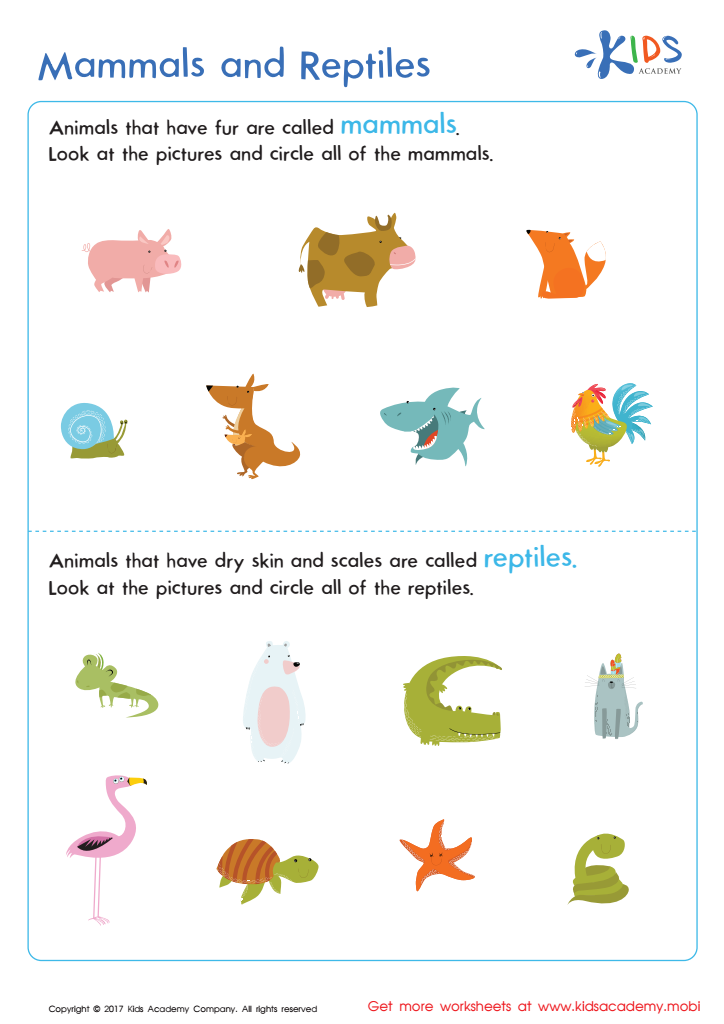
Mammals and Reptiles Worksheet
 Assign to My Students

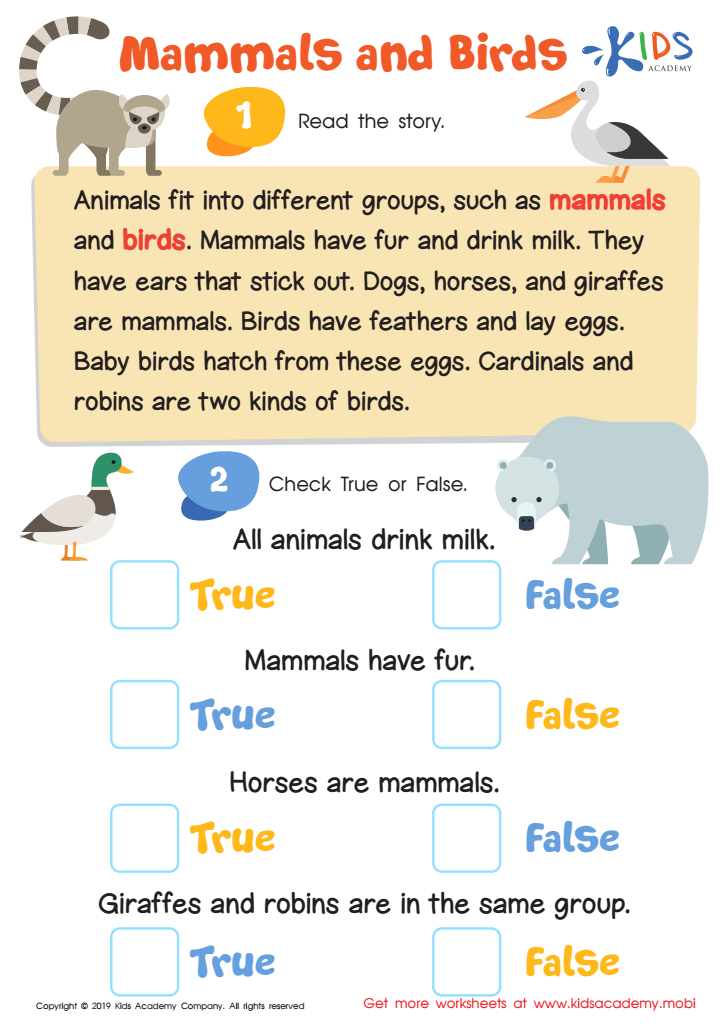
Mammals and Birds Worksheet
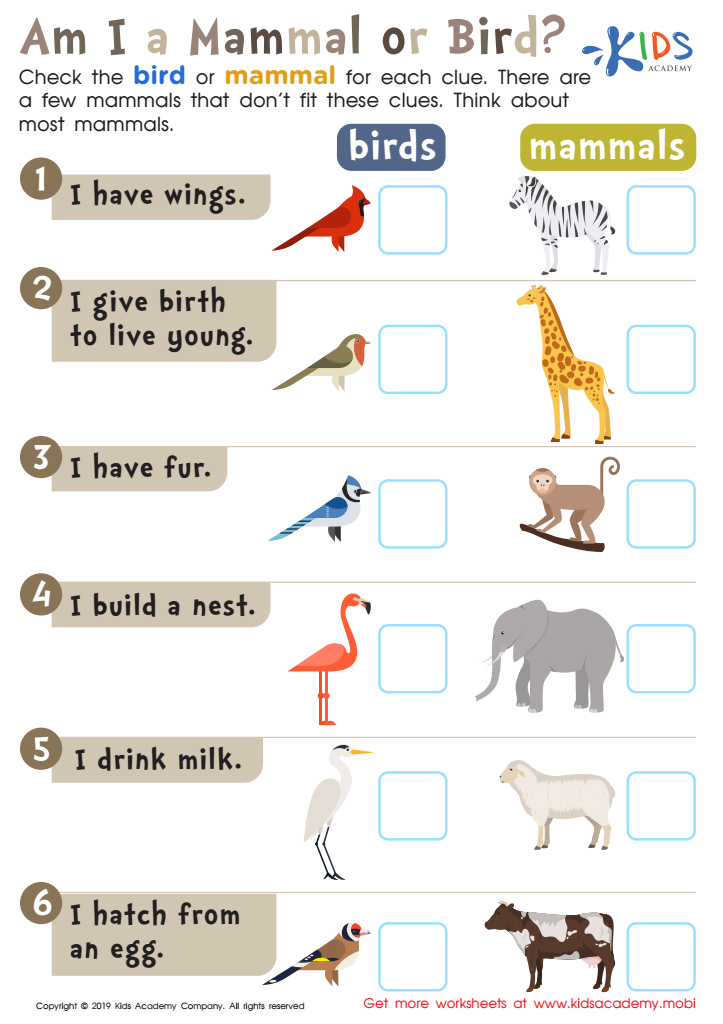
Am I a Mammal or Bird? Worksheet
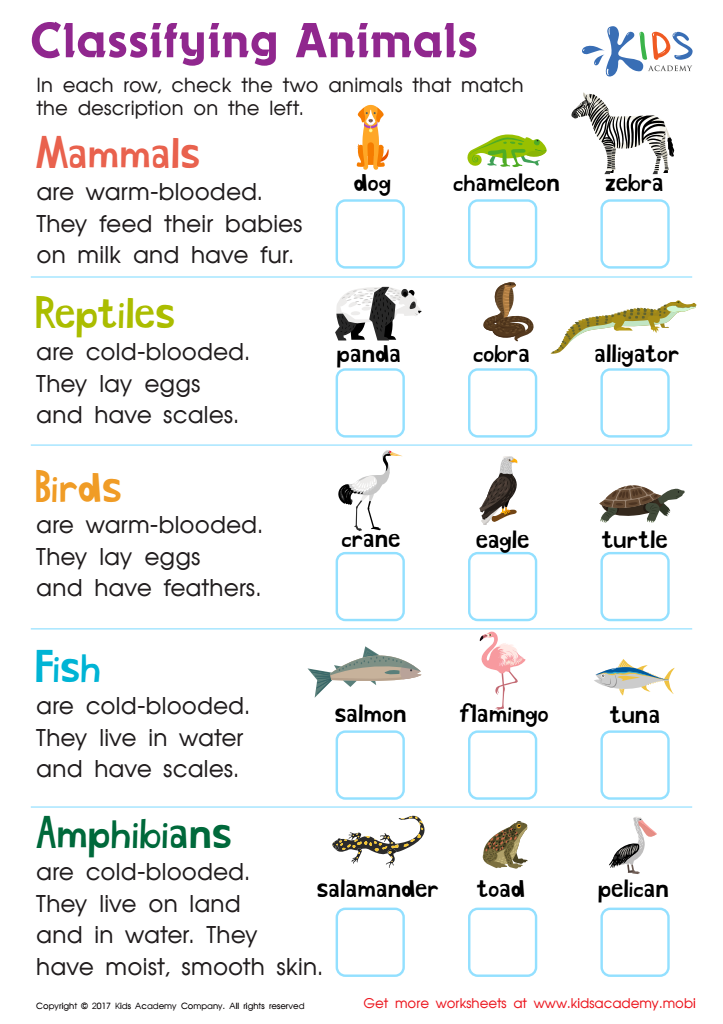
Classifying Animals Worksheet








Understanding animal classification is essential for children aged 7-9 as it forms a foundational aspect of scientific literacy and environmental awareness. By learning how organisms are grouped—whether by characteristics, habitats, or diets—children gain insight into the remarkable diversity of life. This classification fosters critical thinking skills, allowing students to make connections between different species and their roles in ecosystems.
For parents and teachers, introducing this topic can spark curiosity and facilitate discussions about adaptation, behavior, and conservation. Children can explore questions like, “How do animals survive in their habitats?” or “What can different plants teach us about our environment?” Such inquiries encourage exploration and enhance observational skills.
Moreover, engaging with animal classification helps instill a sense of empathy and responsibility towards nature. Understanding the interdependence of species raises awareness about environmental issues, encouraging kids to adopt conservation-friendly behaviors.
Incorporating fun and interactive activities—like classifying animals or identifying local flora and fauna—makes learning approachable and exciting. By nurturing this understanding, parents and teachers not only help kids excel academically but also cultivate future stewards of the planet.








