Division practice Plants and Animals Worksheets for Ages 7-9
4 filtered results
-
From - To
Discover fun and educational "Division Practice: Plants and Animals Worksheets" tailored for ages 7-9! These expertly designed worksheets combine essential division skills with fascinating science topics. Children will explore the wonders of plants and animals while mastering division through engaging exercises. Perfect for home or classroom use, these activities support both mathematical and scientific learning, making education exciting and relevant. Our colorful worksheets captivate young minds, fostering a love for learning while strengthening core skills. Encourage your child to excel with our Division Practice Plants and Animals Worksheets, where math meets the marvels of nature!
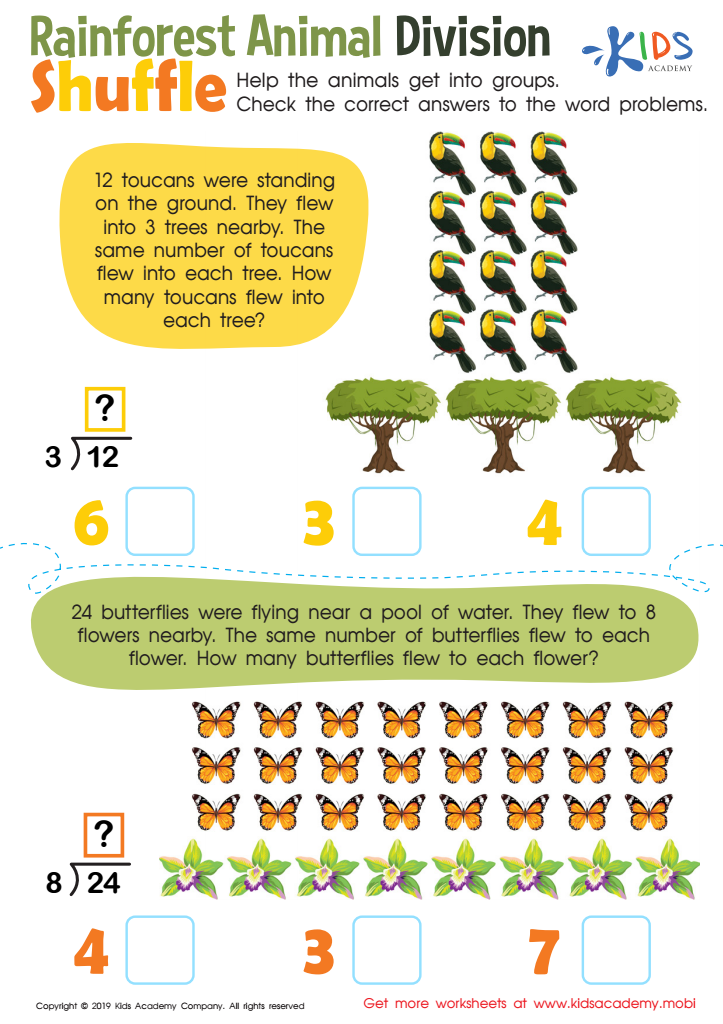
Rainforest Animal Division Worksheet
 Assign to My Students











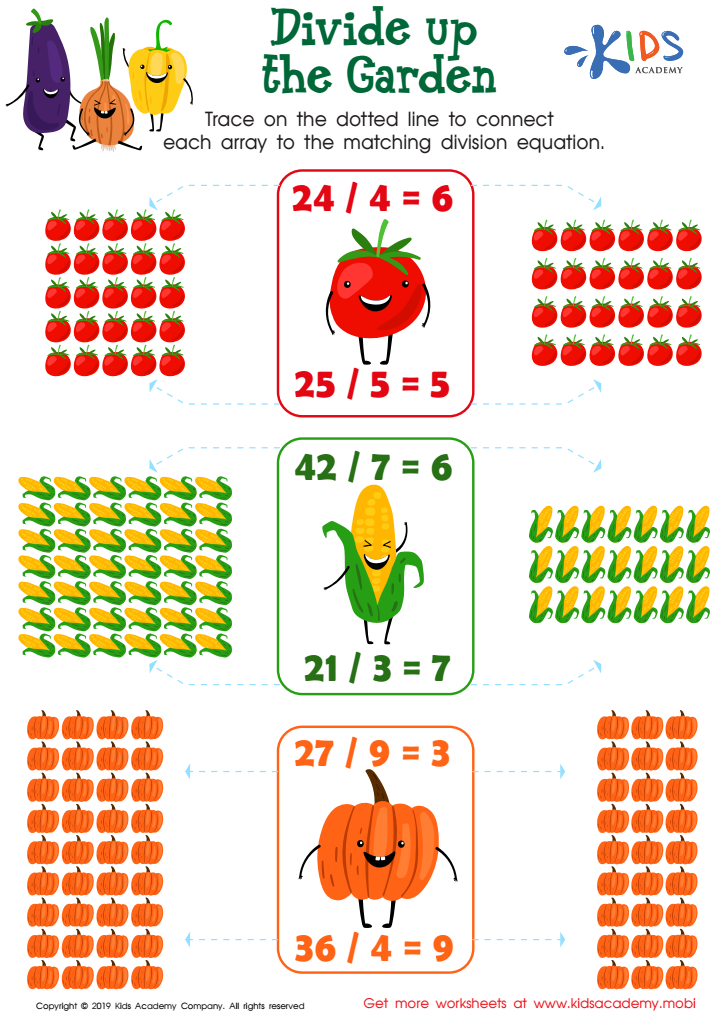
Divide up the Garden Worksheet
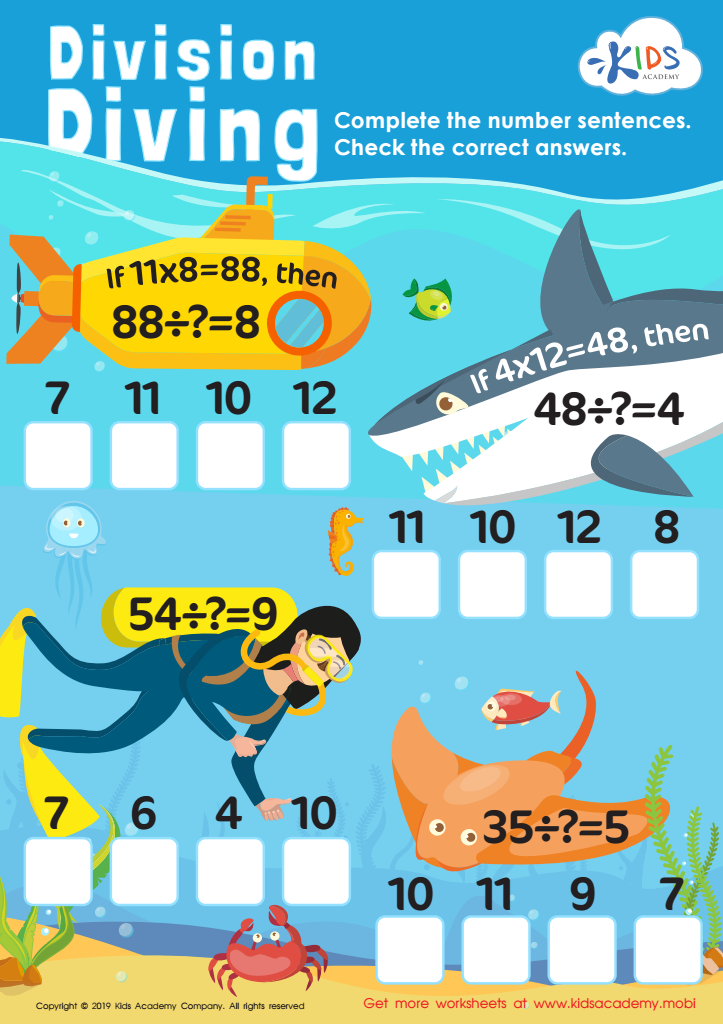
Division Diving Worksheet
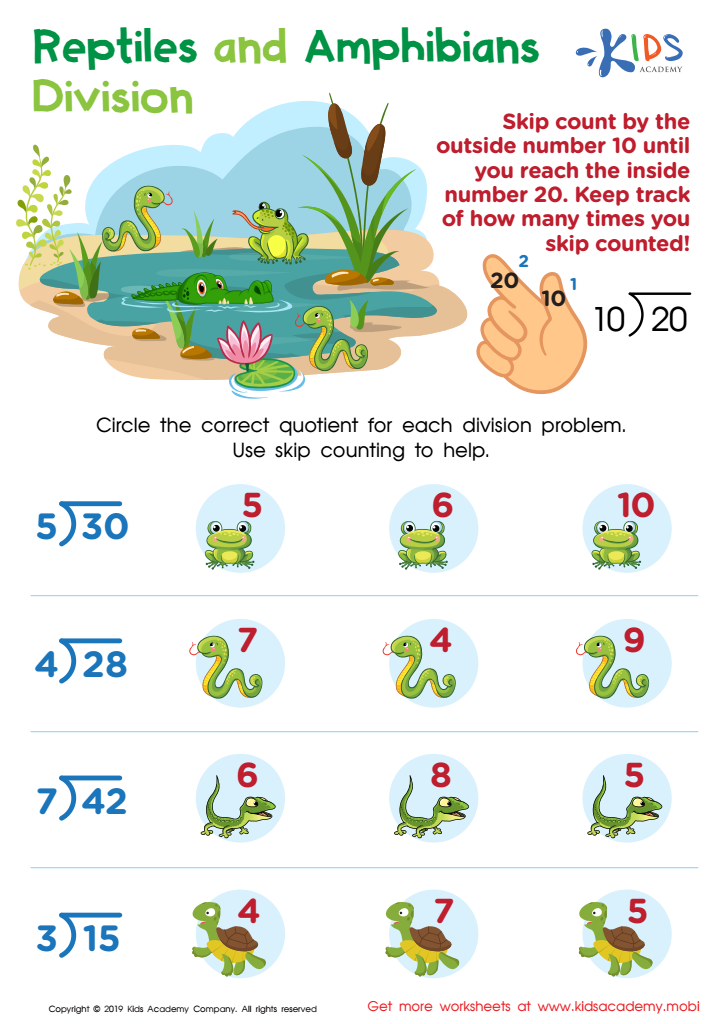
Reptile and Amphibians Division Worksheet



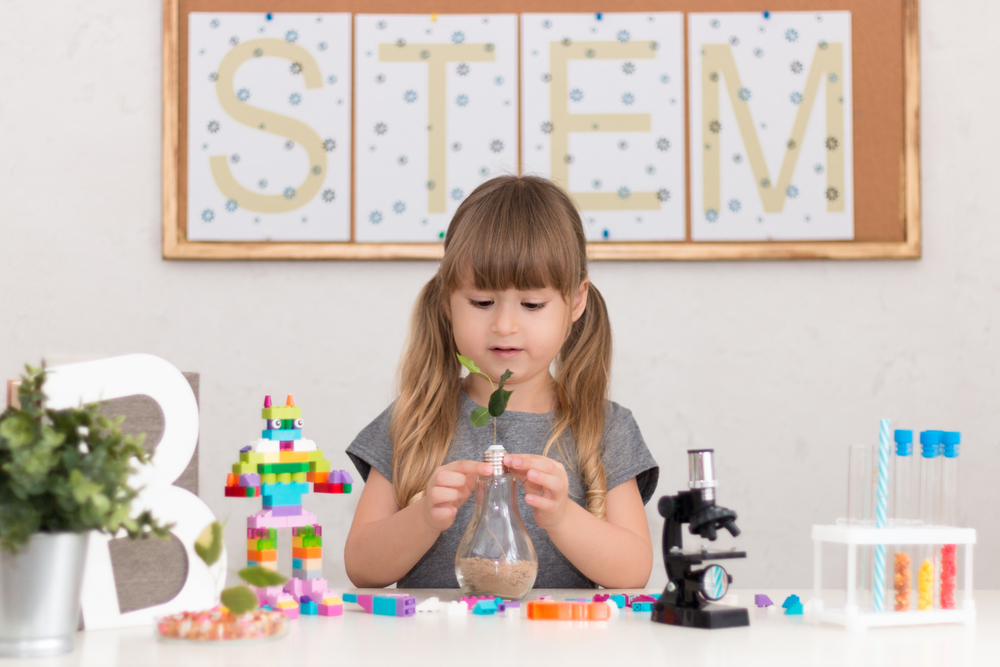




Division practice and an understanding of plants and animals are both essential components of a balanced and enriching education for children ages 7-9. Firstly, division, as one of the fundamental arithmetic operations, serves as a building block for more complex mathematical concepts. Mastering division at an early age fosters critical thinking, problem-solving skills, and numerical fluency. Regular practice helps children grasp division more confidently, which is crucial for their mathematical development and future academic success.
Secondly, learning about plants and animals nurtures a sense of curiosity and appreciation for nature. This knowledge contributes to a child's understanding of ecosystems, biodiversity, and the environment. Engaging with topics related to living organisms can inspire awe and responsibility towards the natural world. Moreover, discussing the life cycles of plants and animals integrates scientific thinking with practical lessons in observation and classification.
Caring about these areas signals a commitment to developing well-rounded learners. Teachers and parents need to support and encourage children in these subjects to build a strong academic foundation, promote environmental stewardship, and fuel an innate love for learning. Blending mathematical and scientific principles prepares children to become informed and analytical thinkers, forming the basis for lifelong education.








