Understanding pollination Plants and Animals Worksheets for Ages 7-9
3 filtered results
-
From - To
Discover the fascinating world of pollination with our engaging worksheets for ages 7-9! At Kids Academy, our 'Understanding Pollination' worksheets blend fun and learning to help young minds explore how plants and animals interact in nature. Each activity is designed to spark curiosity, enhance knowledge of biology and earth sciences, and develop critical thinking skills. With colorful illustrations and interactive exercises, children will grasp the vital role of pollinators such as bees and butterflies in our ecosystem. Perfect for classroom or home use, these printables make learning about pollination exciting and memorable!
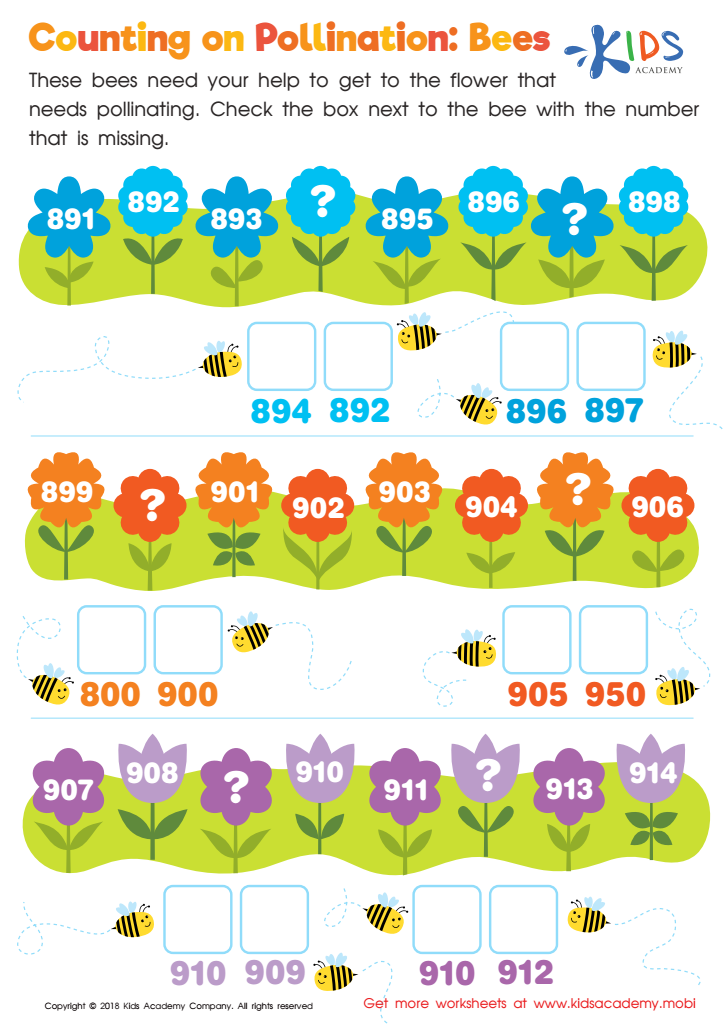
Counting on Pollination: Bees Worksheet
 Assign to My Students











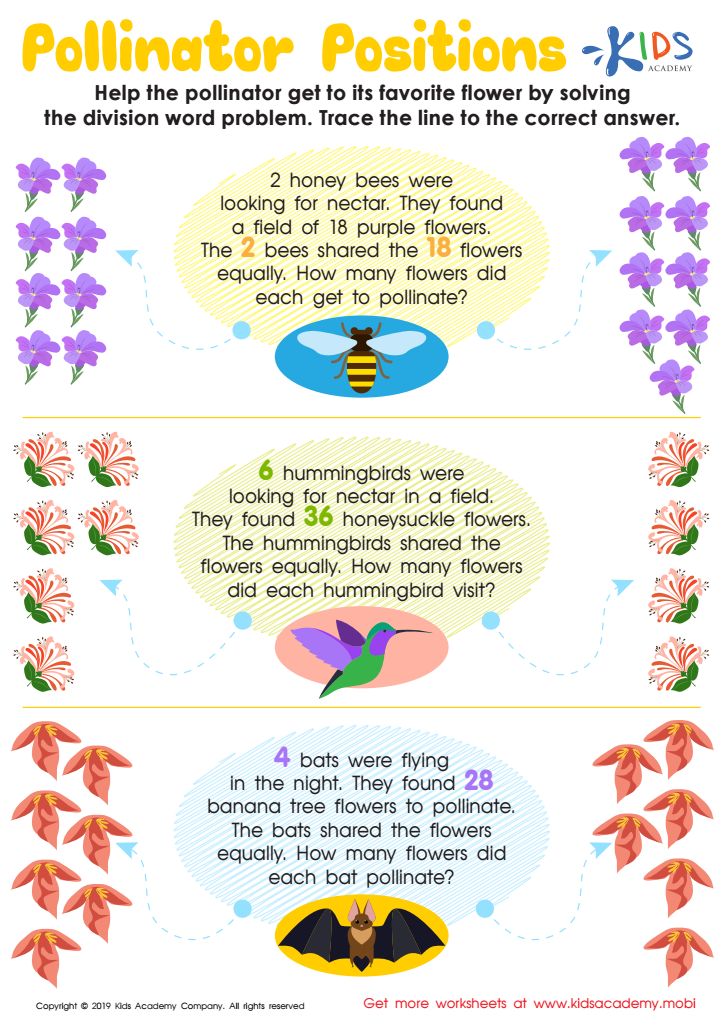
Pollinator Positions Worksheet
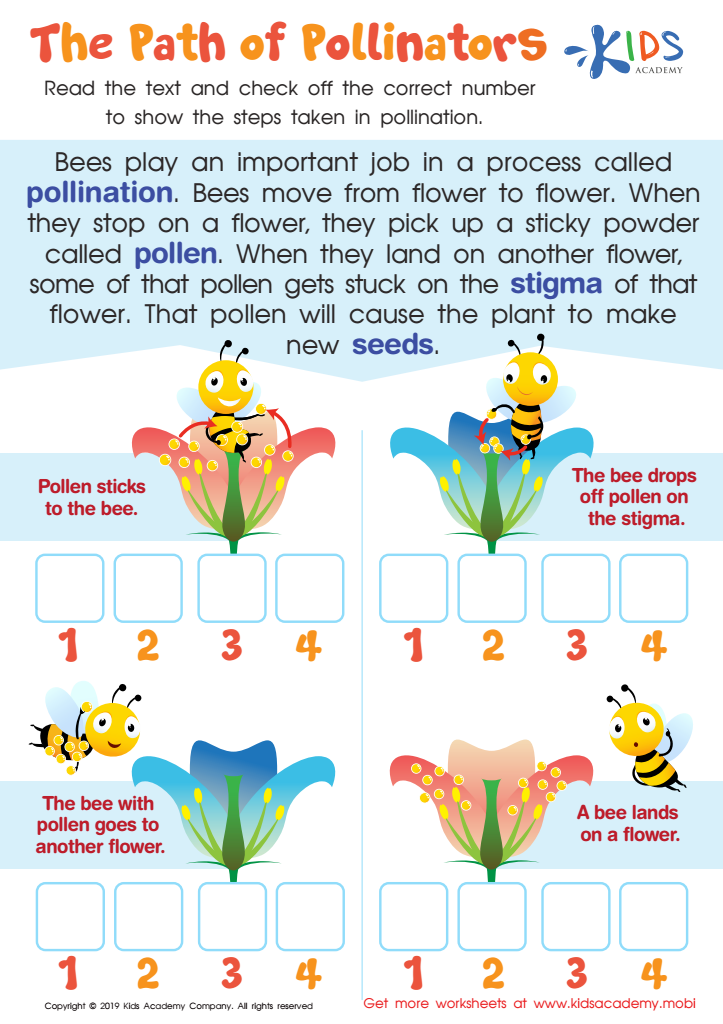
The Path of Pollinators Worksheet







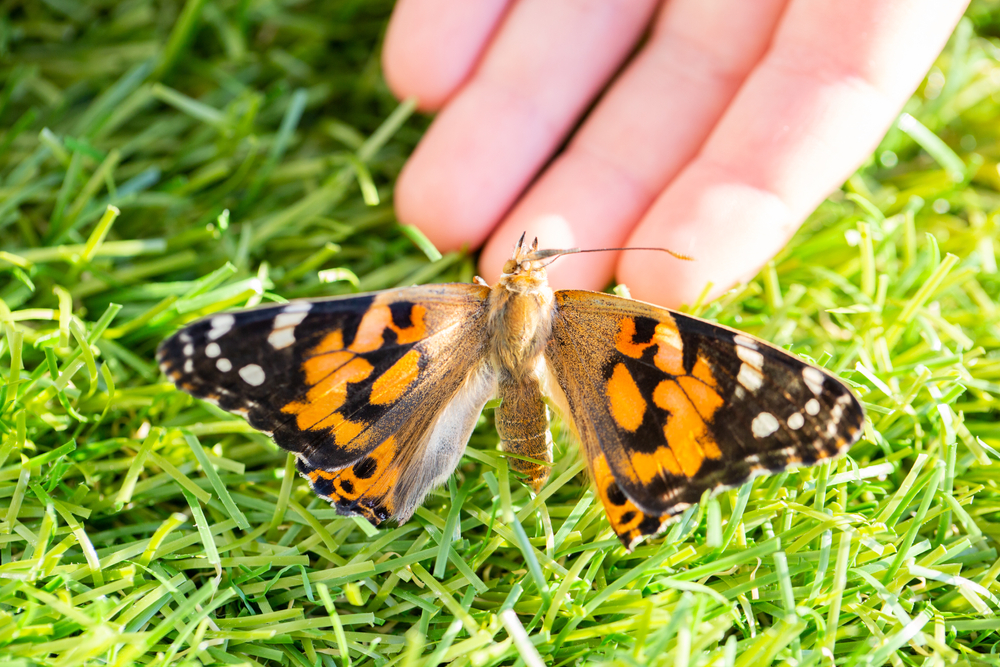
Understanding pollination in plants and animals is essential for children aged 7-9, as it lays the foundation for their broader ecological literacy. During these formative years, kids are naturally curious and absorb information readily, making it the perfect time to introduce complex concepts in an engaging and simplified manner. Pollination is a key biological process that enables plants to produce fruits and seeds, directly impacting our food supply and ecosystems. By learning about the roles of pollinators such as bees, butterflies, and birds, children develop an appreciation for biodiversity and the interdependence of living organisms.
Educationally, early exposure to pollination concepts can enhance critical thinking and scientific inquiry skills. It encourages observational learning, hypothesis testing, and understanding of life cycles. Children learn that actions have consequences; for example, the decline in pollinator populations can adversely affect food crops and biodiversity. This awareness can foster a sense of responsibility and stewardship for the environment.
Moreover, teaching pollination can integrate various subjects like science, math, and art, making learning multidisciplinary and more dynamic. Engaging activities such as planting flowers or observing bees can make the learning process fun and relatable. Parents and teachers who invest in explaining these concepts help cultivate knowledgeable, environmentally-conscious individuals who are better equipped to face future ecological challenges.








