Critical Thinking Writing Worksheets for Ages 7-9
4 filtered results
-
From - To
Enhance your child's writing skills with our Critical Thinking Writing Worksheets designed for ages 7-9! These engaging worksheets encourage young learners to analyze, evaluate, and create unique responses to various prompts. By promoting critical thinking, kids will not only improve their writing abilities but also develop important problem-solving skills essential for their education. Each worksheet is crafted to challenge their imagination while fostering a love for writing. Ideal for teachers and parents, these printable resources provide an interactive way for children to express their thoughts clearly and confidently. Explore our collection now and watch your child's creativity soar!
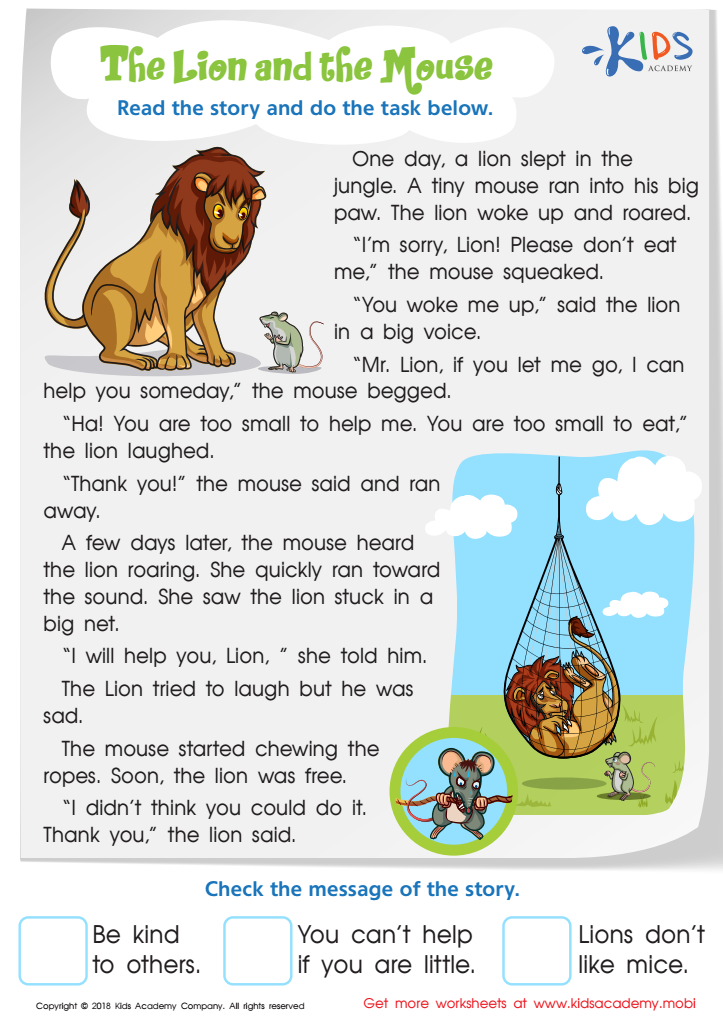
The Lion and the Mouse Worksheet
 Assign to My Students

Capitalization: Fix the Story Worksheet
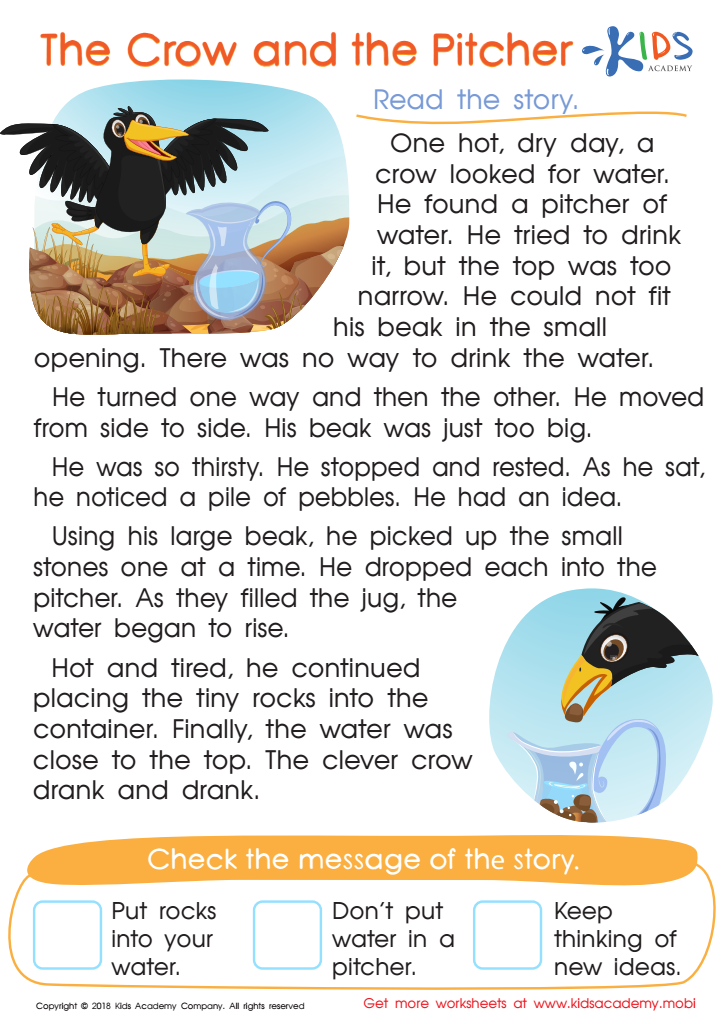
The Crow and the Pitcher Worksheet
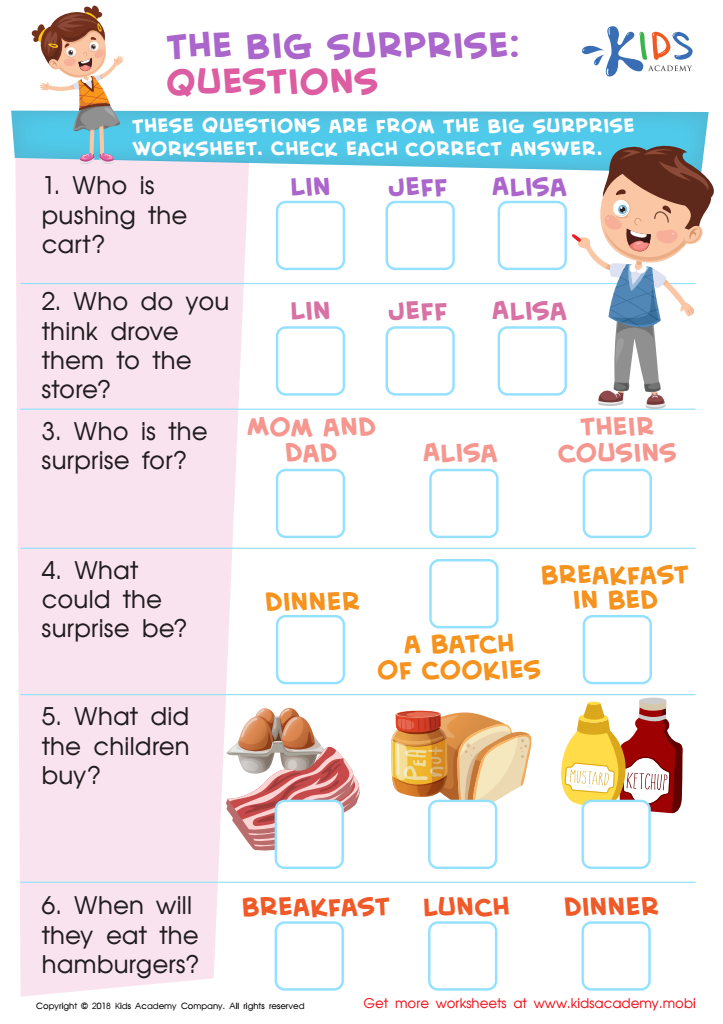
The Big Surprise: Questions Worksheet







Critical thinking writing for ages 7-9 is essential because it lays the foundational skills necessary for effective communication and problem-solving. At this developmental stage, children are increasingly able to express their opinions and ideas clearly. Teaching them to think critically fosters creativity, enhances comprehension, and promotes independent thinking.
When children engage in critical thinking writing, they learn to analyze information, recognize biases, and differentiate between fact and opinion. This skill is crucial in today’s information-saturated environment, where media literacy is vital. Moreover, critical writing encourages self-reflection, helping children evaluate their beliefs and adapt their viewpoints based on new evidence or perspectives.
Parents and teachers should also consider that critical thinking writing nurtures emotional intelligence. By articulating their thoughts and feelings, children learn empathy, which is crucial for collaboration and social interaction. Ultimately, fostering these skills early helps students excel academically and personally, providing them with the tools they need to navigate complex future challenges, collaborate effectively with peers, and become informed citizens. Supporting critical thinking writing ensures that children not only excel in school but also develop into thoughtful, articulate adults capable of contributing meaningfully to society.








