Phonics recognition Writing Worksheets for Ages 7-9
5 filtered results
-
From - To
Enhance your child's literacy skills with our engaging Phonics Recognition Writing Worksheets for Ages 7-9. These interactive worksheets are designed to reinforce phonics understanding, helping young learners connect sounds with letters and improve their writing abilities. With a variety of activities, from matching letters to completing sentences, these worksheets are perfect for at-home practice or in-class use, catering to diverse learning styles. Empower your child to build their vocabulary and boost their confidence in reading and writing. Explore our collection today and support your child's educational journey with fun and effective phonics practice!
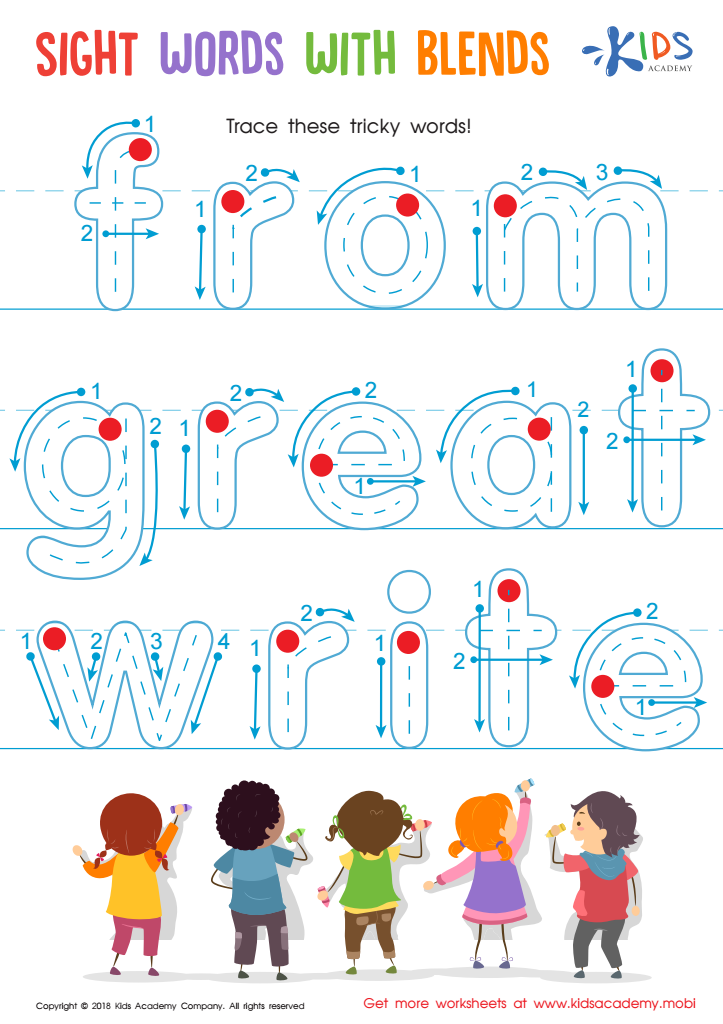
Sight Words with Blends Worksheet
 Assign to My Students
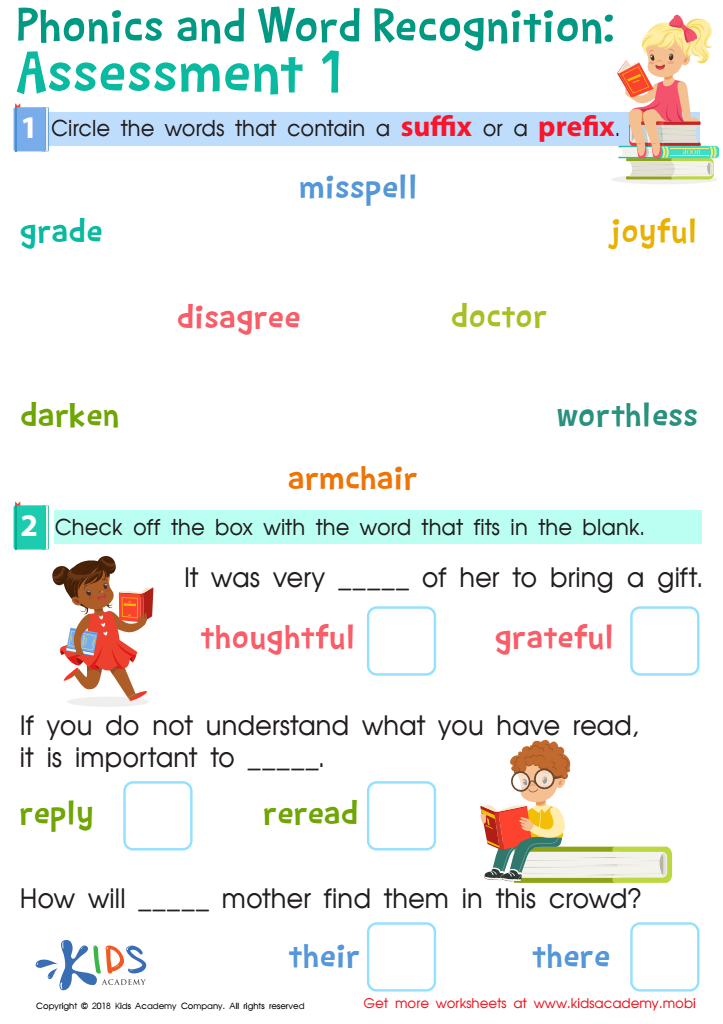
Phonics and Word Recognition: Assessment 1 Worksheet
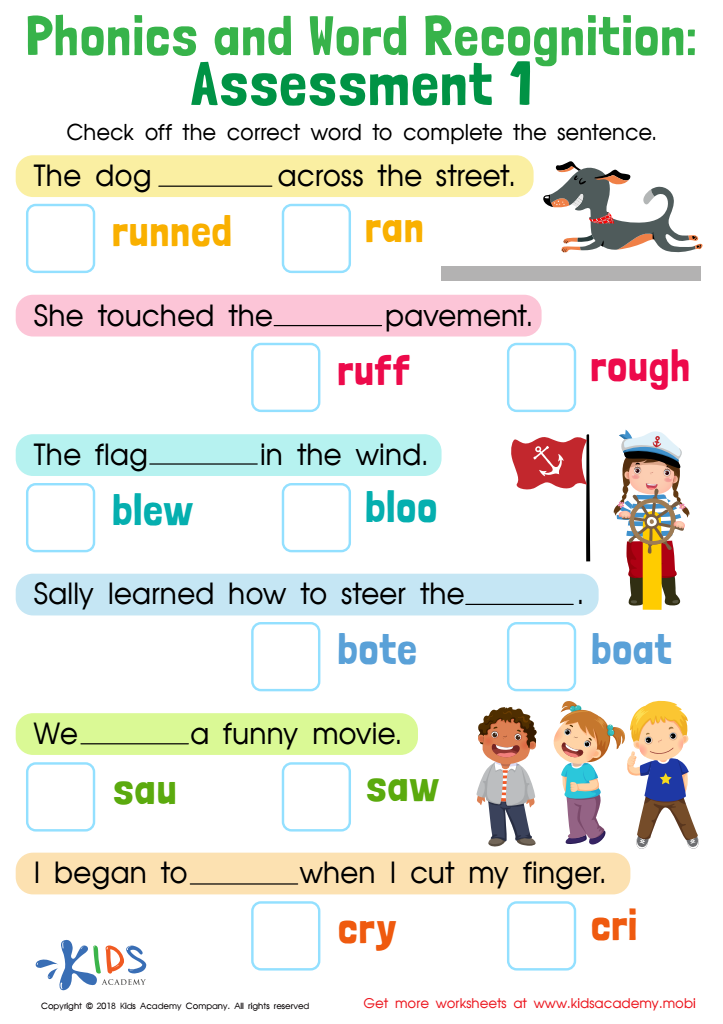
Phonics and Word Recognition: Assessment 1 Worksheet
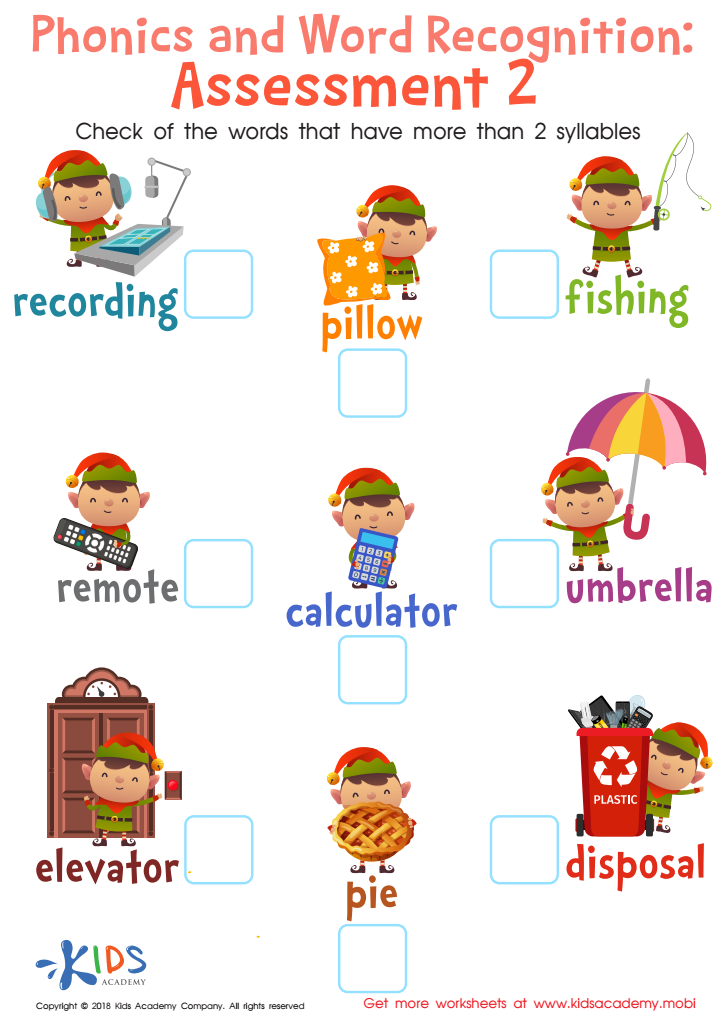
Phonics and Word Recognition: Assessment 2 Worksheet
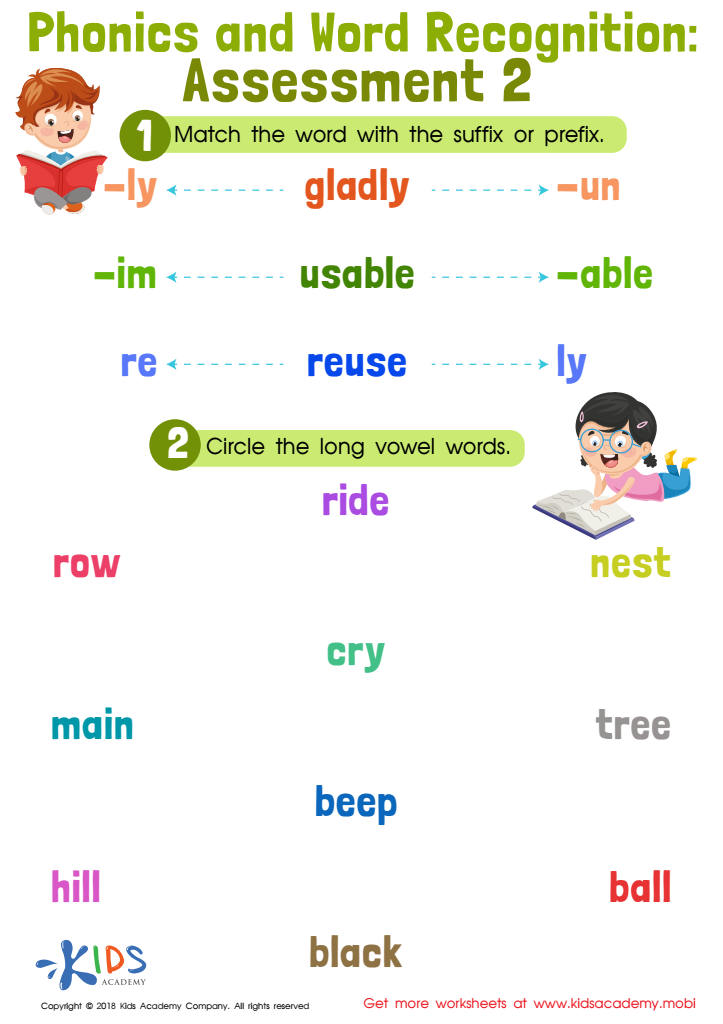
Phonics and Word Recognition: Assessment 2






.jpg)
Phonics recognition is crucial for children aged 7-9 as it lays the foundation for successful reading and writing skills. During this developmental stage, children are transitioning from learning to read to reading to learn, making robust phonics awareness essential. By mastering phonics, they can decode words, improve their spelling, and enhance vocabulary acquisition. This leads to better comprehension, allowing for greater engagement with texts and overall academic performance.
Additionally, strong phonics skills contribute to children’s confidence as readers and writers. As they become proficient in recognizing sounds and letter combinations, they are more likely to attempt reading and writing independently, fostering a love for literacy that can last a lifetime.
For teachers and parents, supporting phonics recognition means playing an active role in a child’s educational journey. Encouraging phonics through games, stories, and writing exercises creates a rich language environment. This collaboration is vital because early interventions and positive reinforcement can prevent reading difficulties later on. Staying attentive to phonics recognition not only ensures academic success but also nurtures the essential skills of critical thinking and creativity, equipping children with the tools they need for lifelong learning.








