
Understanding syllables Writing Worksheets for Ages 7-9
3 filtered results
Difficulty Level
Grade
Age
-
From - To
Subject
Activity
Standards
Unlock the magic of words with our "Understanding Syllables Writing Worksheets for Ages 7-9." Tailored for young learners, these engaging worksheets make it fun and easy to grasp syllable breakdowns, promoting better reading and writing skills. Each exercise encourages kids to identify, count, and segment syllables through interactive activities, colorful illustrations, and age-appropriate puzzles. Perfect for classroom and home use, our resources aim to boost your child's phonological awareness, making them confident readers and expressive writers. Set your child on the path to literacy success with KidsAcademy's expertly crafted syllable worksheets!
Favorites
With answer key
Interactive
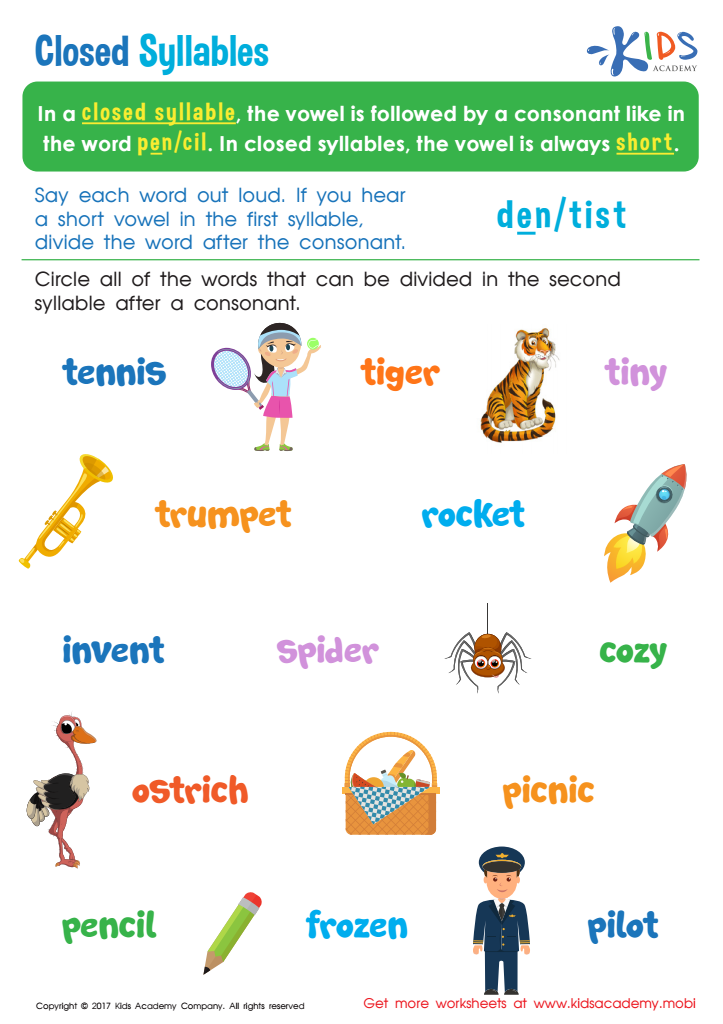
Closed Syllable Spelling Worksheet
Learning syllables can be tough, but we can make it easier! Look for long and short vowel sounds to identify closed syllables. This worksheet can help 3rd graders do just that, with its fun and colorful design.
 Assign to My Students
Closed Syllable Spelling Worksheet
Worksheet
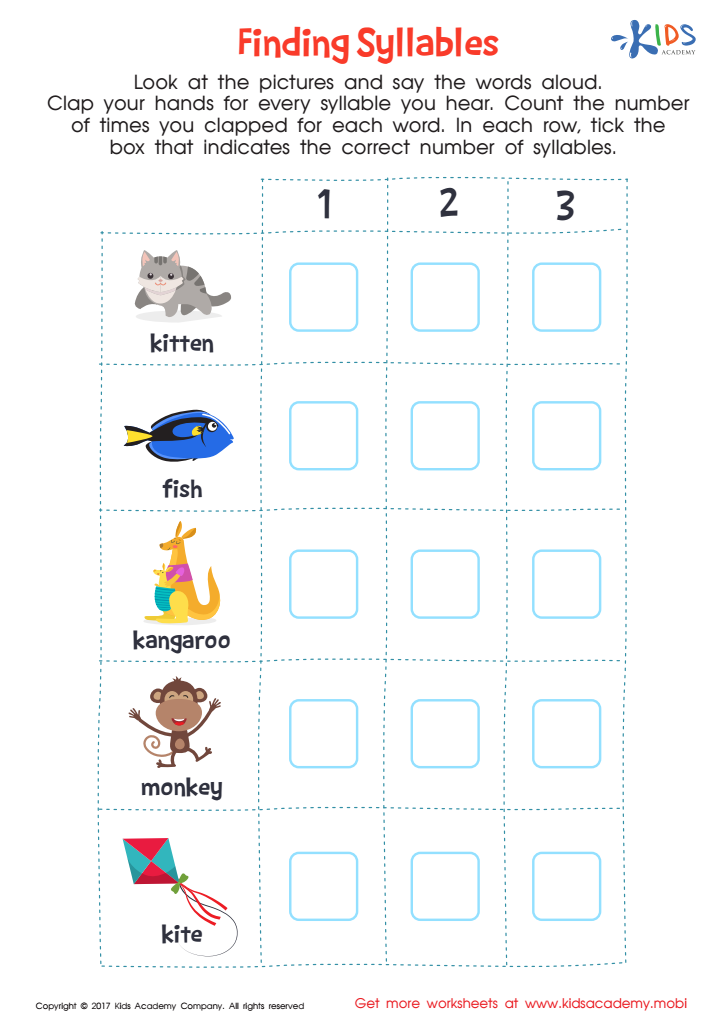
Finding Syllables Word Structure Worksheet
Have your kid clap and count syllables in words to improve their reading and spelling! Use this word structure worksheet for a fun activity - syllables!
Finding Syllables Word Structure Worksheet
Worksheet
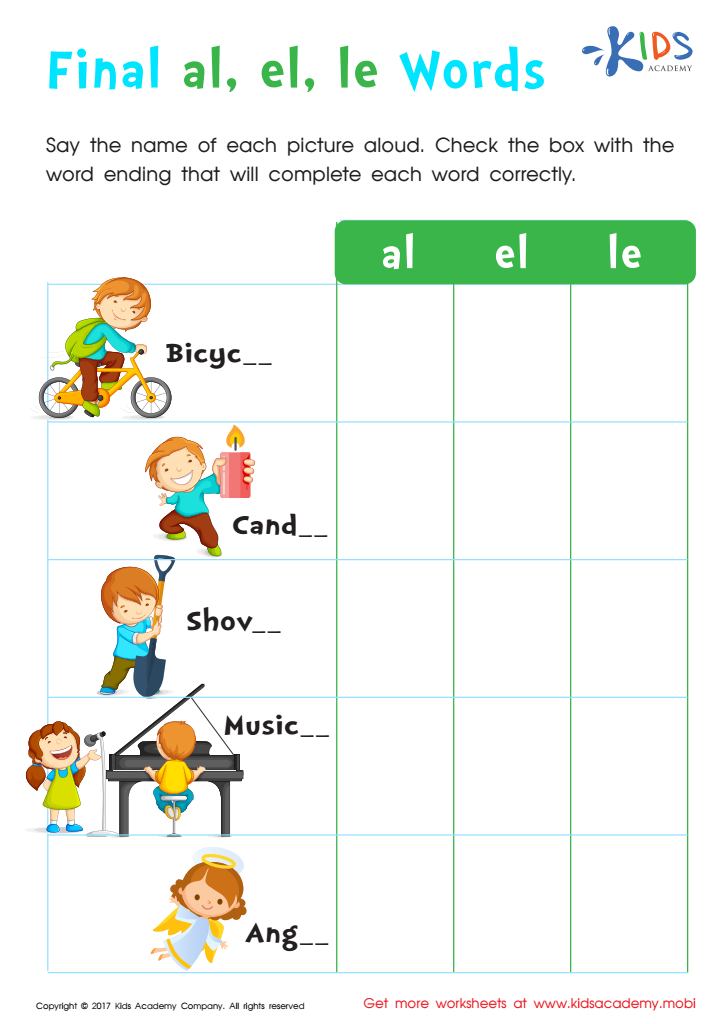
Spelling Words Ending with –le, –el and –al Worksheet
Spelling tricky words with the same ending sounds can be fun with this worksheet! Kids learn to spell -le, -el, and -al words while enjoying colorful pictures. It's a great way to refine their usage of tricky word endings.
Spelling Words Ending with –le, –el and –al Worksheet
Worksheet
Join Kids Academy for Free
Who is primarily going to use this learning content?




.jpg)

Understanding syllables is crucial for children aged 7-9 as it serves as a foundation for their reading, writing, and spelling skills. At this developmental stage, kids are transitioning from learning to read to reading to learn. Syllables, the building blocks of words, help demystify complex words. Being aware of syllable structure simplifies word recognition. It can aid in deciphering unfamiliar words, thereby boosting reading fluency and comprehension.
Moreover, syllable knowledge supports spelling abilities. As children learn to break down words into manageable parts, they are better able to predict spelling patterns and irregularities. This segmentation allows for improved writing skills, as kids can more easily spell out their thoughts and express ideas effectively.
Additionally, syllable awareness enhances phonemic abilities. Phonemic skills are vital for recognizing sound patterns, essential in both reading and listening comprehension. As children grasp these skills, they are more apt to develop a lifelong interest in literacy.
Parental and teacher involvement is vital to support and guide children's practice of syllabification through engaging activities. Educators and parents enabling practice in recognizing and using syllables can tremendously influence a child's confidence and success in all areas of literacy. This foundational knowledge promises broader educational and communicative success in later years.








