Basic geometry comprehension Worksheets for 7-Year-Olds
3 filtered results
-
From - To
Unlock a world of shapes and spatial understanding with our Basic Geometry Comprehension Worksheets for 7-Year-Olds. Specifically designed to engage young minds, these worksheets cover essential geometry concepts, including identifying shapes, understanding their properties, and spatial relationships. Each activity is carefully curated to match the developmental stage of your child, promoting both learning and fun. Whether at home or in the classroom, kids will develop critical thinking and problem-solving skills. Enhance your child’s educational journey today with our fun, interactive, and age-appropriate geometry worksheets. Dive into the exciting world of shapes now!
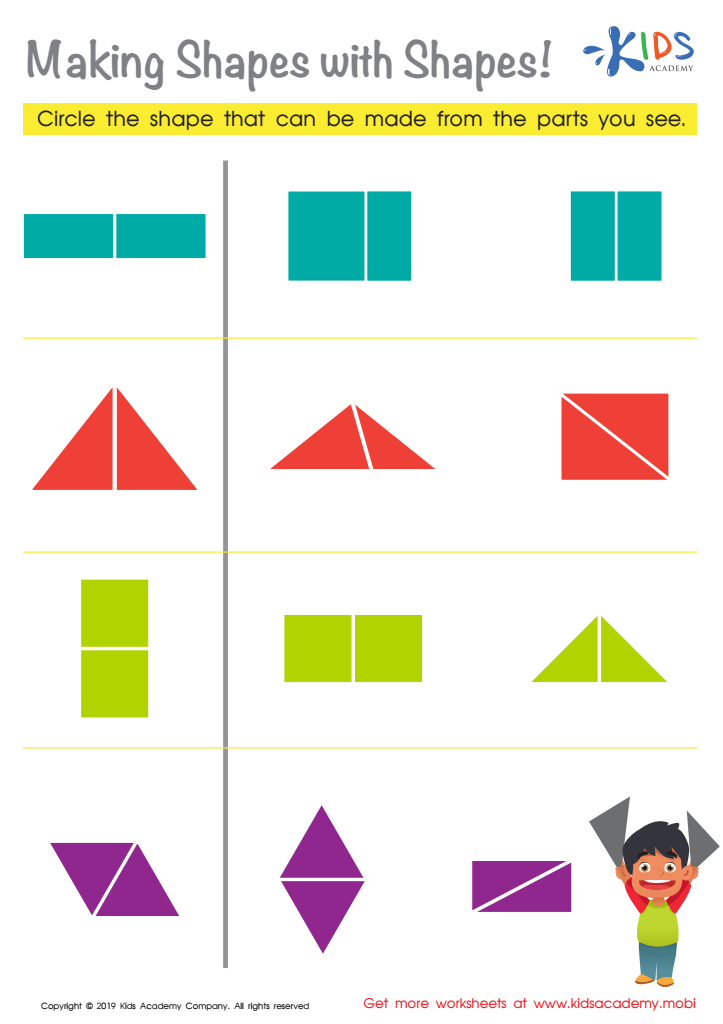
Making Shapes with Shapes Worksheet
 Assign to My Students
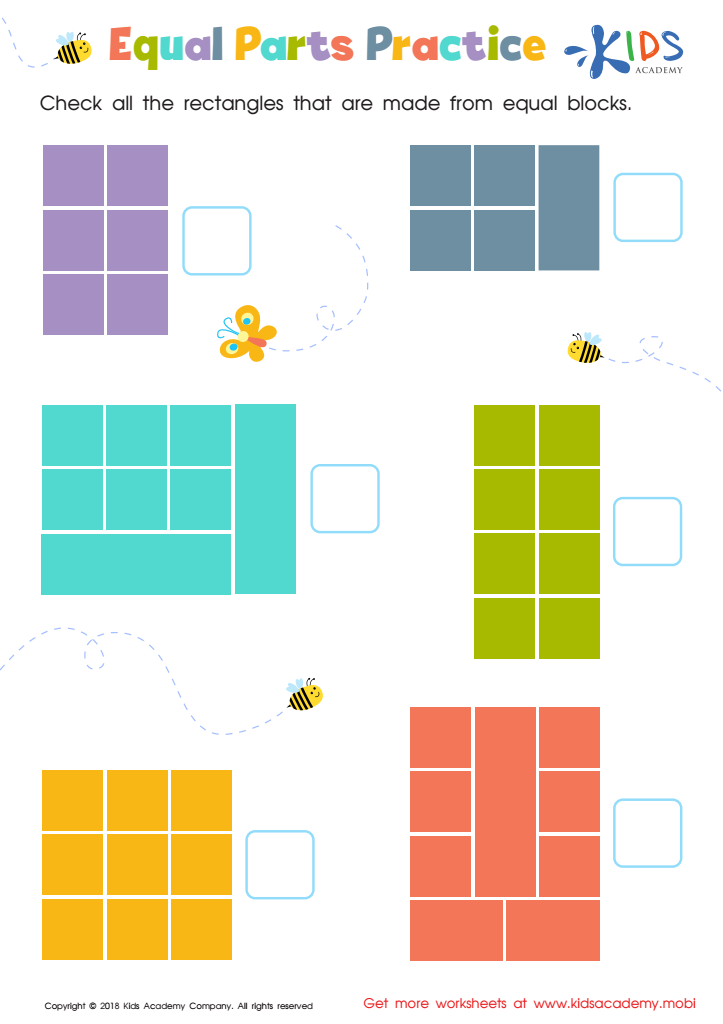
Equal Parts Practice Worksheet








Basic geometry comprehension for 7-year-olds is crucial for several reasons. First, it lays the foundational blocks for further mathematical learning and problem-solving skills. Understanding shapes, sizes, and spatial relationships helps children comprehend more complex mathematical concepts later on. It enhances their logical thinking and analytical abilities, which are essential for subjects beyond mathematics, such as science and engineering.
Second, geometry is integral to everyday life. Recognizing shapes and their properties aids in tasks such as reading maps, understanding traffic signs, and even in art and architecture. It equips children with the skills they need to interact effectively with the world around them.
Moreover, basic geometry promotes visual-spatial intelligence, a key aspect of cognitive development. This type of intelligence is linked to success in a variety of fields, including technology, creative arts, and more. When children engage with geometry, they improve their ability to visualize and manipulate objects in their minds, which enhances both their academic and real-world problem-solving skills.
Lastly, mastering geometry boosts a child’s confidence in their mathematical abilities. Accomplishing basic geometric tasks can provide a sense of achievement, motivating them to tackle more challenging subjects with a positive attitude.
Therefore, parents and teachers should prioritize basic geometry comprehension to foster well-rounded cognitive development and prepare children for future academic and life challenges.








