Shape Recognition 2D Shapes Worksheets for 7-Year-Olds
14 filtered results
-
From - To
Enhance your 7-year-old's geometry skills with our engaging Shape Recognition 2D Shapes Worksheets! Tailored for young learners, these worksheets introduce various 2D shapes—circles, squares, triangles, and more—through fun and interactive activities. Children will identify, classify, and draw shapes, reinforcing their understanding of basic geometry concepts. Designed to spark creativity and make learning enjoyable, these worksheets serve as perfect tools for teachers and parents alike. Whether in the classroom or at home, our Shape Recognition worksheets promote essential skills, critical thinking, and spatial awareness while preparing kids for more advanced mathematics. Explore and download today to make learning shapes exciting!
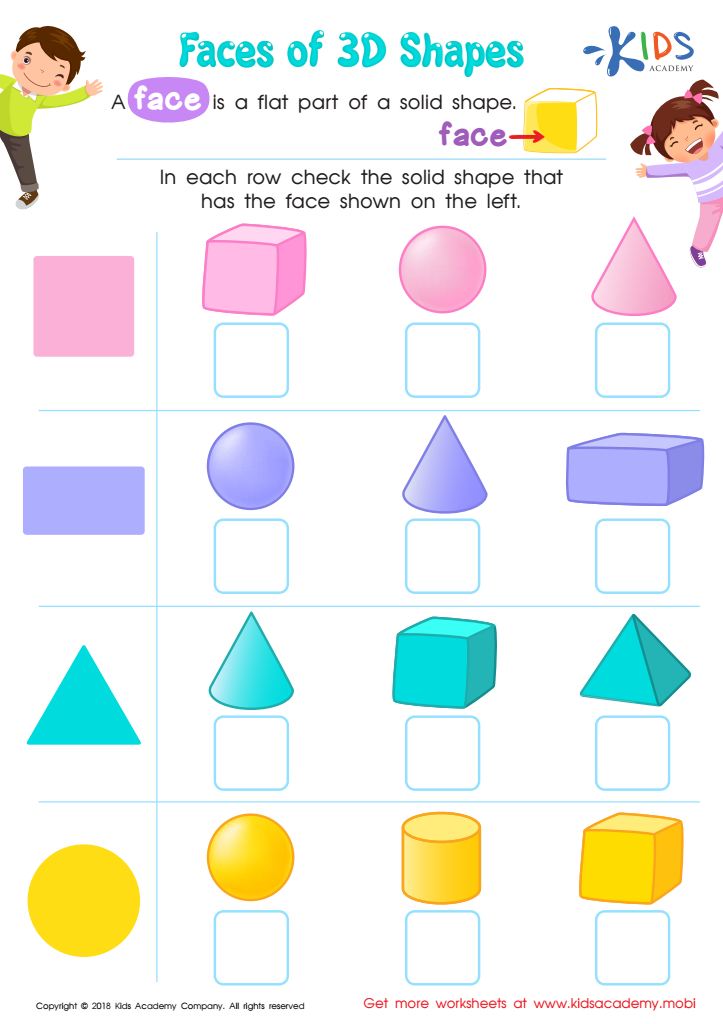
Faces of 3D Shapes Worksheet
 Assign to My Students






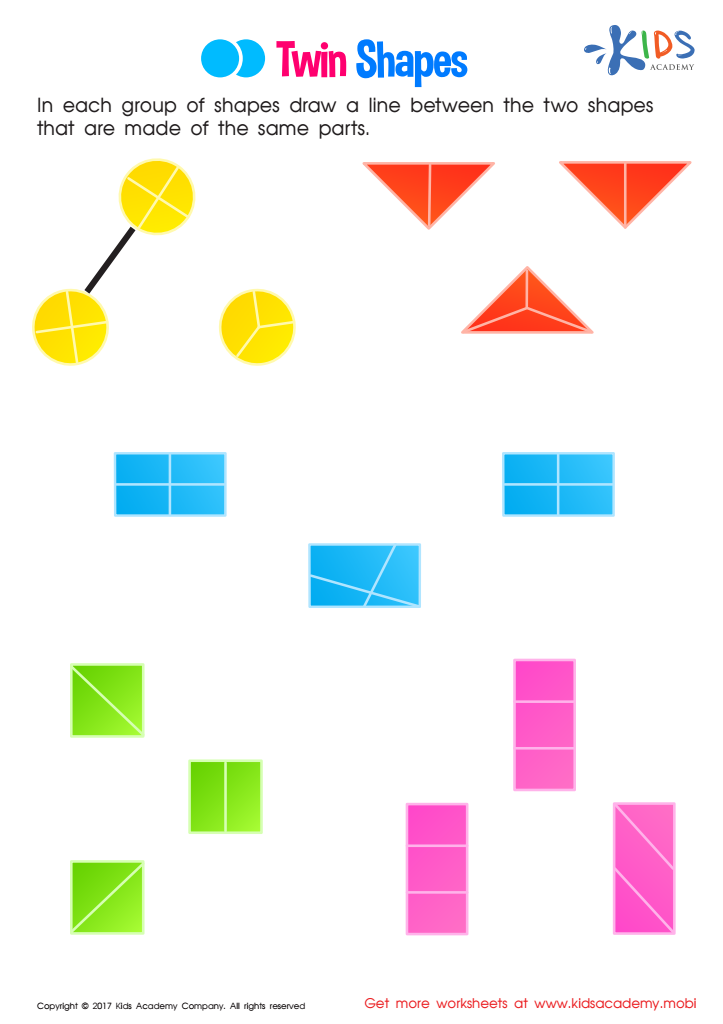
Twin Shapes Worksheet
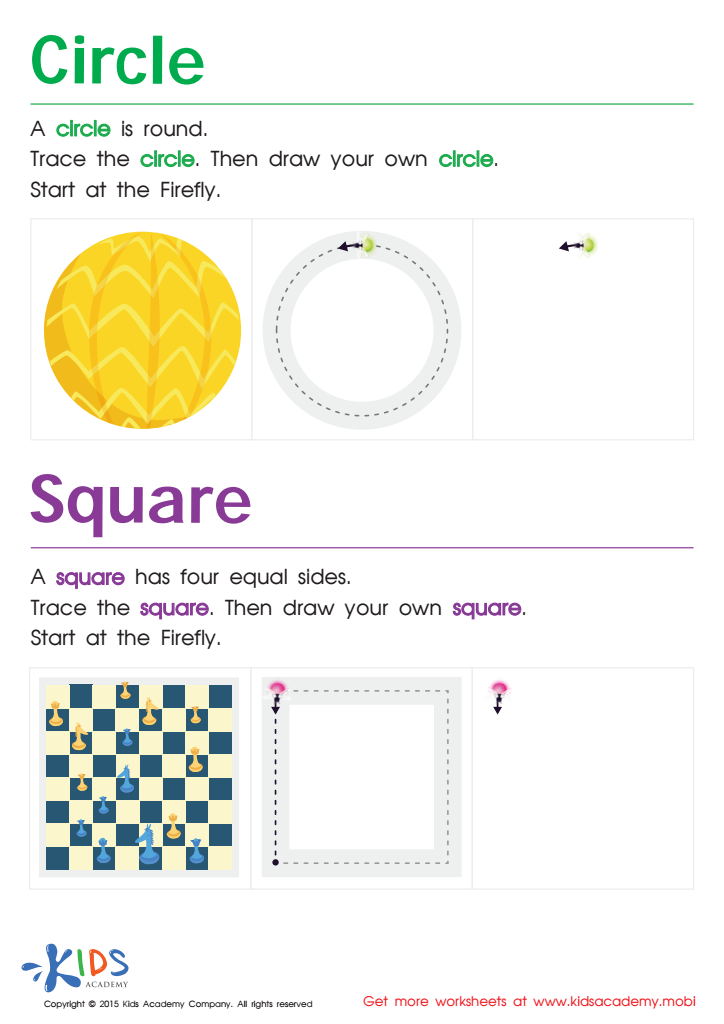
Trace And Draw a Circle And a Square Worksheet
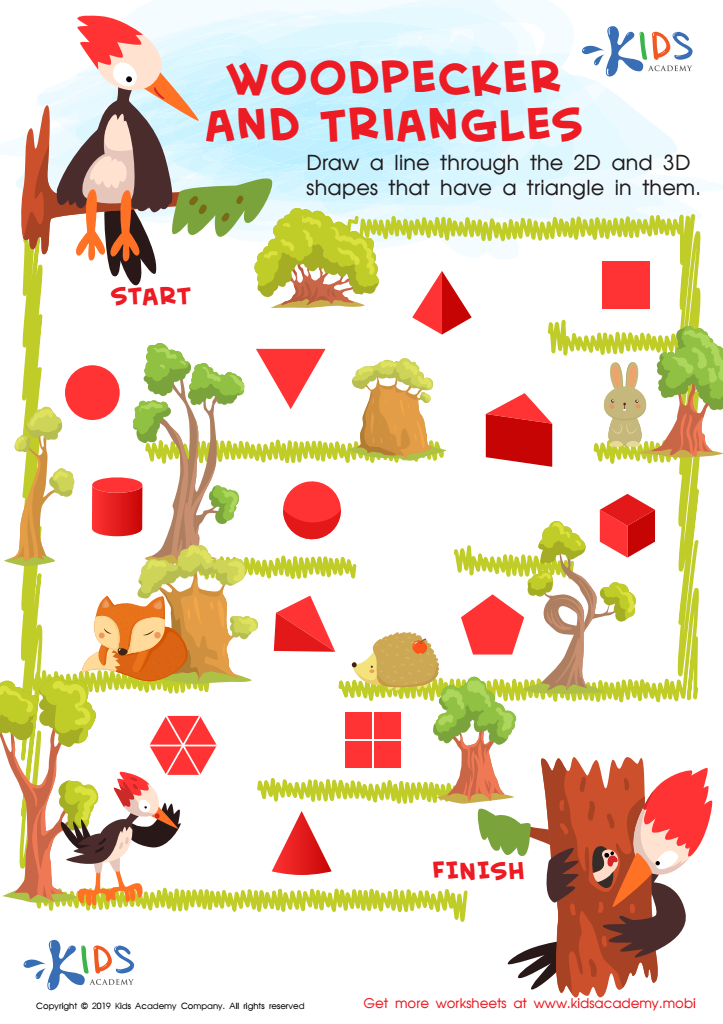
Woodpecker and Triangles Worksheet
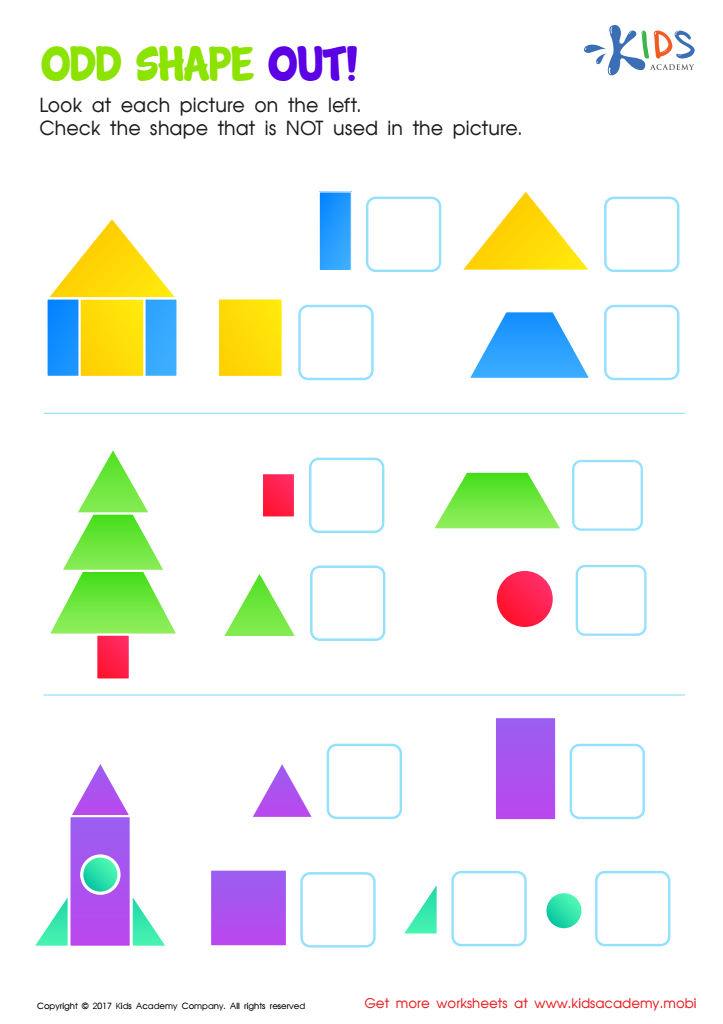
Odd Shape Out Worksheet for Grade 1
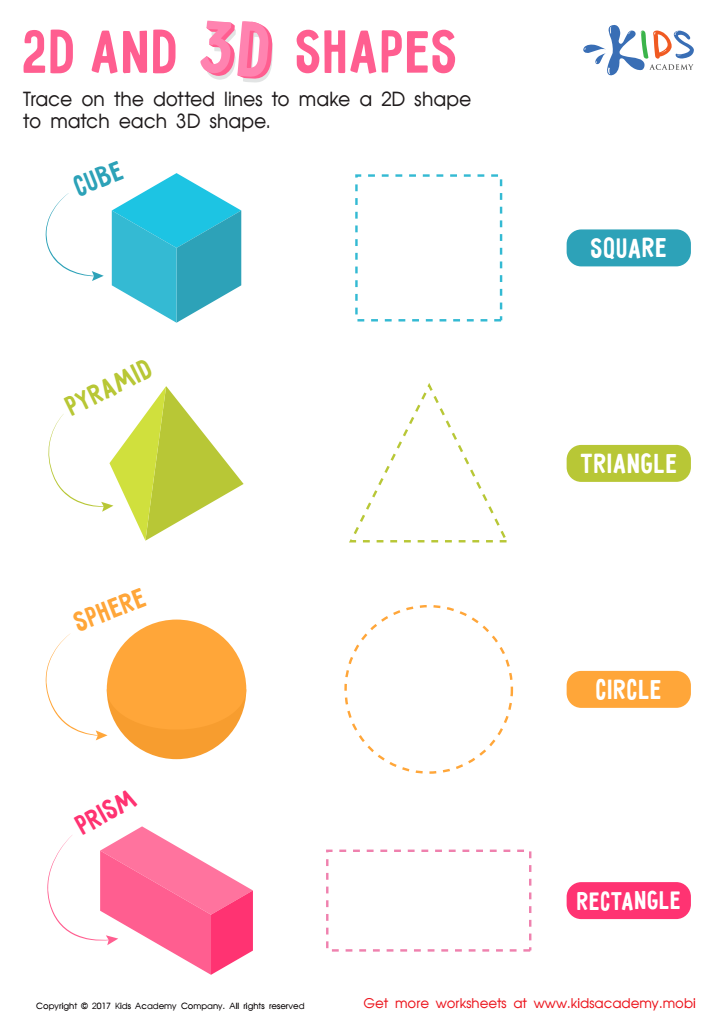
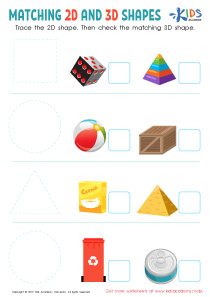
2D and 3D Shapes Worksheet
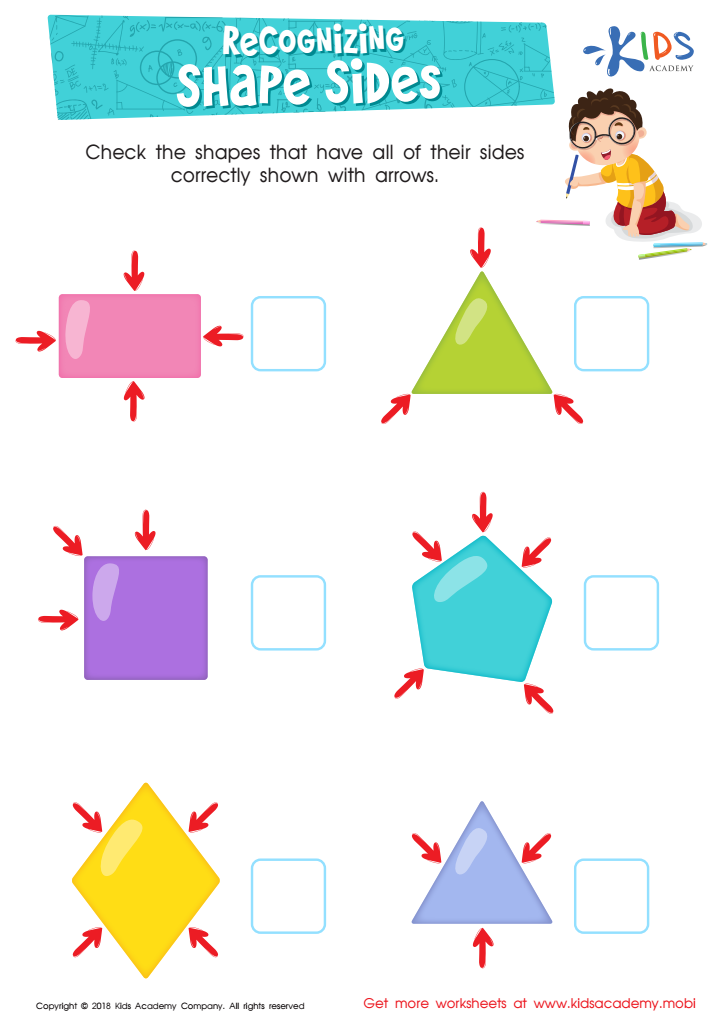
Recognizing Shape Sides Worksheet
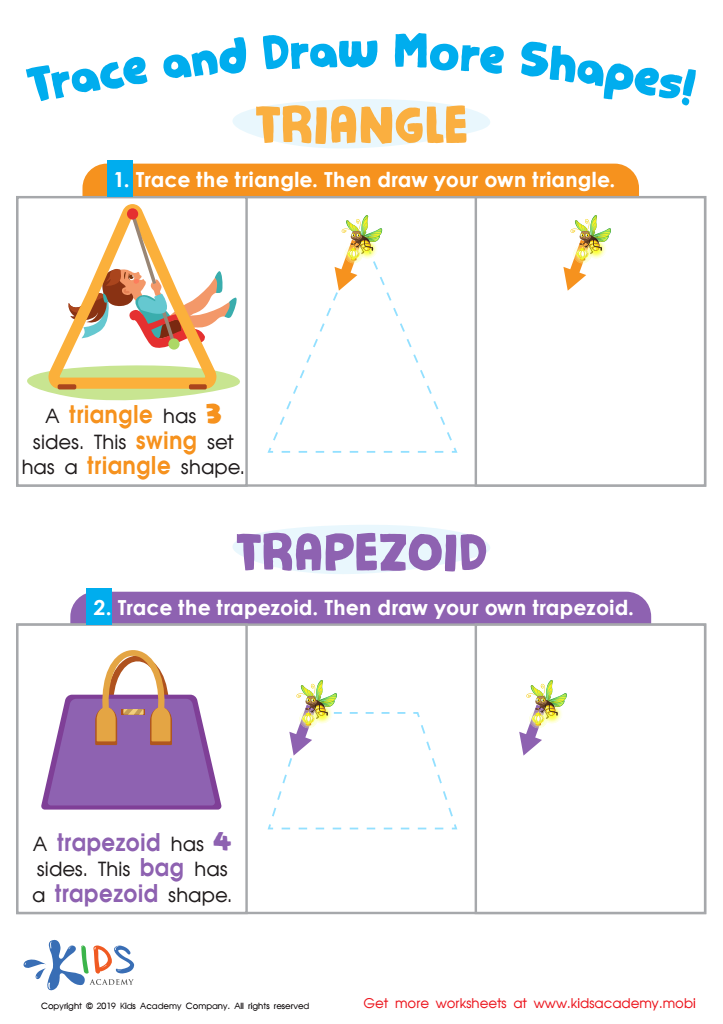
Trace and Draw More Shapes Worksheet
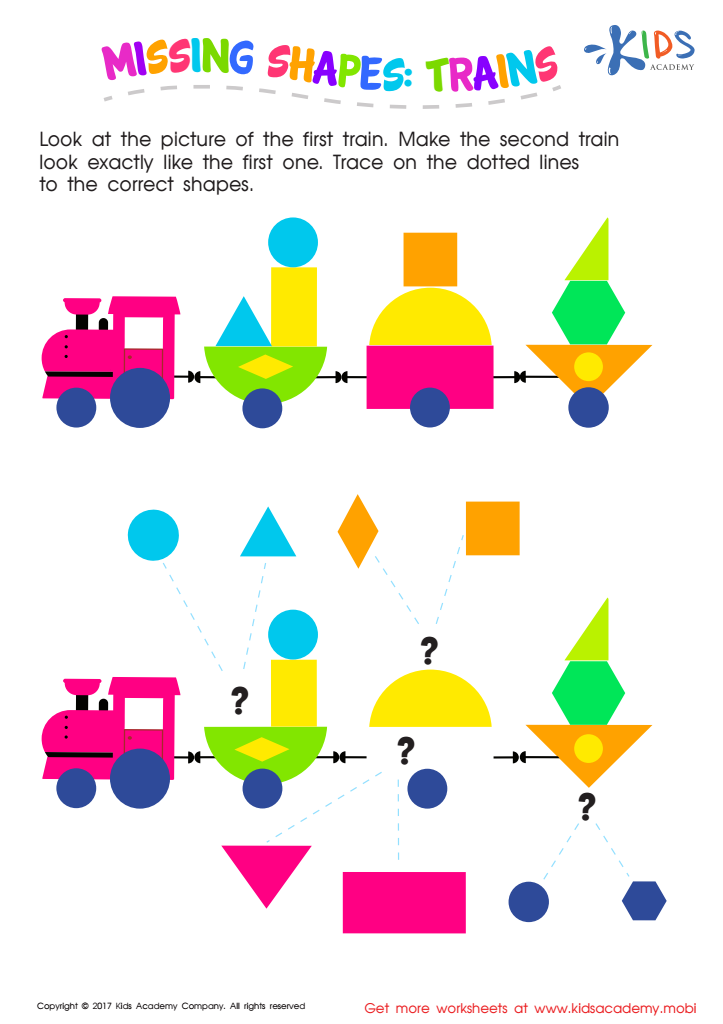
Missing Shapes: Trains Worksheet
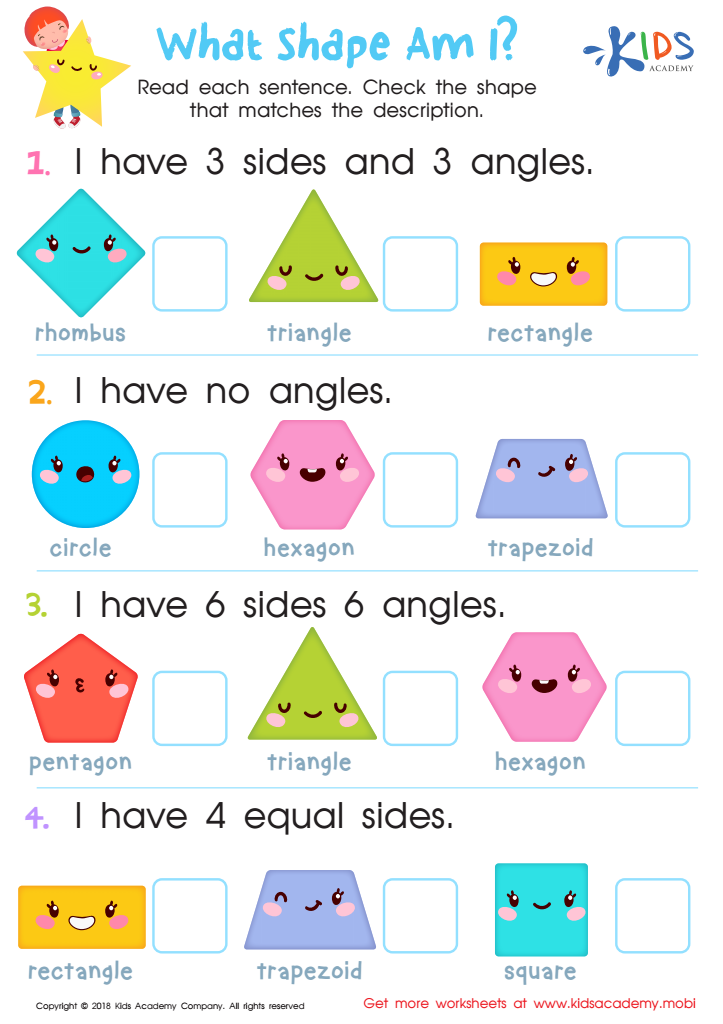
What Shape Am I? Worksheet
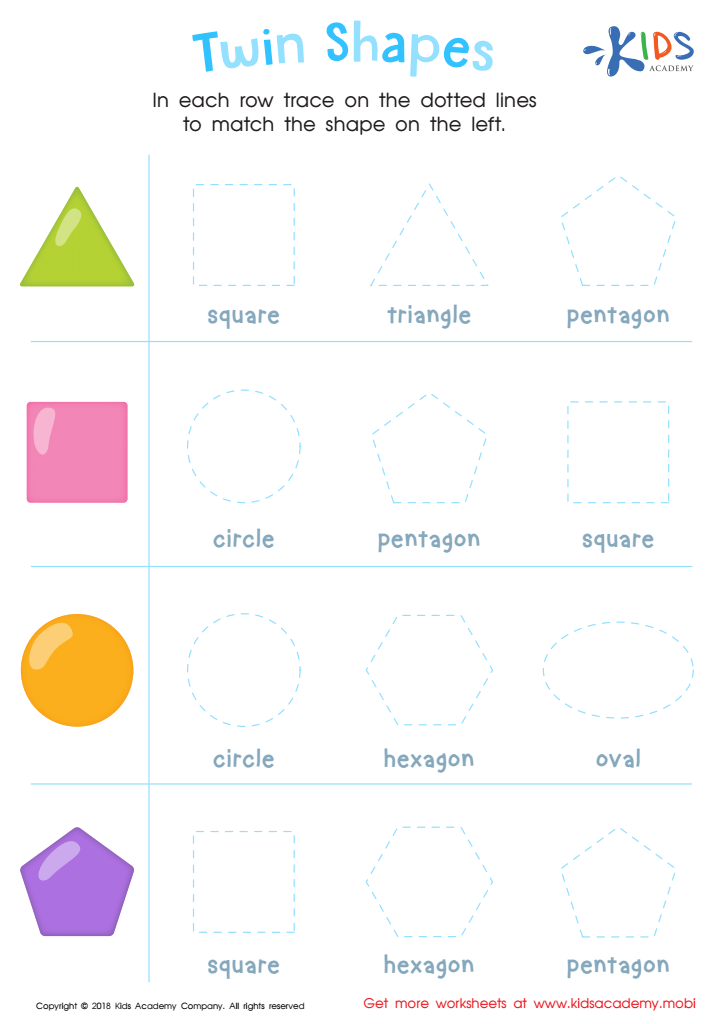
Twin Shapes Dot-to-Dot Worksheet
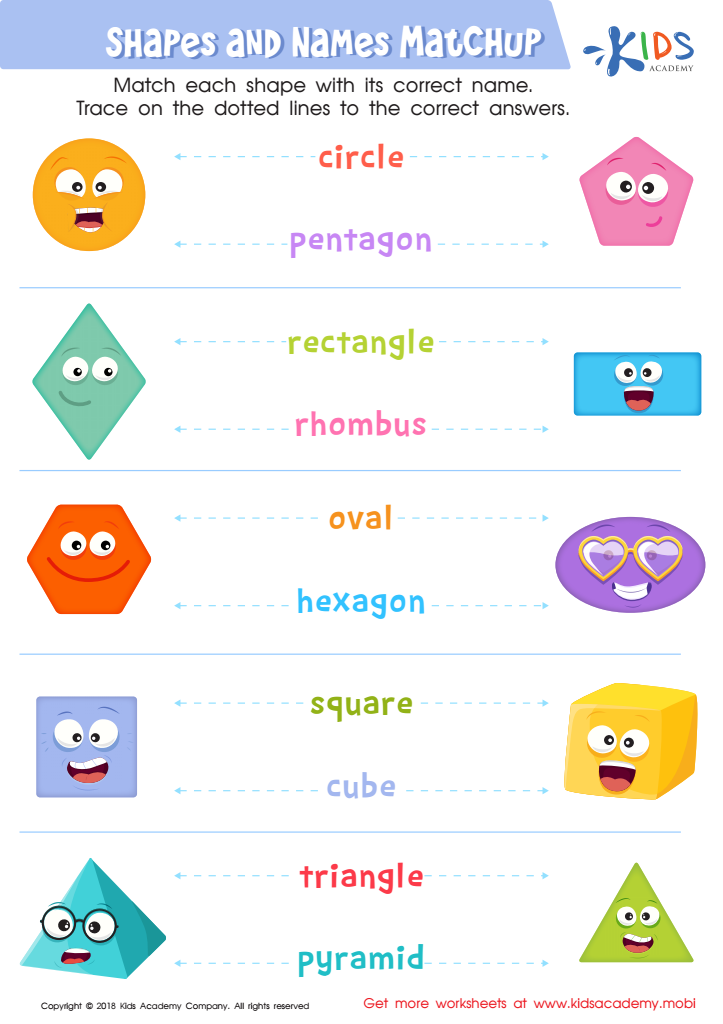
Shapes and Names Matchup Worksheet
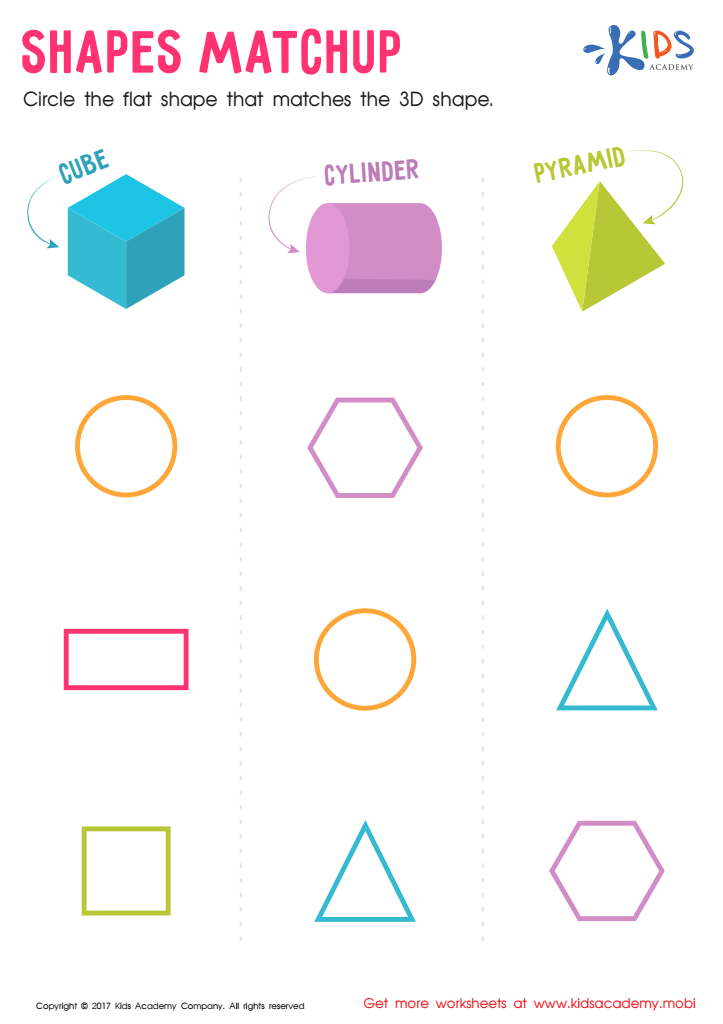
Shapes Matchup Worksheet
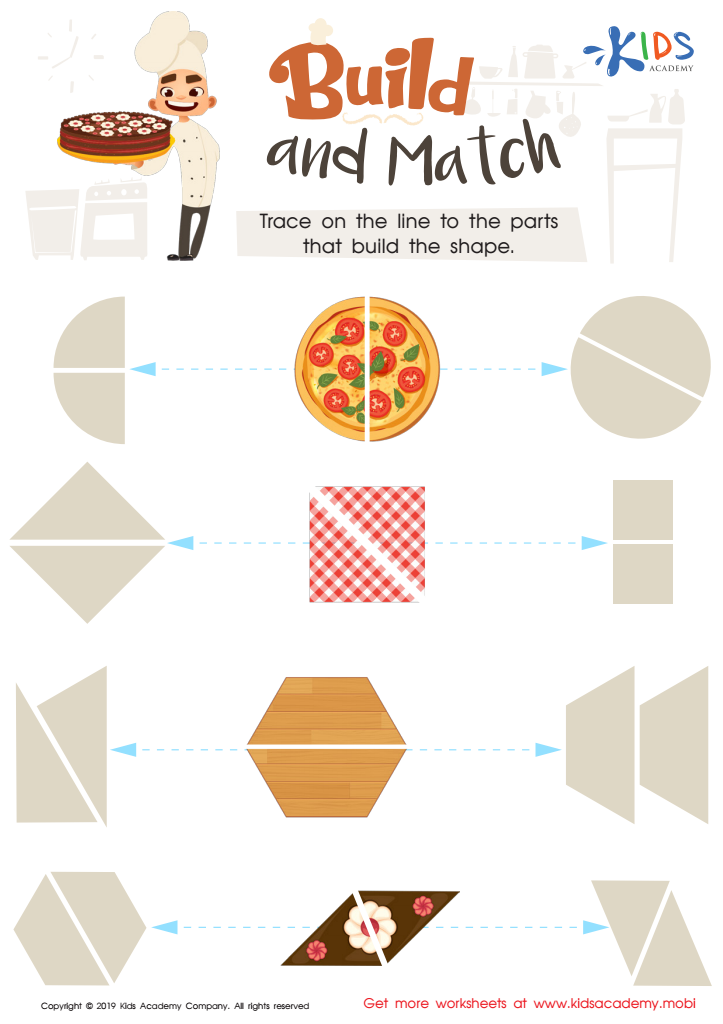
Build and Match Worksheet








Shape recognition is a fundamental skill that weaves into various aspects of a child's education and daily life. For 7-year-olds, understanding 2D shapes forms the building blocks for essential cognitive skills. Parents and teachers should prioritize this area of learning for several reasons.
Firstly, recognizing and categorizing shapes enhances critical thinking and spatial awareness. Children learn to identify similarities and differences, paving the way for problem-solving skills. Furthermore, shape recognition supports mathematical foundational concepts, including geometry, measurement, and symmetry. Proficiency in 2D shapes aids in visualizing and constructing mathematical problems they will encounter later in their education.
Secondly, shape recognition fosters creativity through art and design. Children often experiment with shapes when drawing, crafting, and building, essential for their imaginative development. Recognizing 2D shapes also plays a role in their environmental interactions, helping them better understand and interpret the world around them.
Finally, early mastery of shape recognition builds confidence and competence in academic tasks. By engaging with shapes, children develop essential skills that correlate with math performance, laying the groundwork for future success. Therefore, parents and teachers play a critical role in nurturing shape recognition at this crucial stage of a child's development.