Understanding fractions Addition & Subtraction Worksheets for 7-Year-Olds - Page 7

Check out this FREE Trial Lesson on Addition & Subtraction for age 7!

T

Favorites
With answer key
Interactive
  • 7
  • Understanding fractions
  • Addition & Subtraction
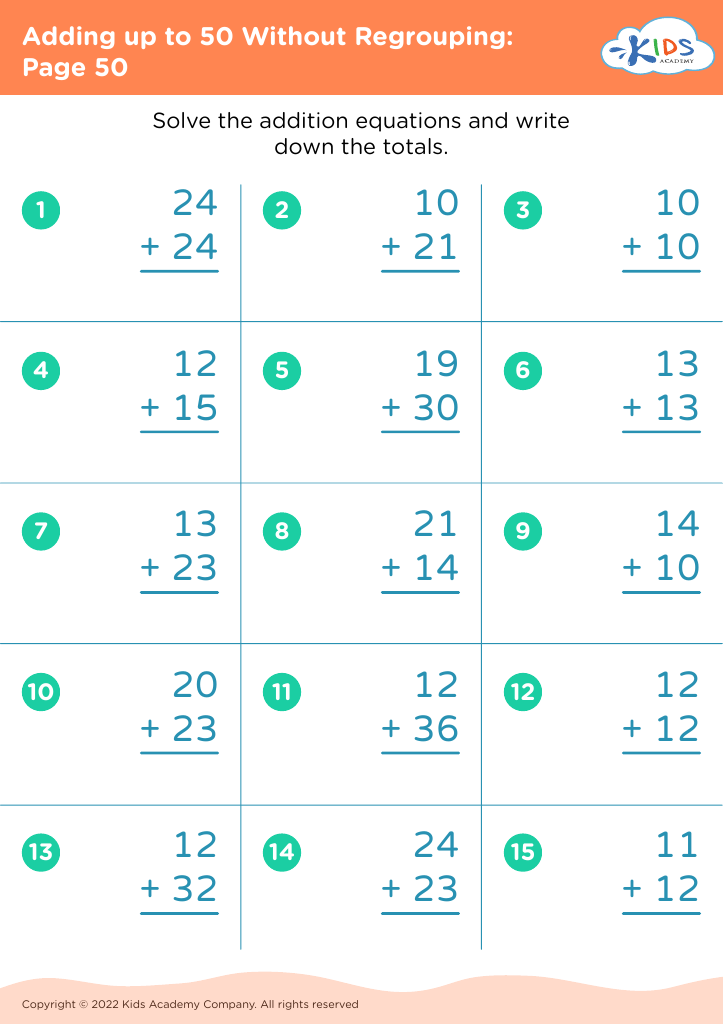
Adding up to 50 Without Regrouping: Page 50
Worksheet
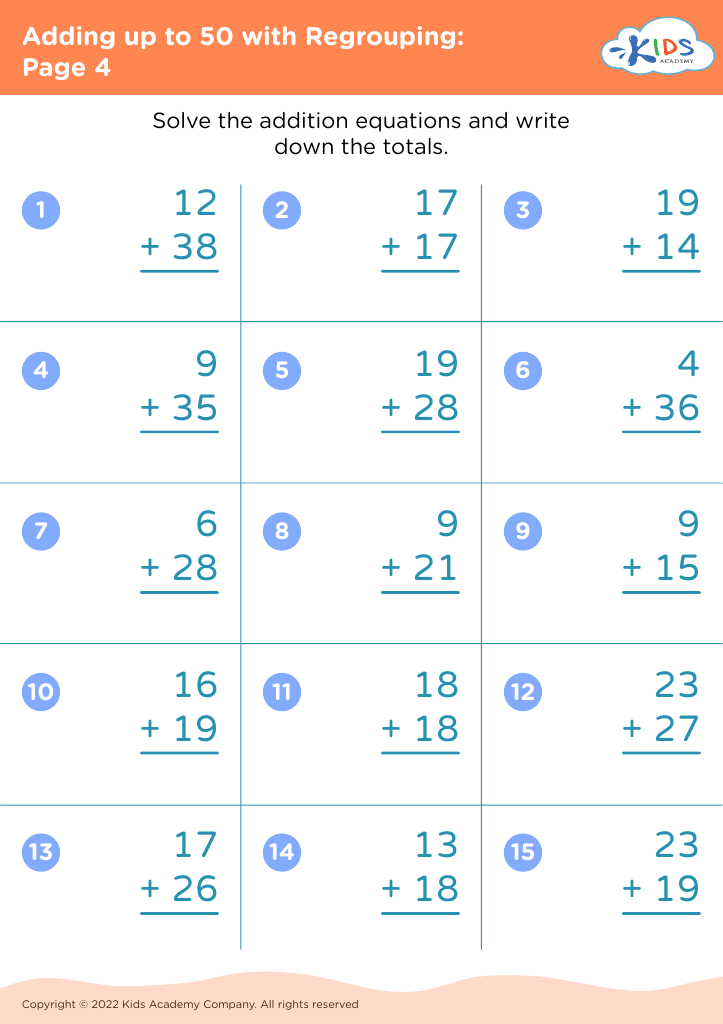
Adding up to 50 with Regrouping: Page 4
Worksheet
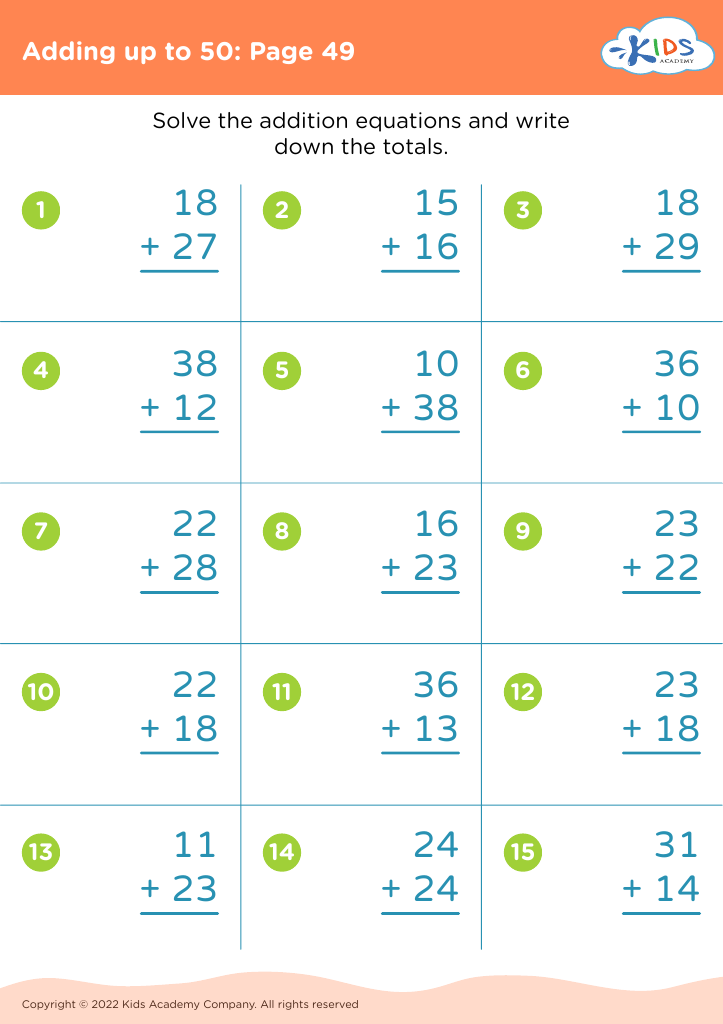
Adding up to 50: Page 49

Adding up to 50: Page 49

Adding up to 50: Page 49
Worksheet
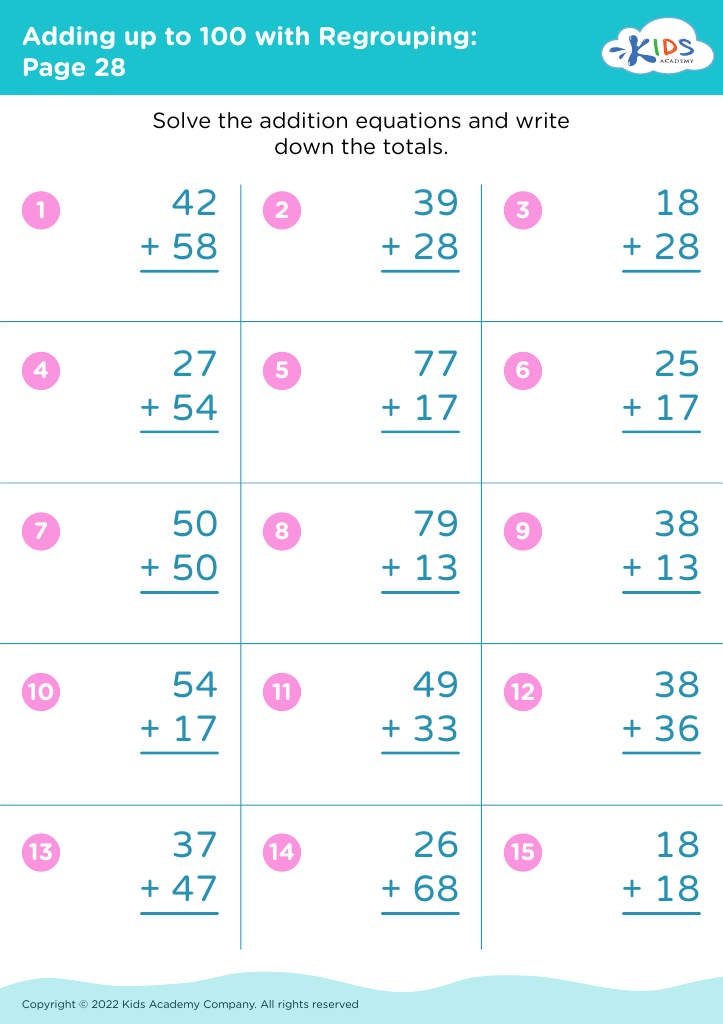
Adding up to 100 with Regrouping: Page 28
Worksheet
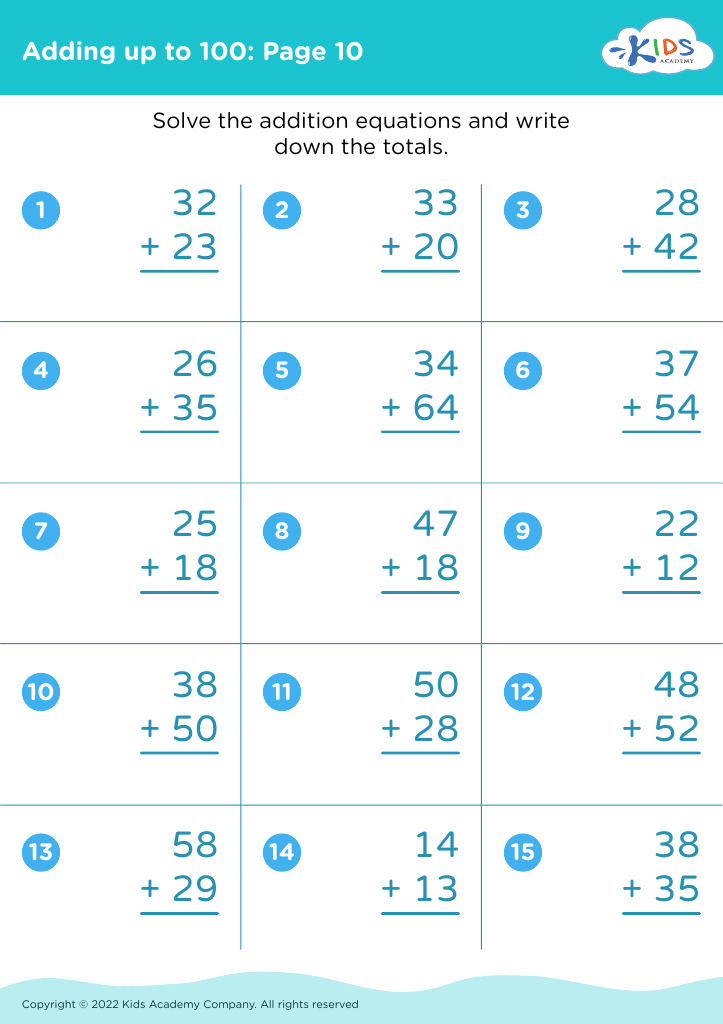
Adding up to 100: Page 10

Adding up to 100: Page 10

Adding up to 100: Page 10
Worksheet
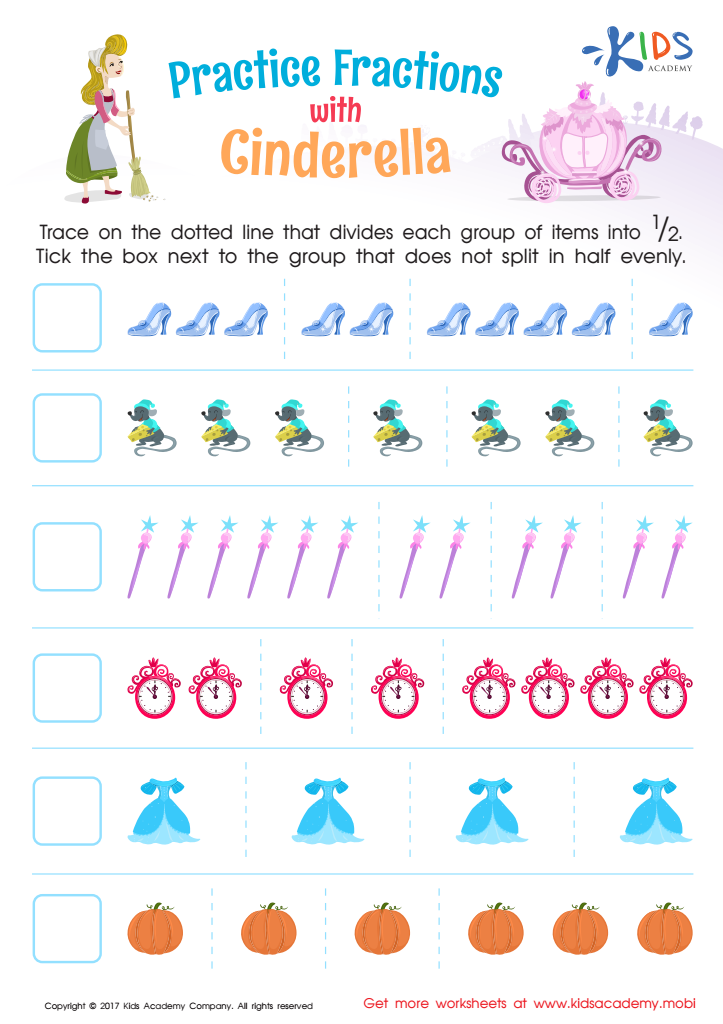
Cinderella Fraction Practice

Fractions: Cinderella Printable

Cinderella and ½ are the perfect pair to excite your child about learning fractions.
Fractions: Cinderella Printable
Worksheet
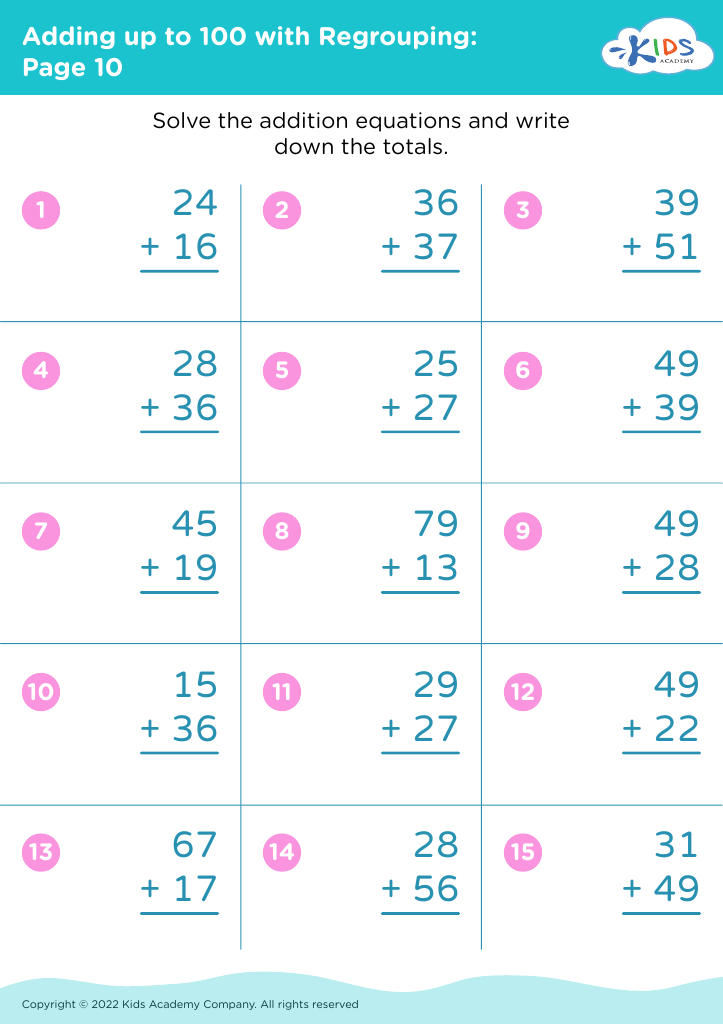
Adding up to 100 with Regrouping: Page 10
Worksheet
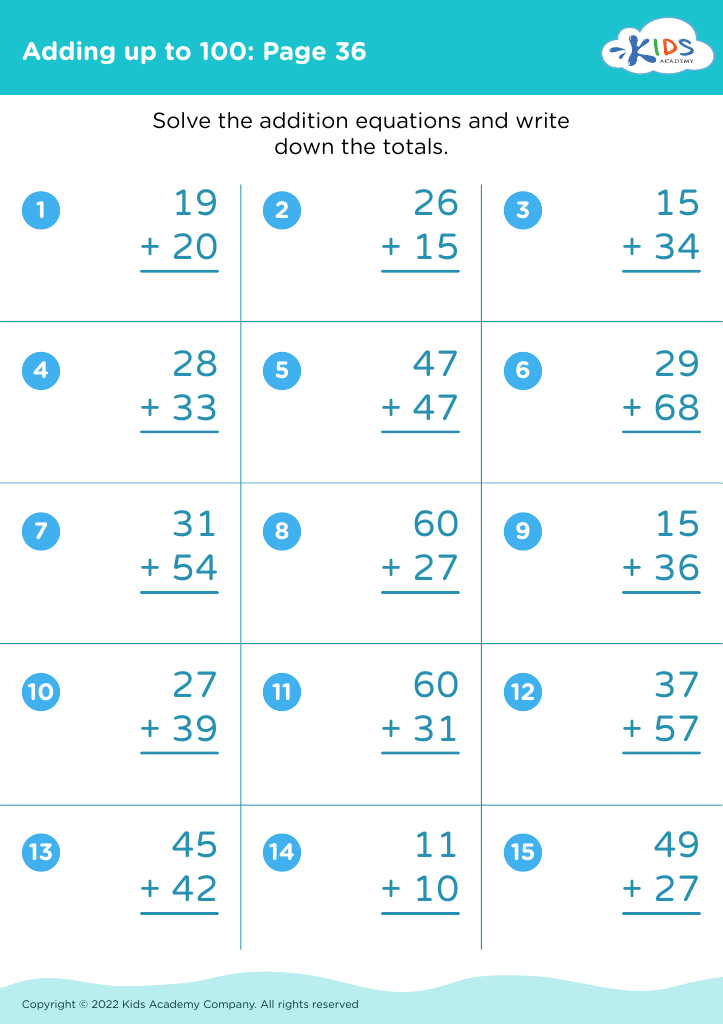
Adding up to 100: Page 36

Adding up to 100: Page 36

Adding up to 100: Page 36
Worksheet
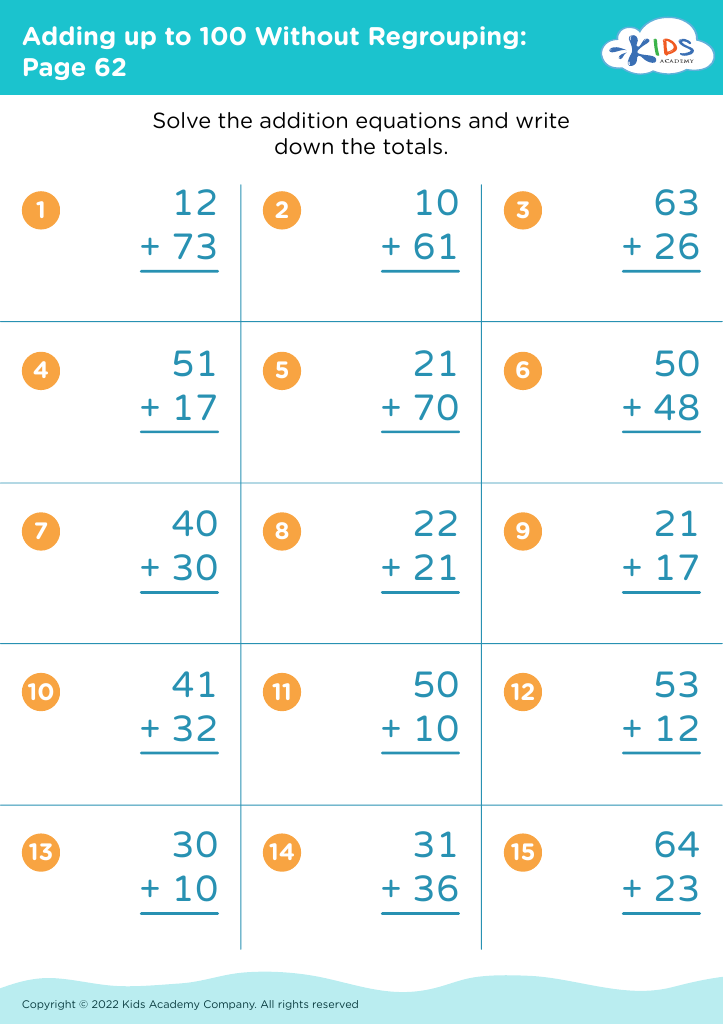
Adding up to 100 Without Regrouping: Page 62
Worksheet
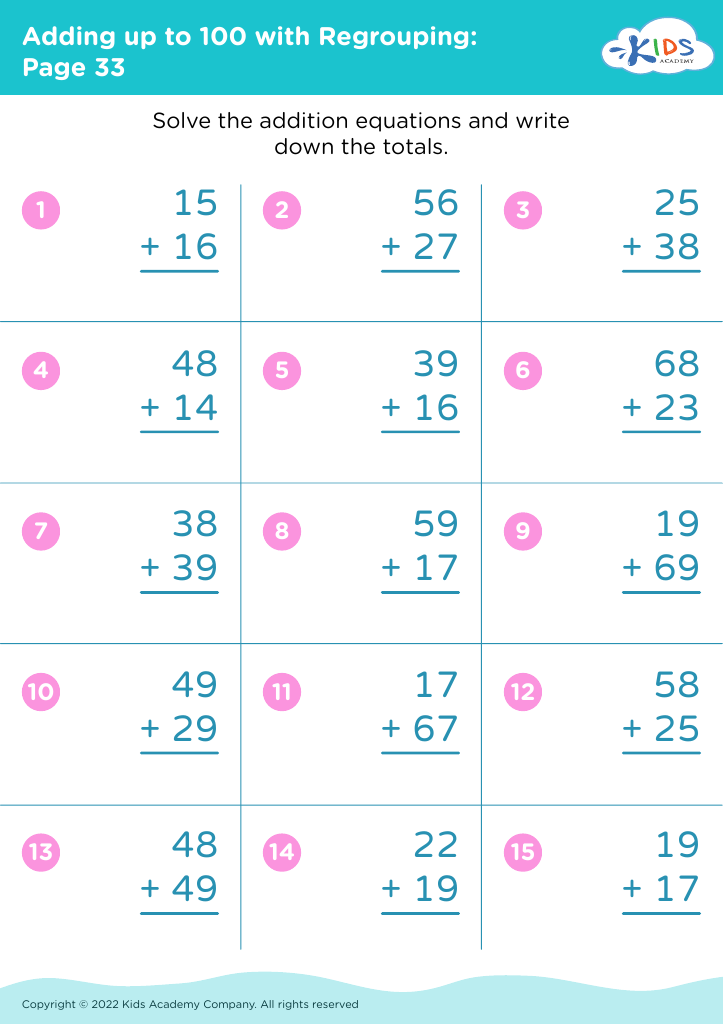
Adding up to 100 with Regrouping: Page 33
Worksheet
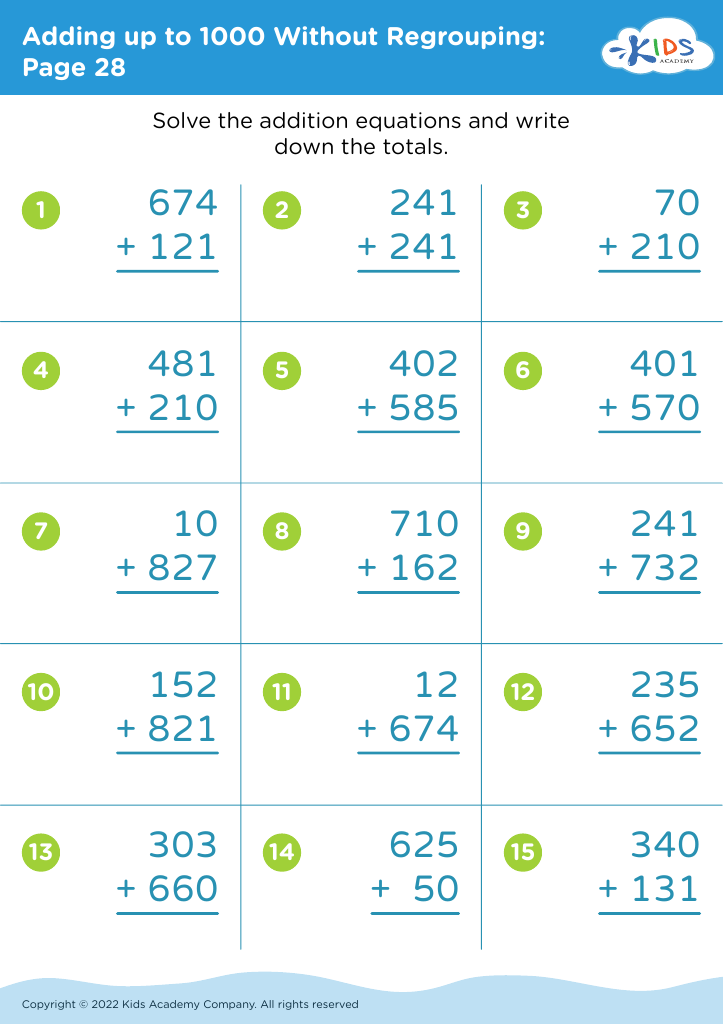
Adding up to 1000 Without Regrouping: Page 28
Worksheet
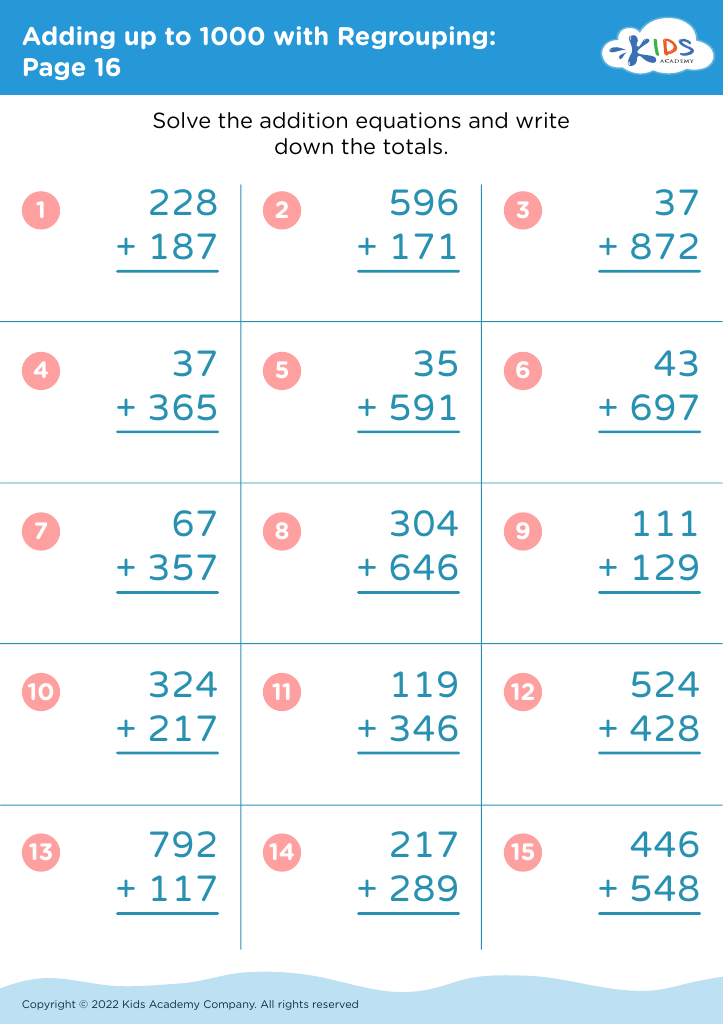
Adding up to 1000 with Regrouping: Page 16
Worksheet
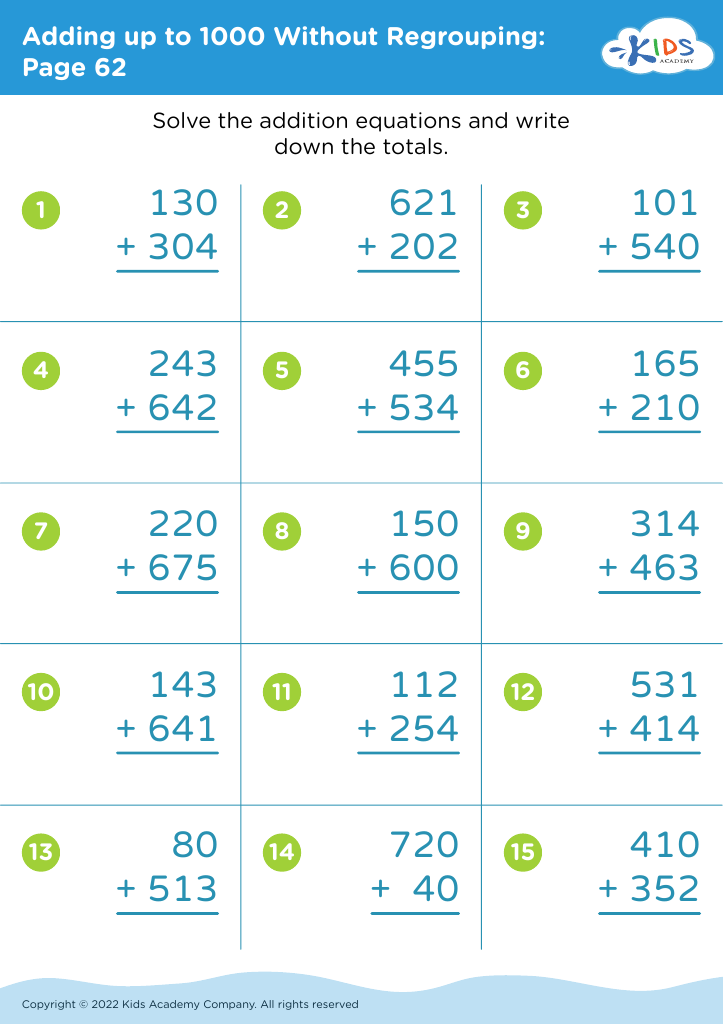
Adding up to 1000 Without Regrouping: Page 62
Worksheet
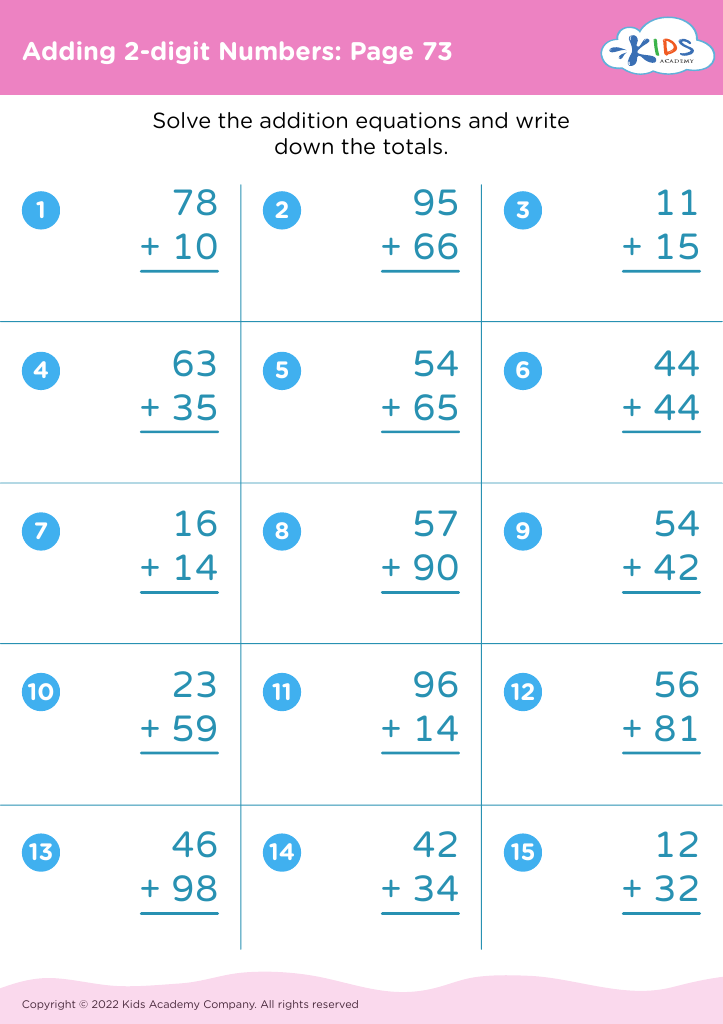
Adding 2-digit Numbers: Page 73

Adding 2-digit Numbers: Page 73

Adding 2-digit Numbers: Page 73
Worksheet
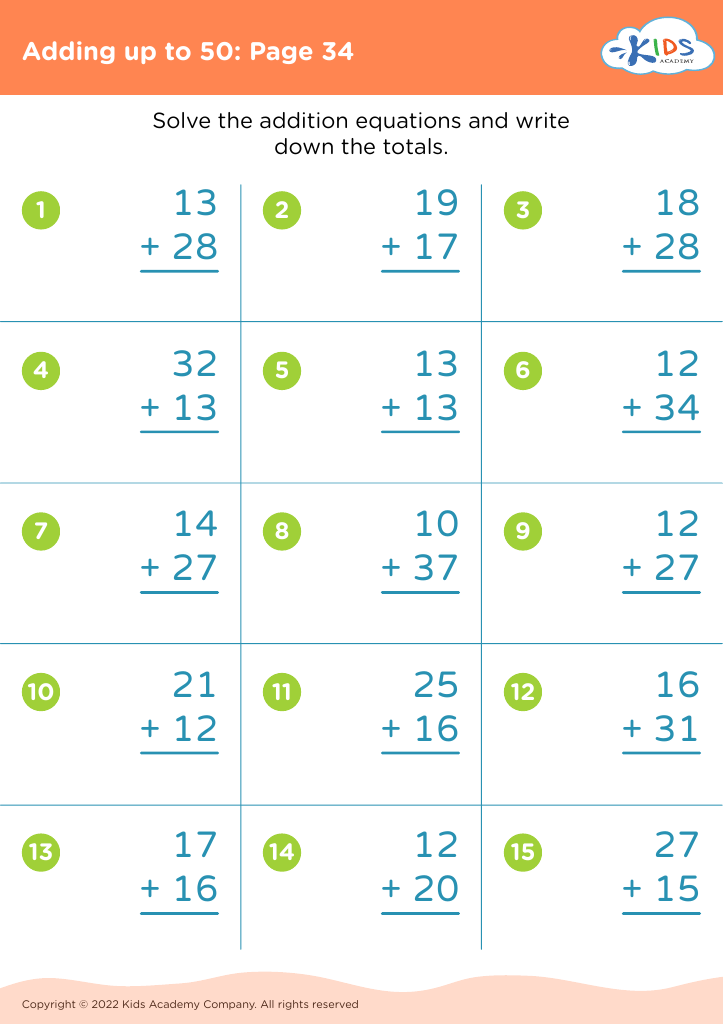
Adding up to 50: Page 34

Adding up to 50: Page 34

Adding up to 50: Page 34
Worksheet
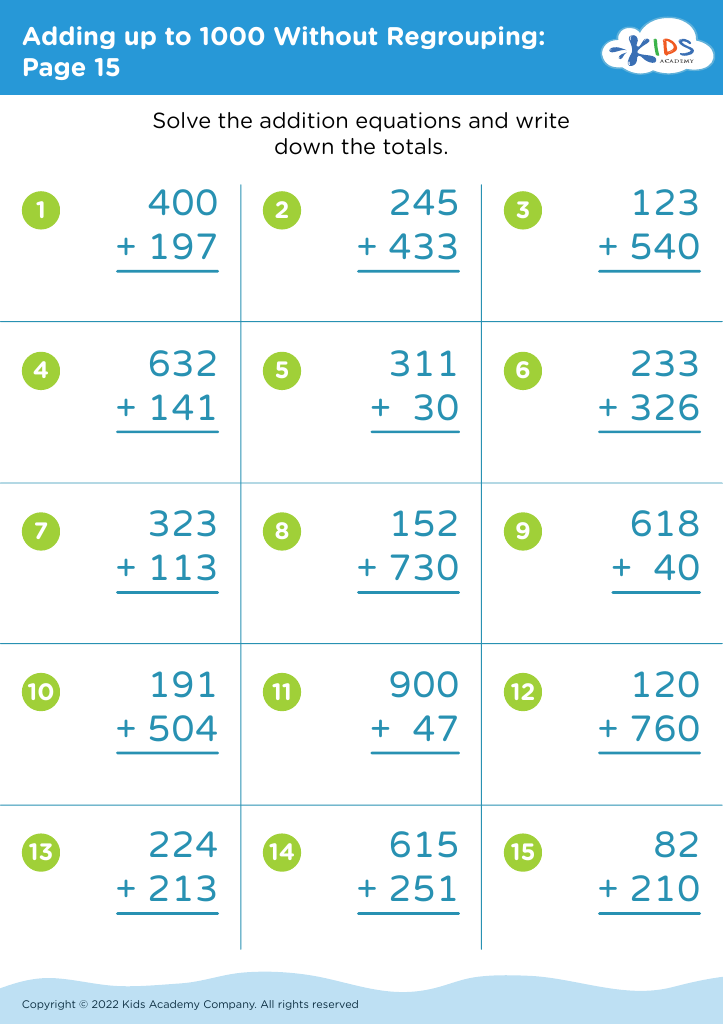
Adding up to 1000 Without Regrouping: Page 15
Worksheet
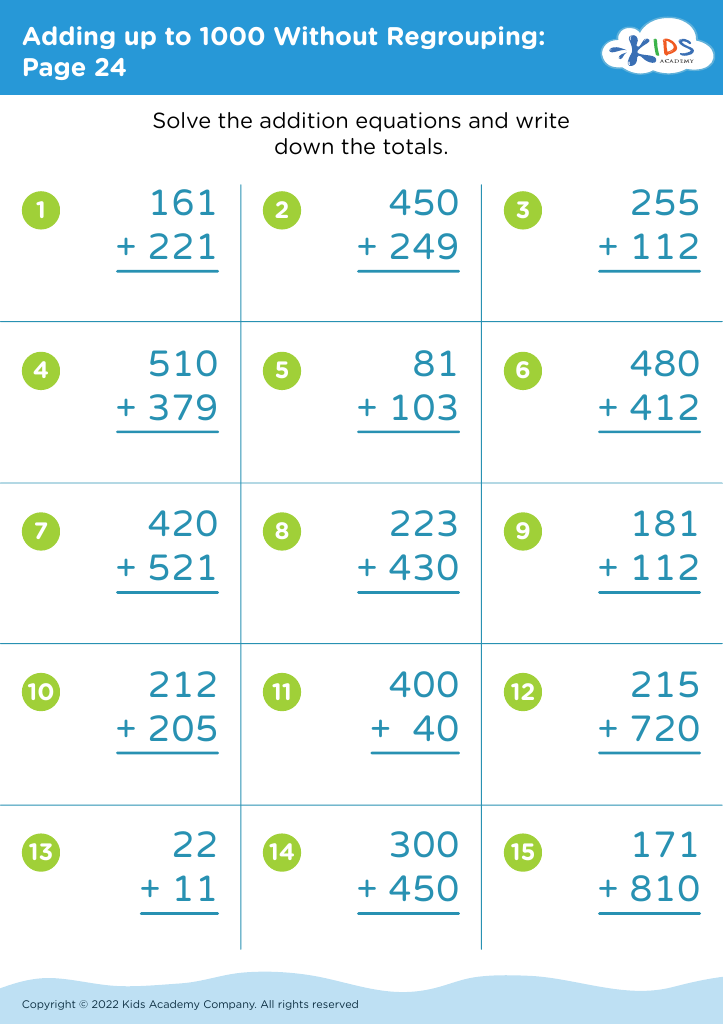
Adding up to 1000 Without Regrouping: Page 24
Worksheet


... 6 7

Understanding fractions and their addition and subtraction is crucial for 7-year-olds as it lays a solid foundation for future mathematical concepts. For both parents and teachers, this foundational knowledge helps in fostering a child's overall cognitive development and problem-solving skills.

At this age, children are still developing their number sense and an understanding of parts and wholes. Mastering fractions aids in enhancing their comprehension of this critical mathematical relationship. It facilitates a deeper grasp of division, ratios, percentages, and advanced mathematical operations required in later academic years.

Furthermore, fractions are not confined to the classroom. They are practical and evident in everyday life—whether it's slicing a pizza into equally shared pieces, measuring ingredients in cooking, or understanding time with a half-hour and quarter-hour increment. This practical application underscores the importance of grasping fractional concepts early on.

Moreover, fostering an early understanding of fractions cultivates a positive attitude towards math, encouraging students to engage confidently with more challenging concepts. It nurtures precision, attention to detail, analytical thinking, and logical reasoning. For teachers and parents, emphasizing the importance of fractions at an early stage ensures that children build a robust mathematical toolkit, fostering academic success and practical life skills. This proactive approach can demystify complex ideas and promote sustained mathematical confidence throughout a child's educational journey.