Unlock the magic of multiplication with our engaging Math Worksheets specifically designed for 7-year-olds! Kids Academy offers a variety of fun, interactive exercises to help young learners grasp essential multiplication concepts with ease. Our worksheets include colorful visuals, relatable examples, and step-by-step instructions to make learning enjoyable and effective. Each worksheet aims to build a strong foundation in multiplication, fostering confidence and mastery in this critical math skill. Perfect for both classroom use and at-home practice, our resources are meticulously crafted to support your child's educational journey. Discover the joy of learning multiplication today!
Check out this FREE Trial Lesson on Math for age 7!

Draw and Write an Equation to Match (3 numbers)

Favorites
With answer key
Interactive
  • 7
  • Understanding multiplication
  • Math
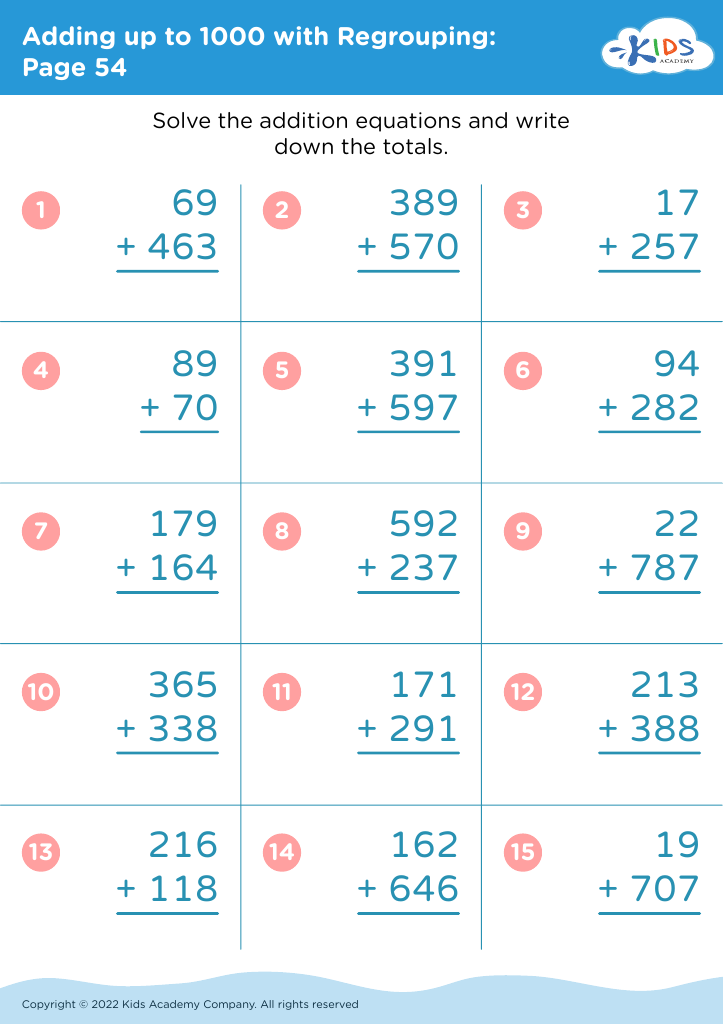
Adding up to 1000 with Regrouping: Page 54
Worksheet
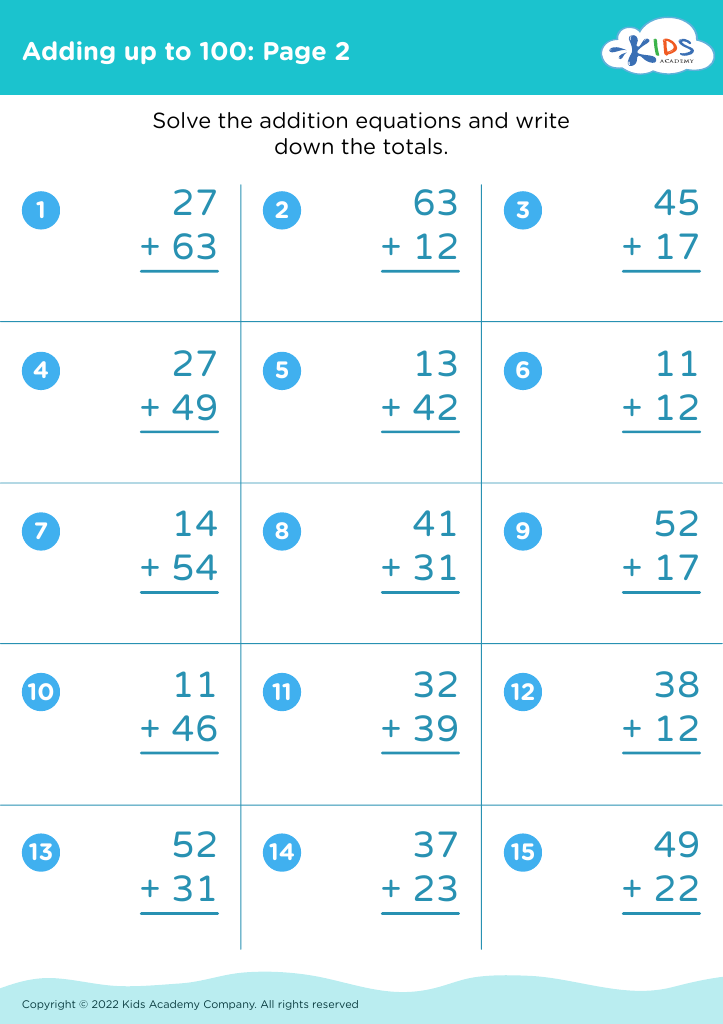
Adding up to 100: Page 2

Adding up to 100: Page 2

Adding up to 100: Page 2
Worksheet
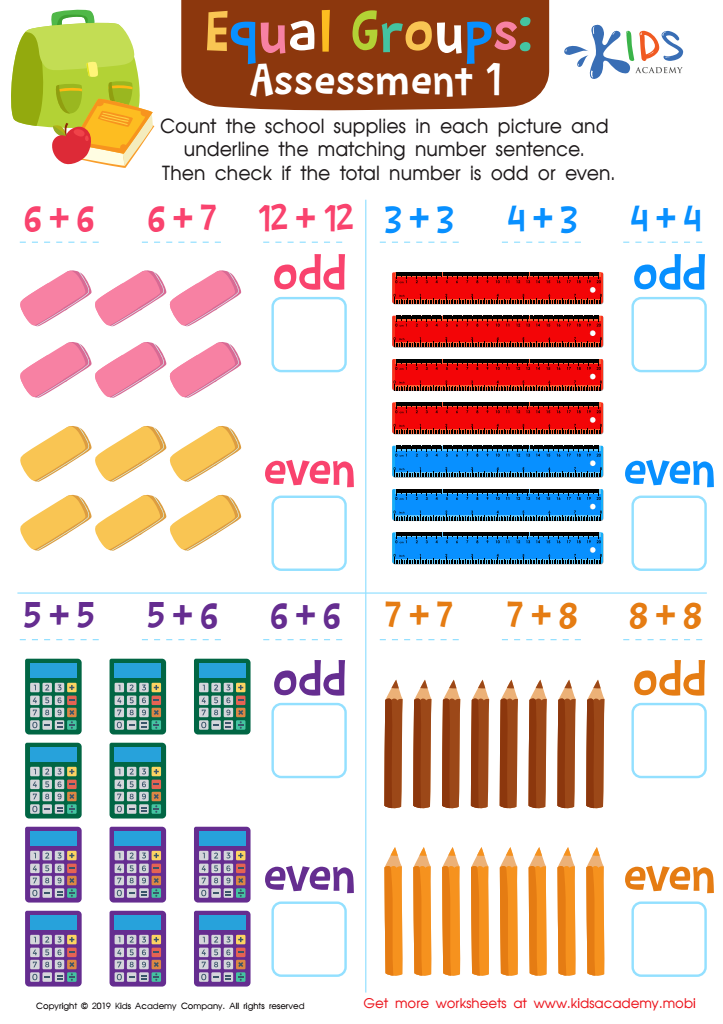
Equal Groups: Assessment1 Worksheet

Equal Groups: Assessment 1 Worksheet

Have your students count the school supplies in each picture. Underline the number sentence that matches. Ask them if the total number is odd or even. Help your eager little preschoolers explore their classroom, which is full of pencils, chairs, desks, a blackboard and the teacher's desk.
Equal Groups: Assessment 1 Worksheet
Worksheet
Busy Farmers: Problem Matching Worksheet
Busy Farmers: Problem Matching Worksheet
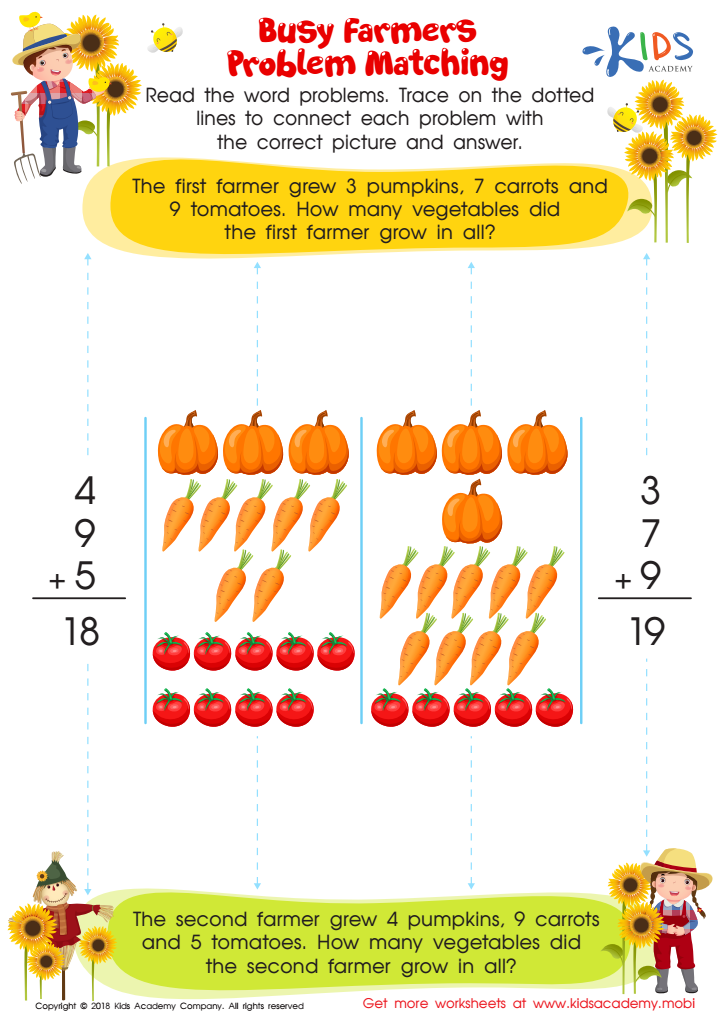
Farming is tough, so help your mathematician out with this fun and stimulating worksheet! They'll read word problems and connect each to its correct picture, using traceable lines. They'll practice addition with three addends, and use the harvest veg pictures to ensure accuracy.
Busy Farmers: Problem Matching Worksheet
Worksheet
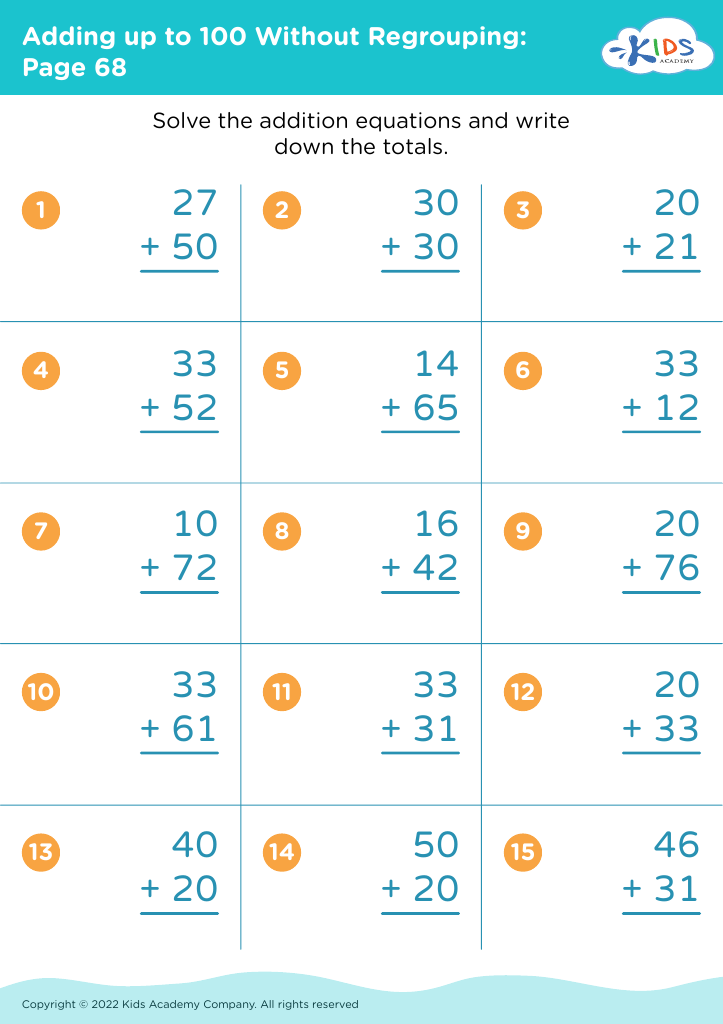
Adding up to 100 Without Regrouping: Page 68
Worksheet
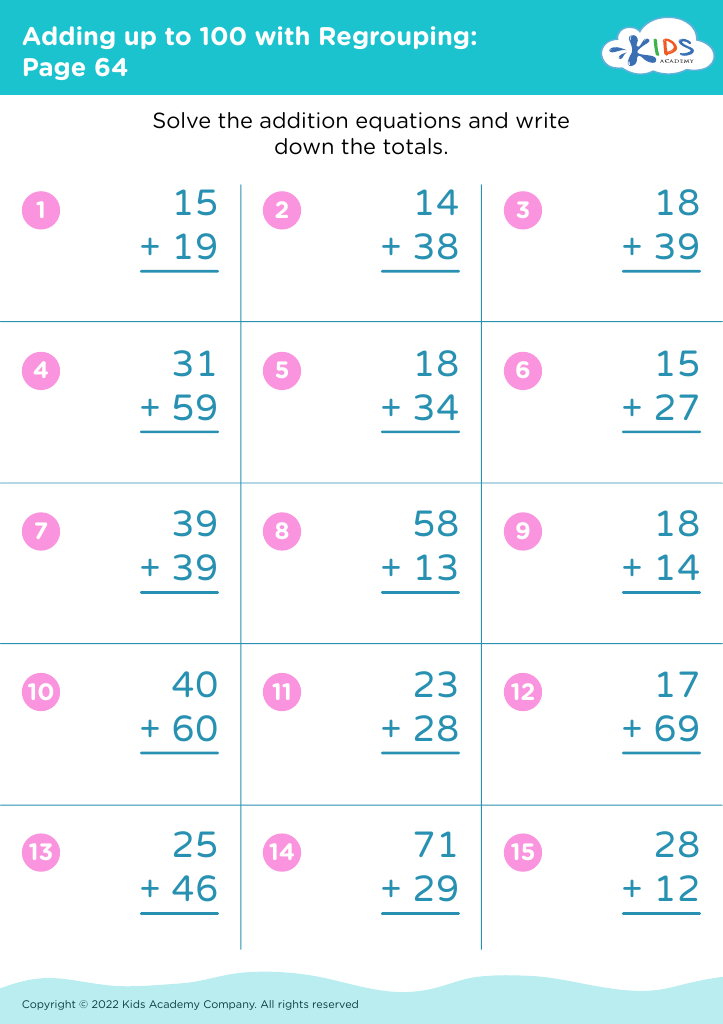
Adding up to 100 with Regrouping: Page 64
Worksheet
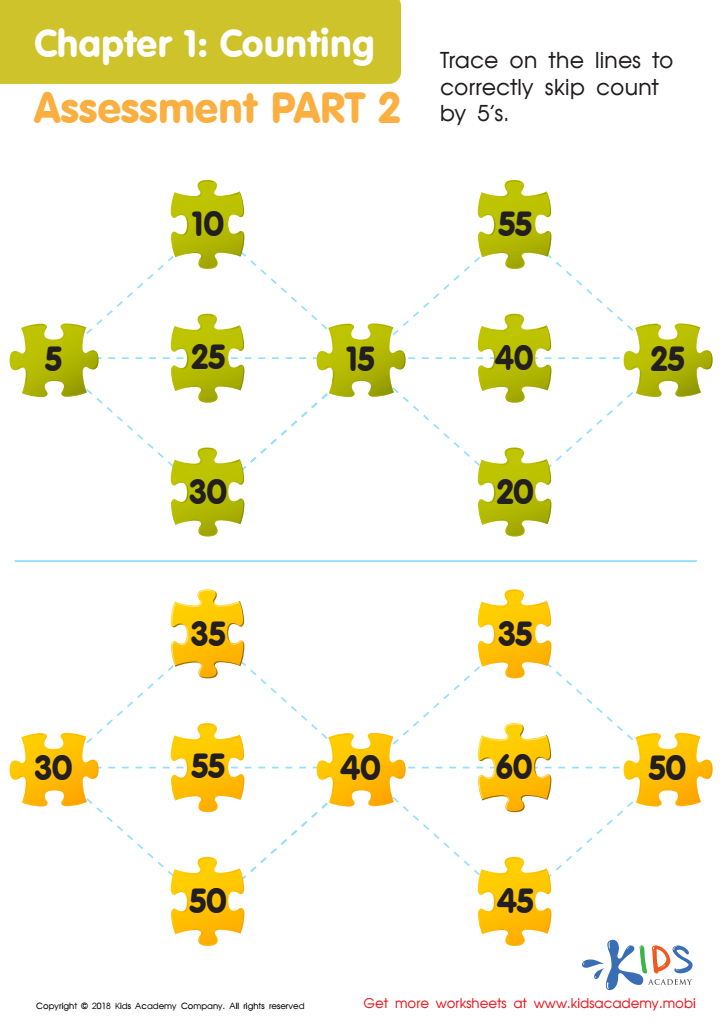
Counting: Assessment 2 Worksheet
Counting: Assessment 2 Worksheet

By now, your child should be able to count up to the hundreds. If they're still learning the tens, that's okay - as long as they're going at their own pace. This worksheet will be easy if they can count to ten. Ask them to trace the lines and skip count by 5's.
Counting: Assessment 2 Worksheet
Worksheet
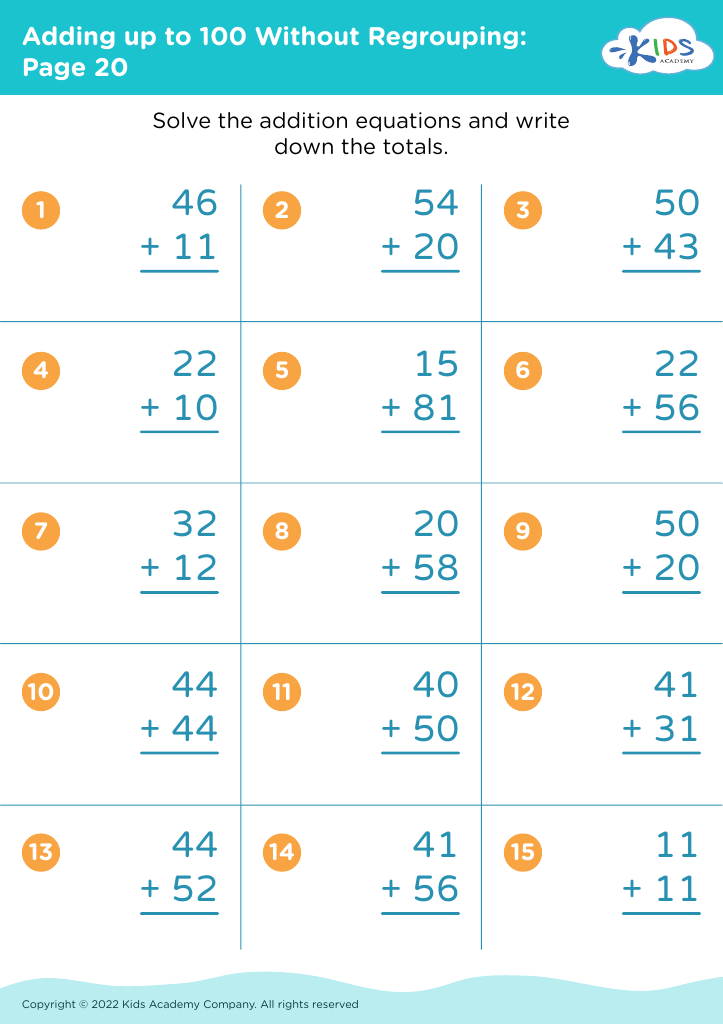
Adding up to 100 Without Regrouping: Page 20
Worksheet
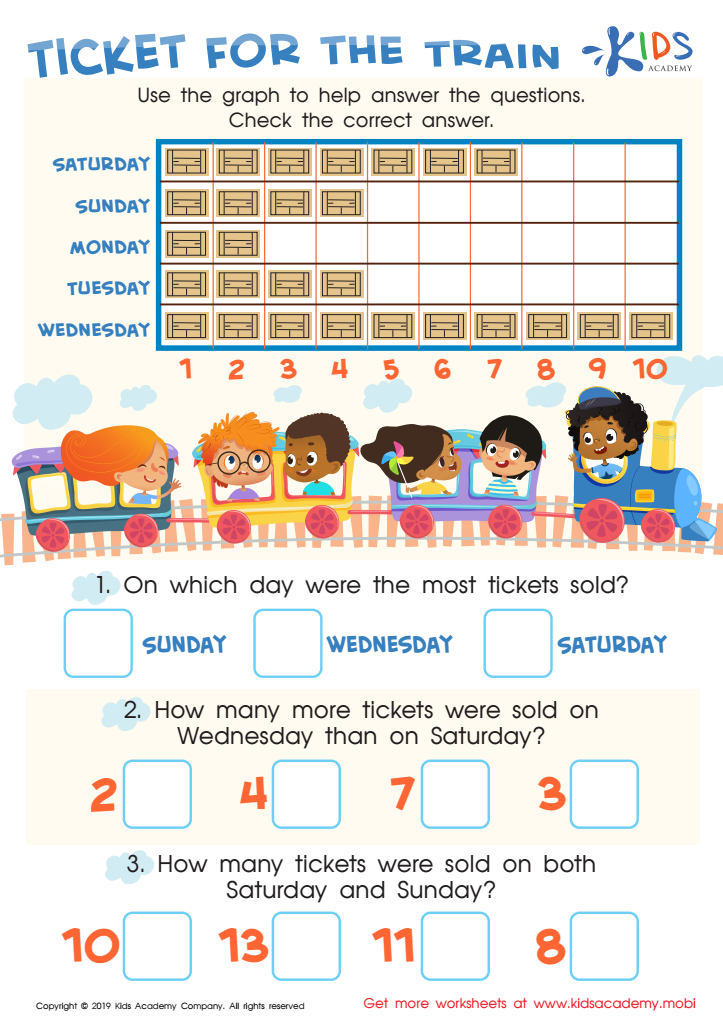
Ticket for the Train Worksheet
Ticket for the Train Worksheet
It's important to use fun scenarios with familiar objects when teaching kids. Try discussing train rides and the accompanying picture graph. Ask questions about it, then help kids check the correct answers. Let them enjoy the learning process!
Ticket for the Train Worksheet
Worksheet
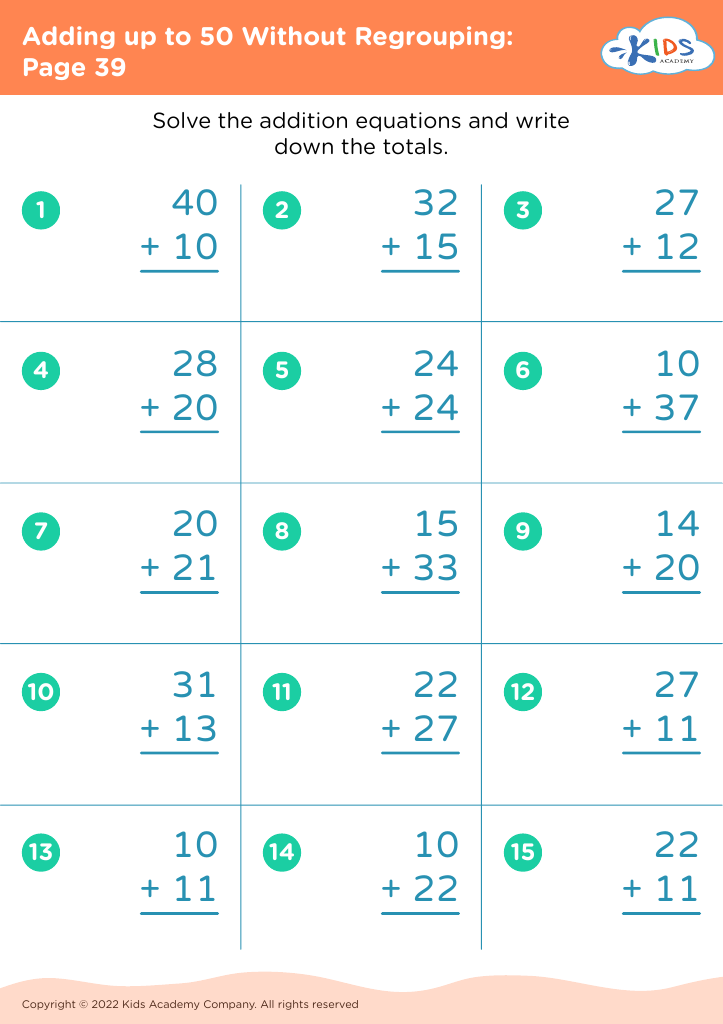
Adding up to 50 Without Regrouping: Page 39
Worksheet
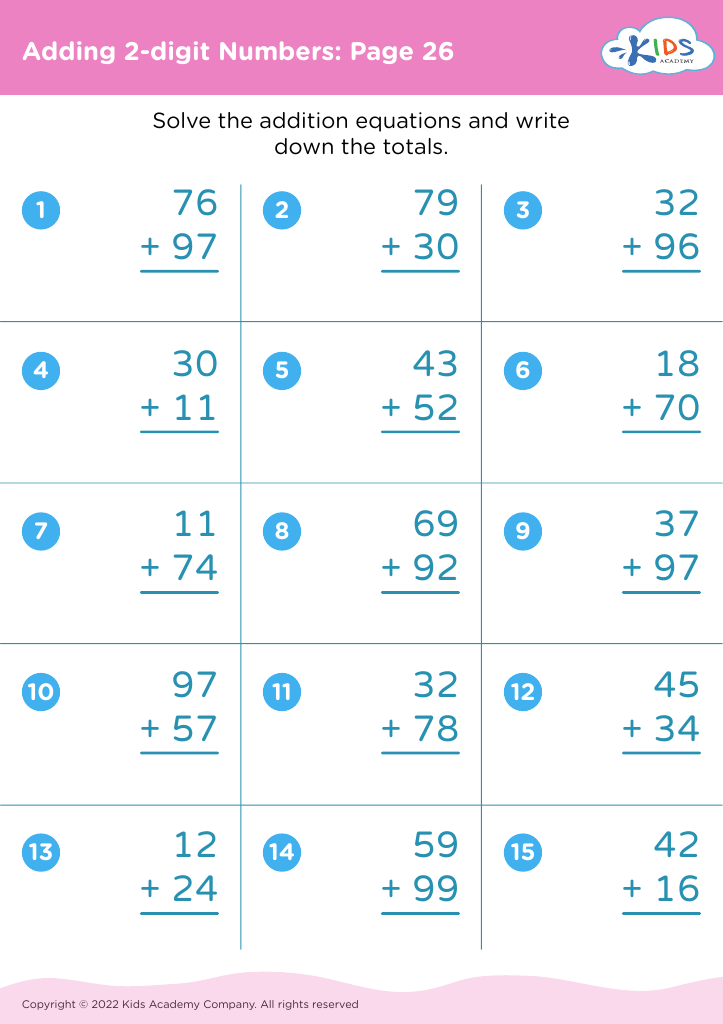
Adding 2-digit Numbers: Page 26

Adding 2-digit Numbers: Page 26

Adding 2-digit Numbers: Page 26
Worksheet
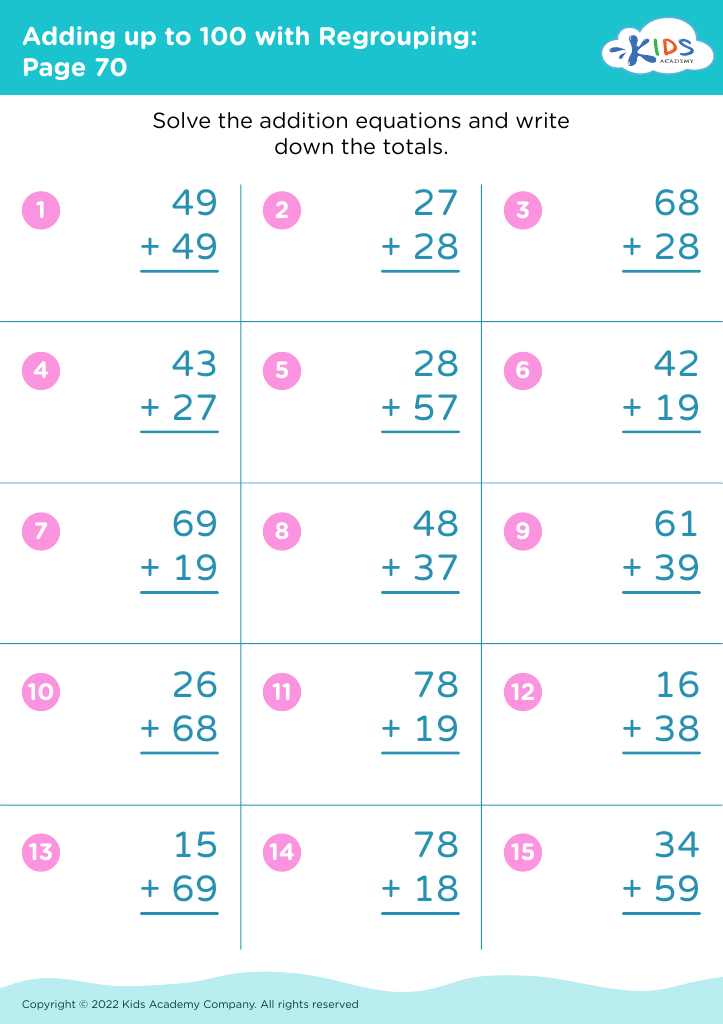
Adding up to 100 with Regrouping: Page 70
Worksheet
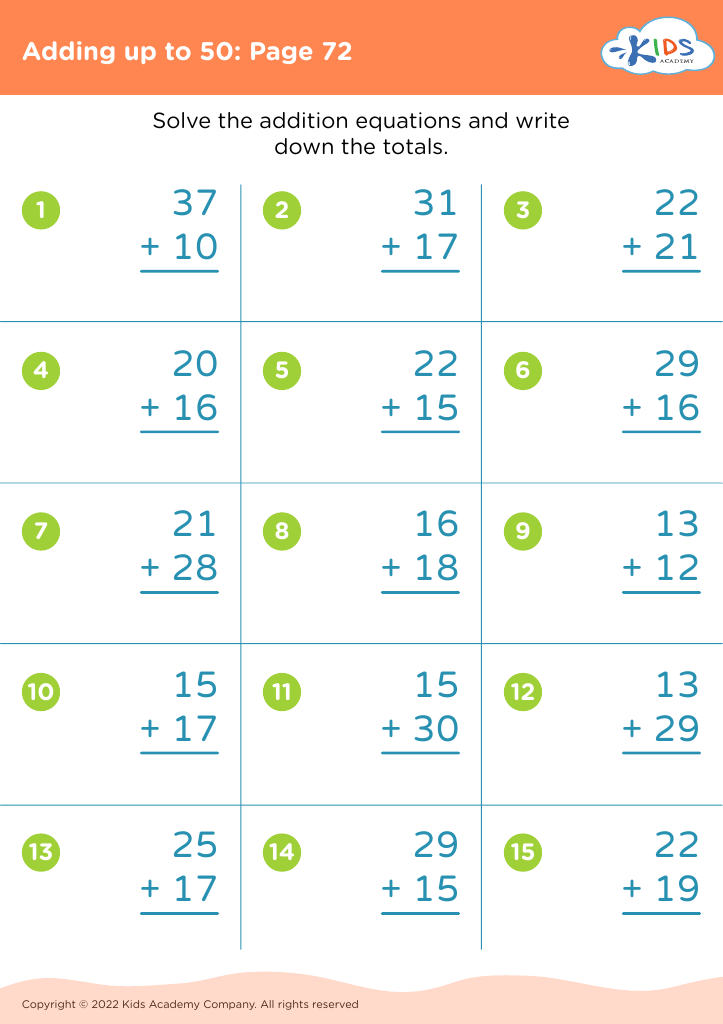
Adding up to 50: Page 72

Adding up to 50: Page 72

Adding up to 50: Page 72
Worksheet
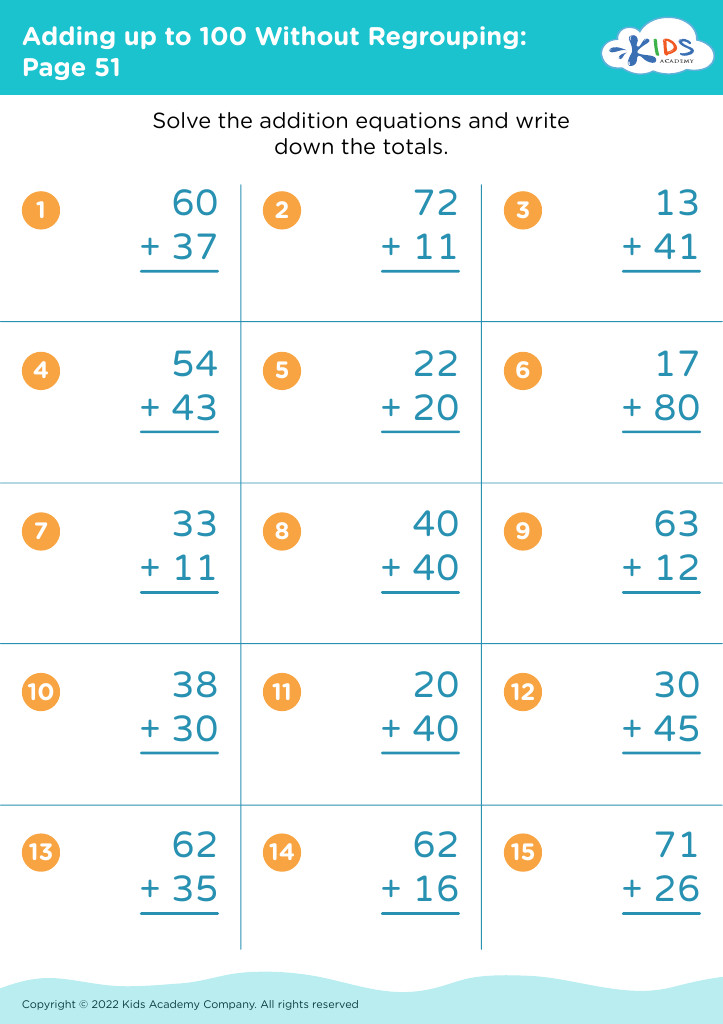
Adding up to 100 Without Regrouping: Page 51
Worksheet
Equal Groups: Assessment 2 Worksheet
Equal Groups: Assessment 2 Worksheet
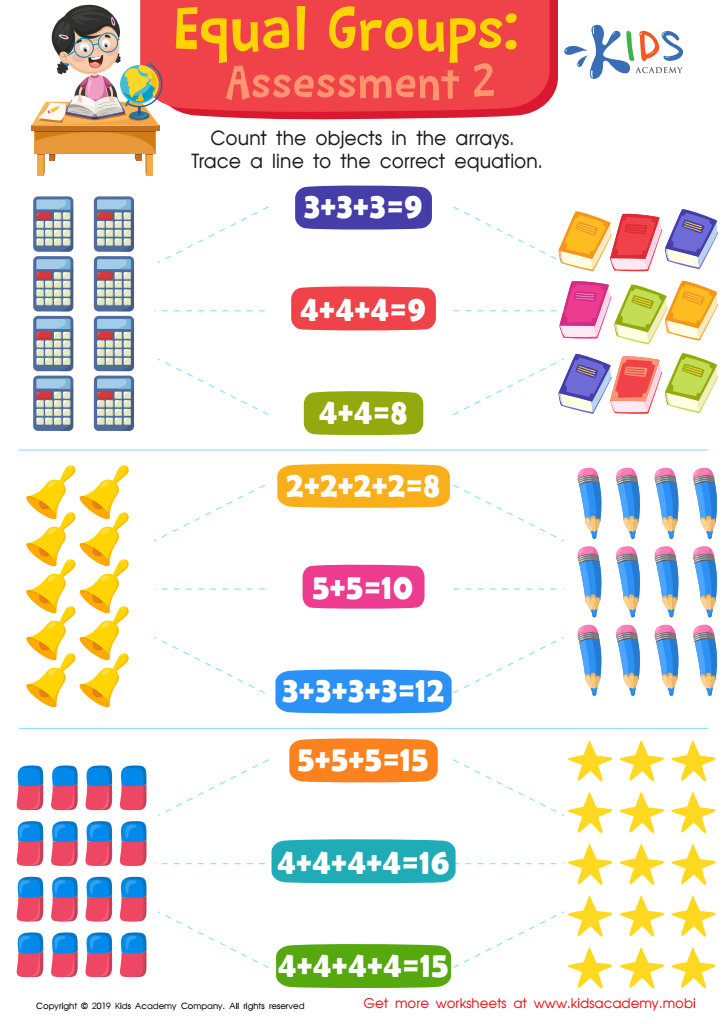
Get your kids to pay attention to learning with familiar objects, bright colors, and this worksheet. It has six arrays - ask kids to identify them and count the objects. Then, help them trace a line to the correct equation.
Equal Groups: Assessment 2 Worksheet
Worksheet
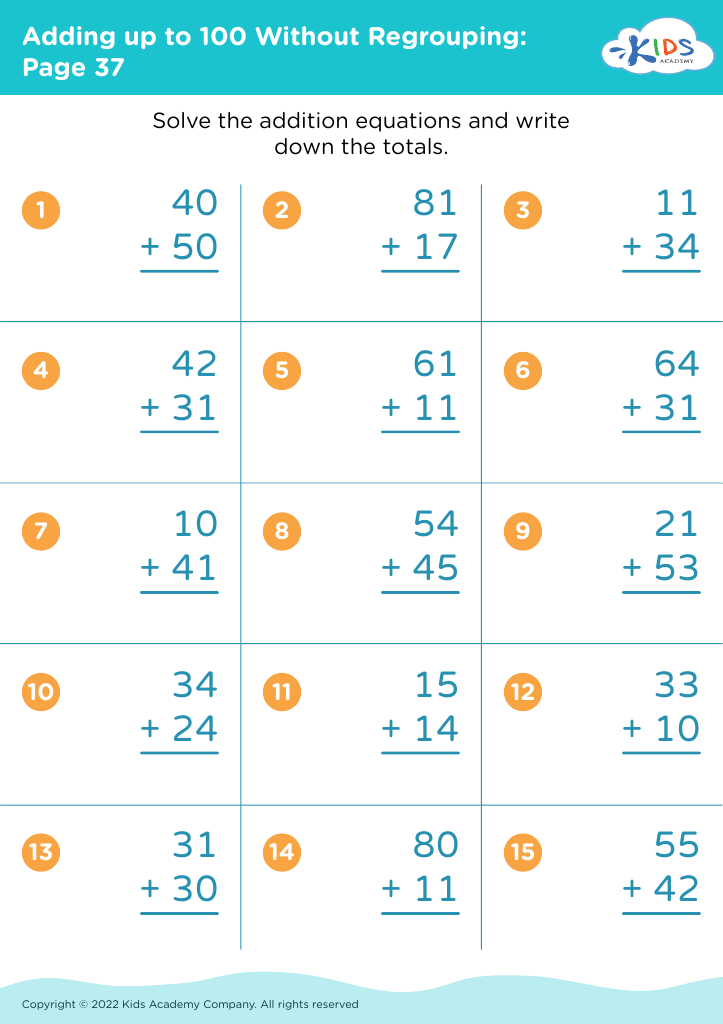
Adding up to 100 Without Regrouping: Page 37
Worksheet
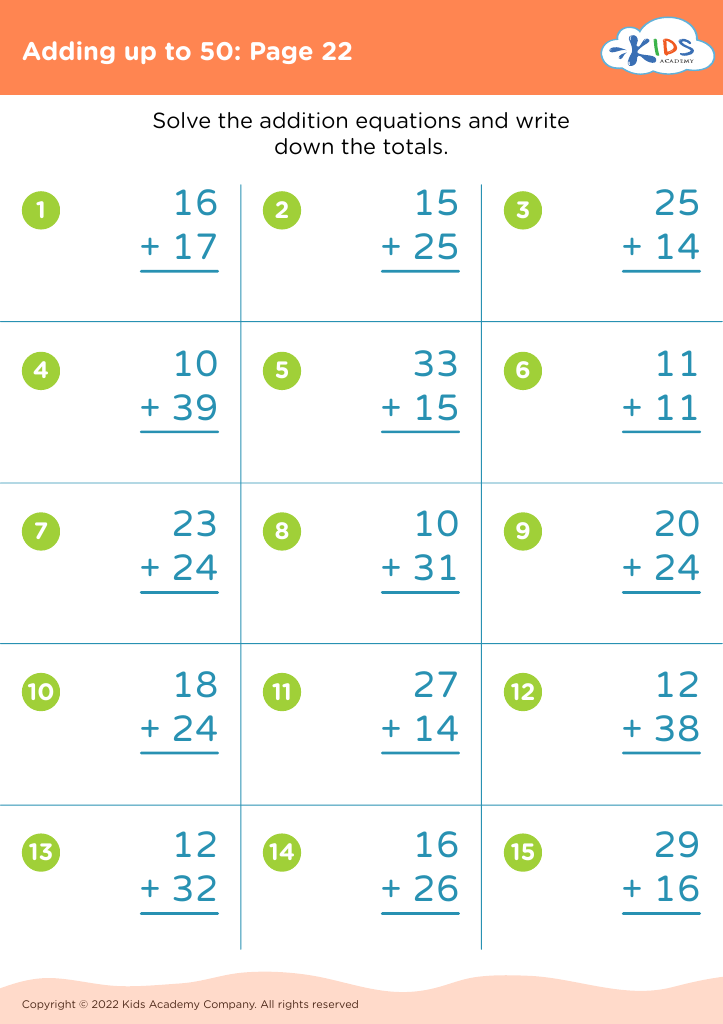
Adding up to 50: Page 22

Adding up to 50: Page 22

Adding up to 50: Page 22
Worksheet
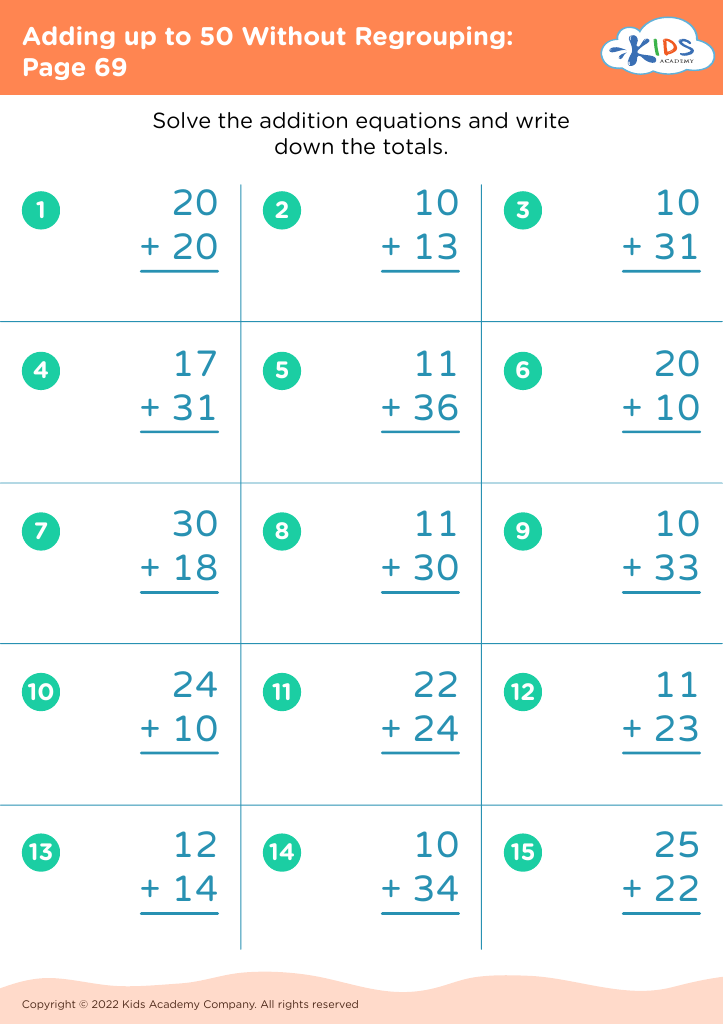
Adding up to 50 Without Regrouping: Page 69
Worksheet
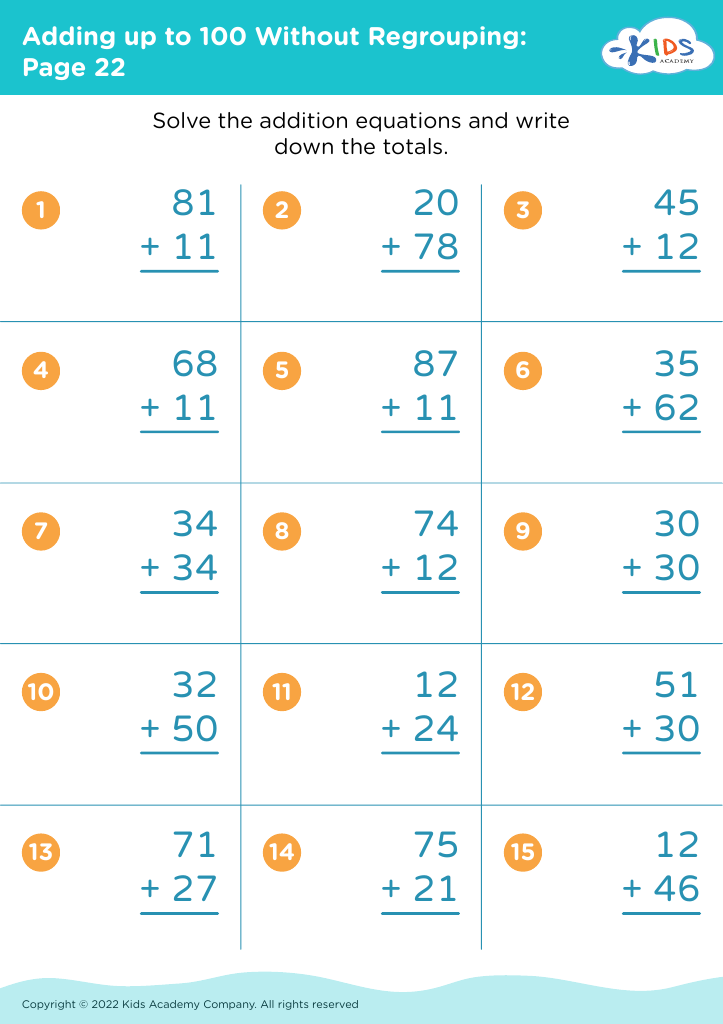
Adding up to 100 Without Regrouping: Page 22
Worksheet
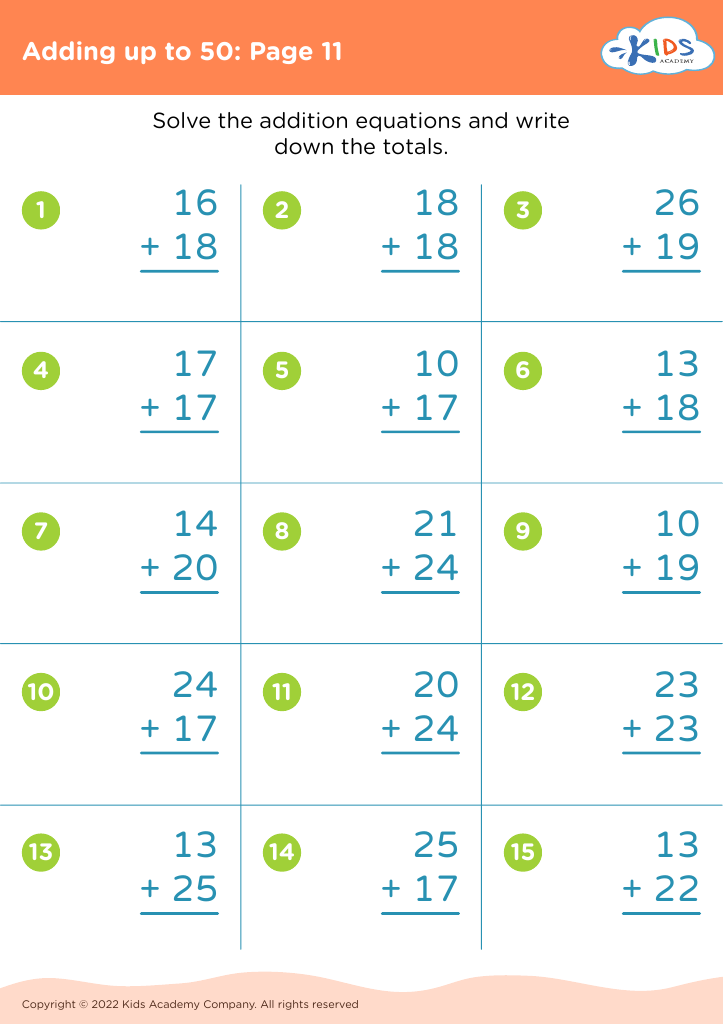
Adding up to 50: Page 11

Adding up to 50: Page 11

Adding up to 50: Page 11
Worksheet
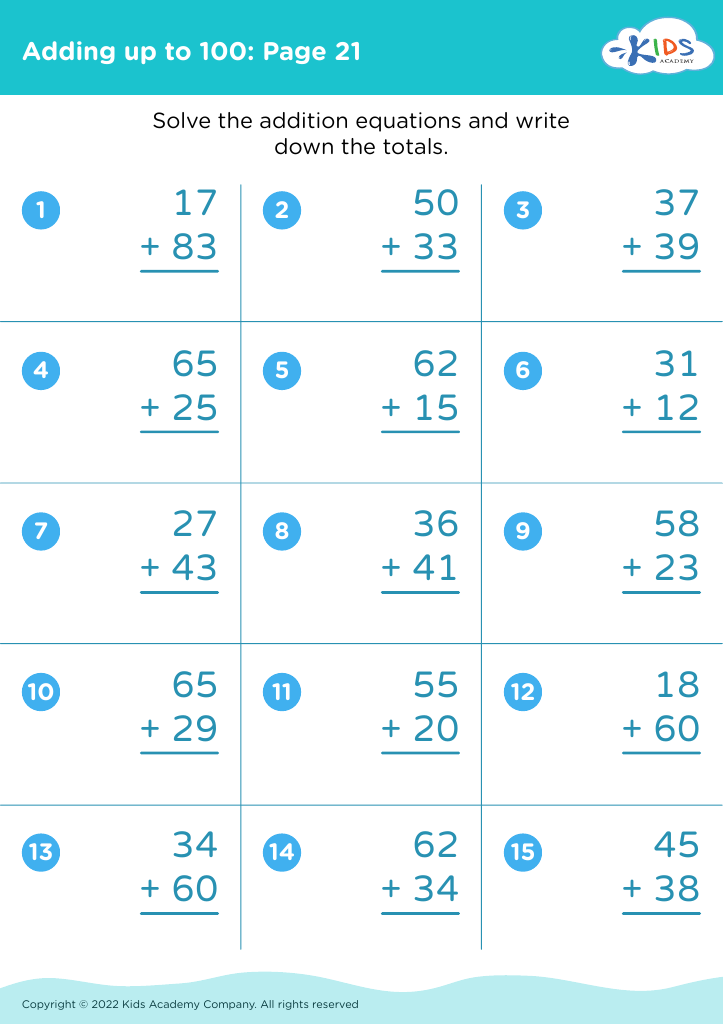
Adding up to 100: Page 21

Adding up to 100: Page 21

Adding up to 100: Page 21
Worksheet
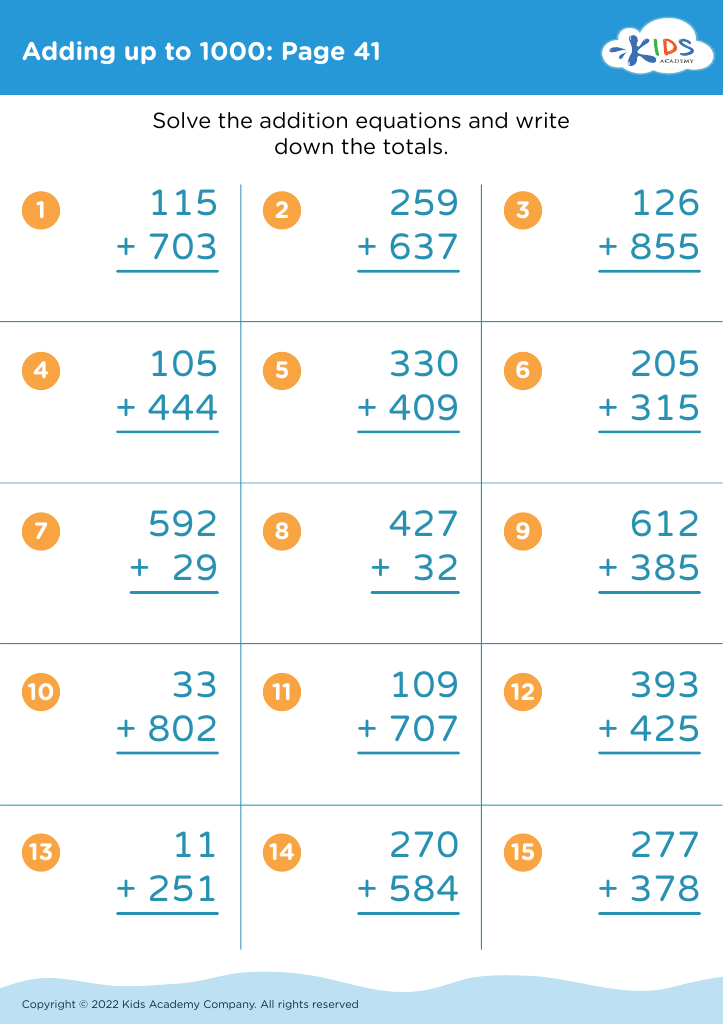
Adding up to 1000: Page 41

Adding up to 1000: Page 41

Adding up to 1000: Page 41
Worksheet
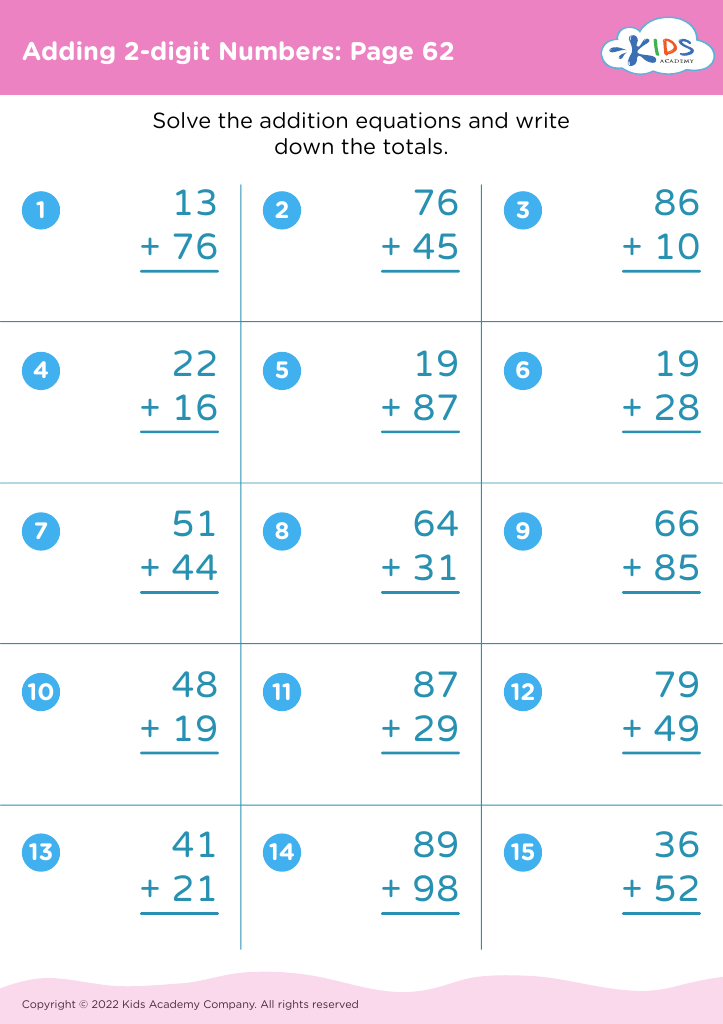
Adding 2-digit Numbers: Page 62

Adding 2-digit Numbers: Page 62

Adding 2-digit Numbers: Page 62
Worksheet
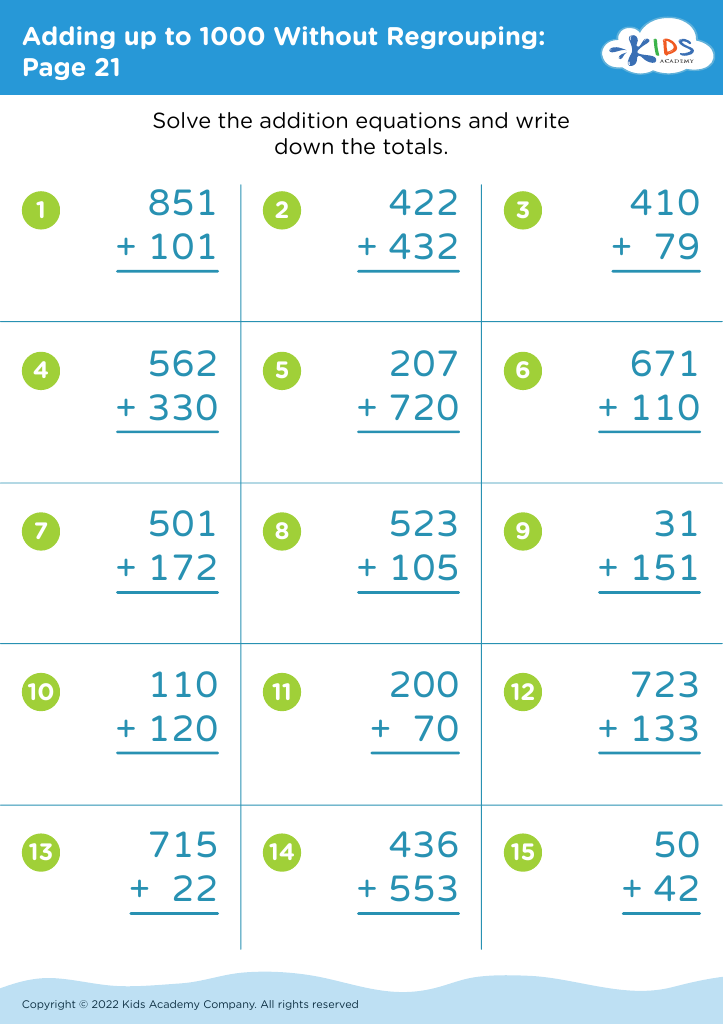
Adding up to 1000 Without Regrouping: Page 21
Worksheet


Understanding multiplication at an early age is critical for a child's mathematical development, making it vital for parents and teachers to invest time and effort in this area. At age 7, children are typically in 2nd grade, a phase where foundational math skills are developed. Multiplication serves as one of the building blocks for more advanced arithmetic and numerous real-life applications.

When children grasp the concept of multiplication, they gain a more profound understanding of number patterns and relationships, promoting better problem-solving skills. Moreover, multiplication introduces children to the idea of mathematical operations going beyond basic addition and subtraction, stimulating cognitive development and logical thinking.

Early exposure to multiplication can also boost children's confidence in math. Confidence plays a significant role in how students perceive their ability to tackle academic challenges. By demystifying multiplication early on, parents and teachers can help children see math as approachable and enjoyable.

Lastly, lifelong implications of strong mathematical skills cannot be understated. Proficiency in math is linked to better performance in school and opens up a plethora of career opportunities in science, technology, engineering, and mathematics (STEM) fields. Thus, ensuring that children understand multiplication at an early age lays a solid foundation for their future learning and professional prospects.