
Recognizing Patterns Reading Worksheets for 7-Year-Olds
3 filtered results
Difficulty Level
Grade
Age
-
From - To
Subject
Activity
Standards
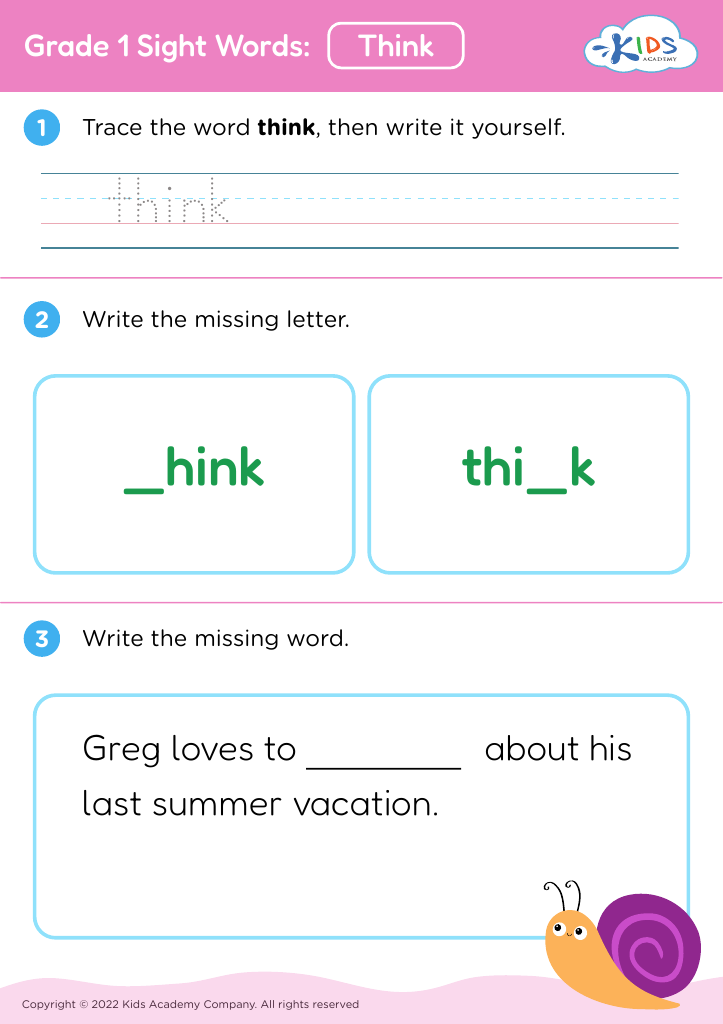
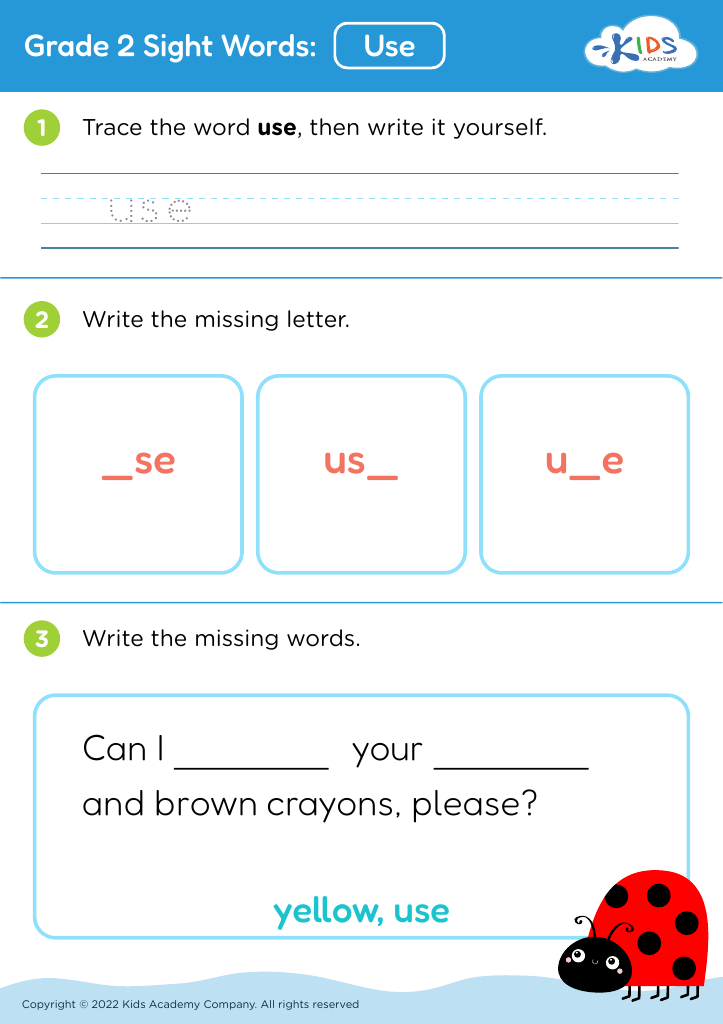
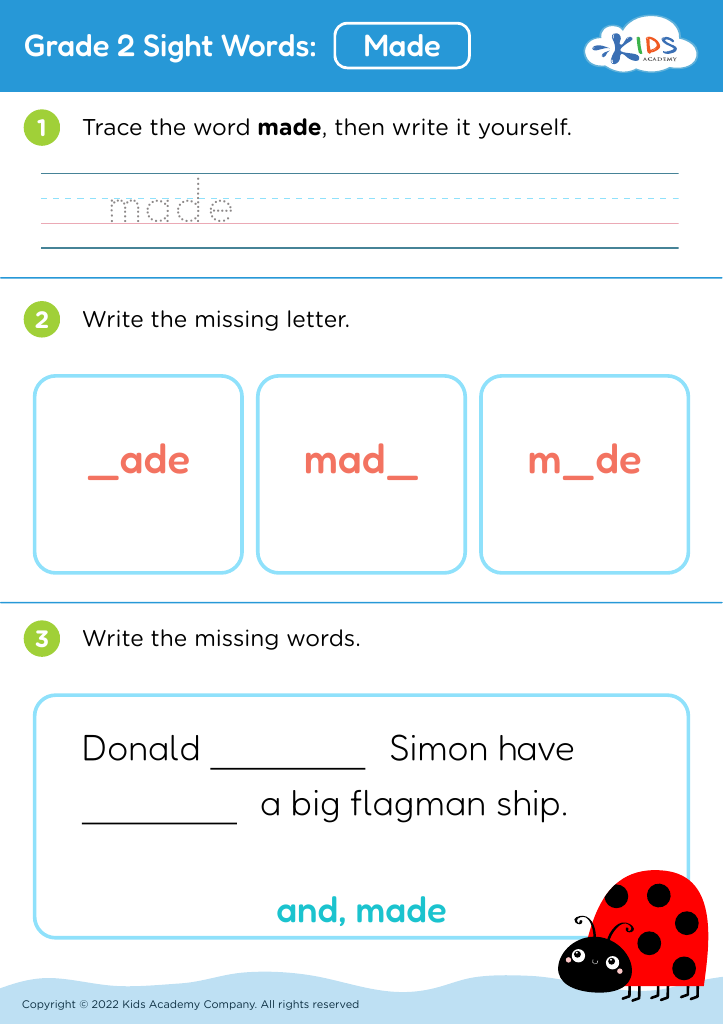
Enhance your 7-year-old's reading skills with our Recognizing Patterns Reading Worksheets! These engaging and interactive worksheets are designed to help young learners identify patterns in text, boosting their comprehension and critical thinking abilities. With colorful illustrations and age-appropriate content, children will enjoy discovering repeating elements in stories and sentences. Each worksheet promotes not only reading proficiency but also problem-solving skills, essential for academic success. Perfect for classroom use or at-home learning, our worksheets provide children with a fun way to enhance their literacy skills through hands-on practice. Start your journey to building confident readers today!
Favorites
With answer key
Interactive
Join Kids Academy for Free
Who is primarily going to use this learning content?








Recognizing patterns in reading is a crucial skill for 7-year-olds that significantly impacts their literacy development. At this age, children are transitioning from learning to read to reading to learn, making pattern recognition essential in enhancing their comprehension and fluency. By identifying patterns in sounds, letters, words, and texts, children develop stronger phonemic awareness, crucial for decoding new words effectively.
Moreover, recognizing patterns helps children predict what comes next in a text, improving their overall reading engagement and motivation. This skill fosters critical thinking, enabling them to draw connections between different concepts, thus deepening their understanding of stories and informational texts. Furthermore, understanding patterns lays the foundation for future skills in math and science, areas that rely heavily on recognizing sequences, similarities, and structures.
Parents and teachers play a vital role in nurturing this skill. By incorporating engaging activities that emphasize patterns, such as rhymes, repetitive phrases, or visual aids, they can create a stimulating environment that promotes exploratory learning. As children become adept at recognizing patterns, they gain confidence in their reading abilities, setting the stage for lifelong learning and academic success. Therefore, fostering this skill is not just beneficial but essential for their comprehensive development.








