Geography knowledge Science Worksheets for 7-Year-Olds
3 filtered results
-
From - To
Explore our Geography Knowledge Science Worksheets designed specifically for 7-year-olds! Children will embark on an exciting journey to understand the world around them. Our engaging worksheets cover continents, oceans, landforms, and more, ensuring young learners grasp vital geography concepts. With fun activities like coloring maps, identifying country flags, and matching topographical features, children will build a strong foundation in geography while enhancing their critical thinking and problem-solving skills. Perfect for both classroom use and at-home learning, our worksheets make geography an adventure! Ignite your child's curiosity and watch them become little explorers with Kids Academy's specialized geography resources.
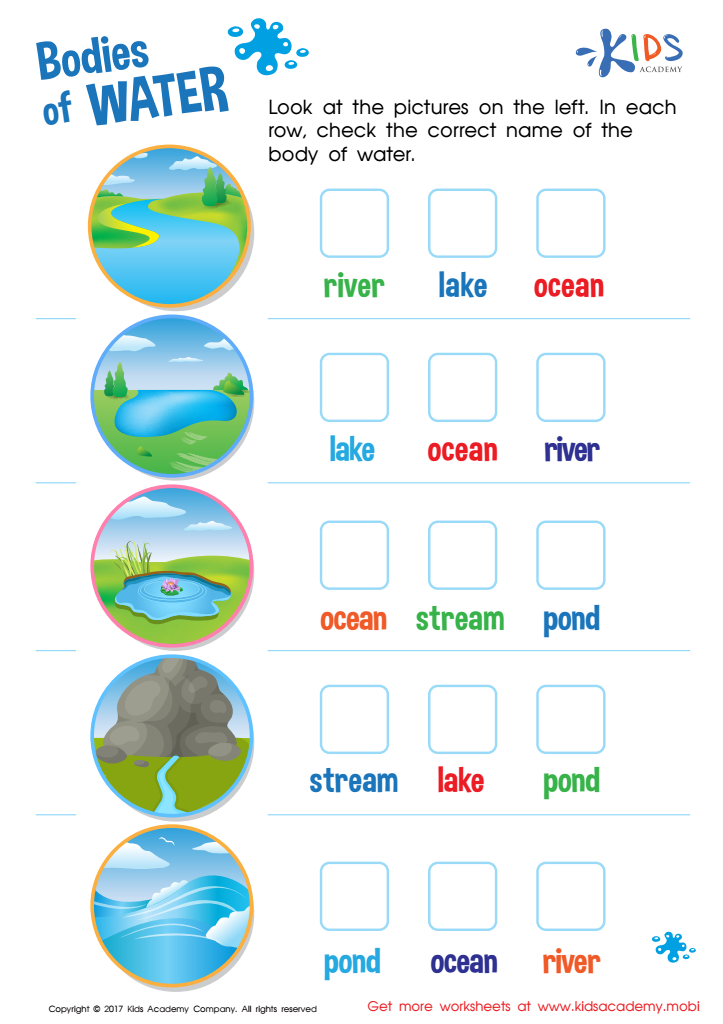
Bodies of Water Worksheet
 Assign to My Students
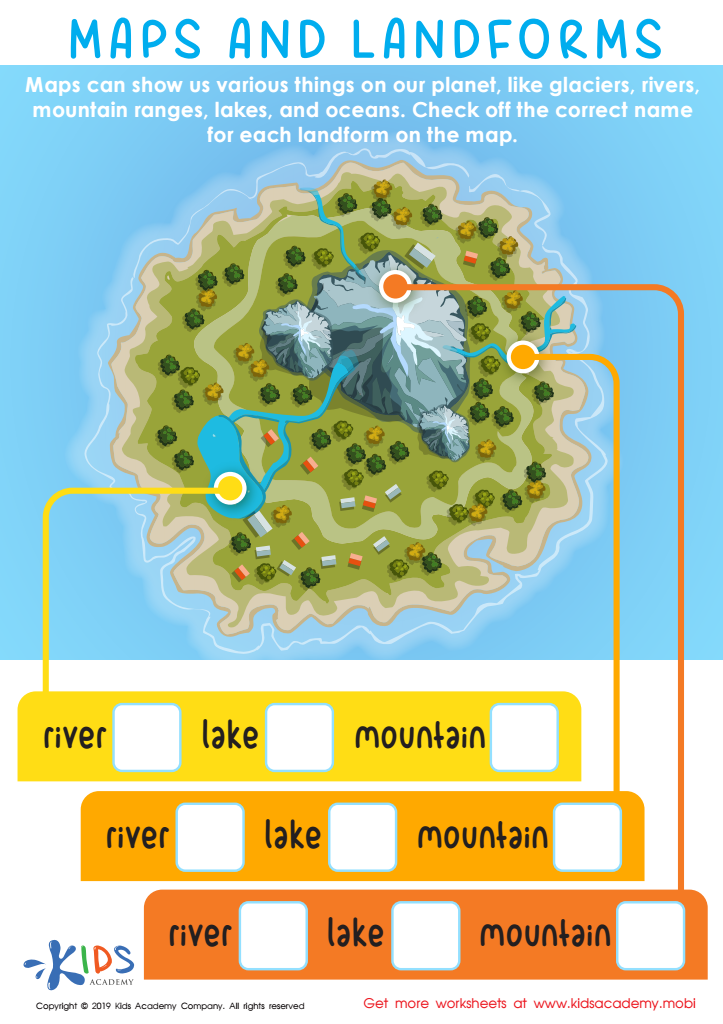
Maps and Landforms Worksheet
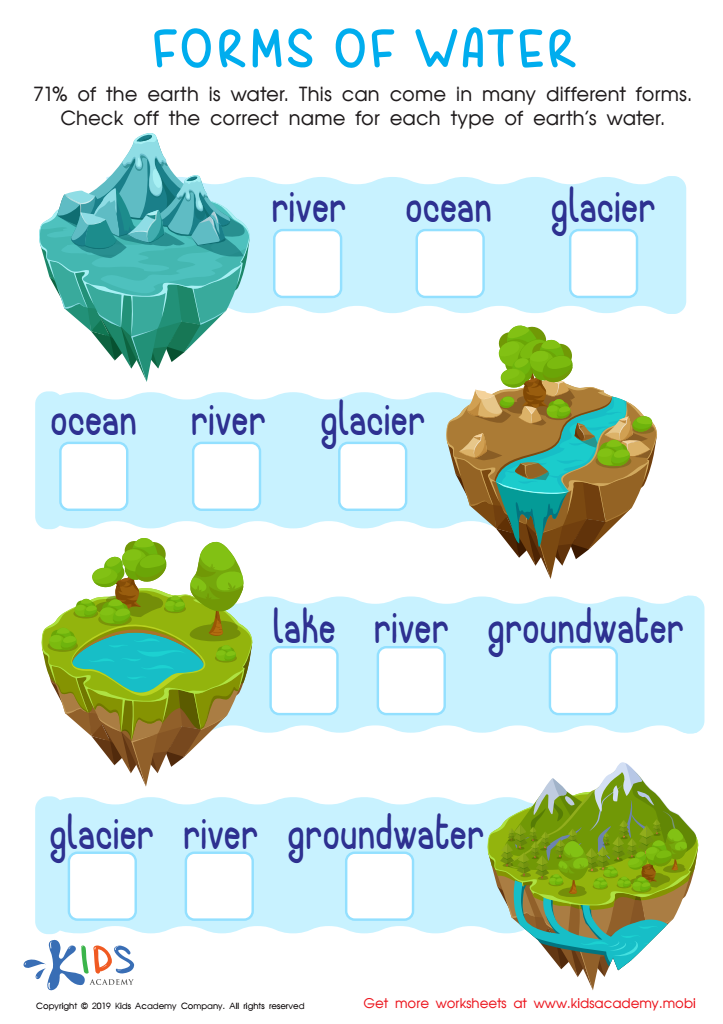
Forms of Water Worksheet





Geography and Science are fundamental components of a child’s education, even at the tender age of seven.
First, understanding geography helps children develop spatial awareness and a sense of place in the world. They learn about different countries, landscapes, climates, and cultures, which fosters an early appreciation for diversity and global interconnectedness. This knowledge builds a foundation for empathy and inclusive thinking, which are invaluable in today’s globalized society.
Geography also enhances critical thinking and problem-solving skills. When children explore maps or learn about different environments, they engage in activities that improve their ability to analyze information and make connections. They start understanding how physical geography, such as mountains and rivers, influences human activities and settlements.
Incorporating basic science concepts, like weather patterns and natural resources, can further stimulate curiosity and inquiry. Seven-year-olds are naturally inquisitive, and when they learn about the Earth’s processes and ecosystems, they become interested in preserving and respecting the environment. This can instill a sense of responsibility and stewardship from a young age.
Teachers and parents who prioritize Geography and Science education set the stage for well-rounded, informed, and responsible future citizens. It nurtures children's natural wonder, prepares them for more complex academic subjects, and equips them with essential life skills.







