Knowledge application Science Worksheets for 7-Year-Olds
3 filtered results
-
From - To
Discover our engaging Knowledge Application Science Worksheets designed specifically for 7-year-olds! These worksheets foster critical thinking and encourage young learners to apply their scientific knowledge in fun and interactive ways. Covering topics such as plants, animals, and the environment, our resources enable children to explore concepts deeply while honing their problem-solving skills. Each worksheet is crafted to stimulate curiosity and encourage learners to connect their understanding to real-world scenarios. Perfect for both classroom and home use, our printable worksheets make science accessible and enjoyable. Empower your child’s learning journey with these valuable educational tools today!
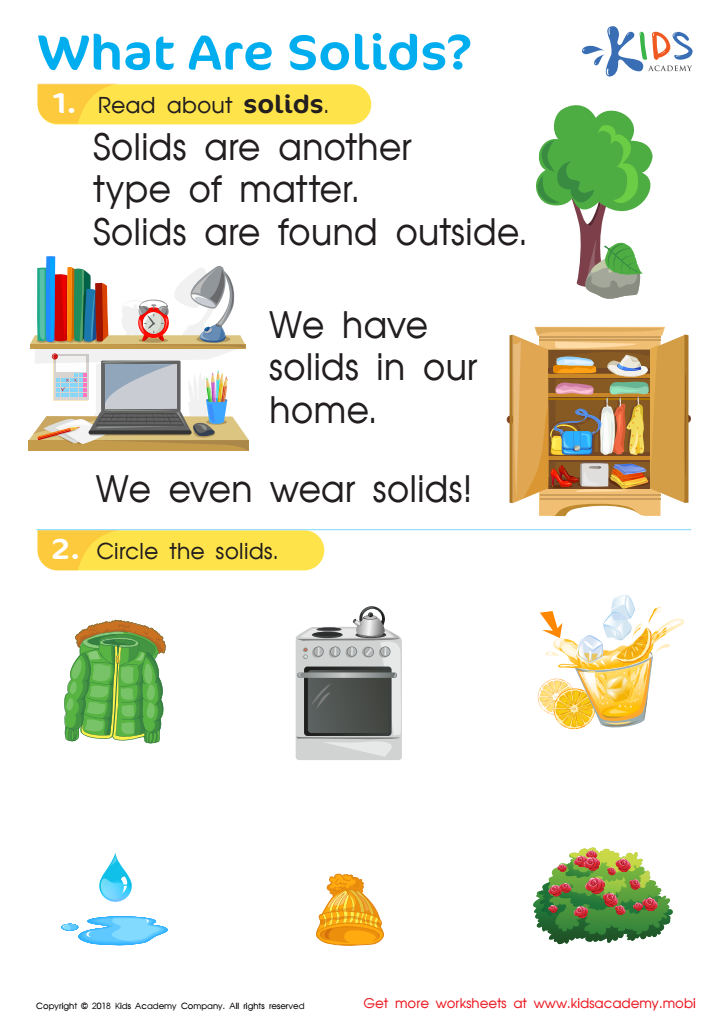
What Are Solids? Worksheet
 Assign to My Students
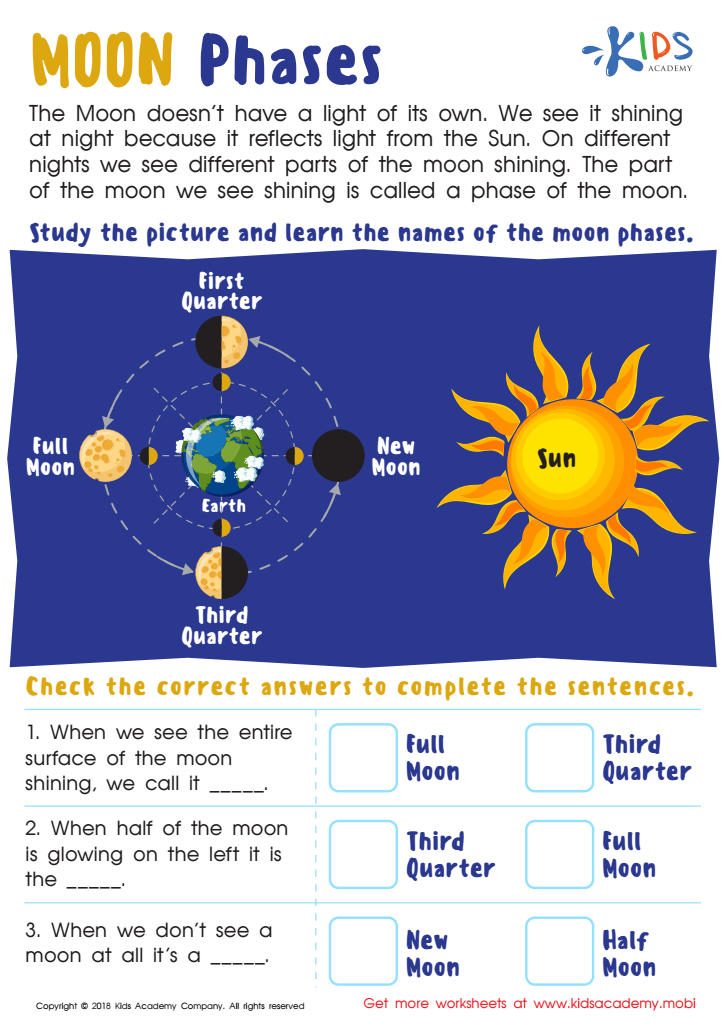
Moon Phases Worksheet
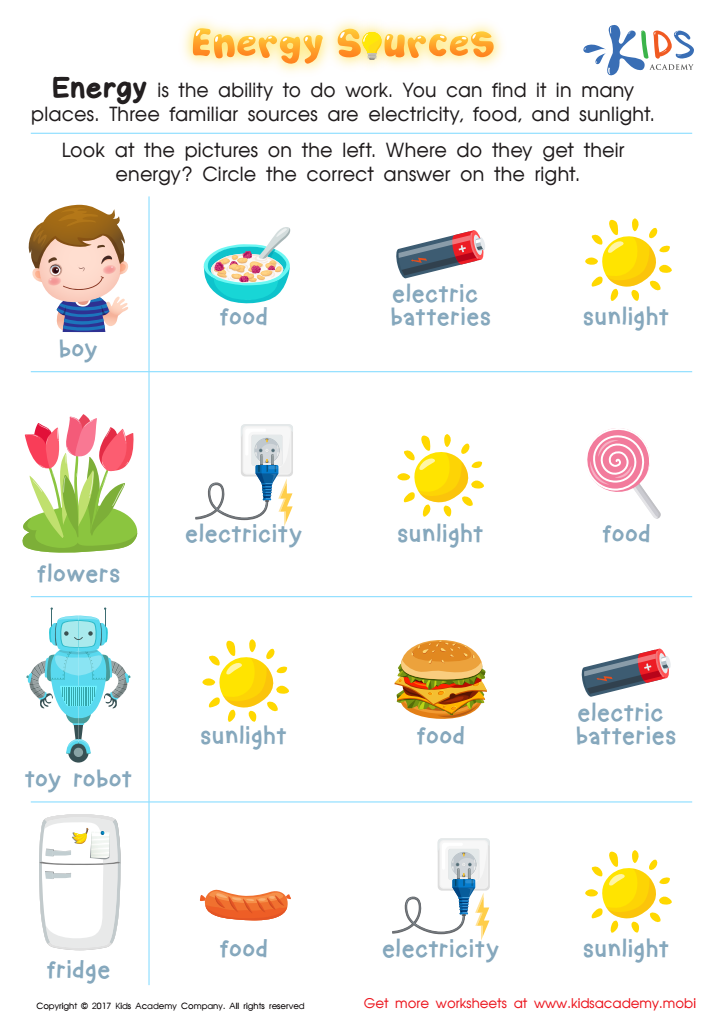
Energy Sources Printable








Knowledge application in science for 7-year-olds is crucial for several reasons. At this stage of development, children are naturally curious and eager to explore the world around them. Introducing science through practical applications fosters critical thinking and problem-solving skills. When kids engage in hands-on experiences, they not only grasp scientific concepts better but also learn to connect theories with real-life situations.
Understanding how to apply knowledge helps in developing a sense of agency; children see firsthand how their actions can impact their environment, promoting responsibility and ethical considerations. This aligns with cultivating a mindset that values lifelong learning, allowing them to approach challenges with confidence.
Moreover, science at this age encourages collaboration and communication among peers. Group experiments and discussions enhance social skills, as children learn to share ideas, listen, and negotiate. Parents and teachers who emphasize knowledge application in science can nurture creativity, encourage inquiry, and foster a passion for learning.
By prioritizing these experiences, adults can lay a strong foundation for future academic success and inspire a generation of innovative thinkers, ready to tackle the complexities of the world. Thus, investing in applied science education from a young age benefits individual growth and society as a whole.







