Understanding life cycles Life Science Worksheets for 7-Year-Olds
3 filtered results
-
From - To
Unlock the wonders of nature with our "Understanding Life Cycles" Life Science Worksheets designed specifically for 7-year-olds! These engaging, educational resources help young learners explore the fascinating stages of various life cycles, from butterflies to plants. Featuring vibrant illustrations and interactive activities, our worksheets encourage curiosity and critical thinking while reinforcing key concepts in life science. Perfect for use in the classroom or at home, these materials promote hands-on learning and foster a love for science. Dive into the world of life cycles and watch your child's understanding and enthusiasm for nature blossom! Start exploring today!
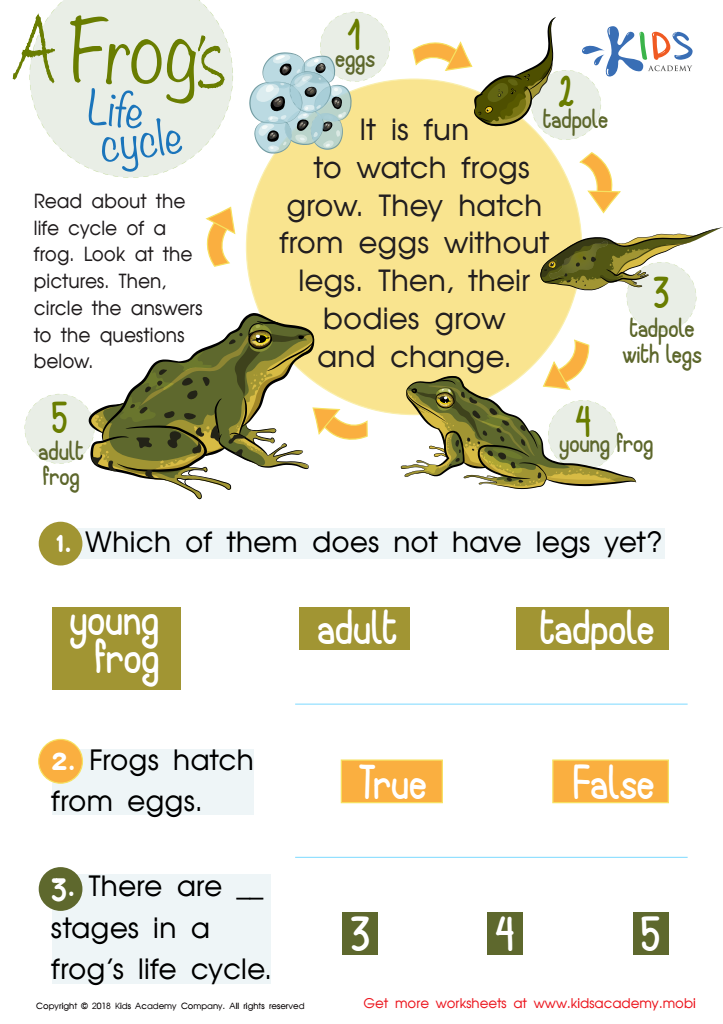
A Frog’s Life Cycle Worksheet
 Assign to My Students
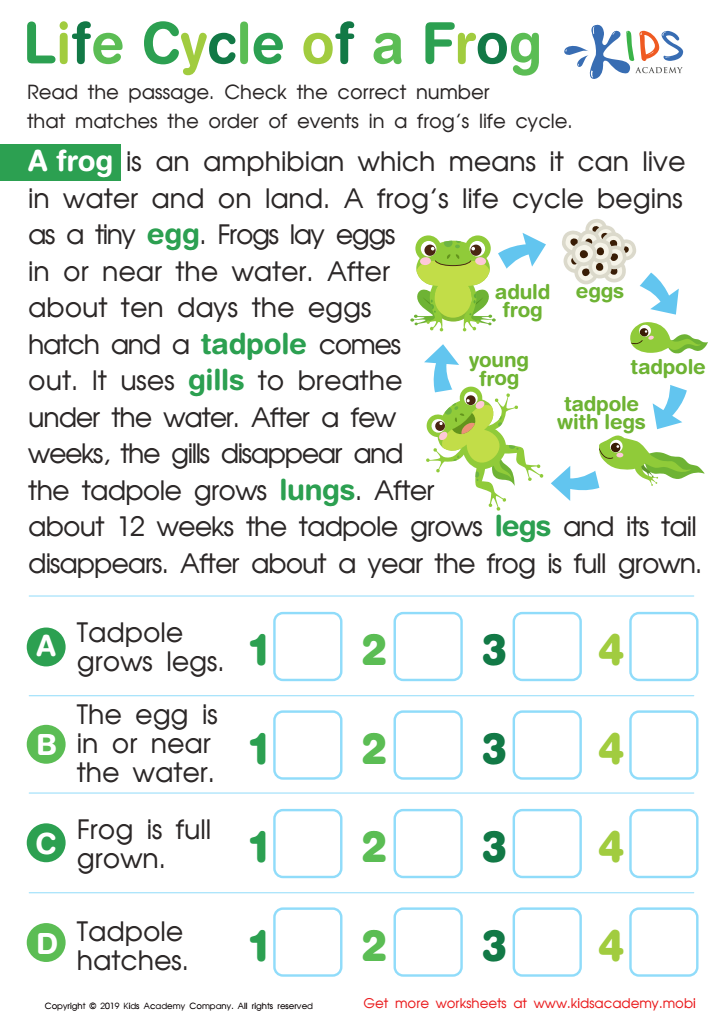
Life Cycle of a Frog Worksheet
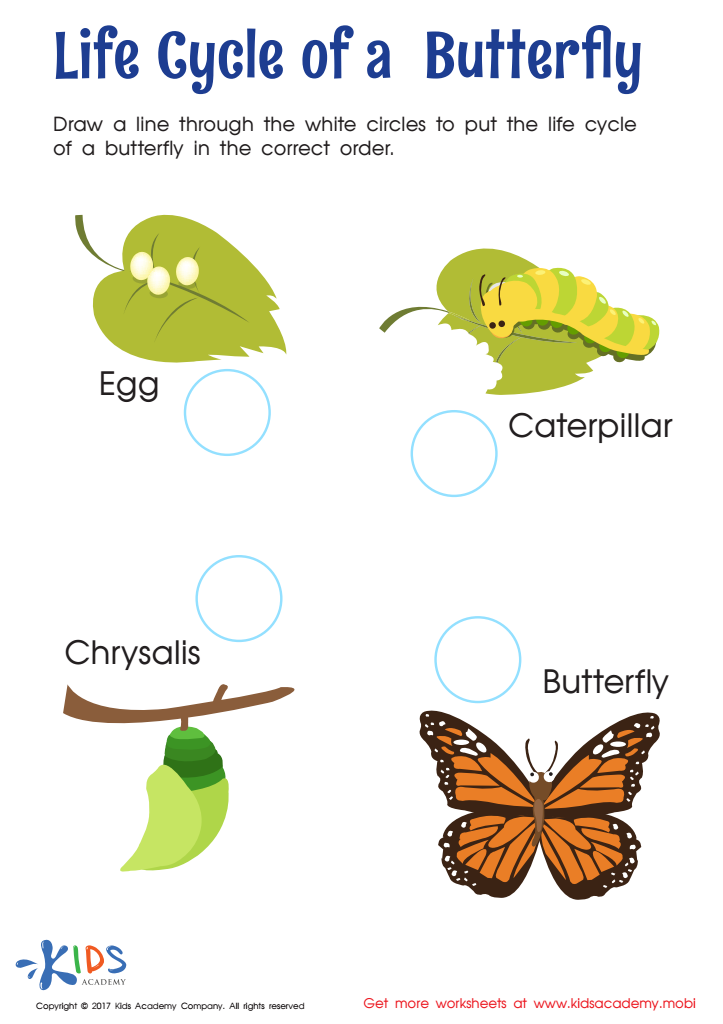
Life Cycle of Butterfly Worksheet








Parents and teachers should prioritize understanding life cycles in life science for 7-year-olds because this fundamental concept lays the groundwork for children's scientific understanding and critical thinking skills. At this age, children are naturally curious about the world around them, and life cycles—from the metamorphosis of a butterfly to the stages of human growth—offer relatable examples that capture their attention.
Studying life cycles enables children to recognize patterns and changes in living organisms, fostering an appreciation for nature and biodiversity. It enhances their observational skills and encourages them to ask questions, further igniting a passion for inquiry. Additionally, understanding life cycles helps children comprehend interconnectedness in ecosystems, promoting a sense of responsibility toward the environment.
Involving parents in their child’s learning can also reinforce concepts discussed in school, making it more impactful. Engaging activities—a family garden or nature walks—can deepen their understanding and strengthen bonds. Moreover, this knowledge cultivates empathy and respect for all living beings, crucial values in developing conscientious citizens. By emphasizing life cycles in education, we encourage holistic development, ensuring children gain essential life skills alongside academic knowledge.








