Counting skills Worksheets for Ages 8-9 - Page 7
168 filtered results
-
From - To
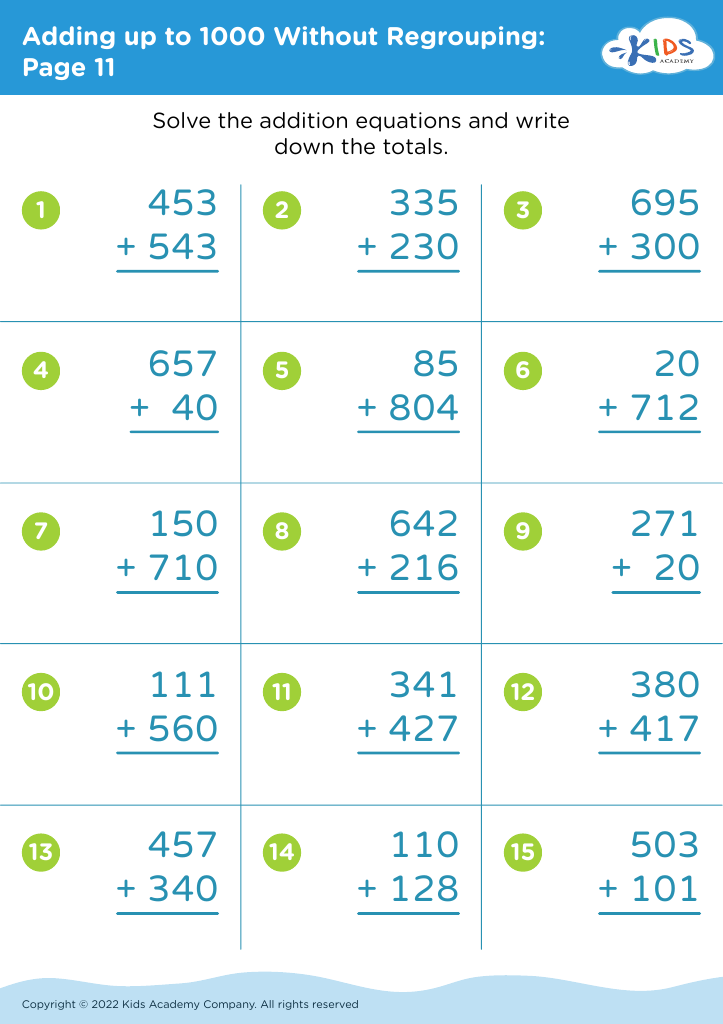
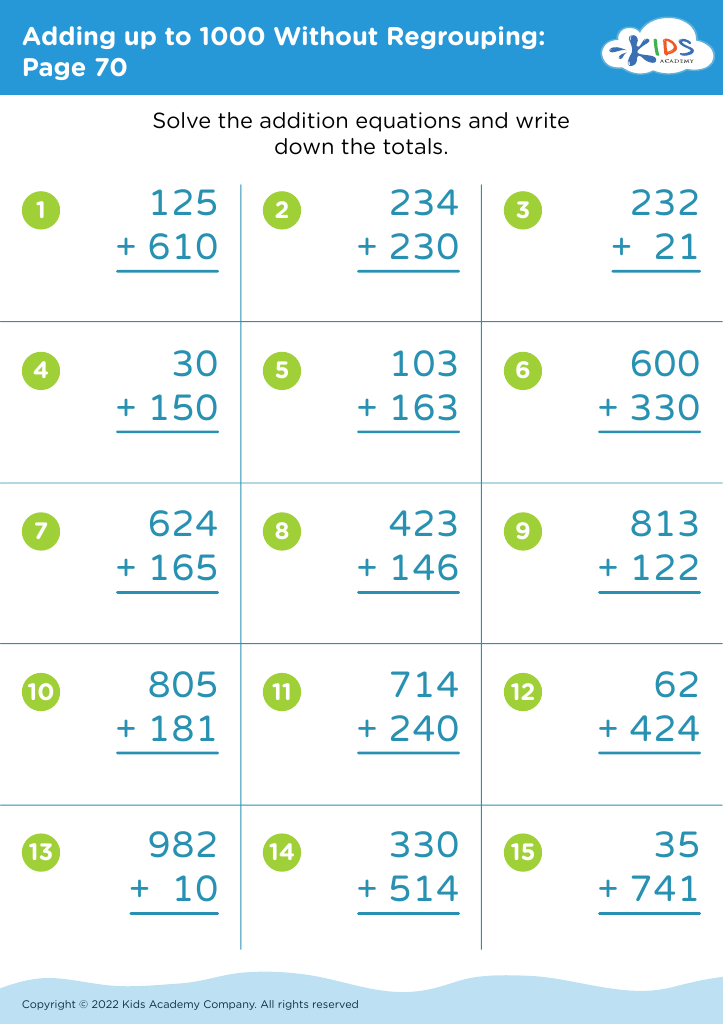
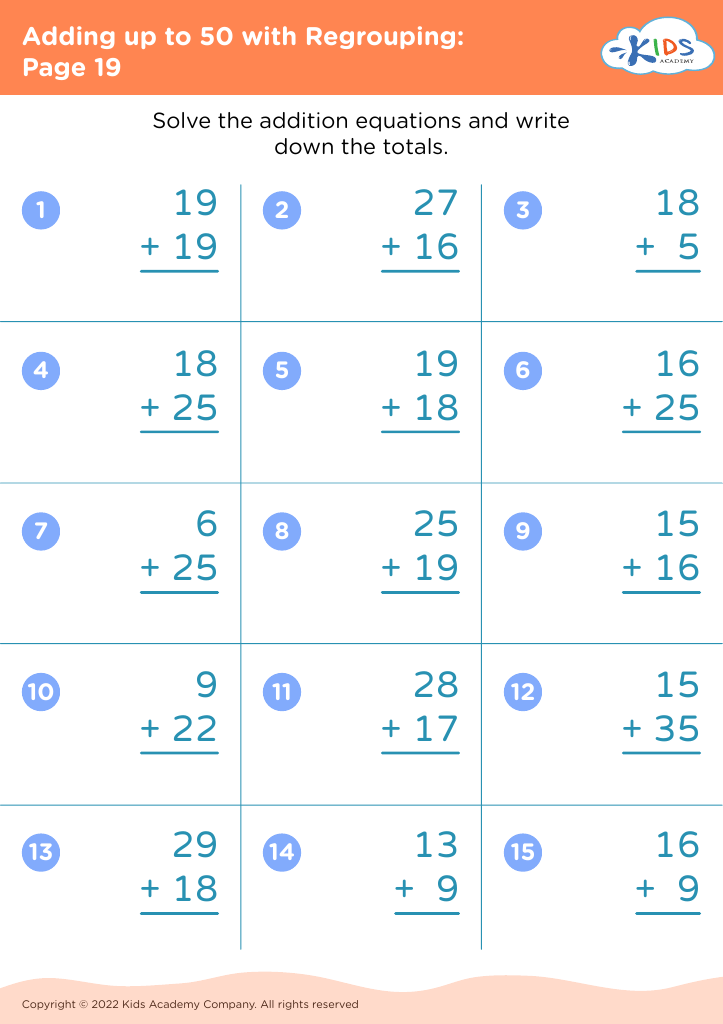
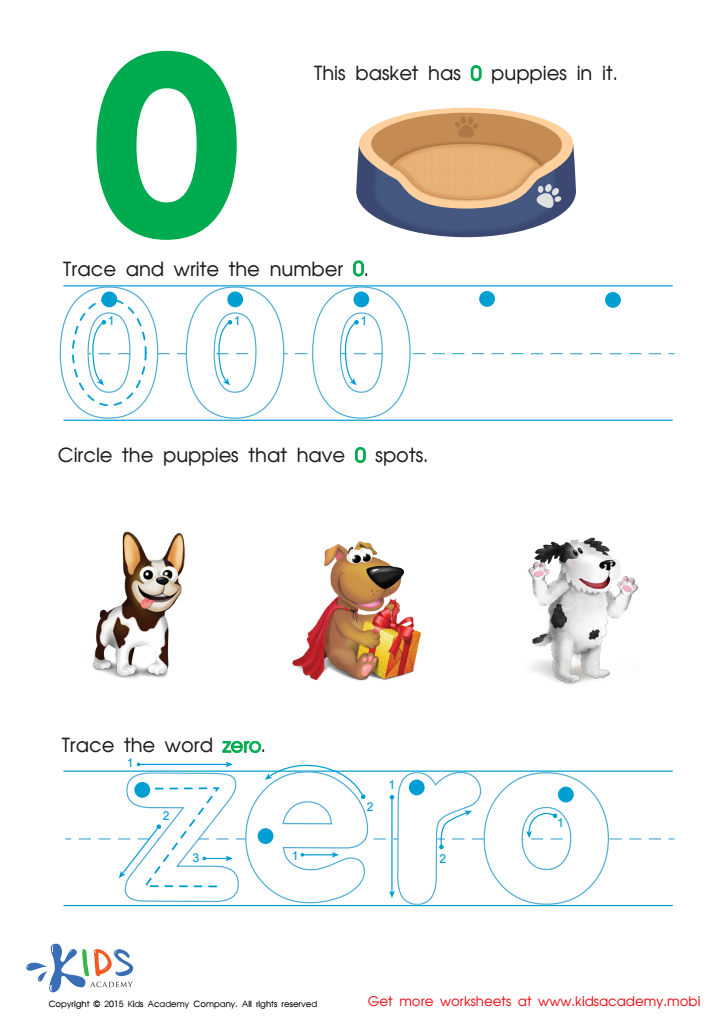
Trace And Write Number 0 Worksheet
 Assign to My Students
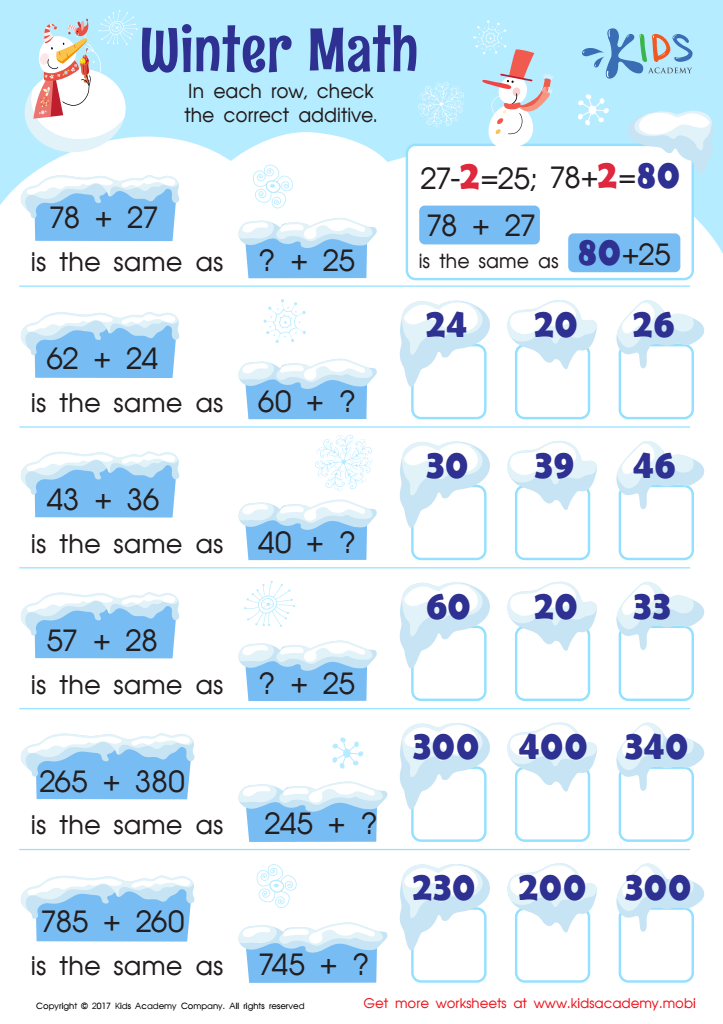
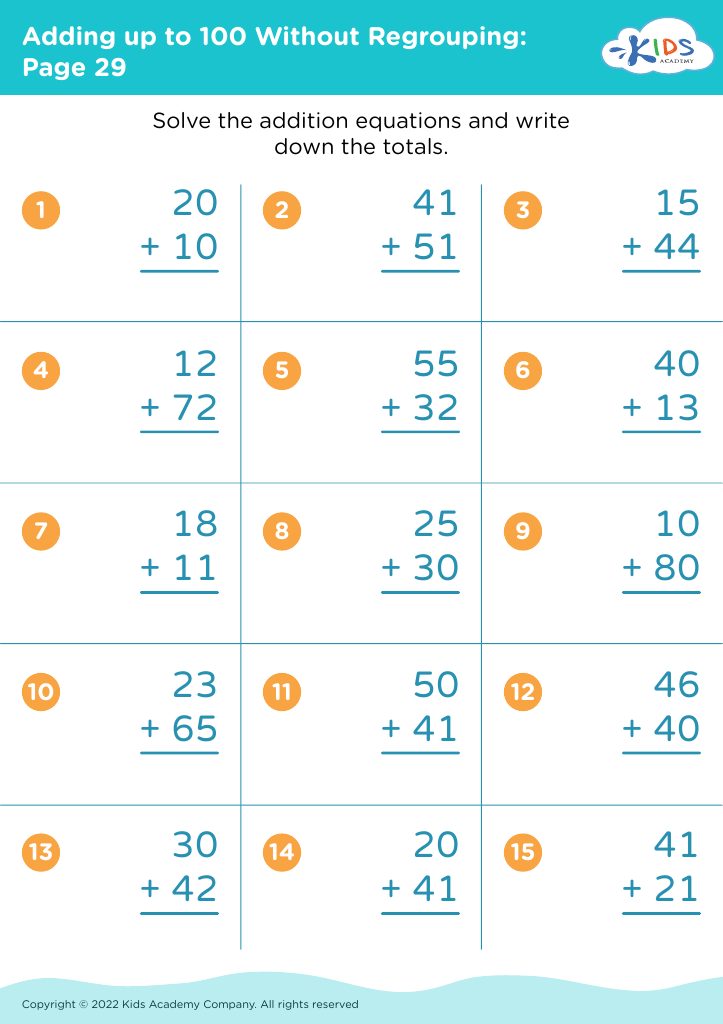
Free Addition Worksheet
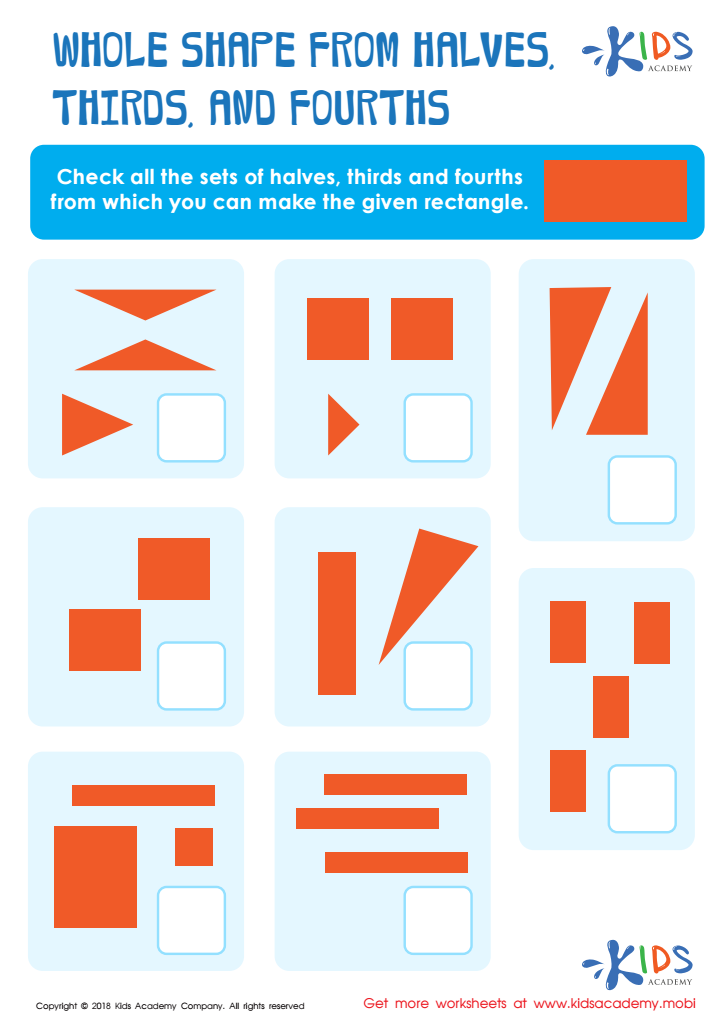
Whole Shape from Halves, Thirds and Fourths Worksheet
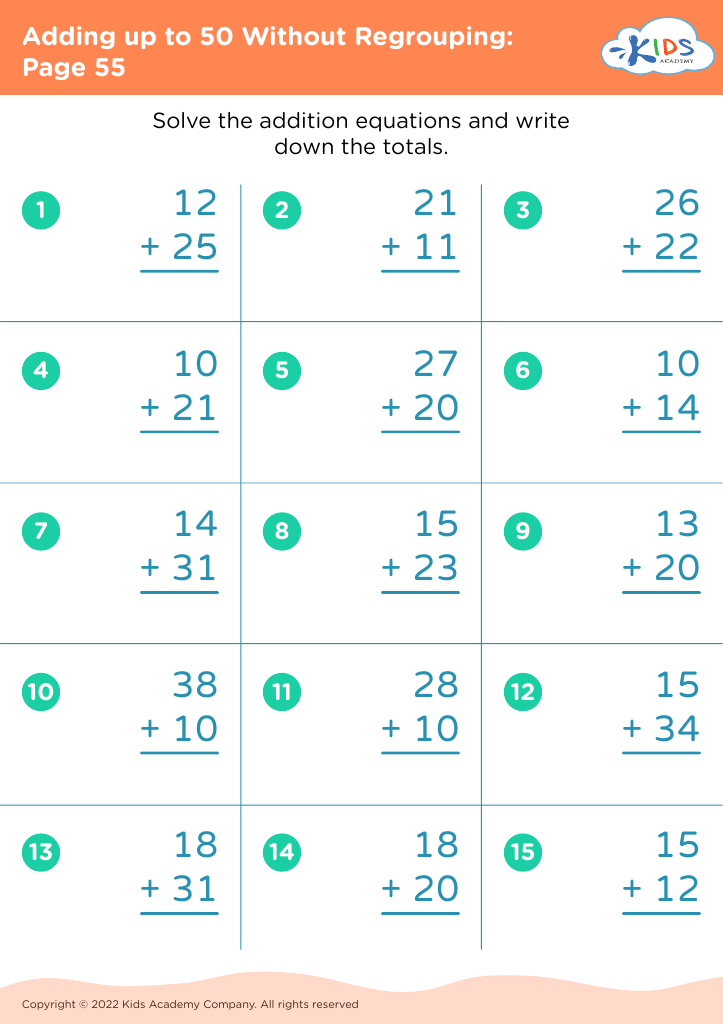
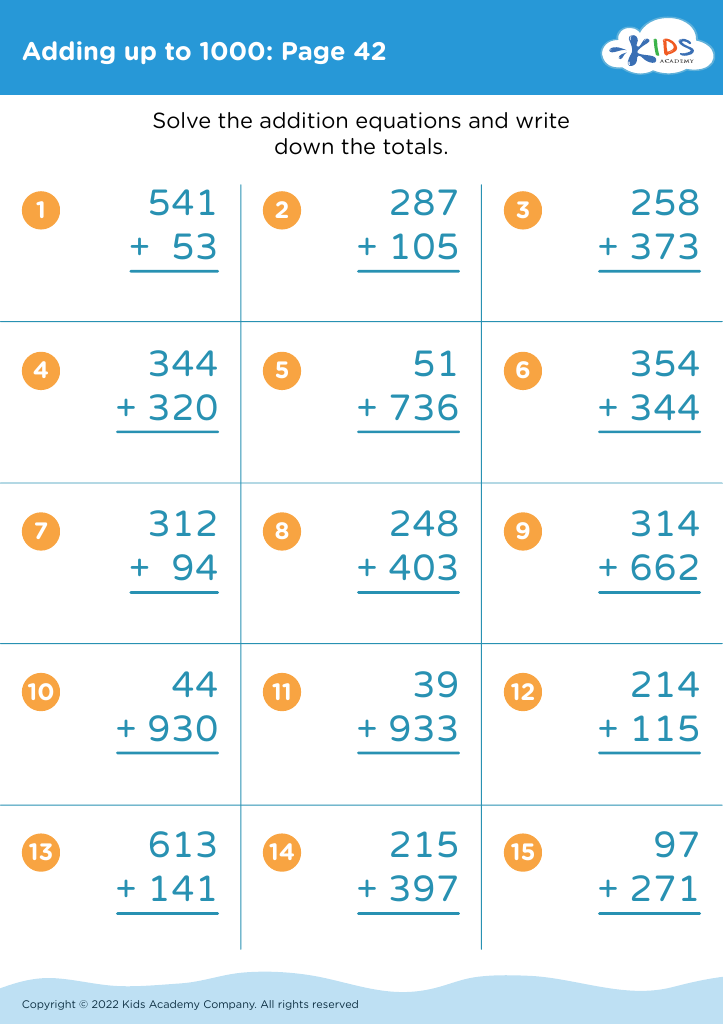
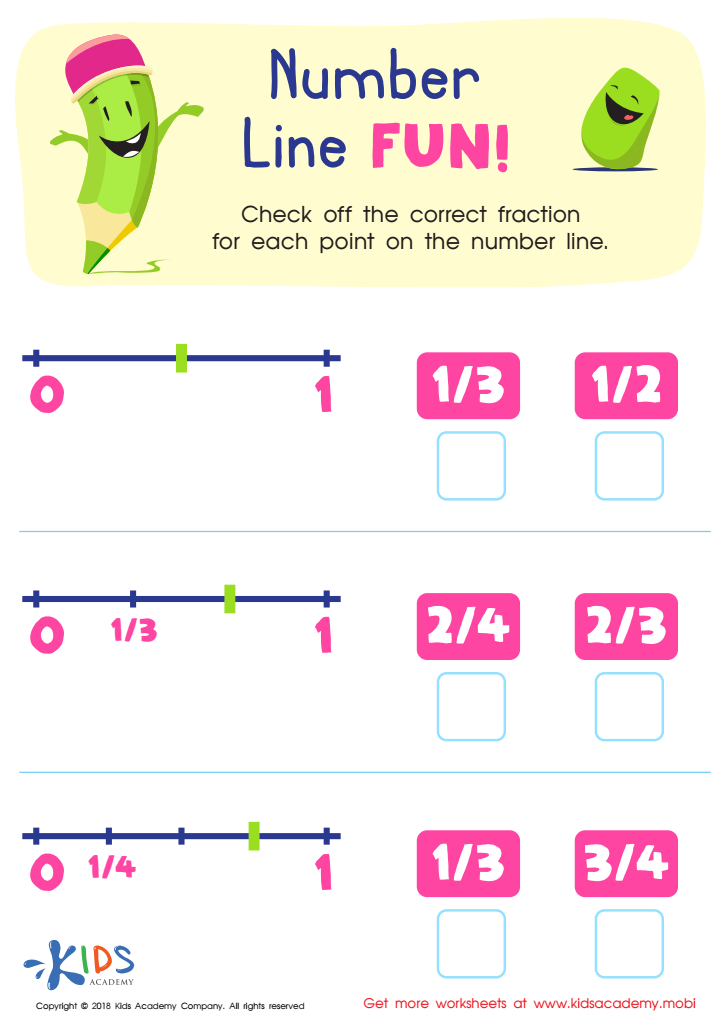
Number Line Fun Worksheet
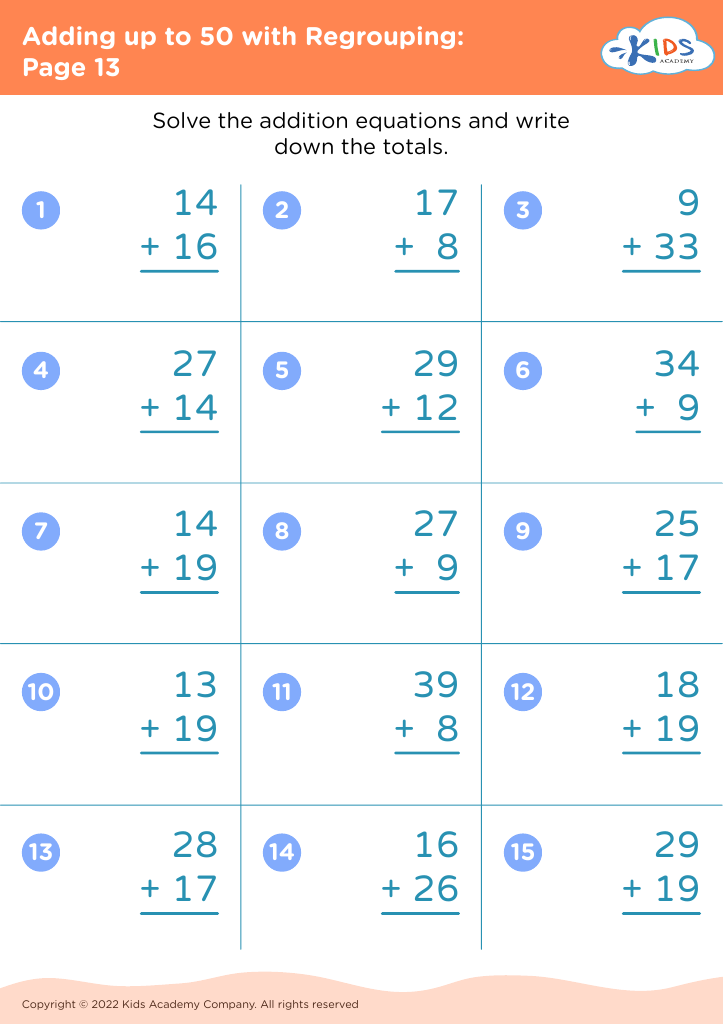
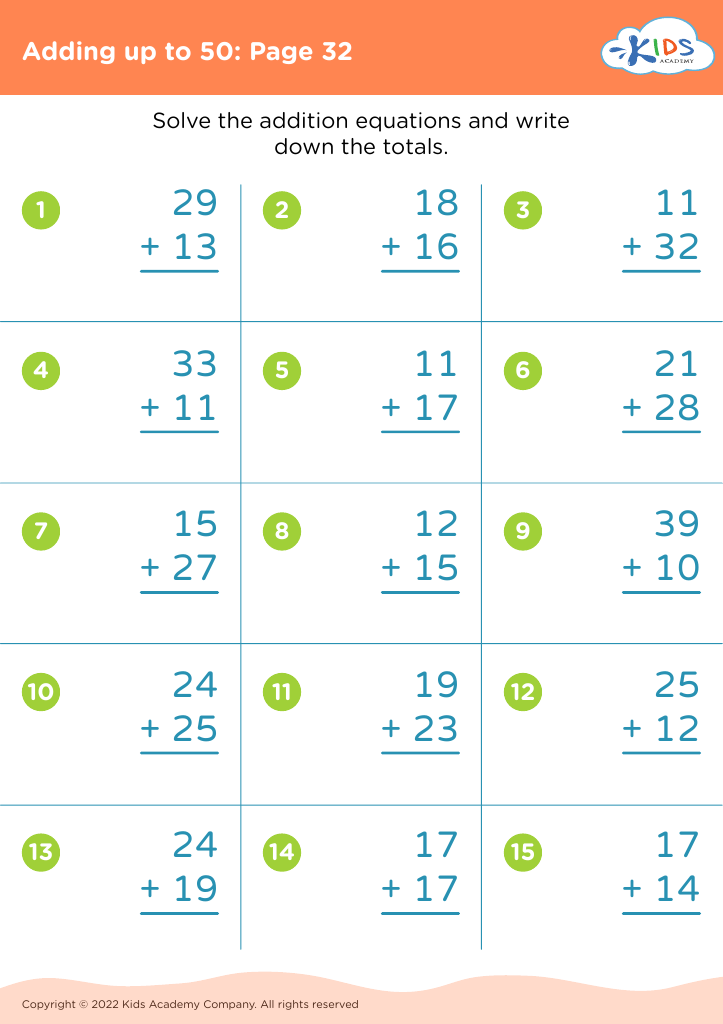








Counting skills are foundational in early mathematics and play a crucial role in a child's cognitive development. For children aged 8-9, mastering counting not only aids in basic arithmetic but also enhances problem-solving capabilities. At this age, students transition from simple counting to understanding more complex mathematical concepts, such as addition, subtraction, multiplication, and division, making counting skills pivotal.
Parents and teachers should care about developing these skills because they directly influence a child's academic success. Proficiency in counting lays the groundwork for understanding patterns, sequences, and number relations, which are essential for higher-level math. It helps children develop logical reasoning and the ability to perform mental calculations, essential life skills that go beyond the classroom.
Moreover, counting is often integrated into daily activities. By fostering counting skills, caregivers can enhance a child's daily learning experiences, from fostering practical abilities in budgeting to problem-solving in real-world situations. Lastly, confidence in counting can improve overall self-esteem in math, making children more willing to engage with challenging tasks and persevere through difficulties. Investing time in developing these skills is a step toward ensuring a child's success in mathematics and fostering a positive attitude toward learning.








