Understanding area Worksheets for Ages 8-9
3 filtered results
-
From - To
At Kids Academy, our "Understanding Area Worksheets for Ages 8-9" are designed to make learning about area engaging and fun for young minds. These worksheets help children grasp the concept of area by breaking it down into manageable and enjoyable exercises. From covering shapes with unit squares to comparing different areas, our activities enhance spatial reasoning and mathematical understanding. Perfect for both classroom and at-home learning, these resources align with common core standards, ensuring a thorough comprehension of this fundamental math topic. Equip your 3rd graders with the skills they need to master area with these interactive and educational worksheets today!
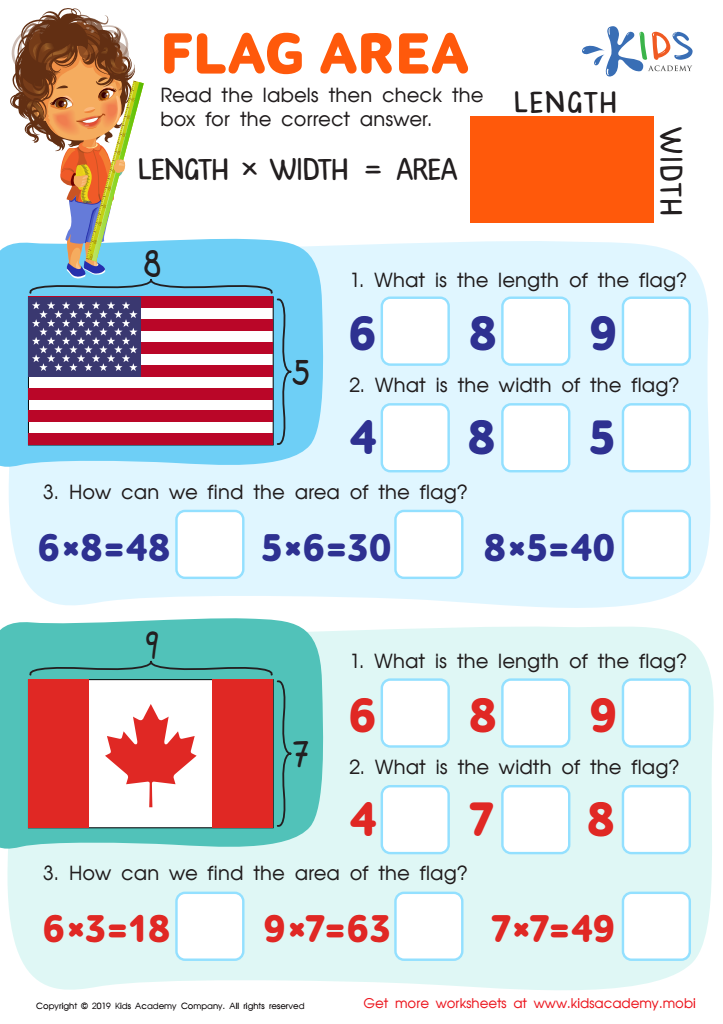
Flag Area Worksheet
 Assign to My Students
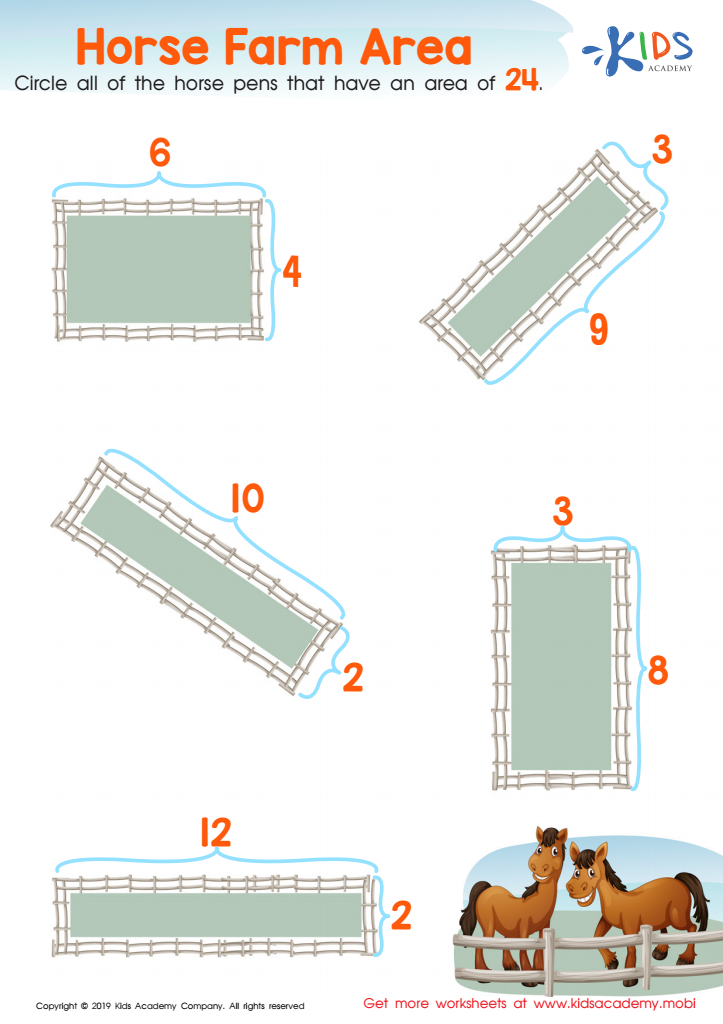
Horse Farm Area Worksheet
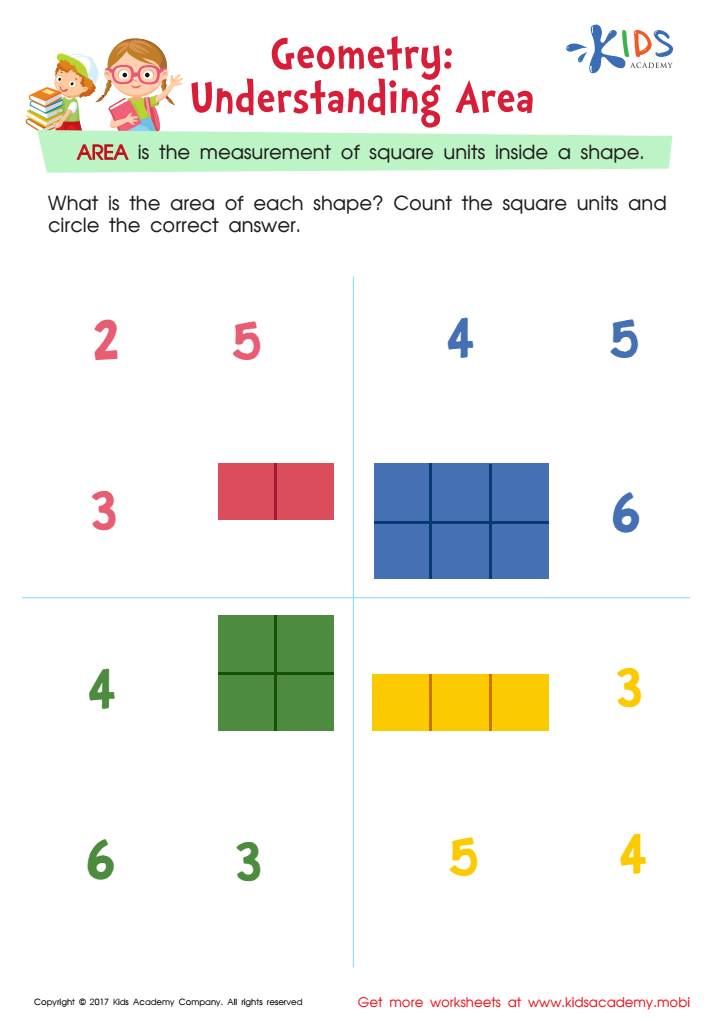
Understanding Area Worksheet





Understanding area for children ages 8-9 is vital for several reasons. Primarily, the concept of area lays the foundation for essential math skills critical later in life, such as geometry, algebra, and calculus. Early exposure to these concepts promotes cognitive development by encouraging problem-solving and logical thinking skills. Comprehending area also aids in practical, everyday tasks. For instance, kids can apply this knowledge to real-world scenarios like determining how much paint is needed to cover a wall or the amount of fabric required for a craft project.
Moreover, grasping the idea of area early on allows children to better understand other mathematical concepts such as multiplication and spatial awareness. Building these skills at a young age makes future learning endeavors less daunting, boosting their confidence and fostering a positive attitude towards math. For teachers, introducing area through engaging activities like drawing, building with blocks, and exploring grids makes learning interactive and enjoyable, enhancing student engagement and retention of the material.
Finally, by promoting an understanding of area, teachers and parents can help equip children with critical life skills. Whether pursuing STEM careers or managing daily tasks, a strong grasp of these basic math concepts will benefit children throughout their academic and personal lives, making their initial education well worth the investment.








