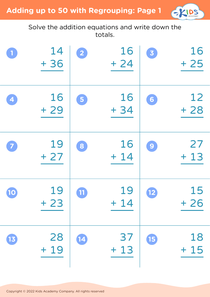
Adding up to 50 Without Regrouping Worksheets for Ages 8-9
73 filtered results
-
From - To
Looking for effective practice resources for young math enthusiasts? Our "Adding up to 50 Without Regrouping Worksheets for Ages 8-9" are perfect for building foundational arithmetic skills. Designed specifically for children in this age group, these worksheets help students to master addition without the complexity of regrouping. Fun and engaging, each printable sheet nurtures accuracy and confidence, enhancing your child’s number sense and calculation abilities. Ideal for both classroom use and home activities, these worksheets provide plenty of a playful yet educational practice, ensuring a smoother learning curve in mathematics. Download now for successful math development!
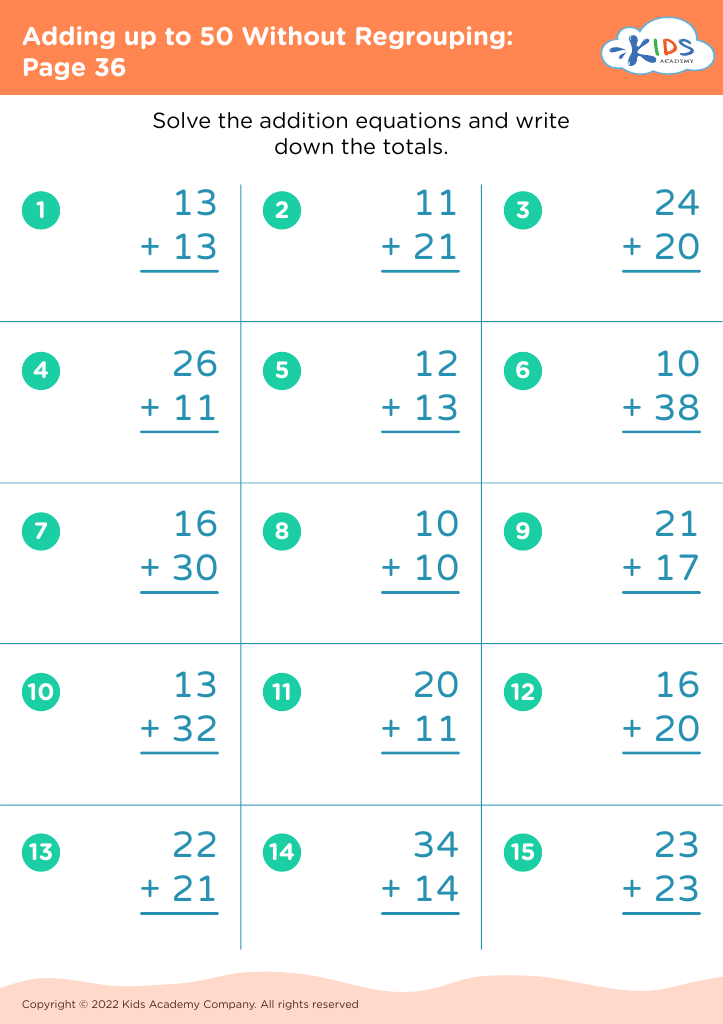
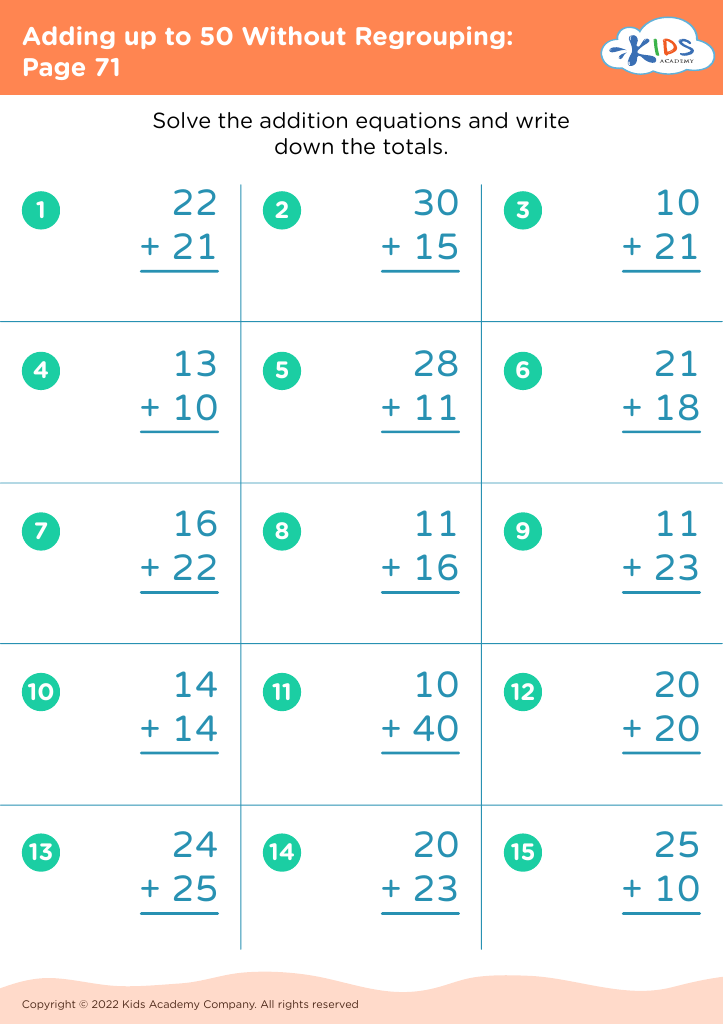
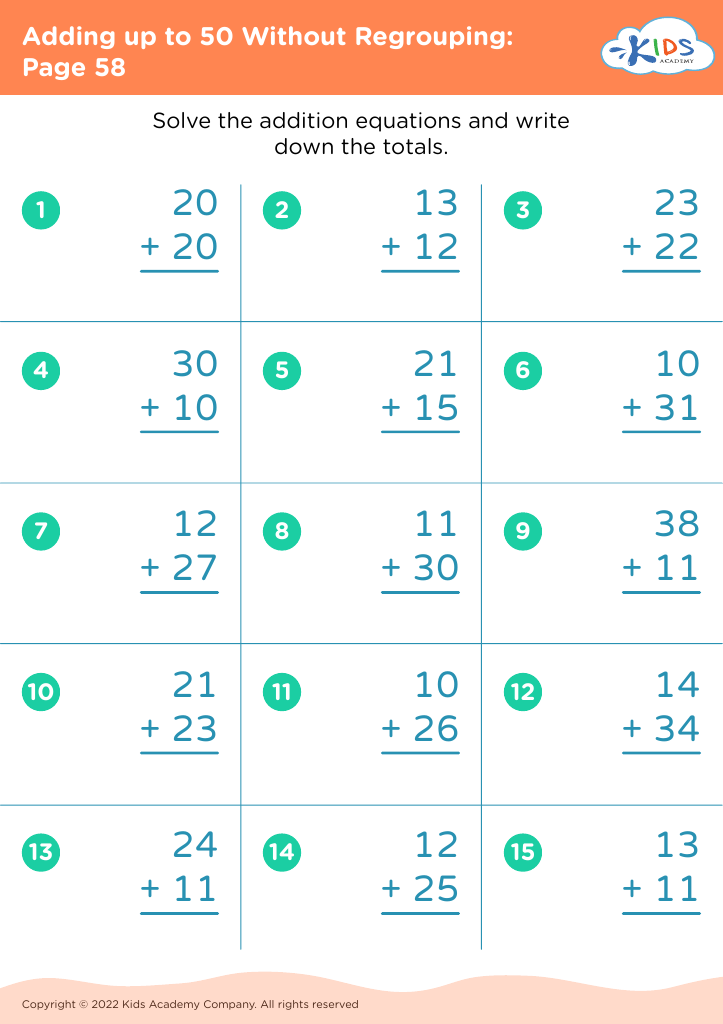
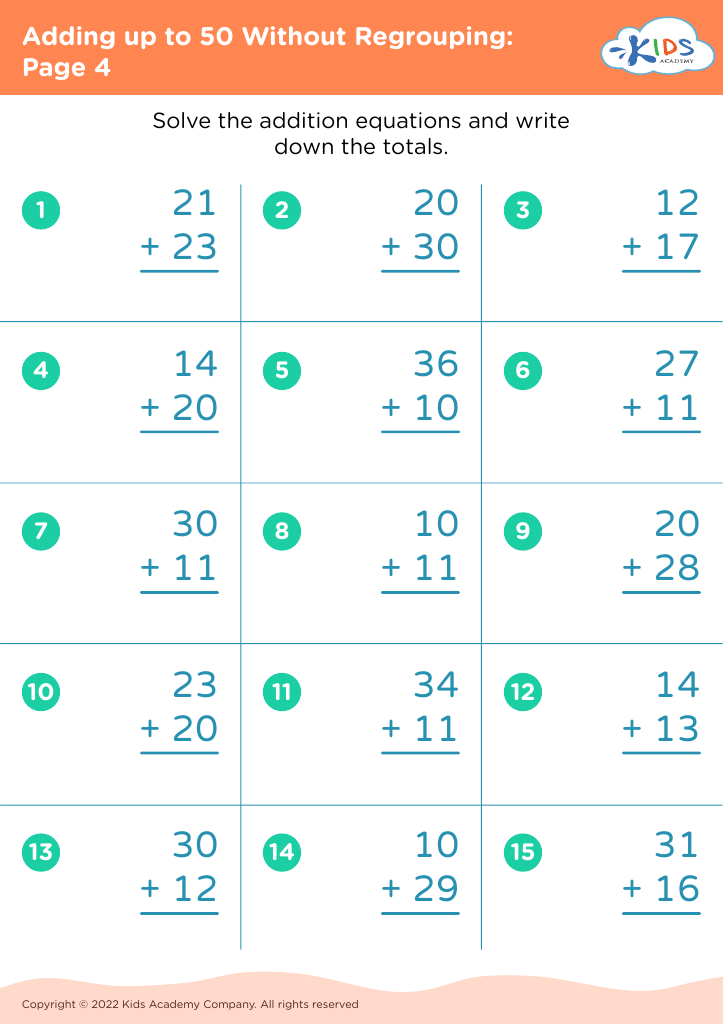
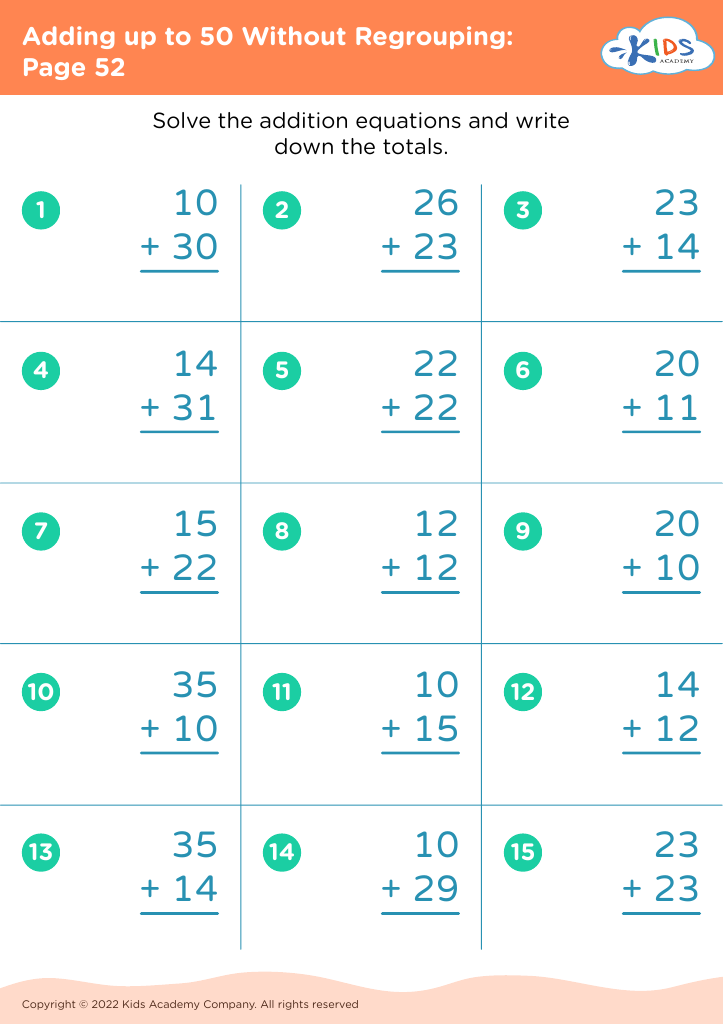
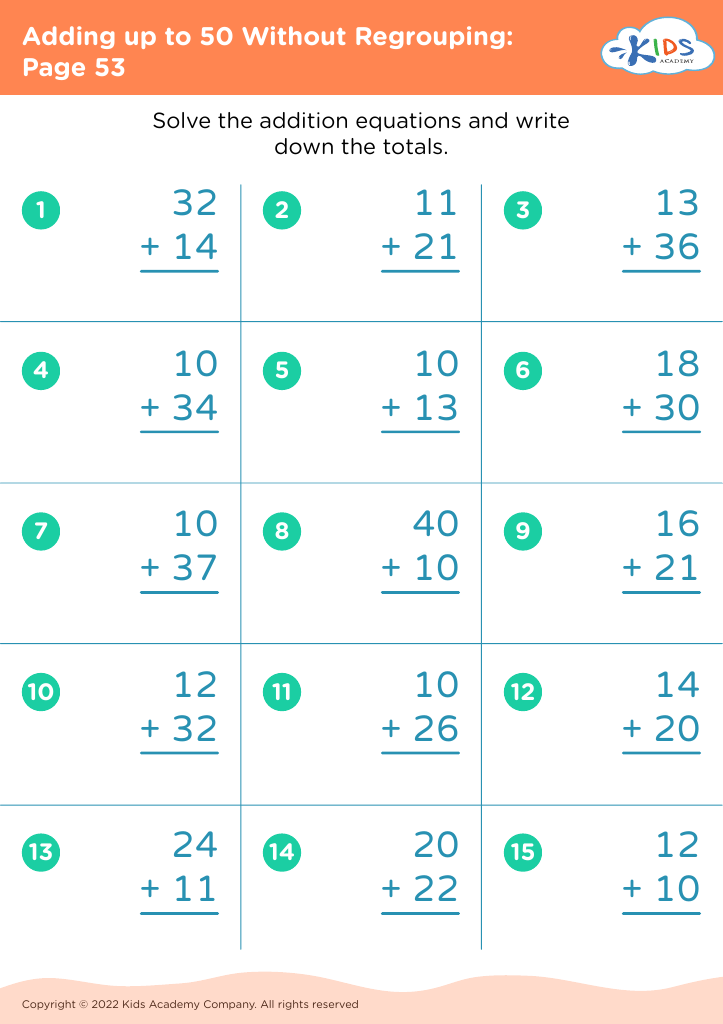
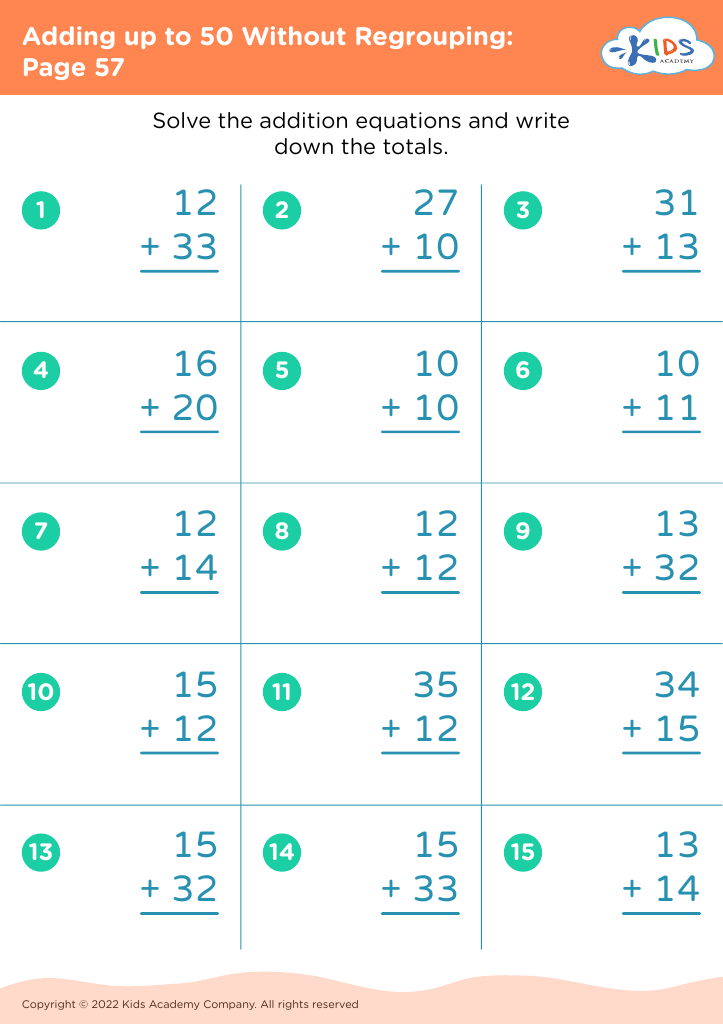
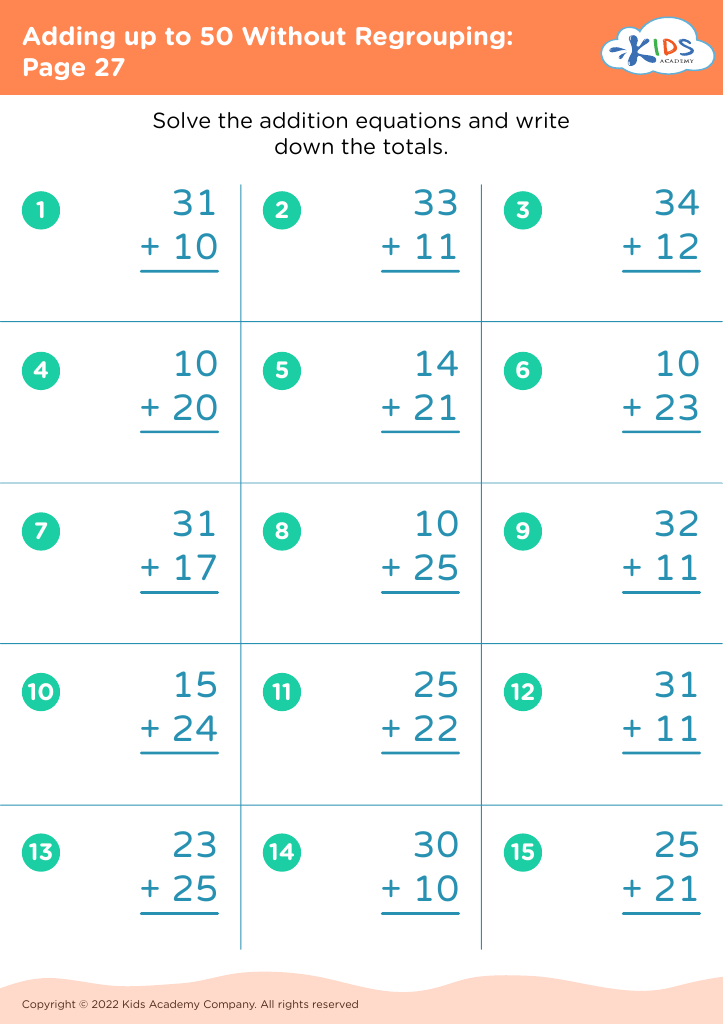
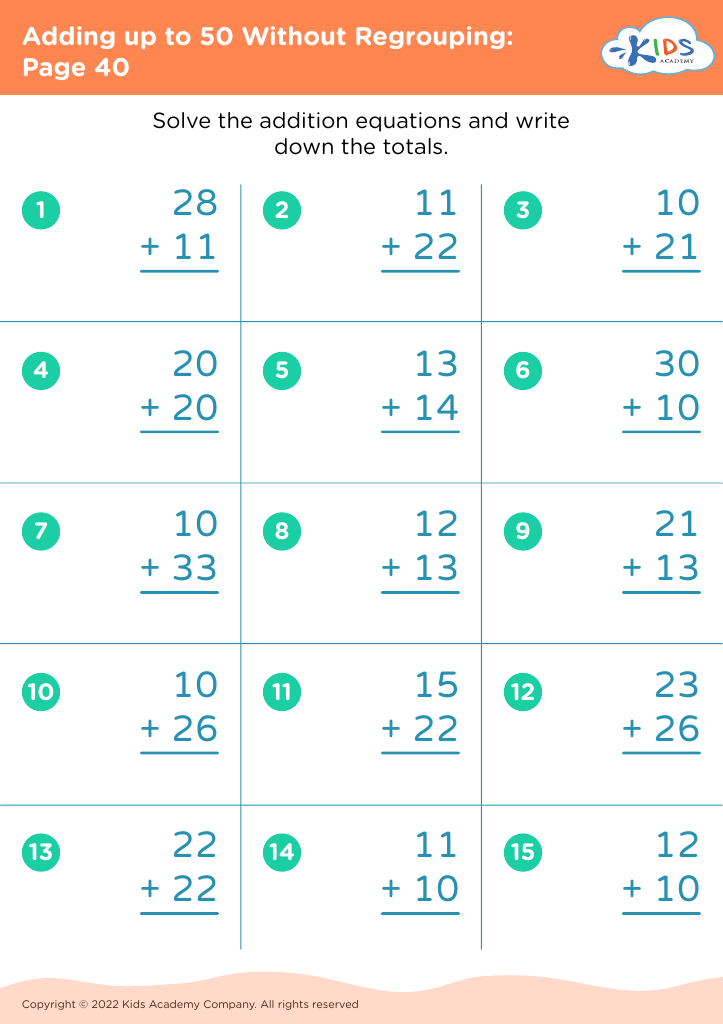
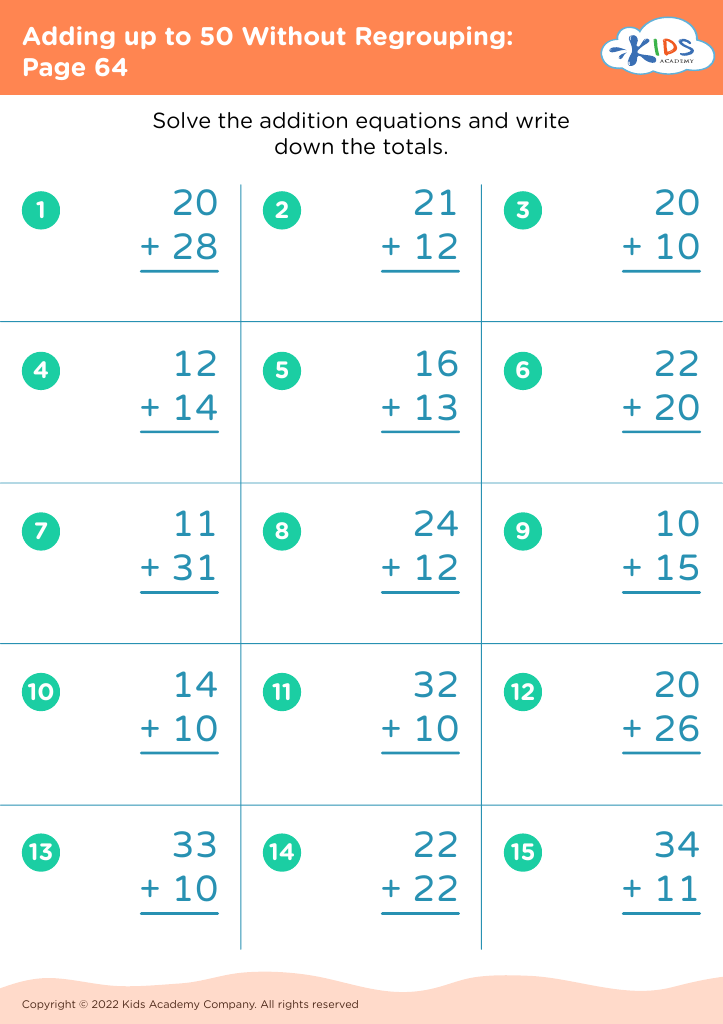
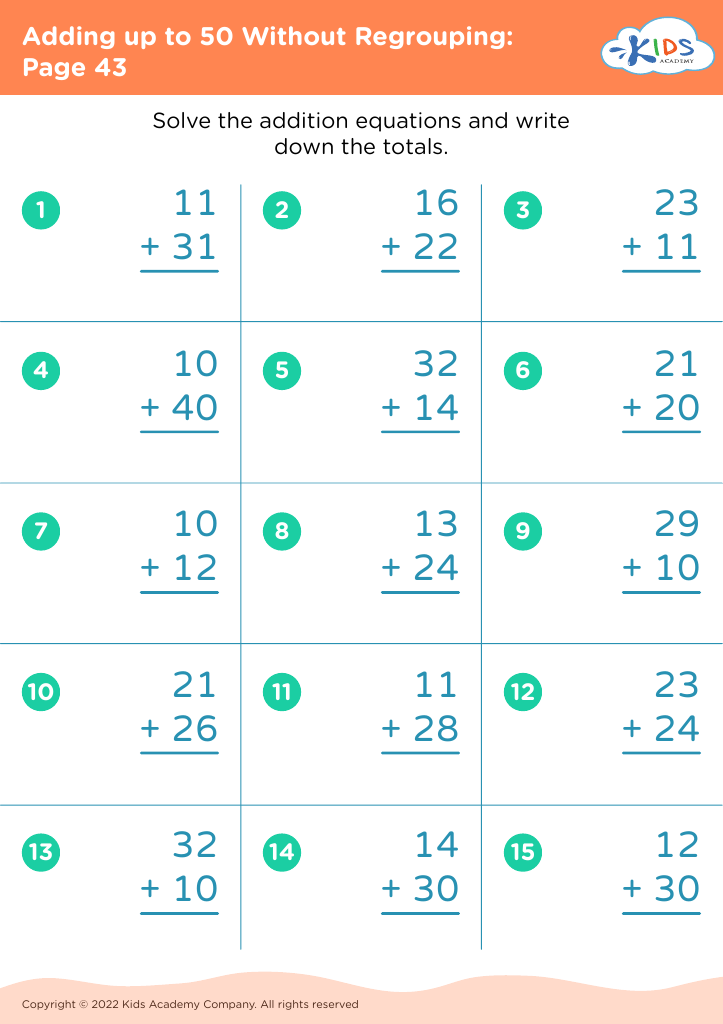
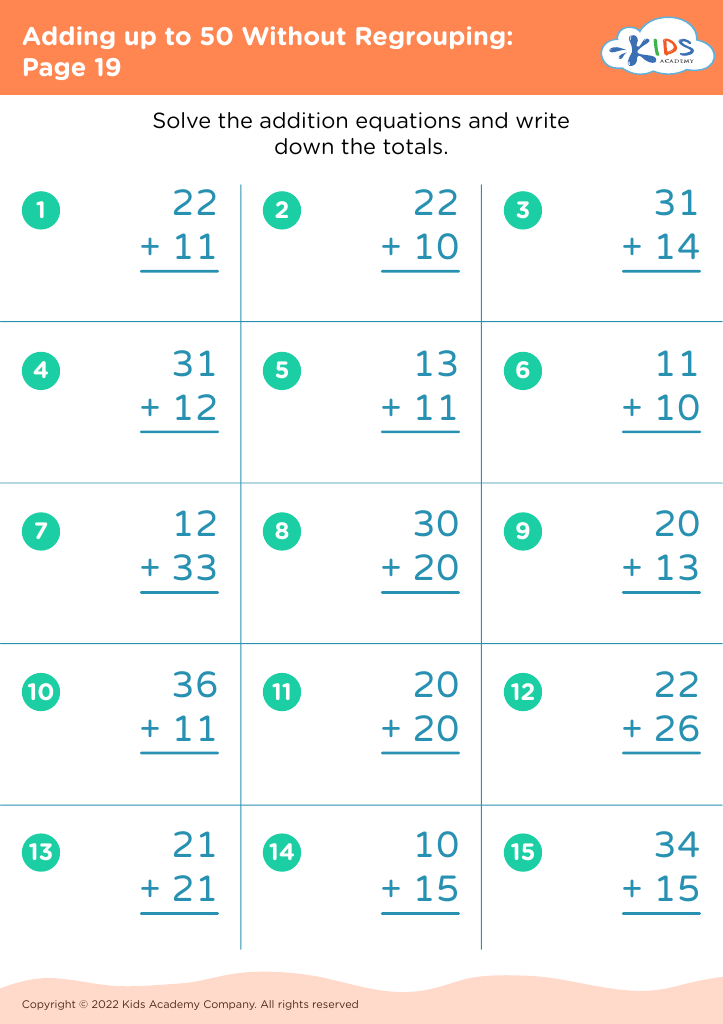
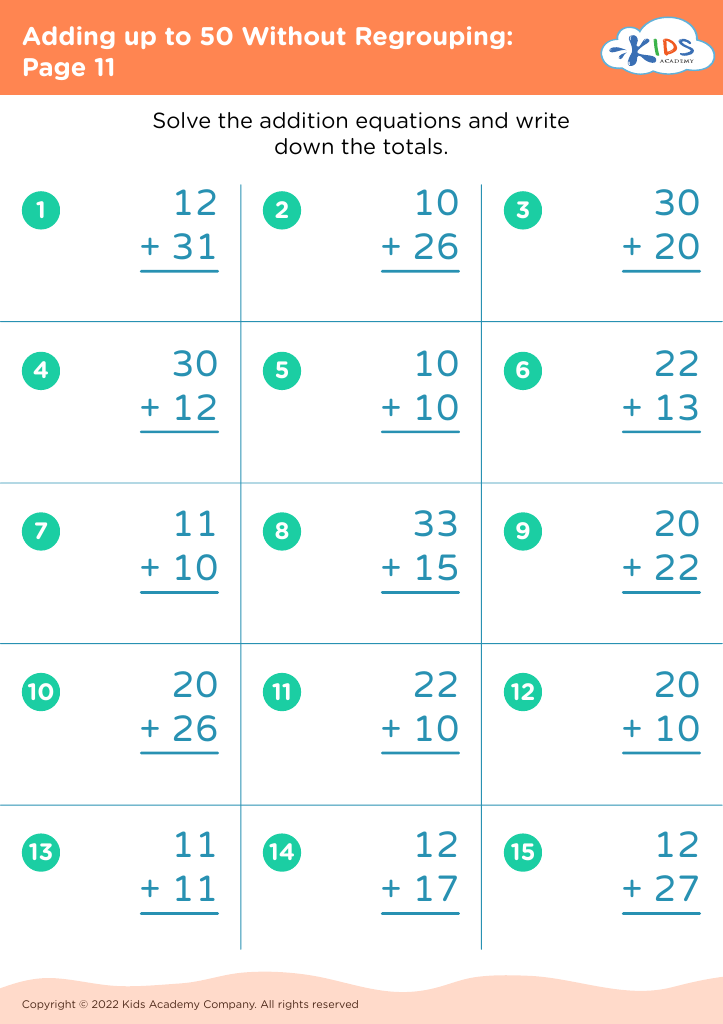
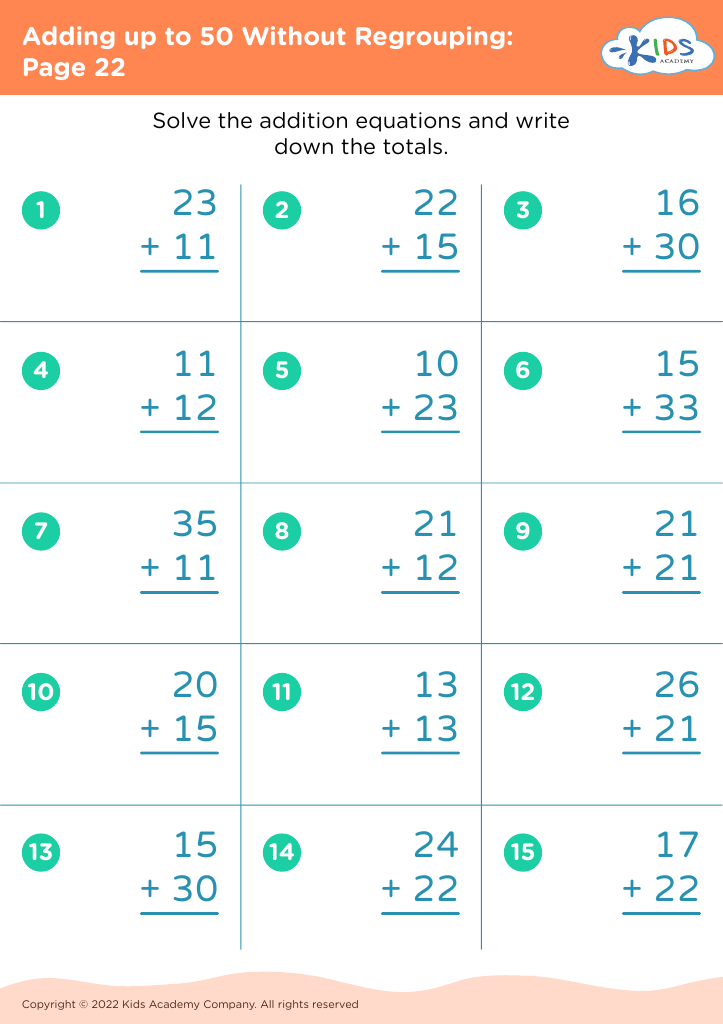
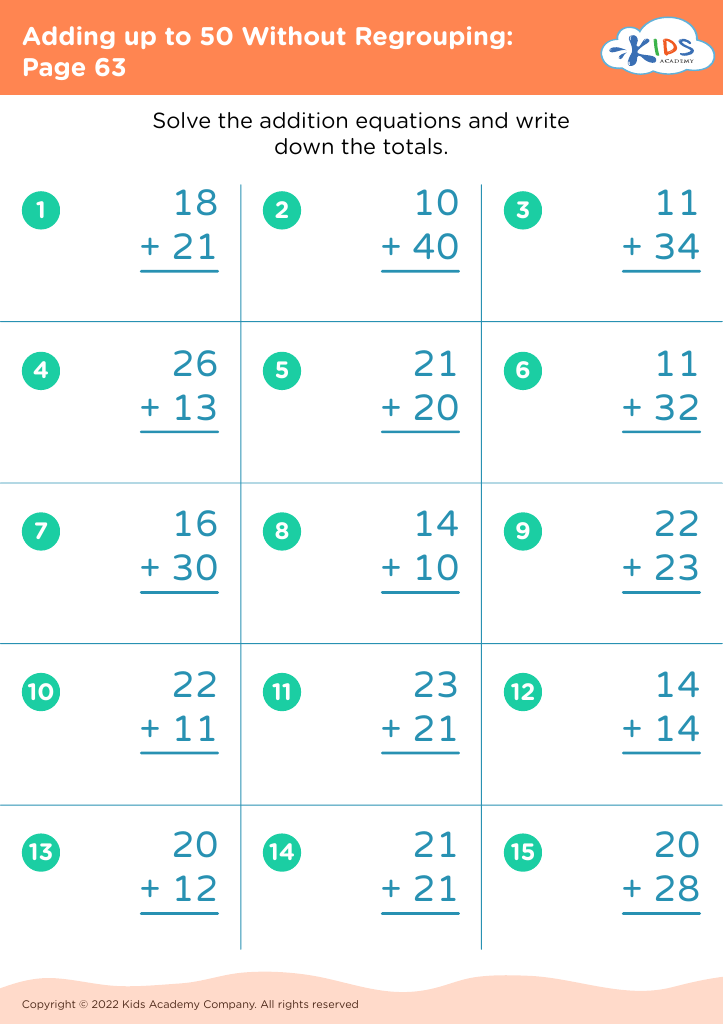
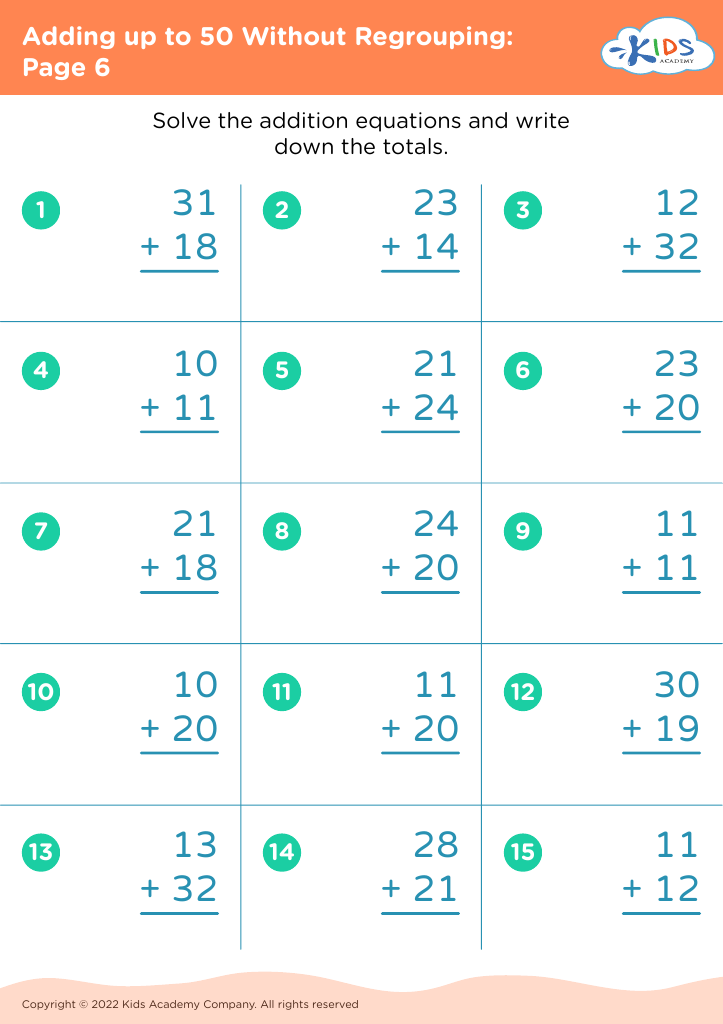
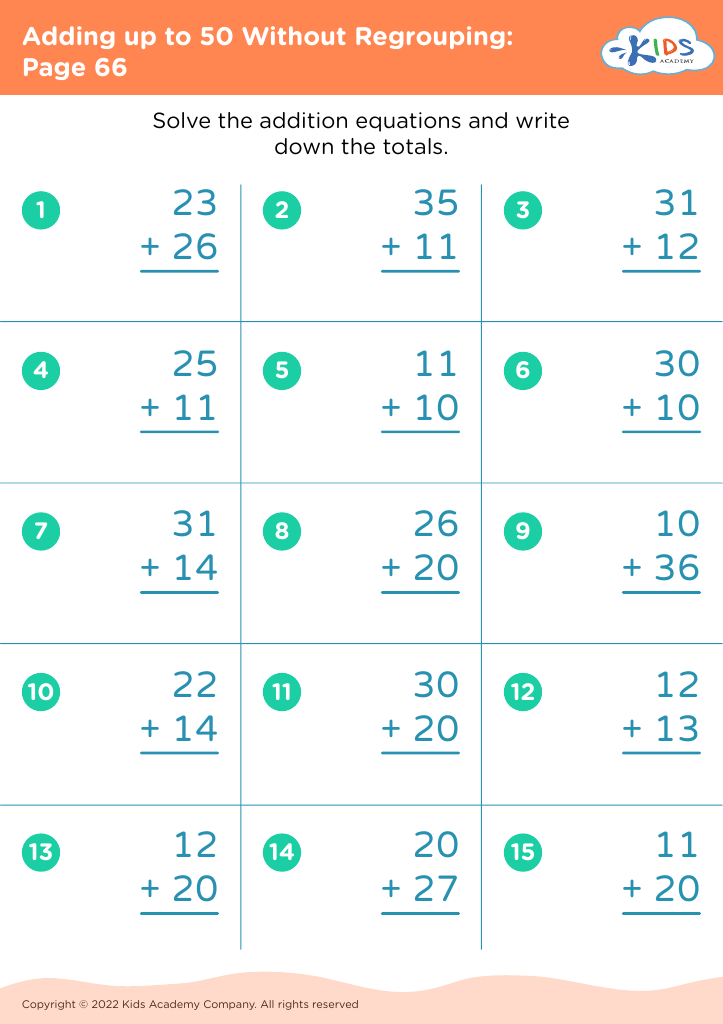
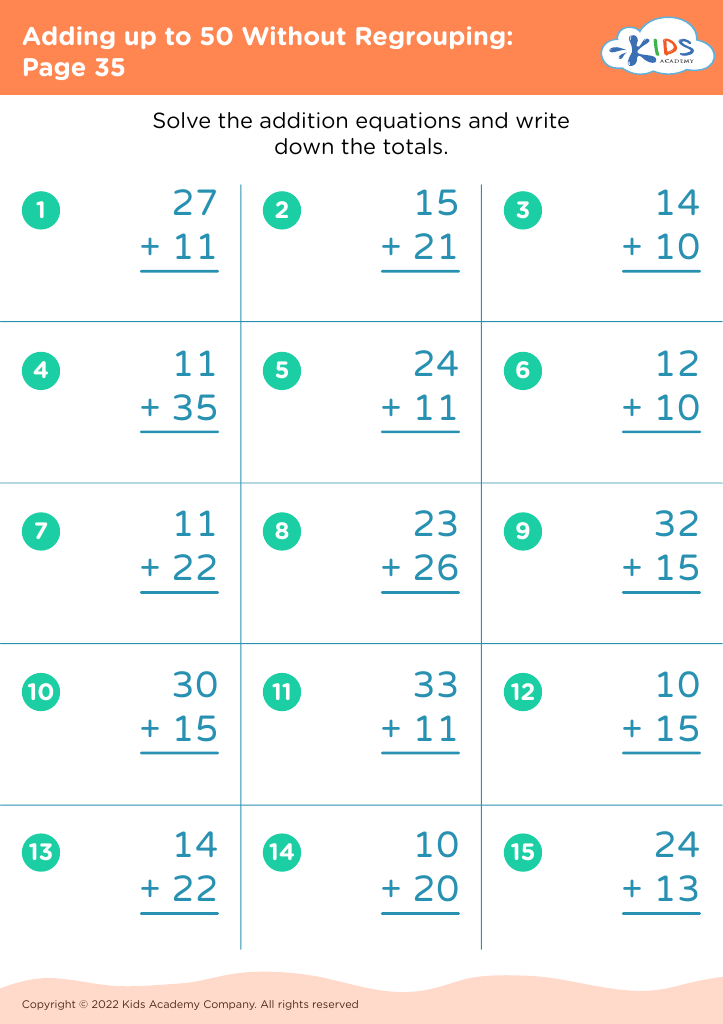
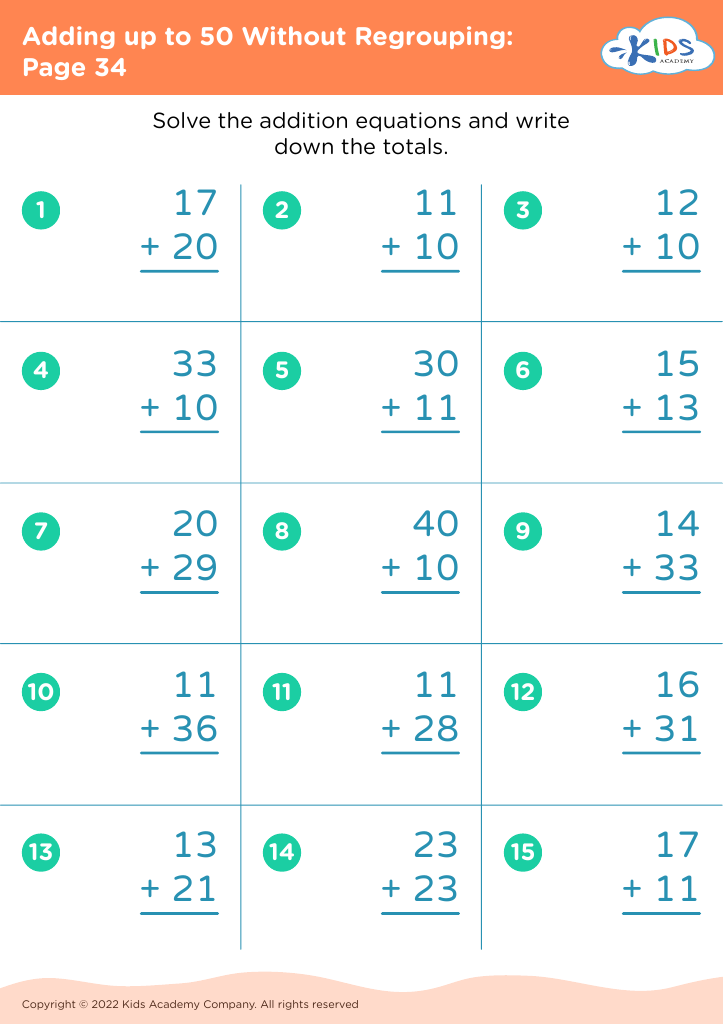
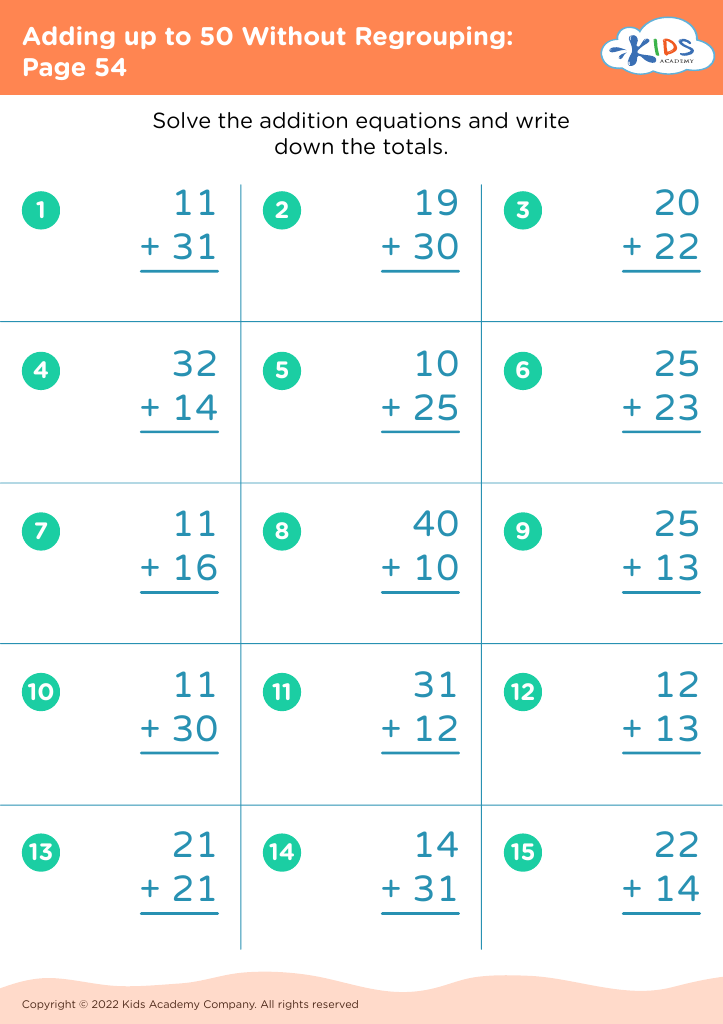
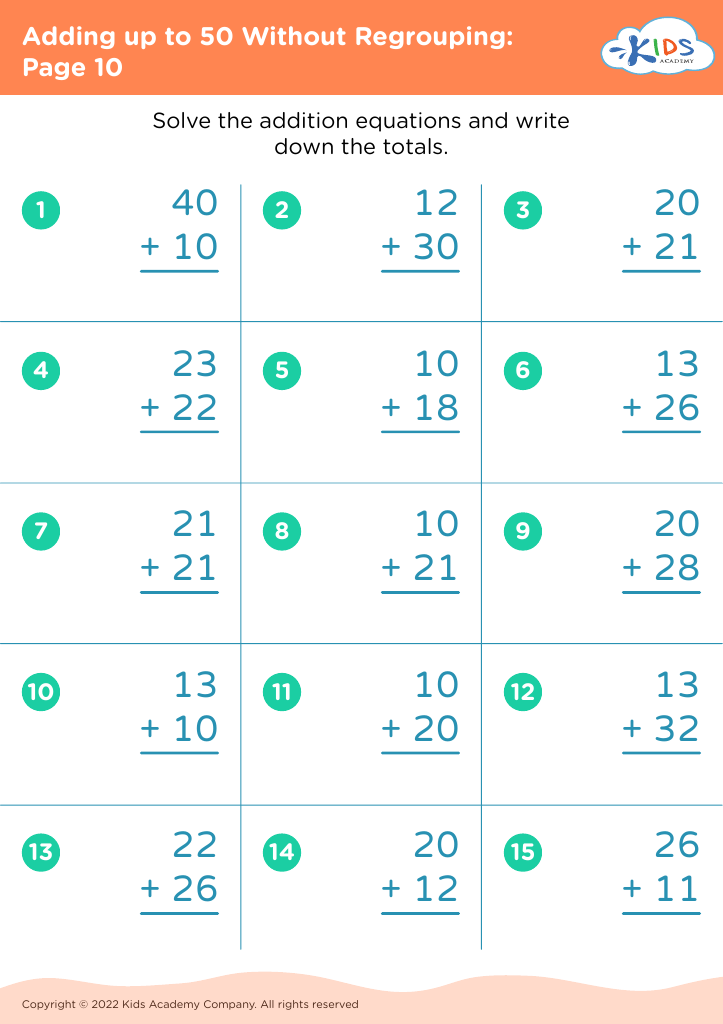
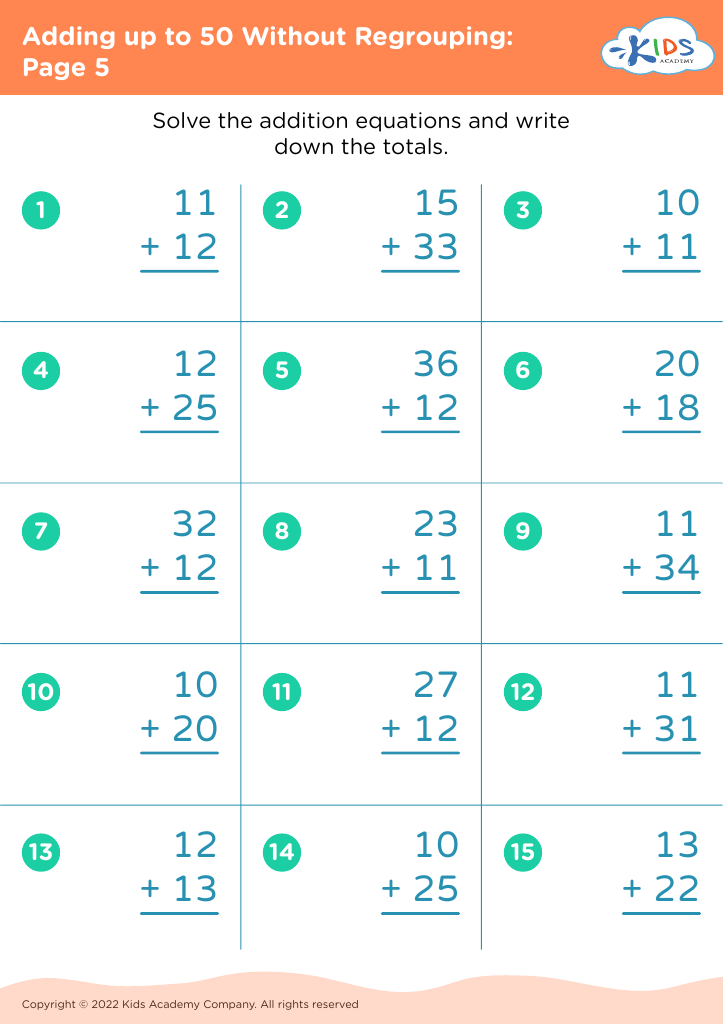
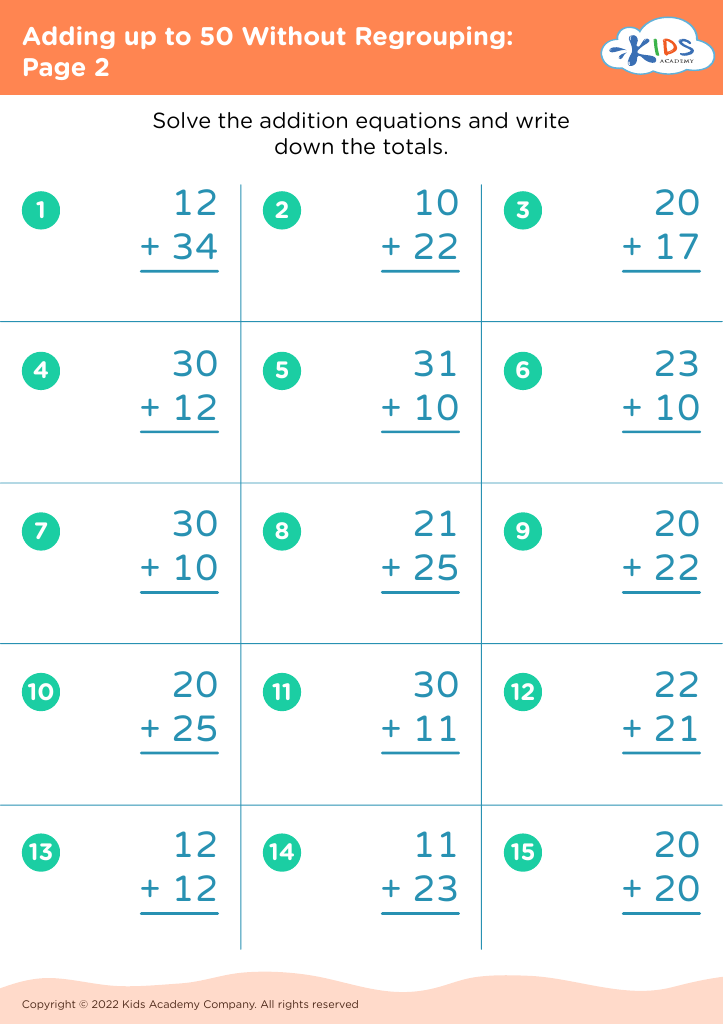
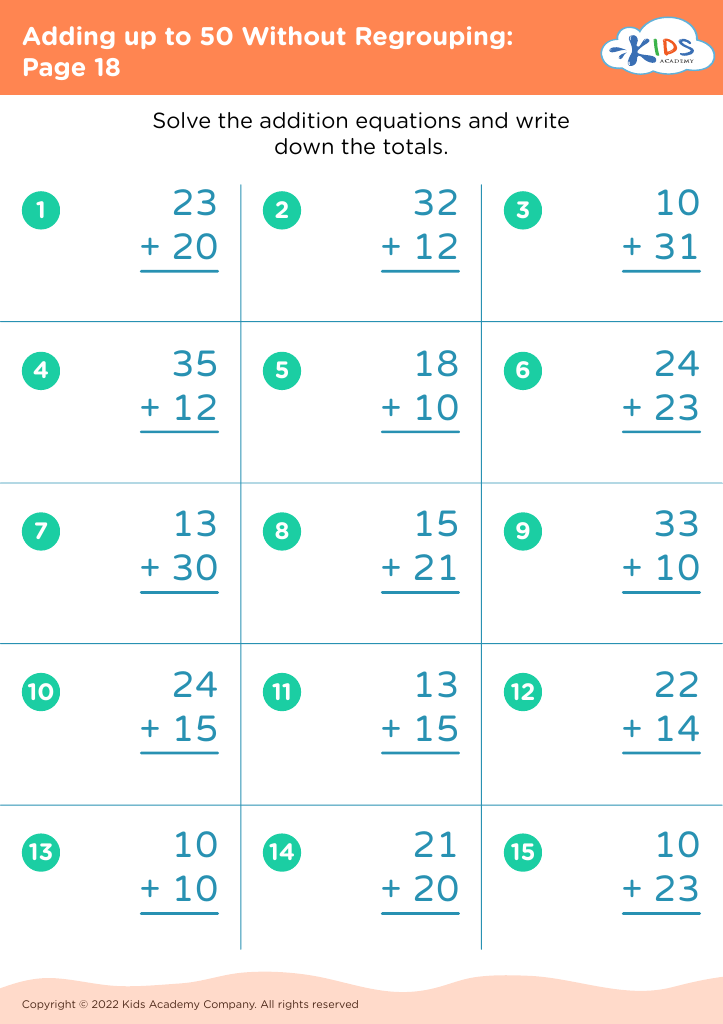


Adding up to 50 without regrouping is a fundamental skill for children ages 8-9 that sets the foundation for more advanced arithmetic and problem-solving abilities. Parents and teachers should care about this milestone for several reasons. First, mastering basic addition sharpens mental math skills, promoting quick and accurate calculations that students will use in daily life. It also helps in understanding place value, which is crucial for comprehending more complicated math concepts like regrouping, subtraction, multiplication, and division.
Second, success in simple addition boosts a child's confidence and reinforces a positive attitude toward math. This positive experience can foster a love for learning and exploration, making students more willing to tackle challenging problems in the future.
Third, competence in addition without the complication of regrouping lays the groundwork for effective use of mathematical strategies. For example, it supports the understanding of number relationships, like recognizing patterns and identifying simpler ways to add numbers, such as breaking them into smaller, more manageable parts.
Finally, a strong foundation in early arithmetic is critical for future academic success. Math skills are cumulative; children who struggle with fundamentals like adding up to 50 could face difficulties as they progress to more complex operations. Ensuring proficiency in basic addition prepares students better for future mathematical learning and academic achievements.