Boost your child's mathematical skills with our "Enhance Comprehension Addition & Subtraction Worksheets" tailored for ages 8-9. These worksheets focus on deepening understanding through engaging and interactive exercises, helping students grasp key concepts of addition and subtraction. Designed to align with educational standards, each worksheet encourages critical thinking and problem-solving, making math both fun and meaningful. Your child will develop confidence in their abilities as they tackle diverse problems that challenge their comprehension. Empower your young learner by turning math practice into an enjoyable adventure – explore our wide range of worksheets today and watch their skills soar!
Check out this FREE Trial Lesson on Addition & Subtraction for age 8-9!

A

Favorites
With answer key
Interactive
  • 8-9
  • Enhance comprehension
  • Addition & Subtraction
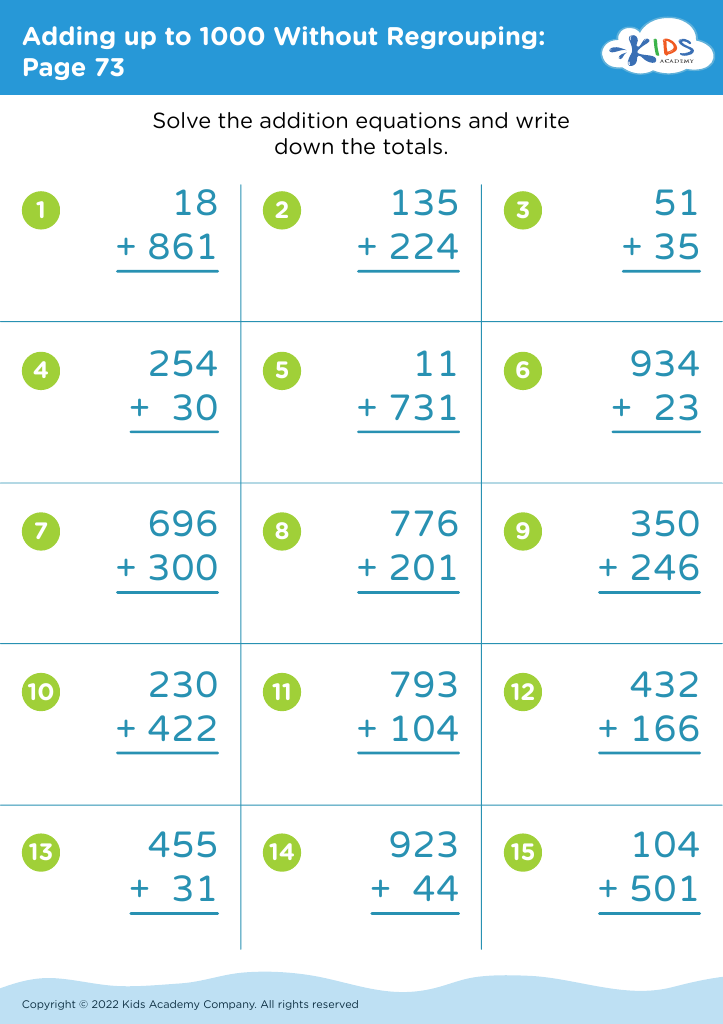
Adding up to 1000 Without Regrouping: Page 73
Worksheet
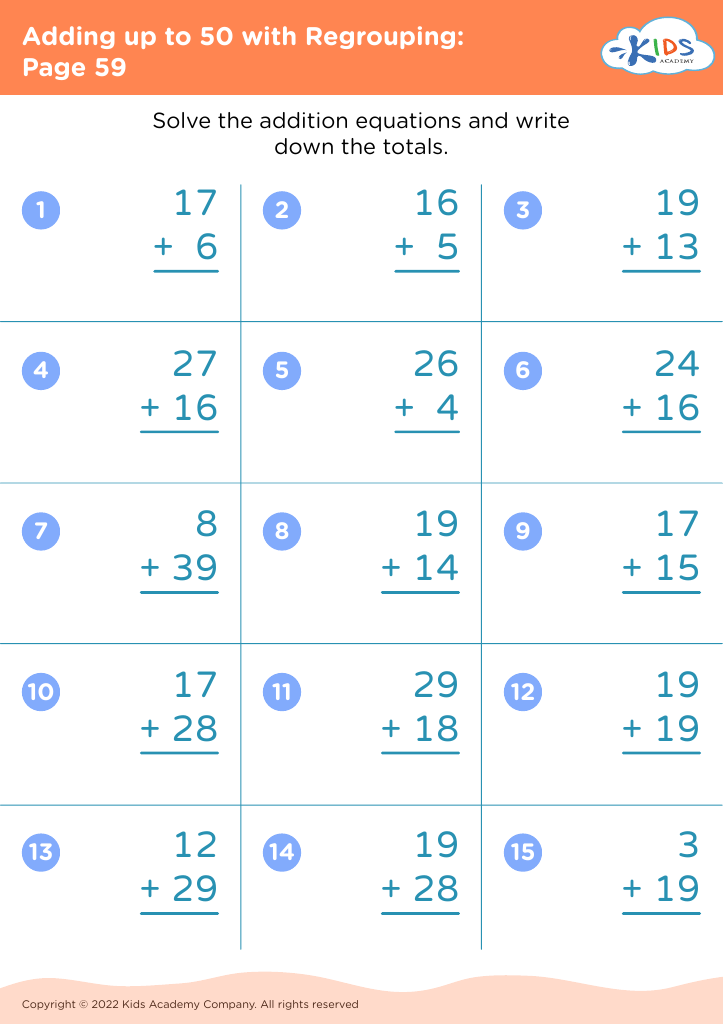
Adding up to 50 with Regrouping: Page 59
Worksheet
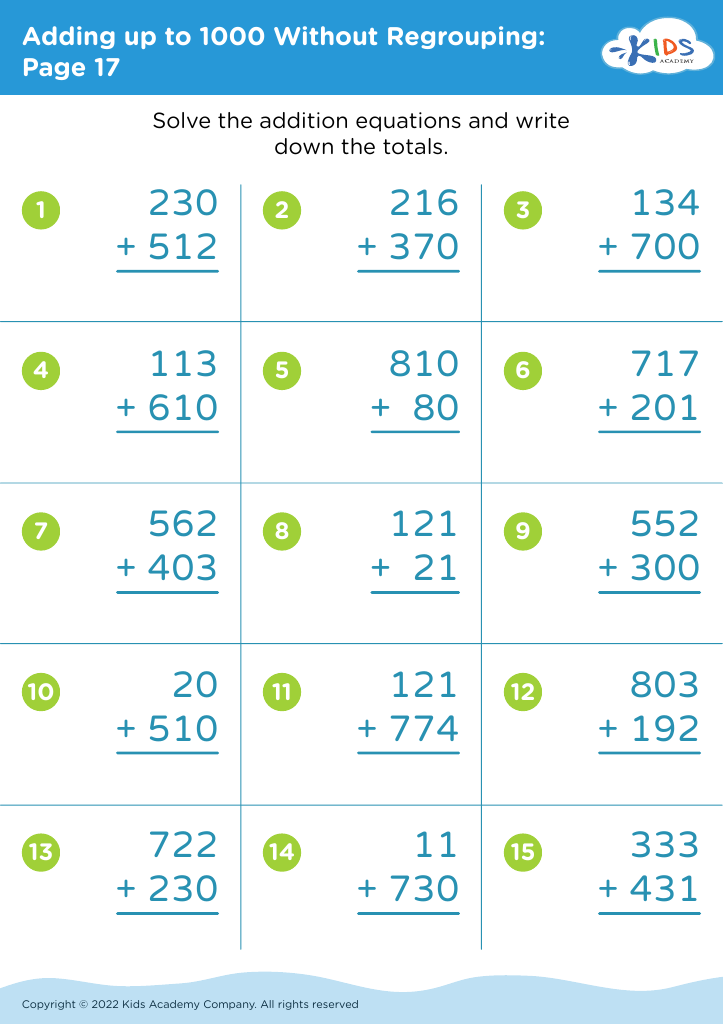
Adding up to 1000 Without Regrouping: Page 17
Worksheet
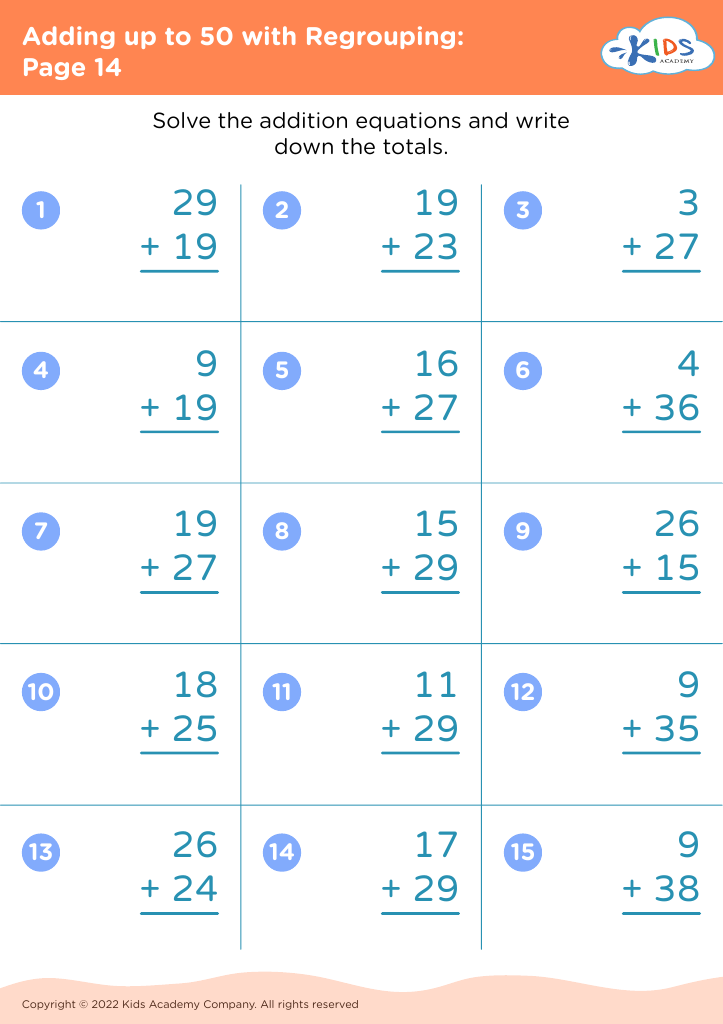
Adding up to 50 with Regrouping: Page 14
Worksheet
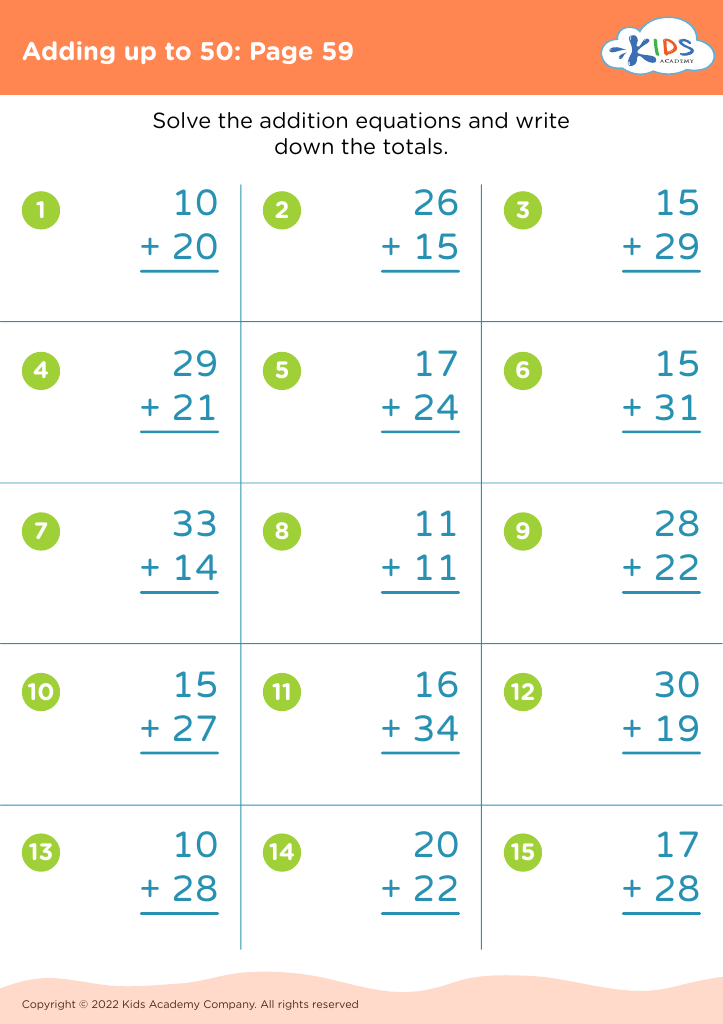
Adding up to 50: Page 59

Adding up to 50: Page 59

Adding up to 50: Page 59
Worksheet
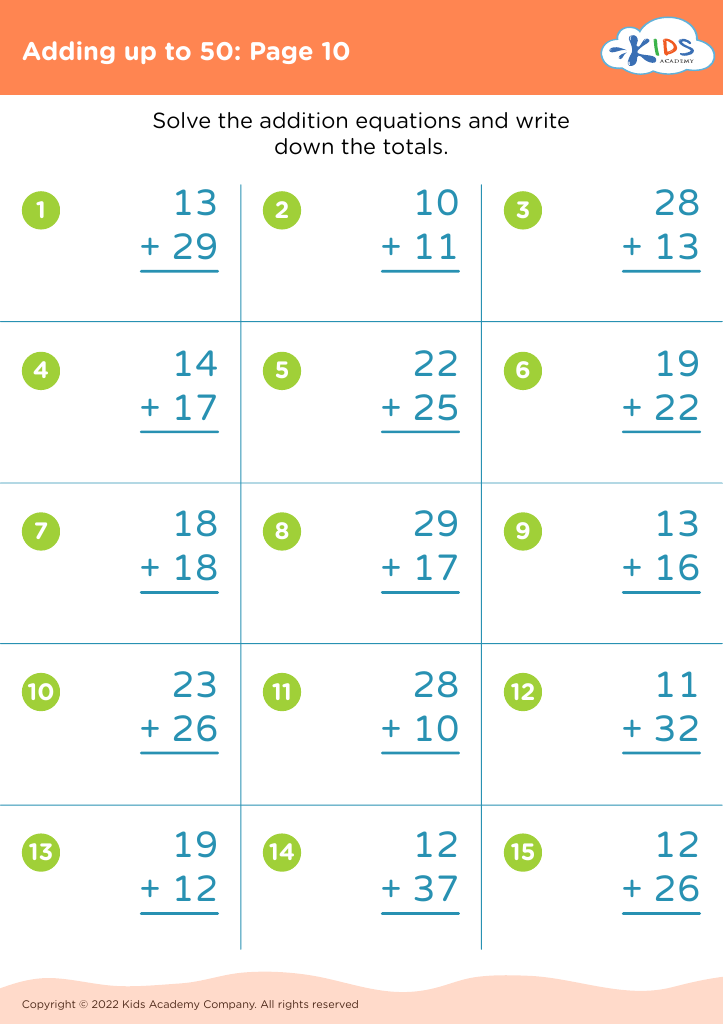
Adding up to 50: Page 10

Adding up to 50: Page 10

Adding up to 50: Page 10
Worksheet
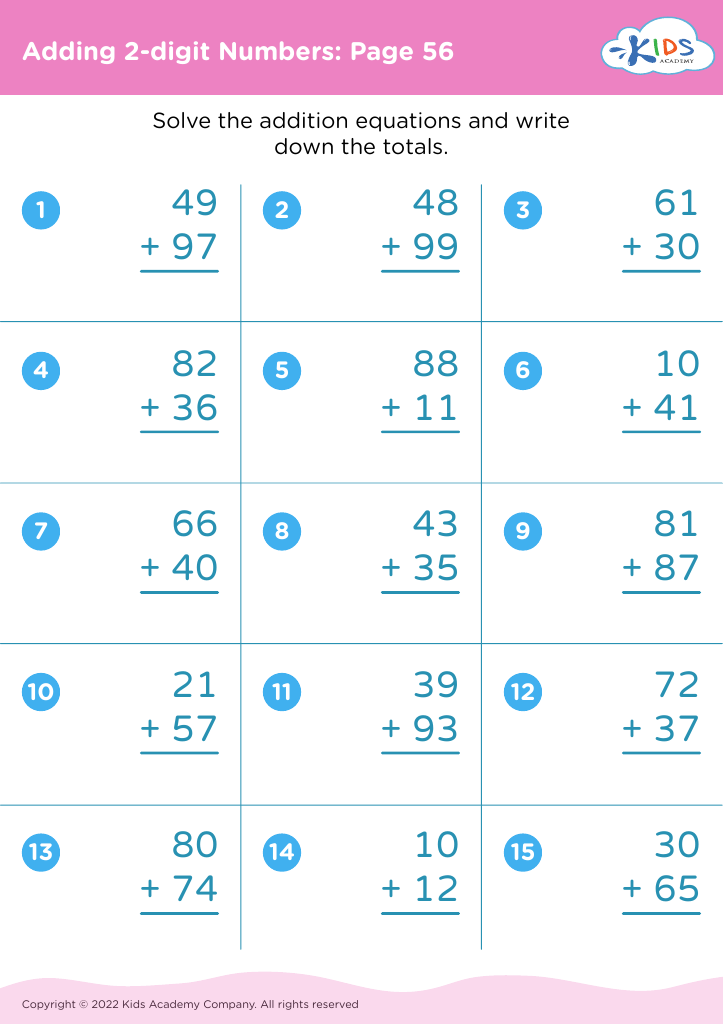
Adding 2-digit Numbers: Page 56

Adding 2-digit Numbers: Page 56

Adding 2-digit Numbers: Page 56
Worksheet
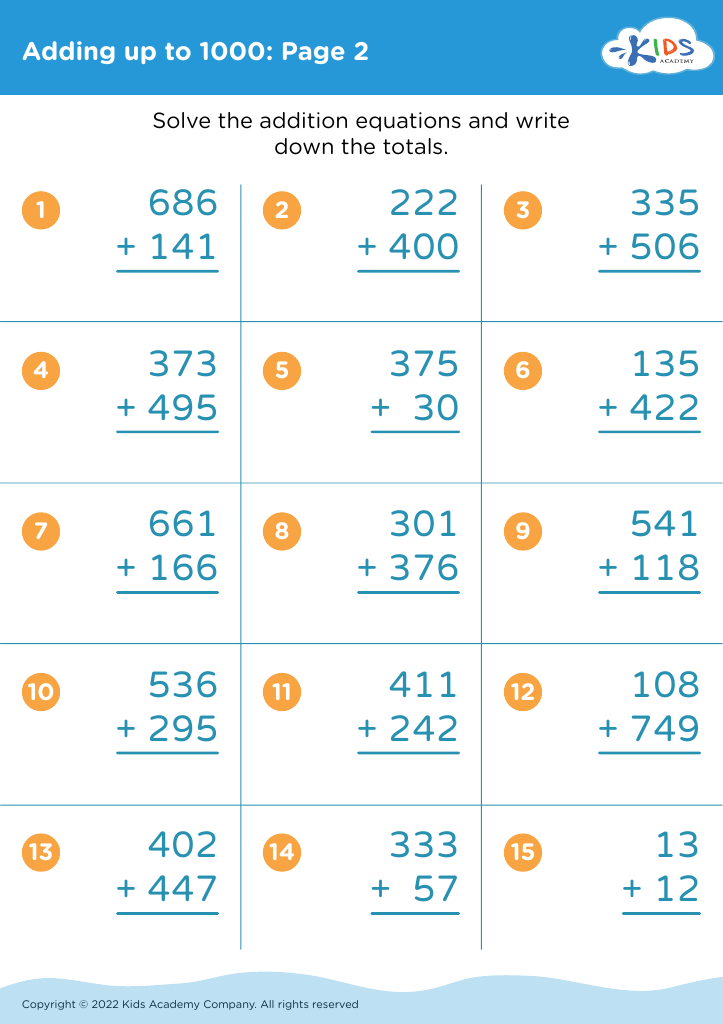
Adding up to 1000: Page 2

Adding up to 1000: Page 2

Adding up to 1000: Page 2
Worksheet
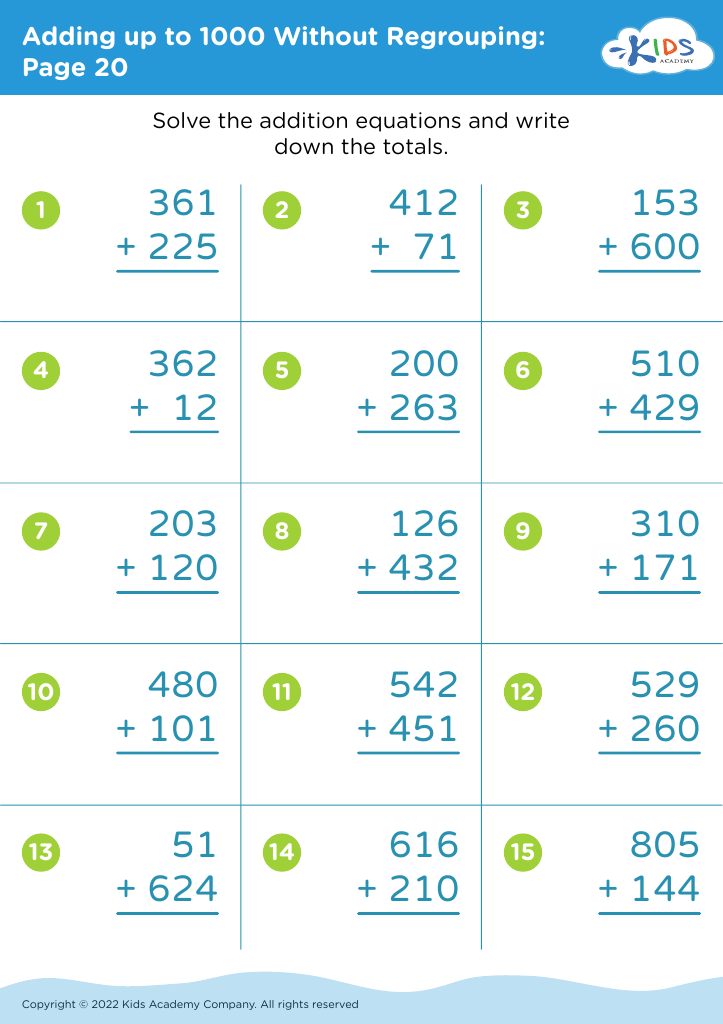
Adding up to 1000 Without Regrouping: Page 20
Worksheet
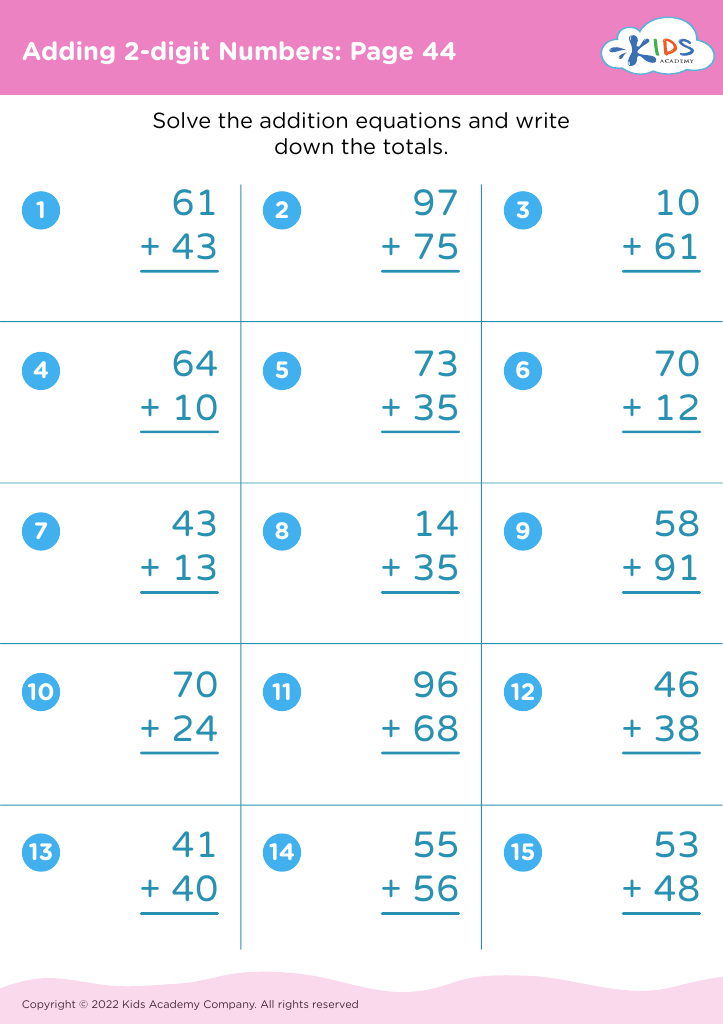
Adding 2-digit Numbers: Page 44

Adding 2-digit Numbers: Page 44

Adding 2-digit Numbers: Page 44
Worksheet
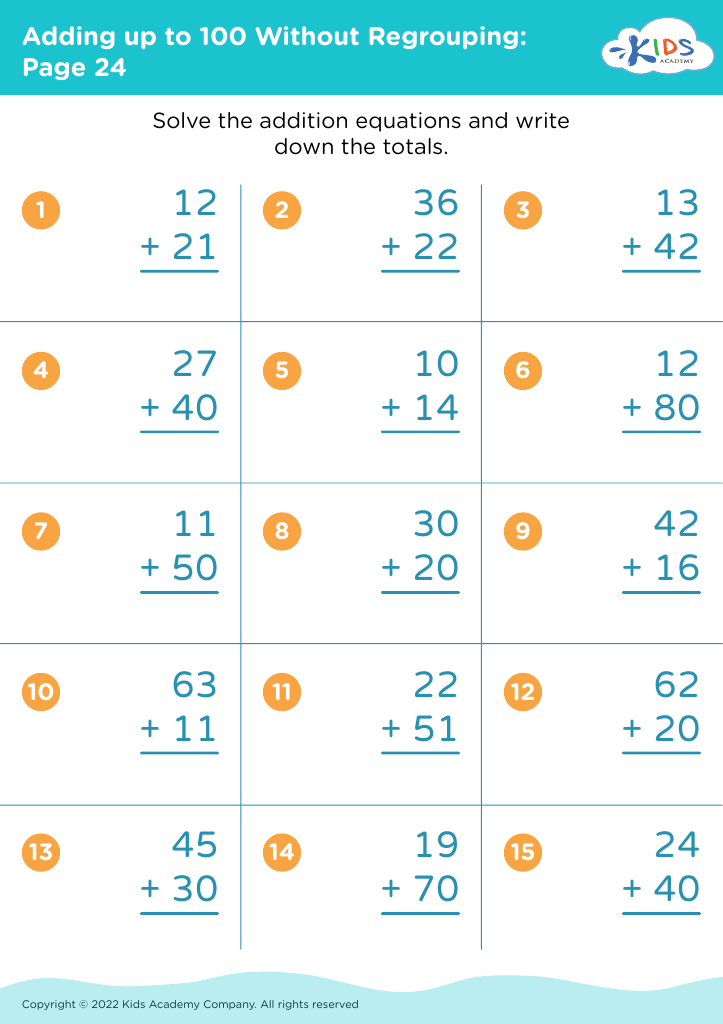
Adding up to 100 Without Regrouping: Page 24
Worksheet
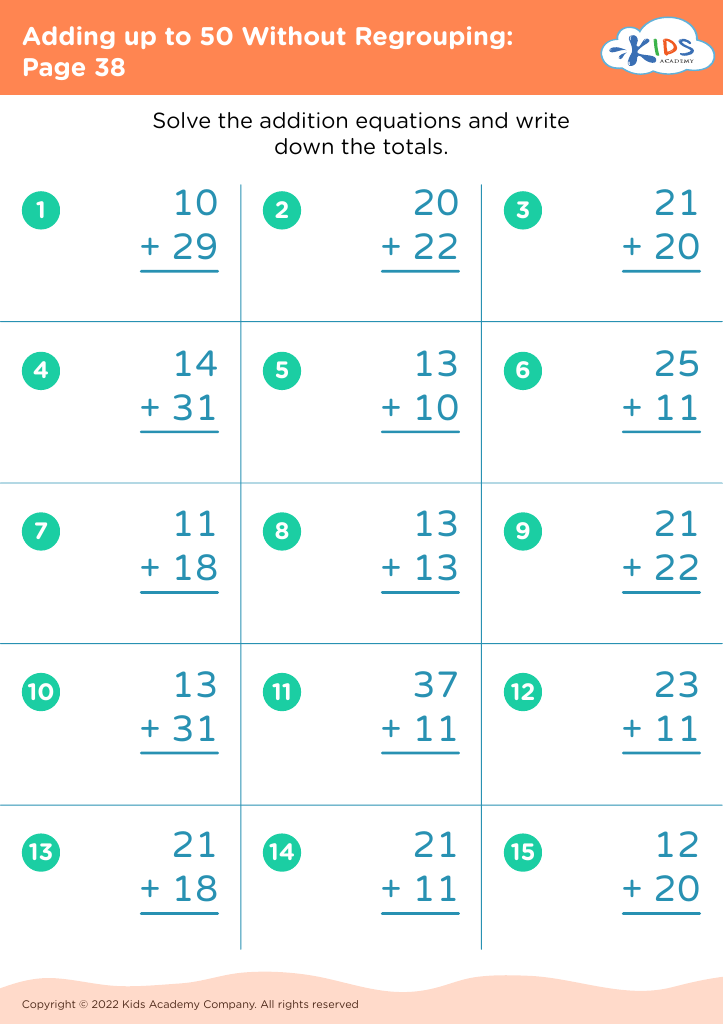
Adding up to 50 Without Regrouping: Page 38
Worksheet
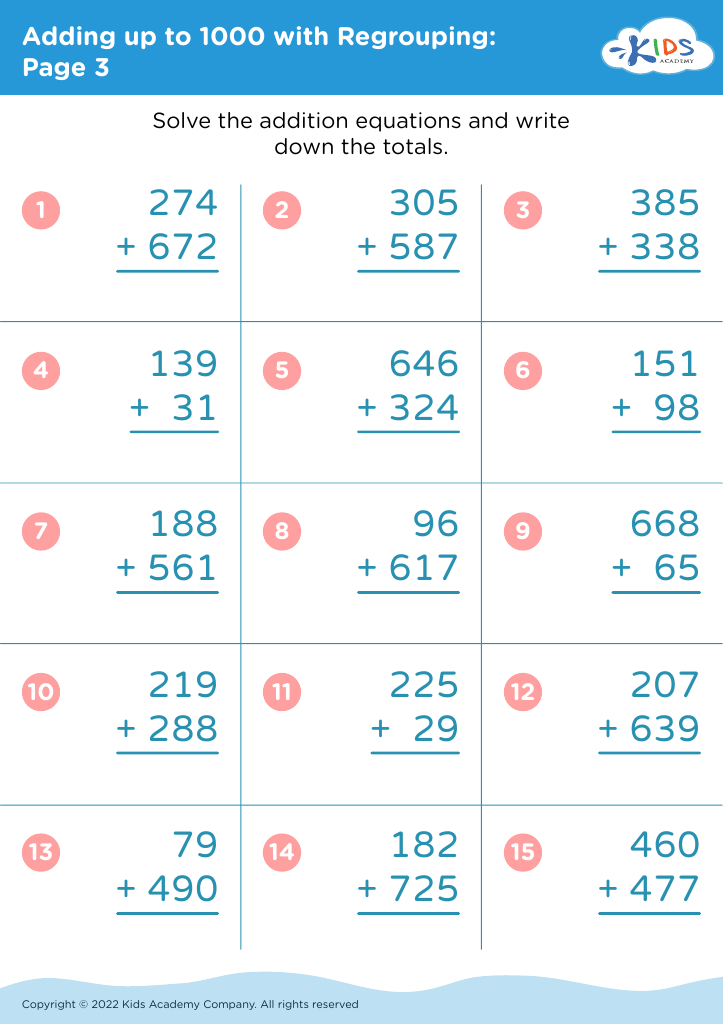
Adding up to 1000 with Regrouping: Page 3
Worksheet
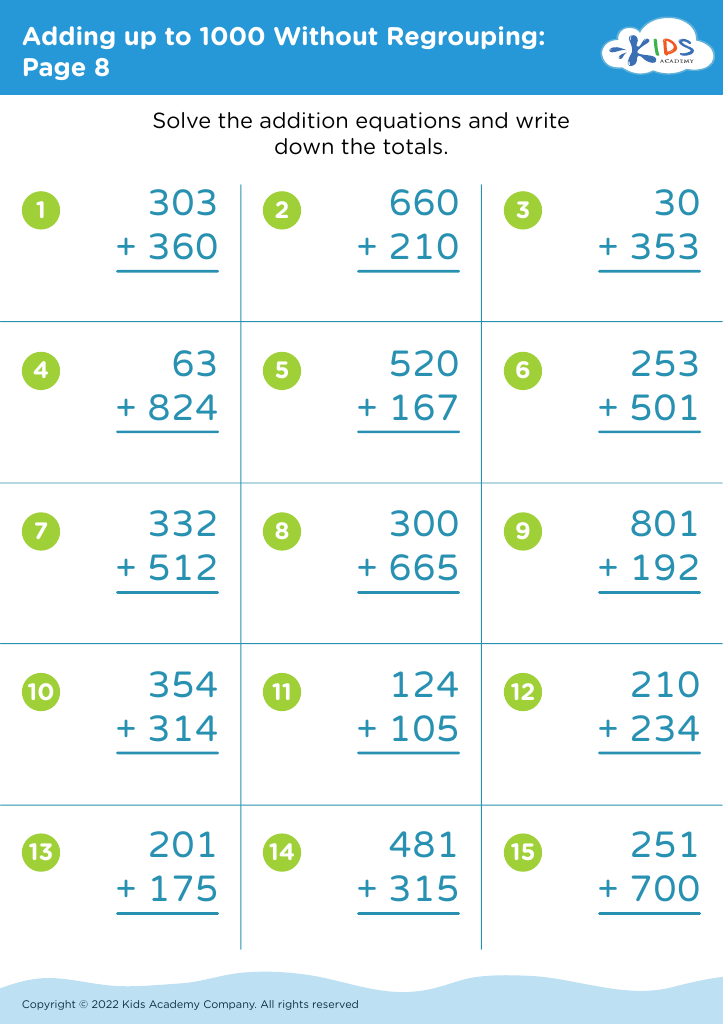
Adding up to 1000 Without Regrouping: Page 8
Worksheet
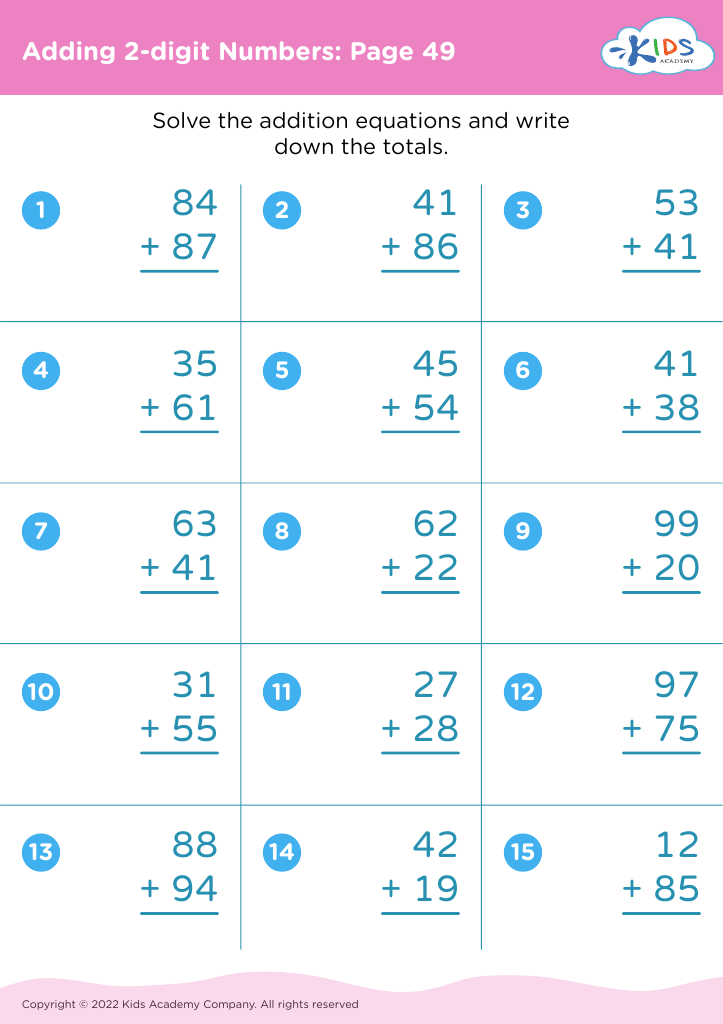
Adding 2-digit Numbers: Page 49

Adding 2-digit Numbers: Page 49

Adding 2-digit Numbers: Page 49
Worksheet
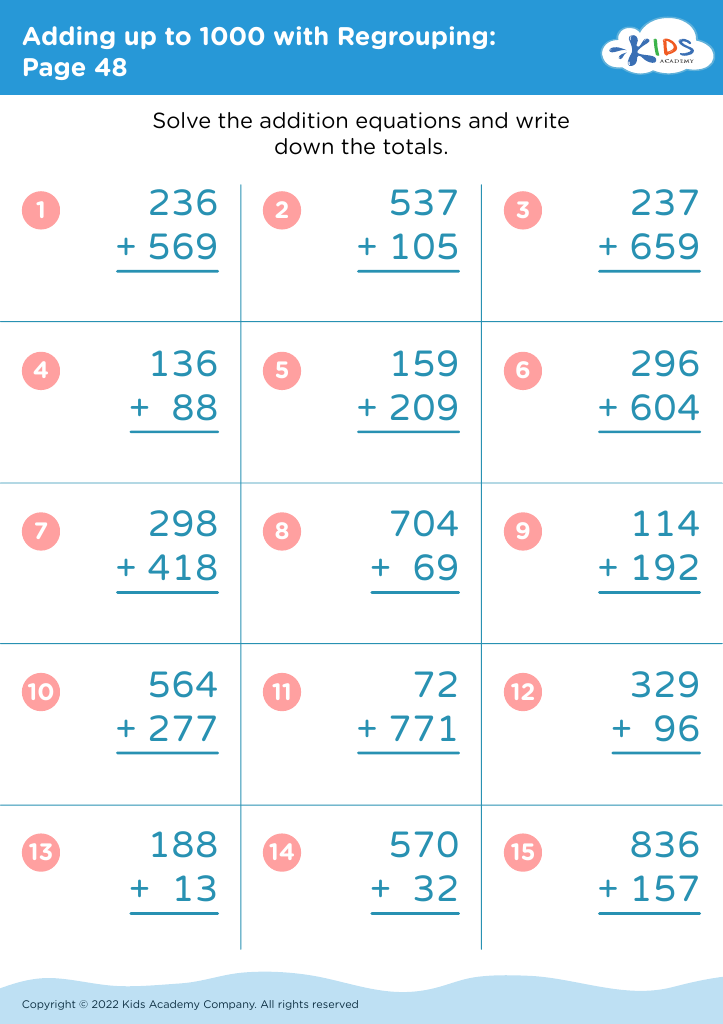
Adding up to 1000 with Regrouping: Page 48
Worksheet
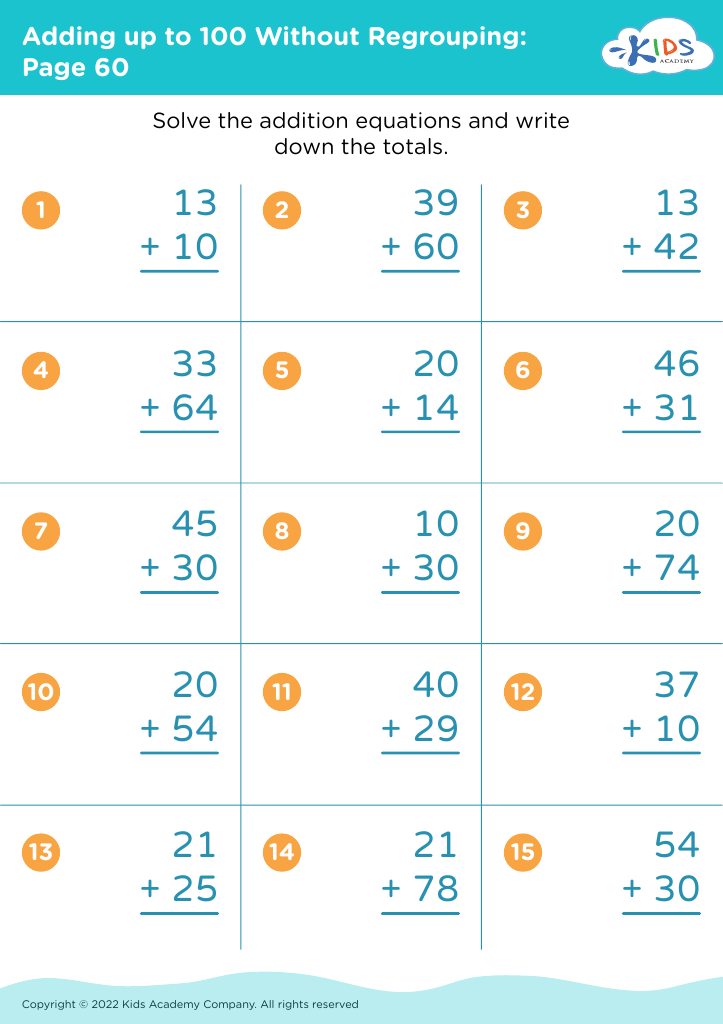
Adding up to 100 Without Regrouping: Page 60
Worksheet


Enhancing comprehension in addition and subtraction for children aged 8-9 is crucial for their mathematical development and overall academic success. At this age, students transition from basic arithmetic to more complex problem-solving and reasoning tasks. Fostering a strong understanding of these foundational concepts equips children with the skills they need for future mathematical learning, including multiplication, division, and even more advanced topics in algebra and geometry.

Comprehension in addition and subtraction goes beyond rote memorization of facts; it encourages intuitive thinking, enabling children to use various strategies to solve problems. Developing a robust understanding helps them visualize numbers and relationships, which is essential for tackling word problems and mathematical reasoning.

Moreover, a strong grasp of these skills can build children's confidence in their abilities, leading to improved engagement in math-related tasks. This is particularly important as early negative experiences with math often lead to long-term aversion.

Involving parents and teachers in enhancing these skills can create a supportive learning environment, making math both engaging and enjoyable. Collaboratively, they can help identify each child’s unique learning style, ensuring that every student has the tools they need to succeed and develop a lifelong appreciation for mathematics.