
Following instructions Addition & Subtraction Worksheets for Ages 8-9
14 filtered results
Difficulty Level
Grade
Age
-
From - To
Subject
Activity
Standards
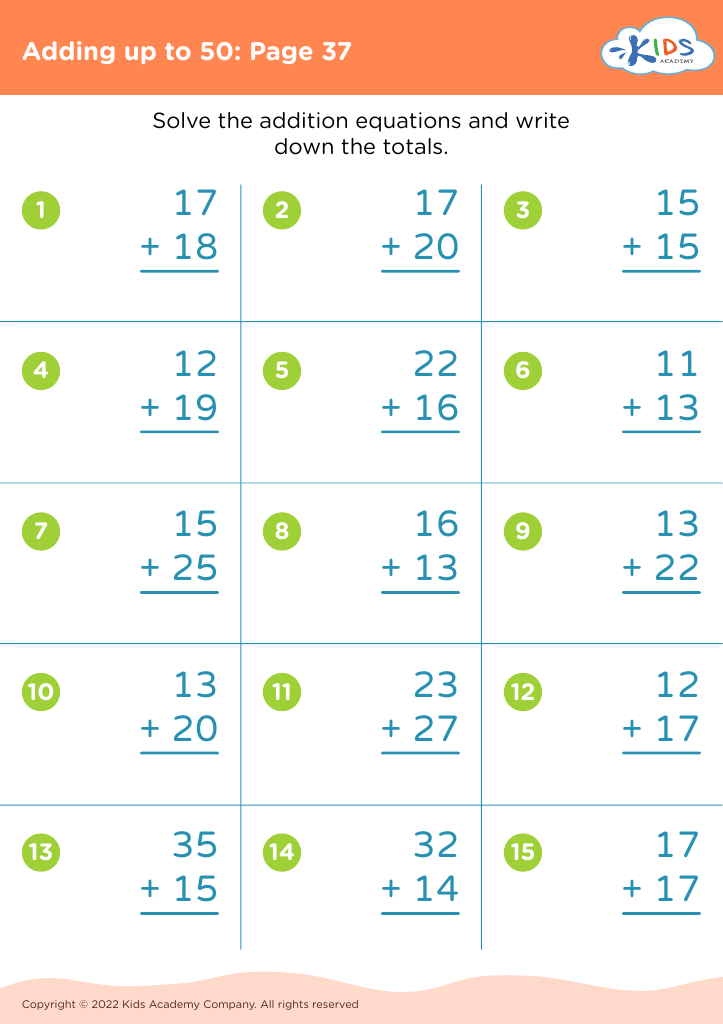
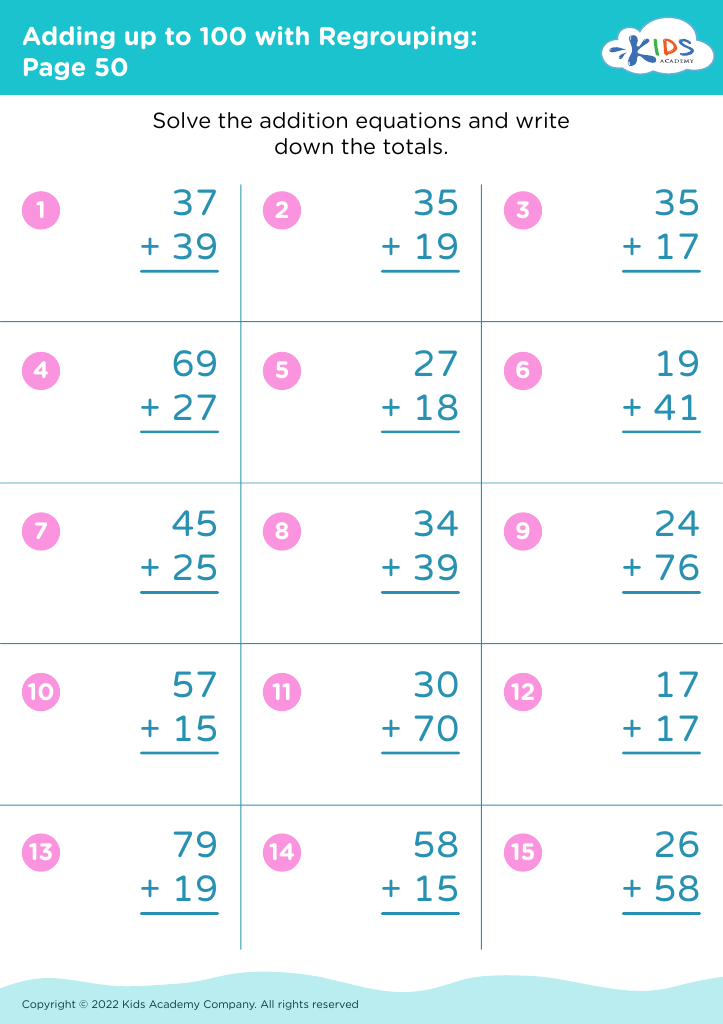
Explore our "Following Instructions Addition & Subtraction Worksheets" specially designed for children aged 8-9. These engaging worksheets enable young learners to practice key math skills while enhancing their ability to follow multi-step instructions. Each activity is crafted to reinforce both addition and subtraction concepts through clear, step-by-step guidance, making learning effective and fun. Ideal for classrooms or at-home practice, these worksheets not only boost mathematical proficiency but also develop critical thinking and comprehension skills. Support your child's educational journey with our thoughtfully designed resources that encourage independence and confidence in math. Download today and watch your child thrive!
Favorites
With answer key
Interactive
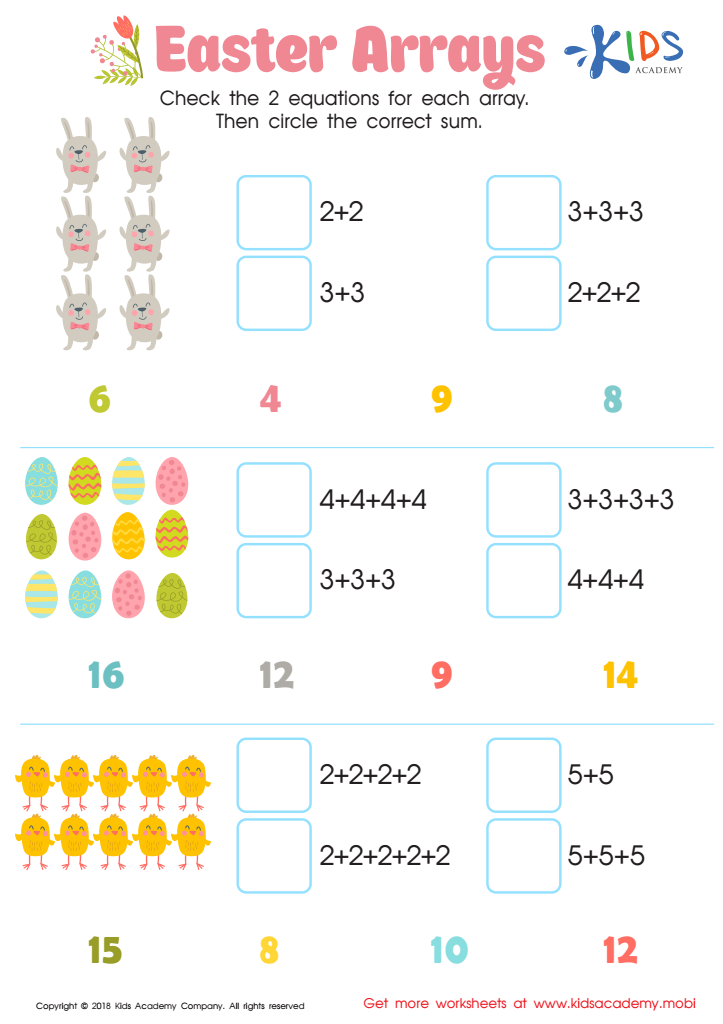
Easter Arrays Worksheet
Does your child love Easter? Do they adore the Easter bunny and egg hunts? Help them have fun with this worksheet! Go through it with them and check the equations for each array. Then, have them circle the correct sum. It's a great way to make the holiday extra exciting!
 Assign to My Students
Easter Arrays Worksheet
Worksheet
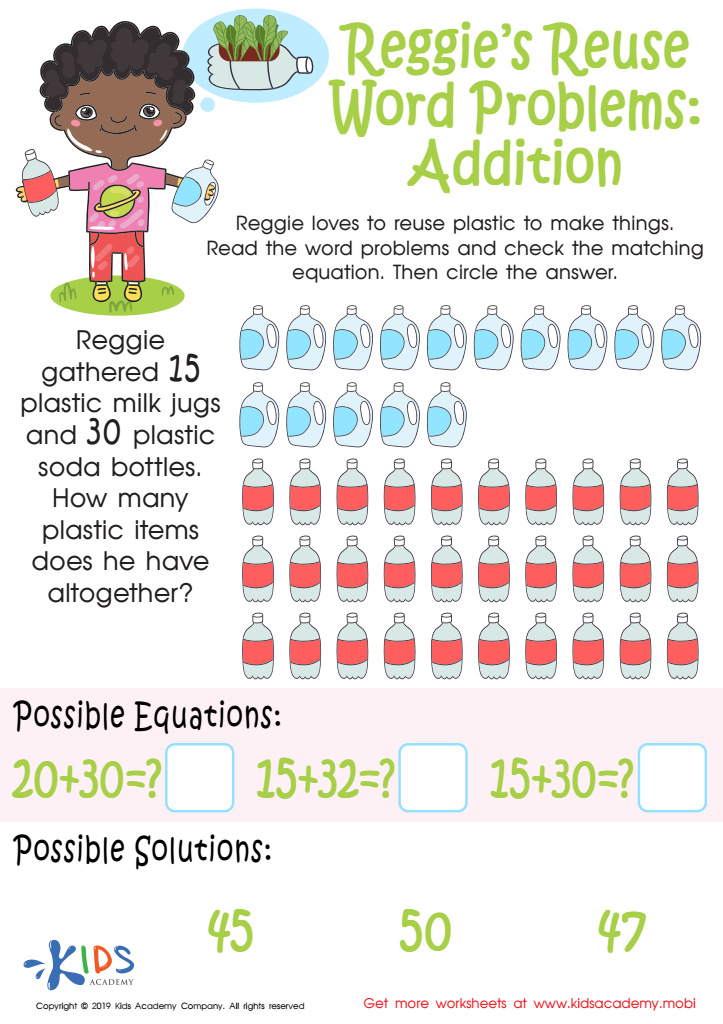
Reggie's Reuse Word Problems: Addition Worksheet
Help Reggie and your child save the planet by using this free worksheet! It reinforces addition word problems using one-to-one picture representation, and helps them pick out the correct number sentence and possible solutions. It's an easy way to help the planet and practice math!
Reggie's Reuse Word Problems: Addition Worksheet
Worksheet
Join Kids Academy for Free
Who is primarily going to use this learning content?








Following instructions in addition and subtraction for children aged 8-9 is crucial for their cognitive and academic development. At this age, children are transitioning from basic arithmetic to more complex problem-solving skills. By focusing on following instructions, they learn important skills like attention to detail, critical thinking, and the ability to follow multi-step processes, which are vital not just in math but across all subjects and life scenarios.
Moreover, mastery in addition and subtraction builds the foundation for future math skills, including multiplication, division, and basic algebra. This understanding is essential for students to tackle more advanced math concepts in later grades. Additionally, following instructions reinforces discipline and patience, qualities necessary in both academic settings and everyday life. It promotes responsibility as students take ownership of their learning.
Parents and teachers can support this skill development by creating engaging, straightforward activities that emphasize clear instructions while celebrating completion and accuracy. Encouraging a positive attitude towards math during this vital stage helps foster confidence, making children more willing to face challenging problems in the future. Ultimately, good instructional habits in math contribute to a child’s overall educational success and lifelong STEM skills.








