Filters

17 filtered results

Clear all filters
Favorites
With answer key
Interactive

17 filtered results

Difficulty Level

Grade


Our Enhance Comprehension Addition Worksheets for Ages 8-9 are designed to strengthen your child's math skills through fun and engaging exercises. These worksheets focus on adding with confidence, supporting the development of critical thinking and problem-solving abilities. Tailored to fit young learners, each sheet combines visually appealing elements with clear instructions to simplify the learning process. Ideal for both classroom use and home practice, these worksheets ensure that your child builds a solid foundation in math while boosting their self-assurance and academic performance. Start enhancing your child’s math comprehension today with our expertly crafted worksheets!
Check out this FREE Trial Lesson on Addition for age 8-9!

X

Favorites
With answer key
Interactive
  • 8-9
  • Enhance comprehension
  • Addition
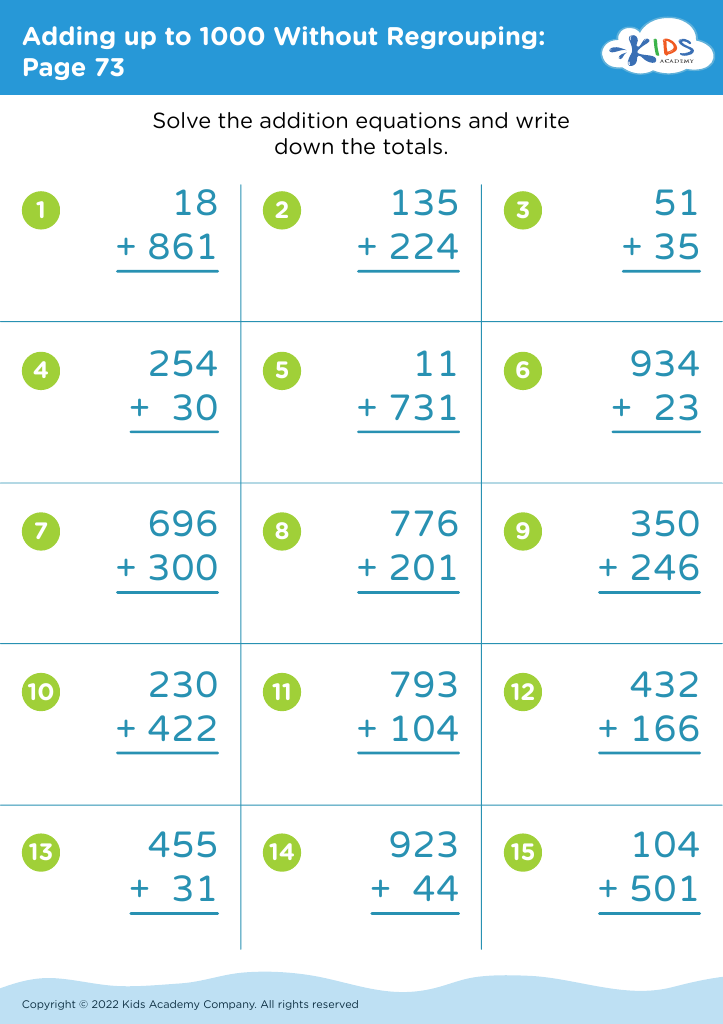
Adding up to 1000 Without Regrouping: Page 73
Worksheet
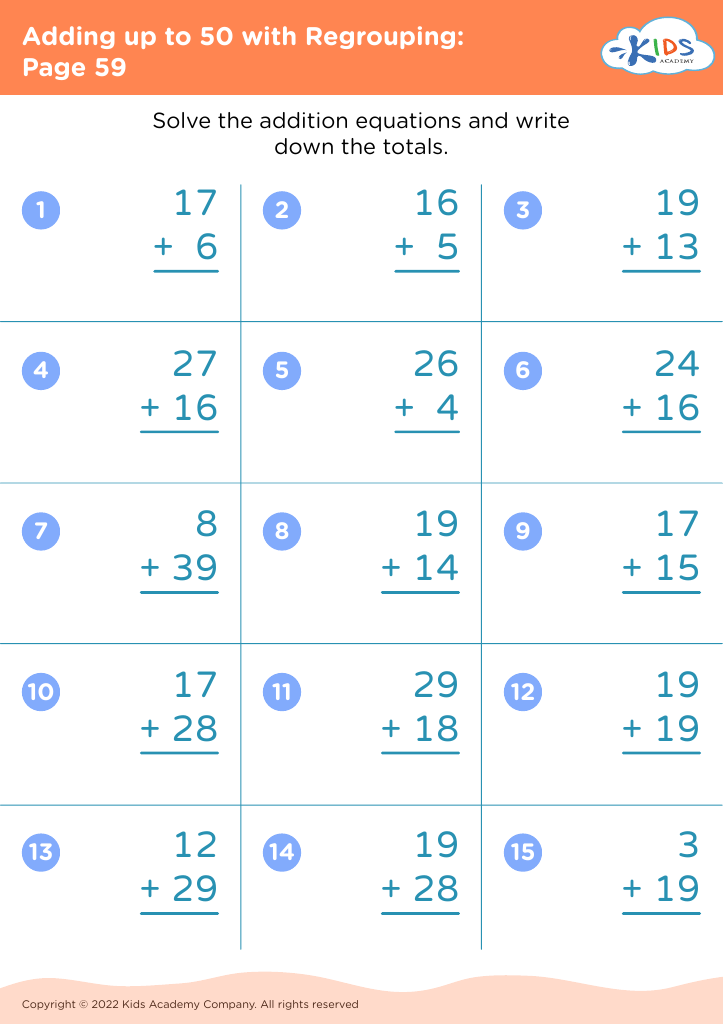
Adding up to 50 with Regrouping: Page 59
Worksheet
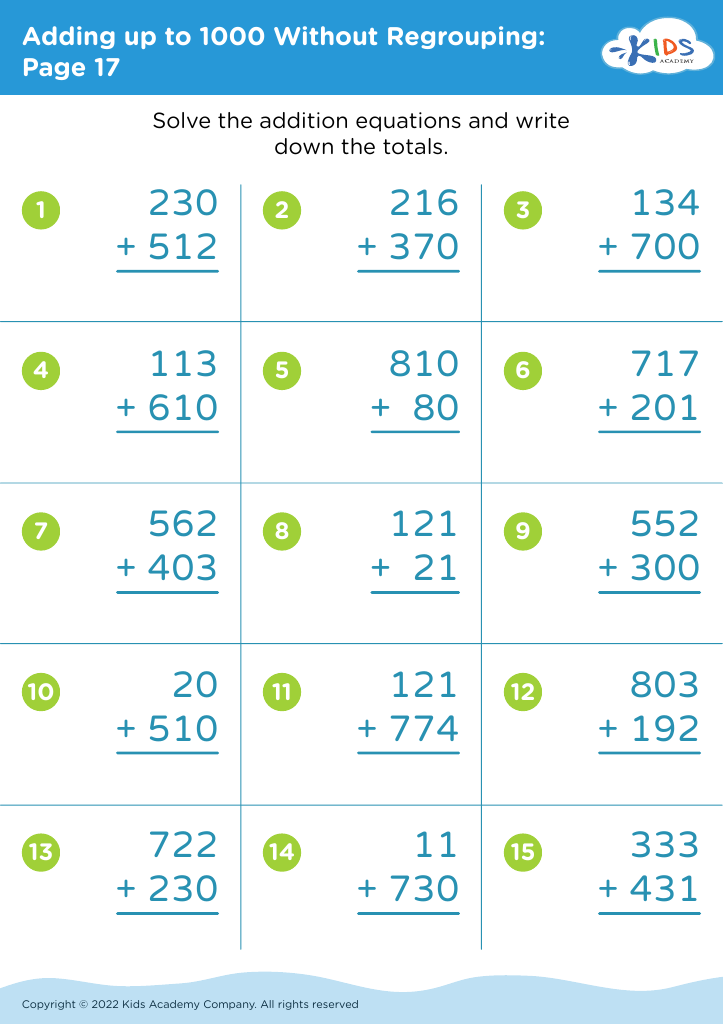
Adding up to 1000 Without Regrouping: Page 17
Worksheet
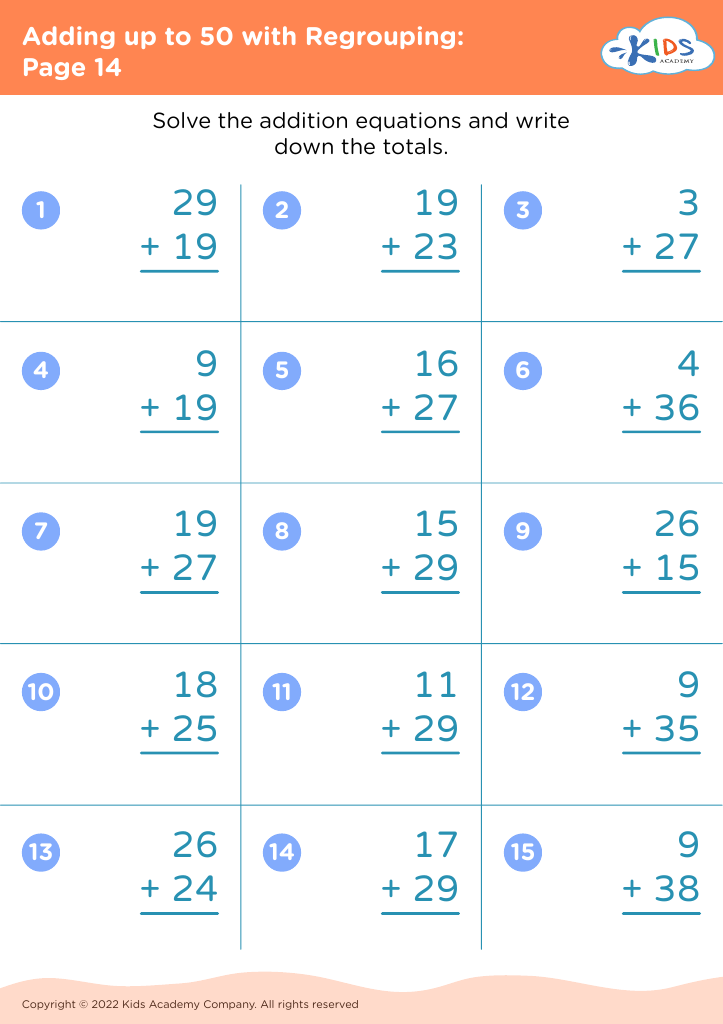
Adding up to 50 with Regrouping: Page 14
Worksheet
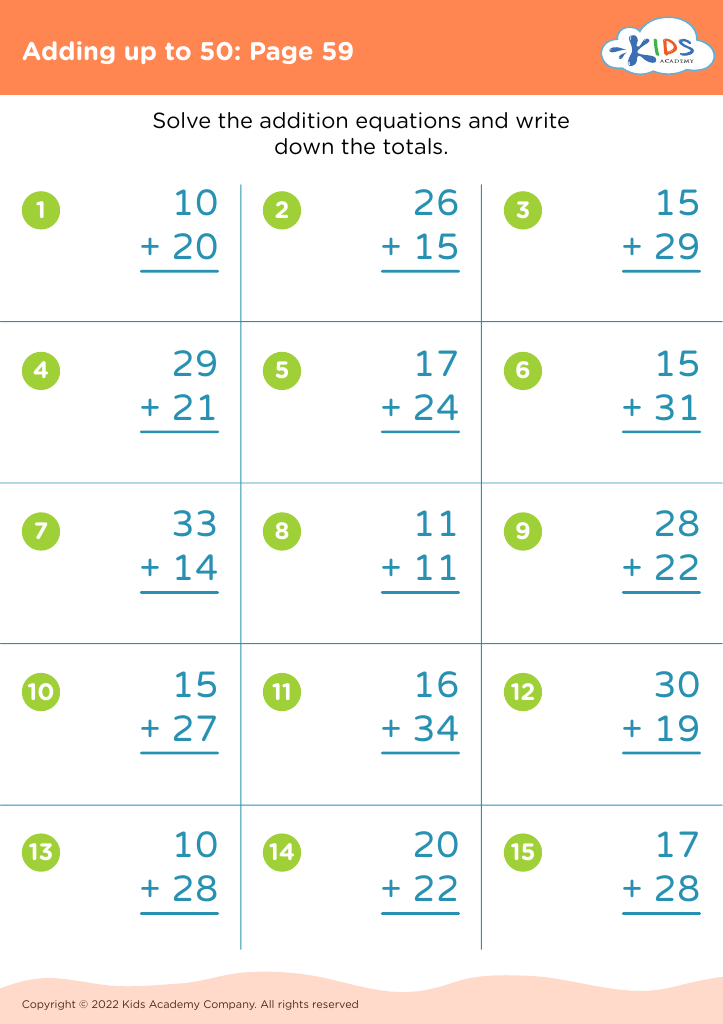
Adding up to 50: Page 59

Adding up to 50: Page 59

Adding up to 50: Page 59
Worksheet
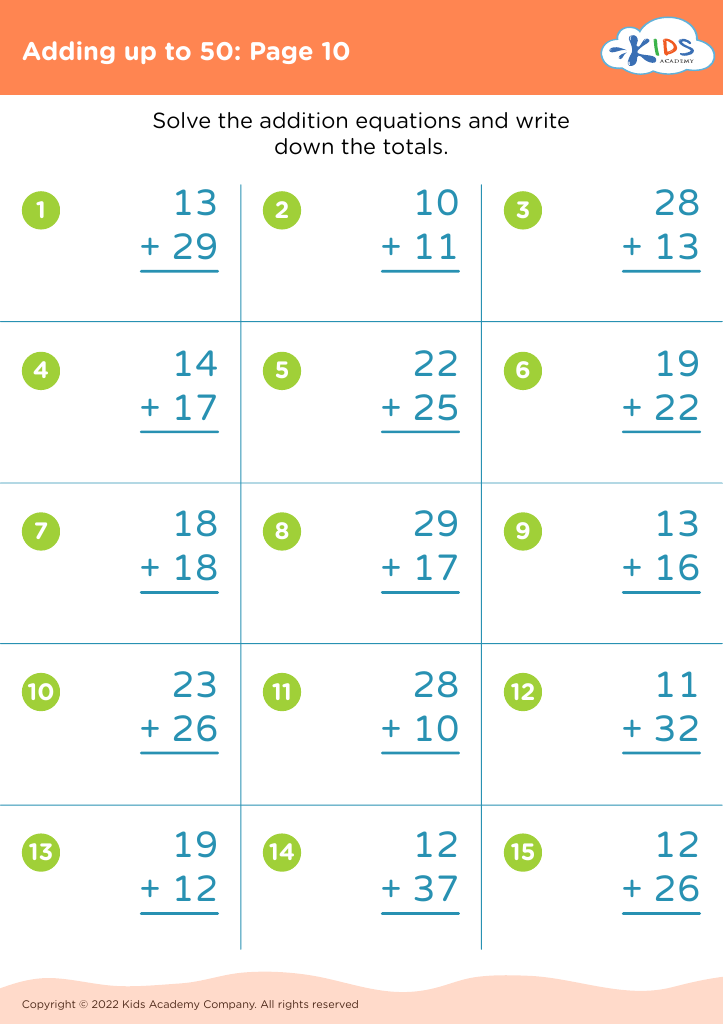
Adding up to 50: Page 10

Adding up to 50: Page 10

Adding up to 50: Page 10
Worksheet
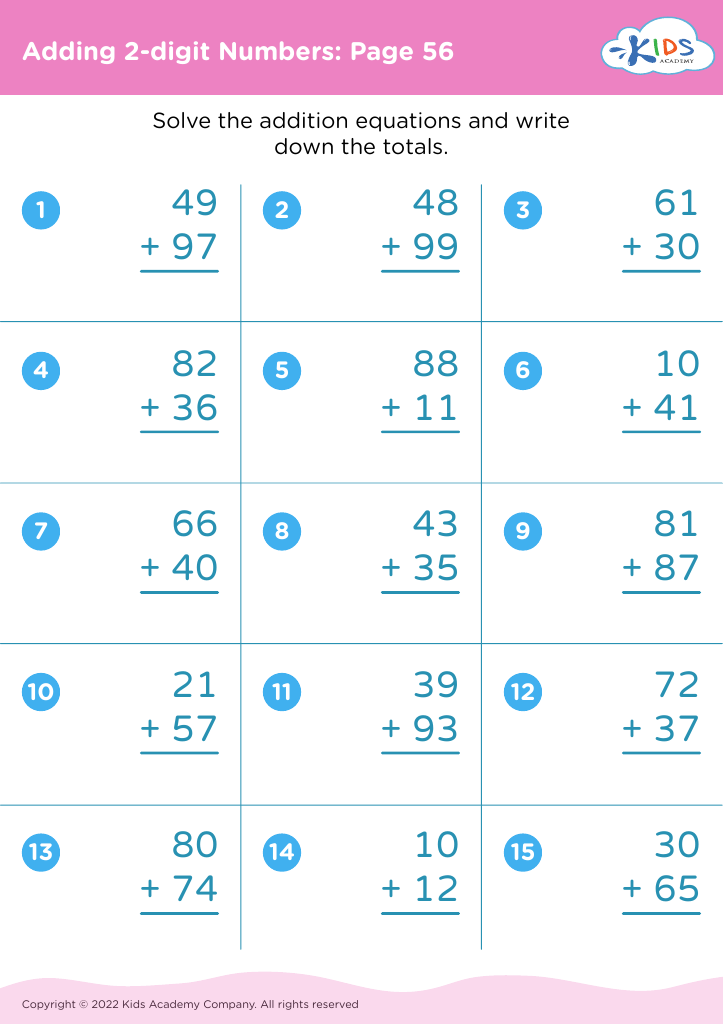
Adding 2-digit Numbers: Page 56

Adding 2-digit Numbers: Page 56

Adding 2-digit Numbers: Page 56
Worksheet
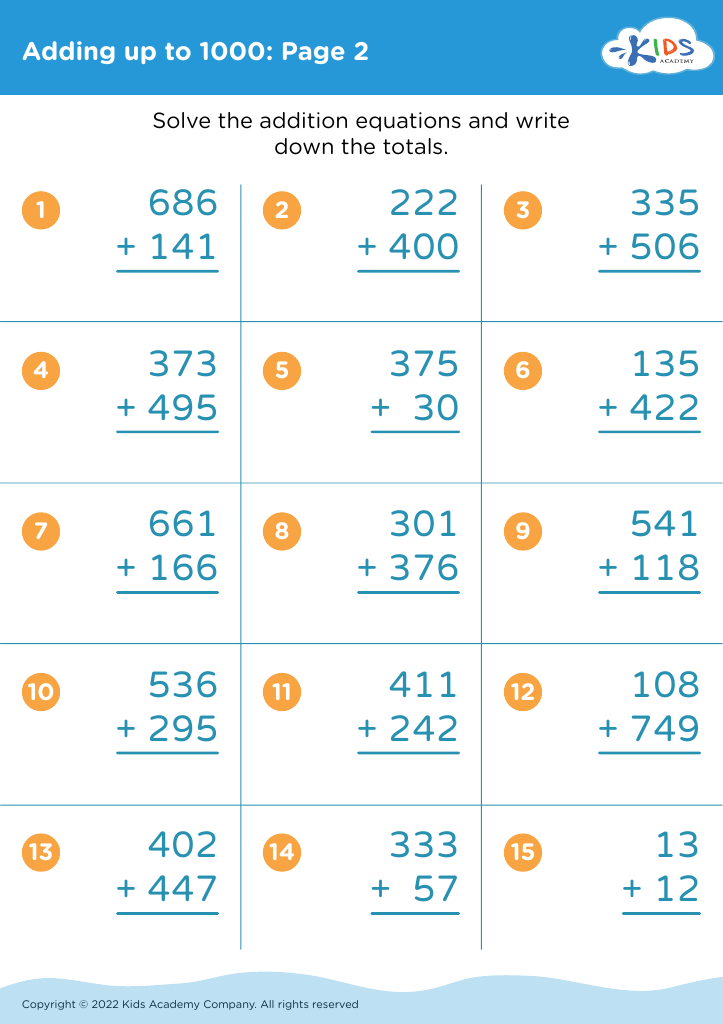
Adding up to 1000: Page 2

Adding up to 1000: Page 2

Adding up to 1000: Page 2
Worksheet
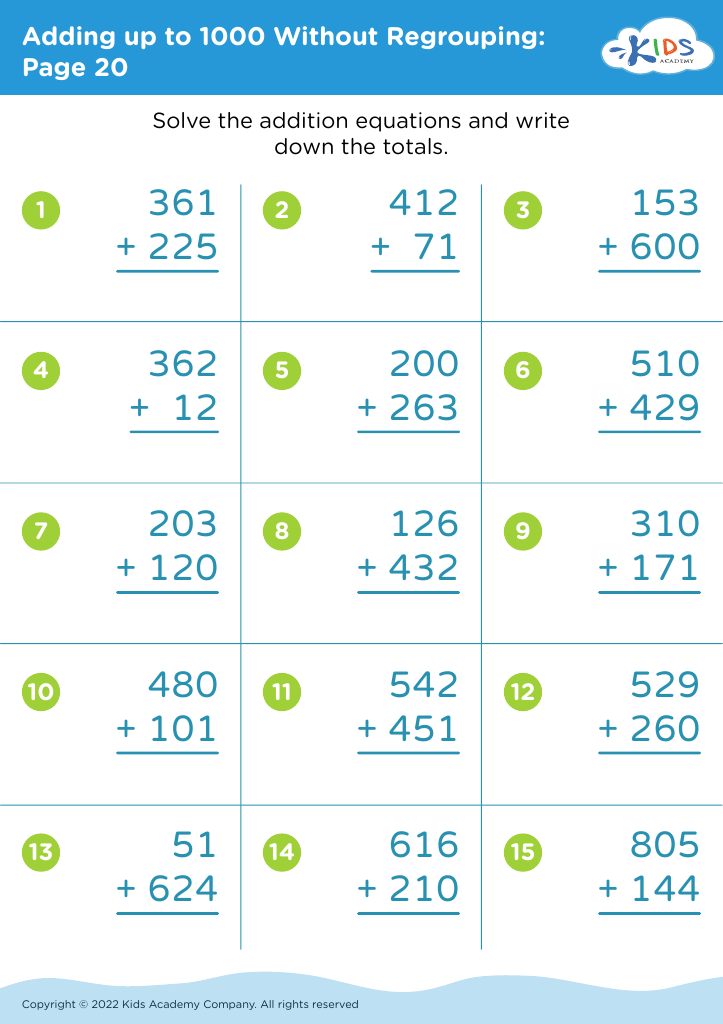
Adding up to 1000 Without Regrouping: Page 20
Worksheet
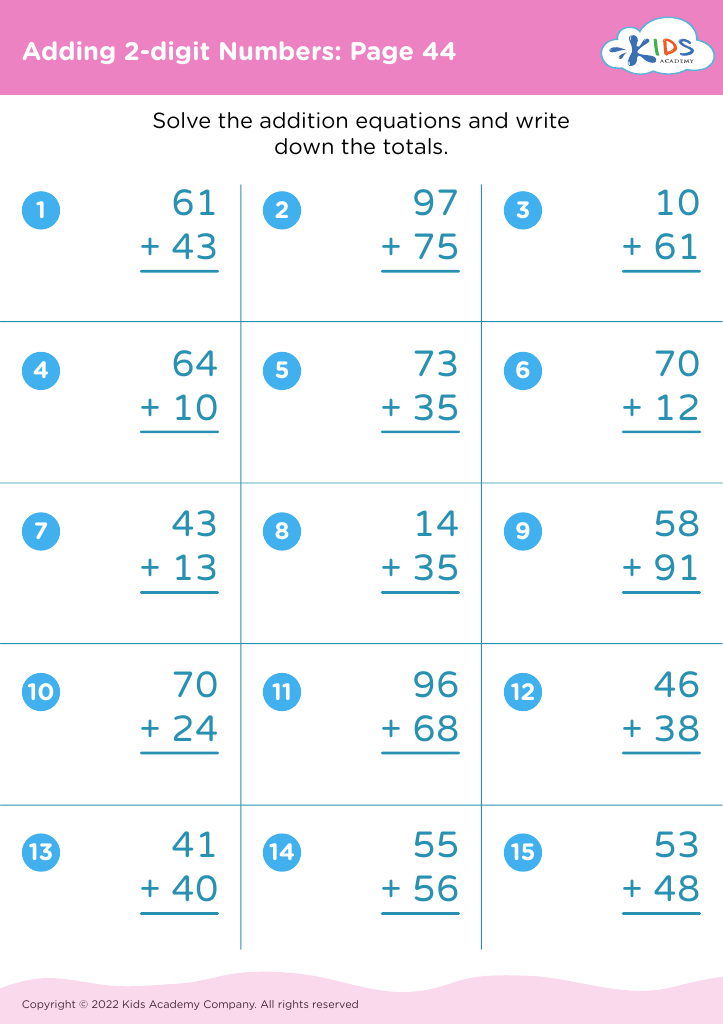
Adding 2-digit Numbers: Page 44

Adding 2-digit Numbers: Page 44

Adding 2-digit Numbers: Page 44
Worksheet
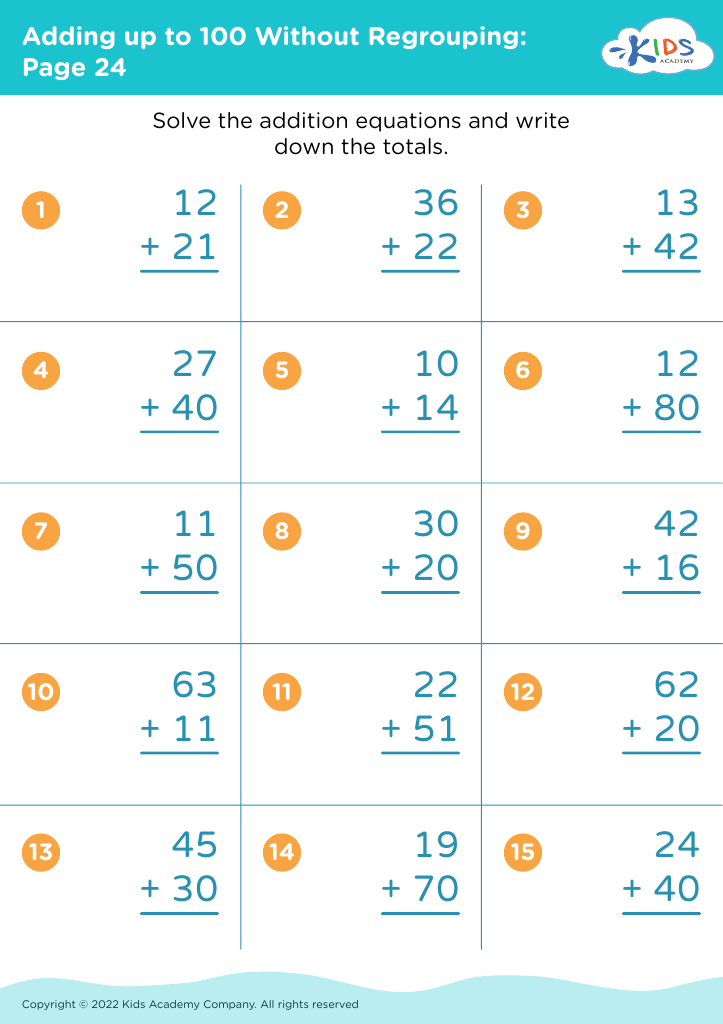
Adding up to 100 Without Regrouping: Page 24
Worksheet
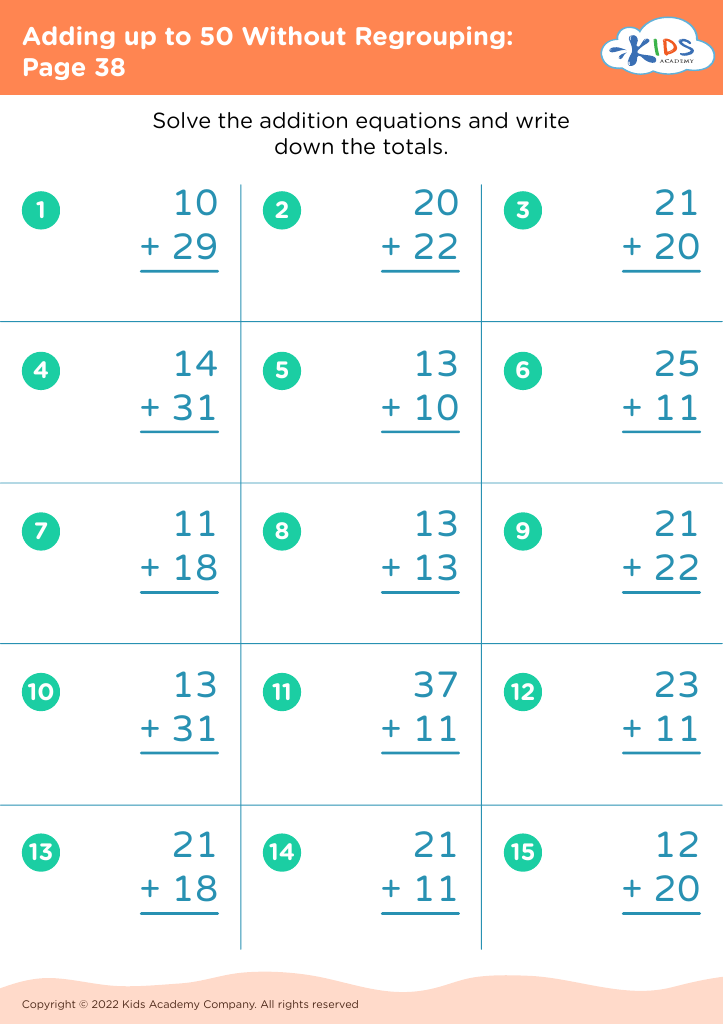
Adding up to 50 Without Regrouping: Page 38
Worksheet
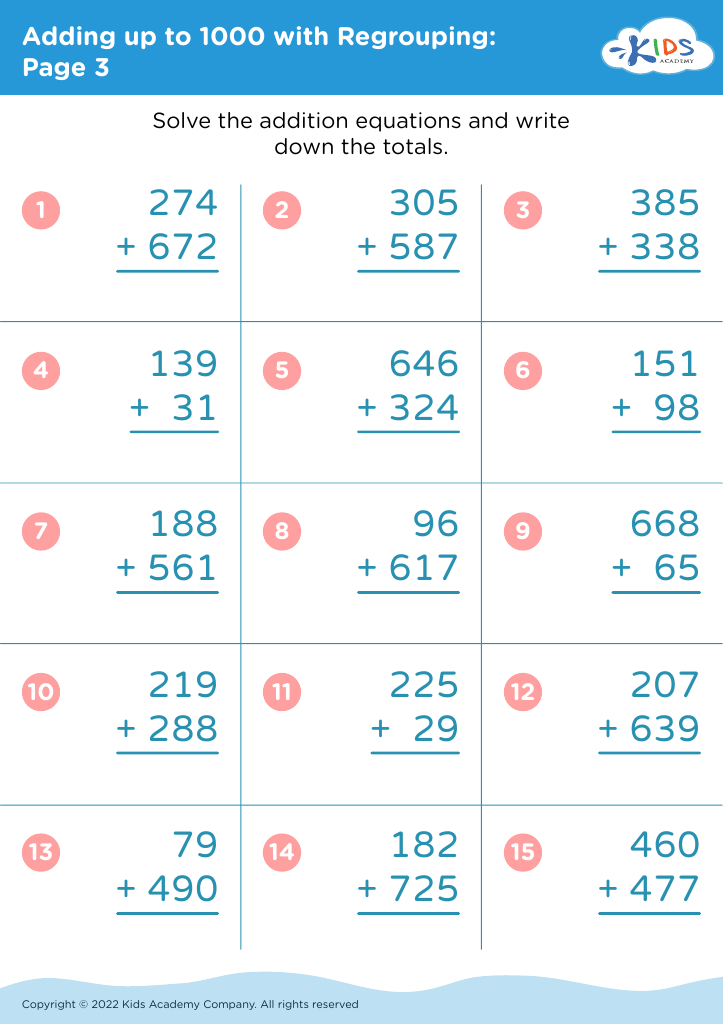
Adding up to 1000 with Regrouping: Page 3
Worksheet
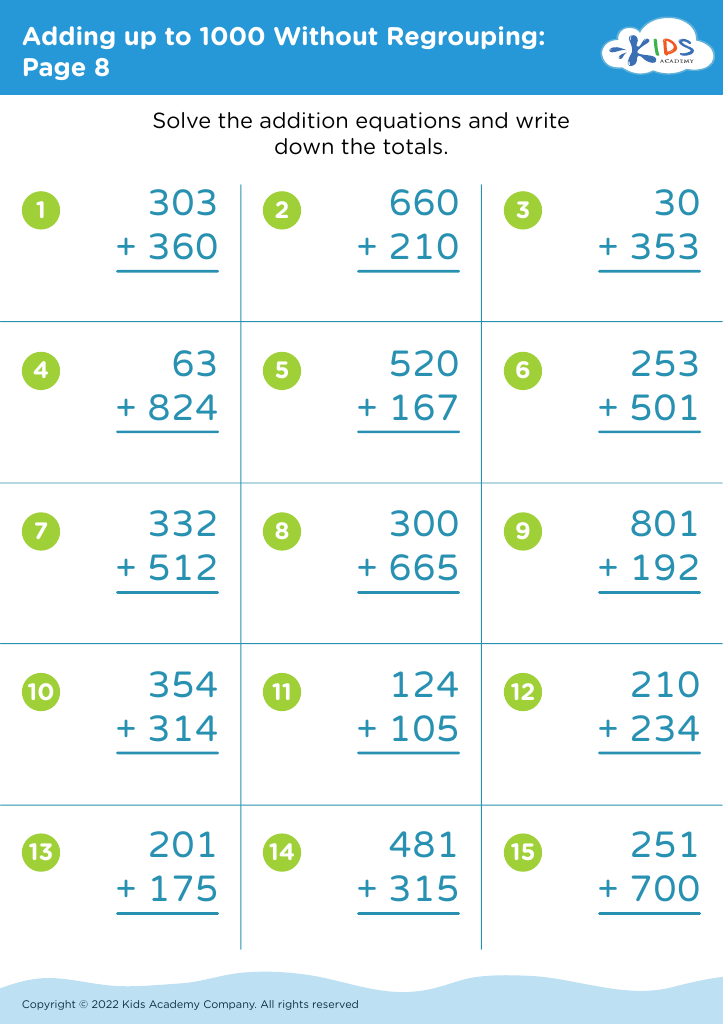
Adding up to 1000 Without Regrouping: Page 8
Worksheet
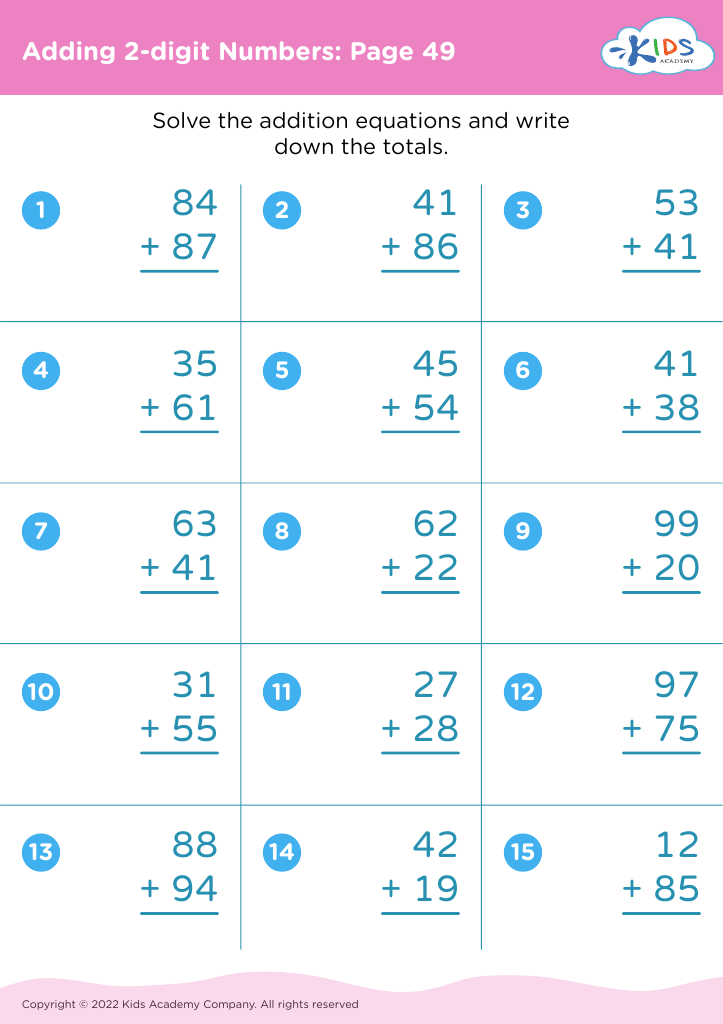
Adding 2-digit Numbers: Page 49

Adding 2-digit Numbers: Page 49

Adding 2-digit Numbers: Page 49
Worksheet
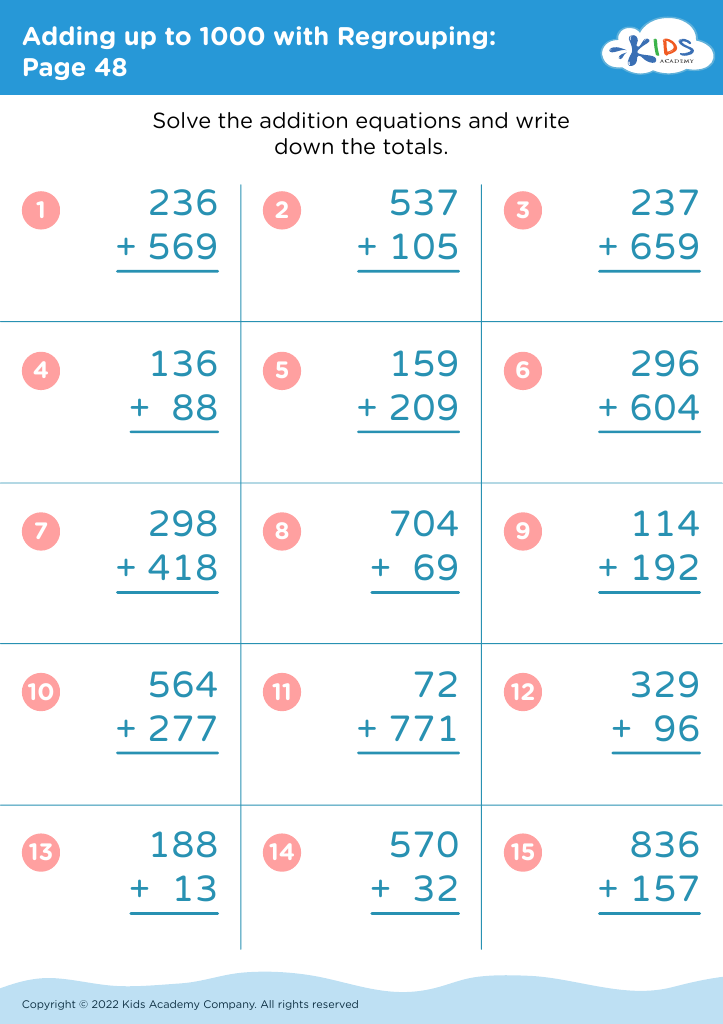
Adding up to 1000 with Regrouping: Page 48
Worksheet
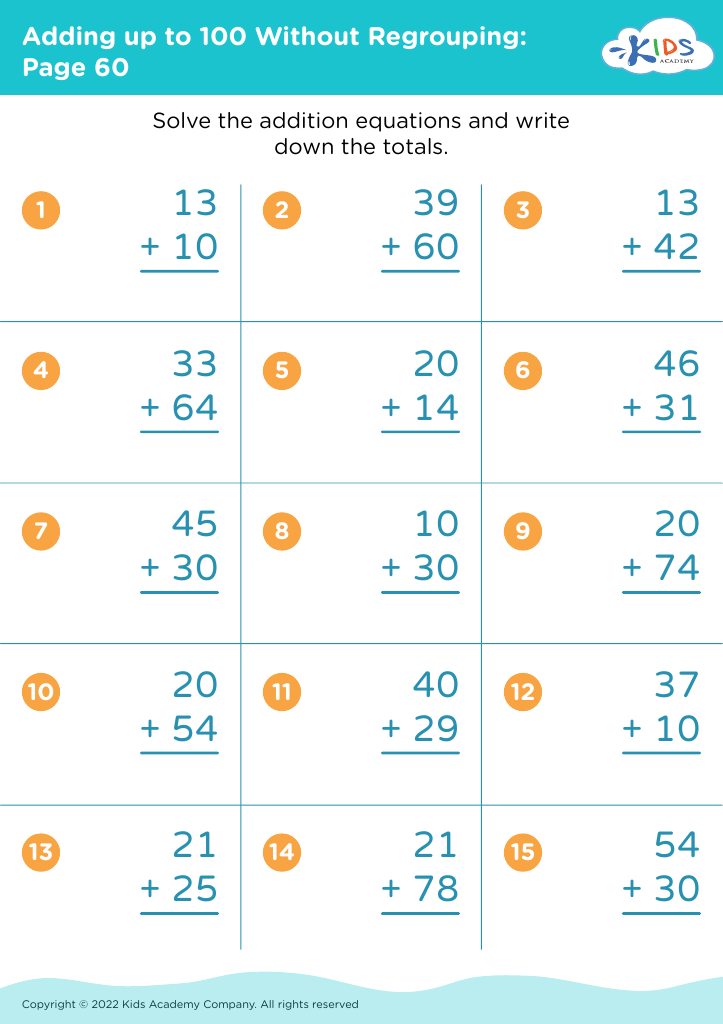
Adding up to 100 Without Regrouping: Page 60
Worksheet


Enhancing comprehension addition for ages 8-9 is vital for both parents and teachers because it lays a strong mathematical foundation and boosts problem-solving skills, essential for future academic success. At this age, students move from simple arithmetic to more complex concepts, making it crucial to deeply understand addition to grasp later subjects like multiplication, division, and fractions. By nurturing these skills early on, we foster a child's ability to handle multi-step problems and logical reasoning more efficiently.

For teachers, embedding comprehensive addition strategies in the curriculum fosters active learning, where children can apply their skills in various contexts, improving their confidence and enthusiasm towards math. It aids in identifying and addressing any learning gaps early, ensuring personalized support to each student.

From a parental perspective, improving their child's comprehension of addition translates to better overall academic performance and cognitive development. Engaged parents can provide support and encouragement at home, using everyday situations to practice addition, thus reinforcing what is learned in school. This collaboration between parents and teachers ensures a cohesive learning environment, which helps children see the true value and practical application of mathematics in their everyday lives, promoting a positive, lifelong attitude toward learning and problem-solving.