Fine Motor Skills Fractions of Shapes Worksheets for Ages 8-9
6 filtered results
-
From - To
Enhance your child’s fine motor skills with our engaging Fractions of Shapes Worksheets designed for ages 8-9. These expertly crafted worksheets help students grasp fractional concepts while simultaneously developing their precision and hand-eye coordination. Through colorful shapes and fraction-based exercises, children will enjoy a hands-on learning experience that strengthens their understanding of math in a fun and interactive way. Ideal for both classroom use and at-home practice, these printable worksheets offer a perfect blend of education and skill-building to support your child’s academic and motor development journey. Download and start enhancing math skills today!
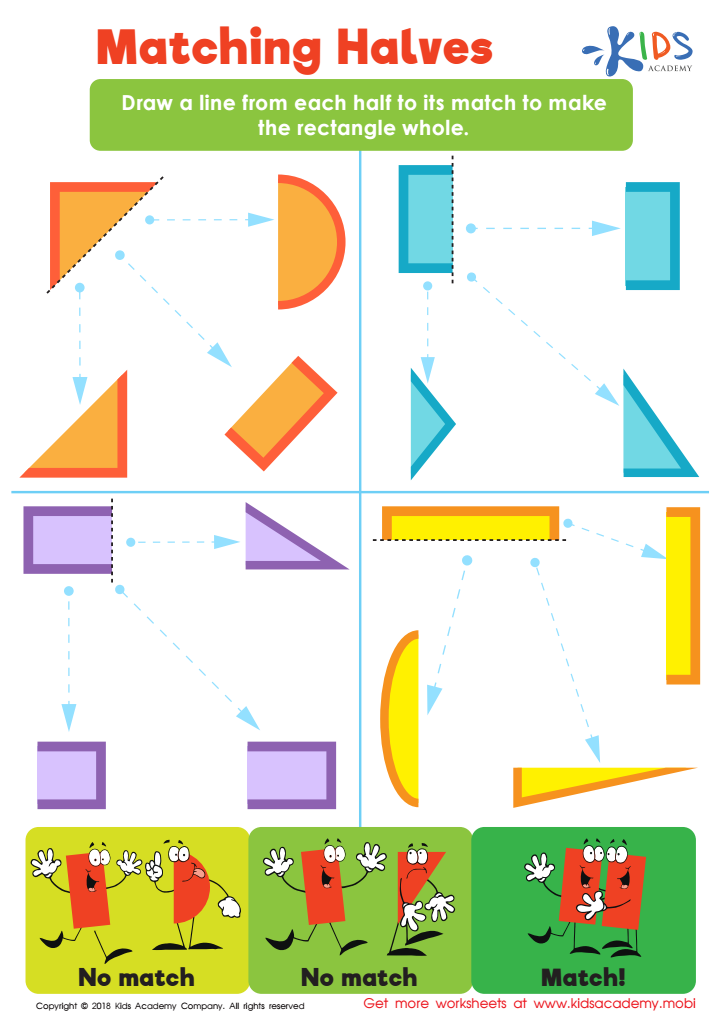
Matching Halves Worksheet
 Assign to My Students
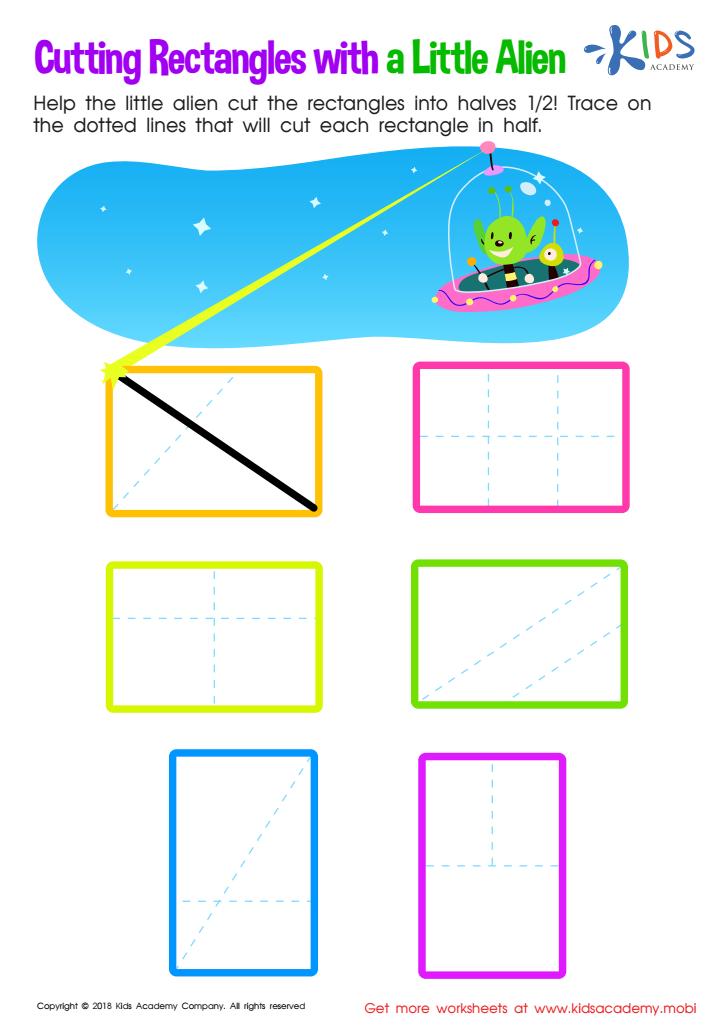
Cutting Rectangles with Alien Worksheet
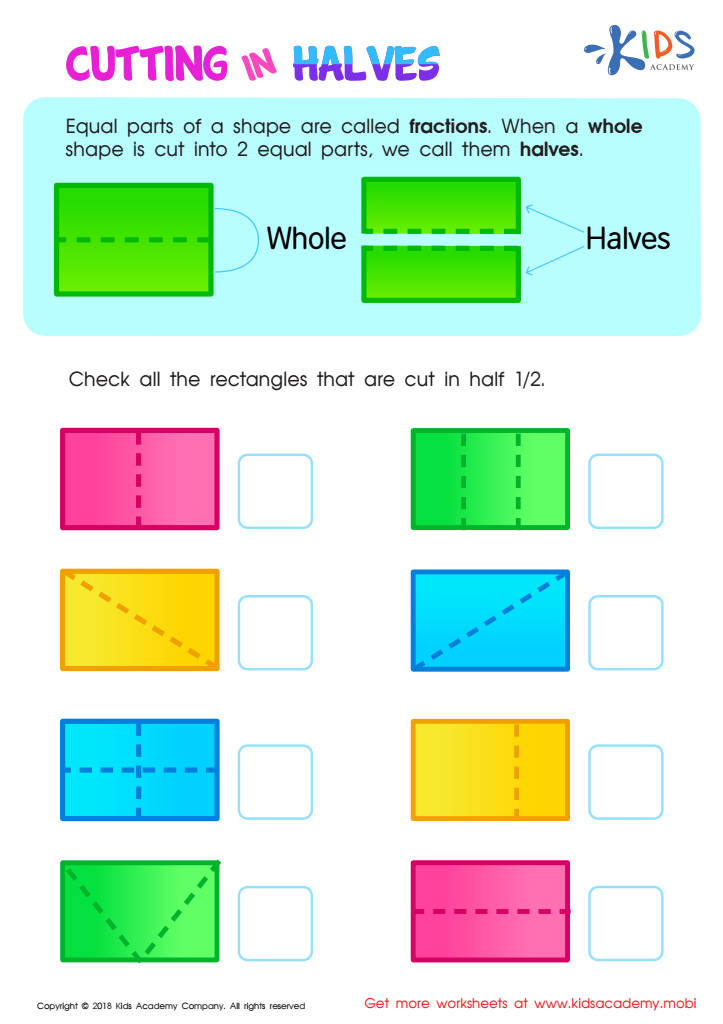
Cutting in Halves Worksheet
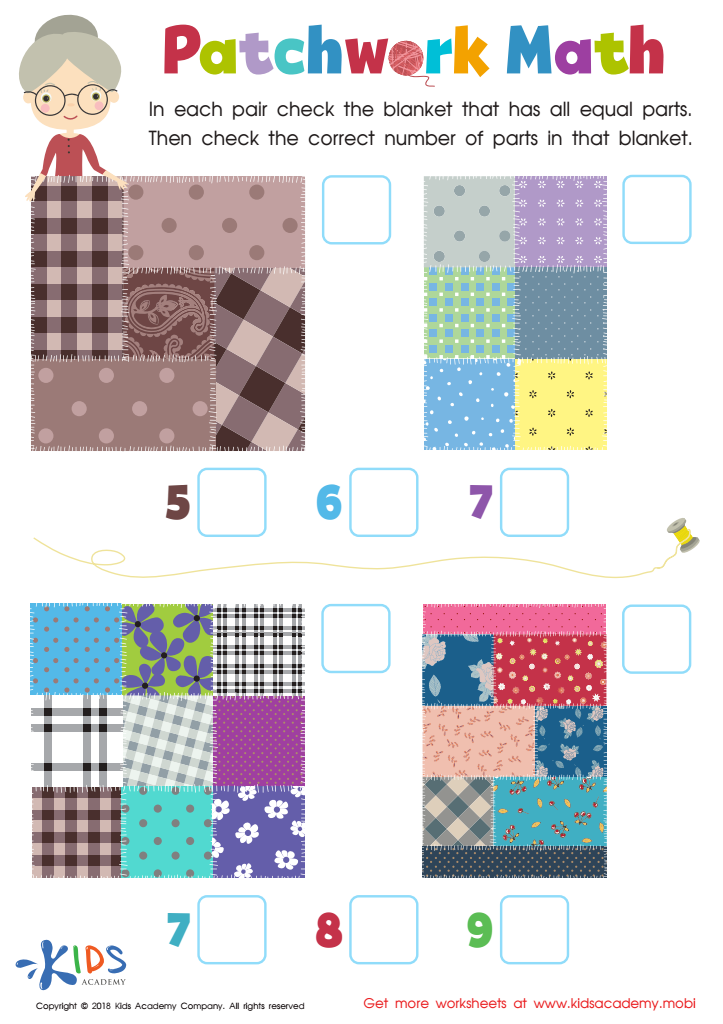
Patchwork Math Worksheet
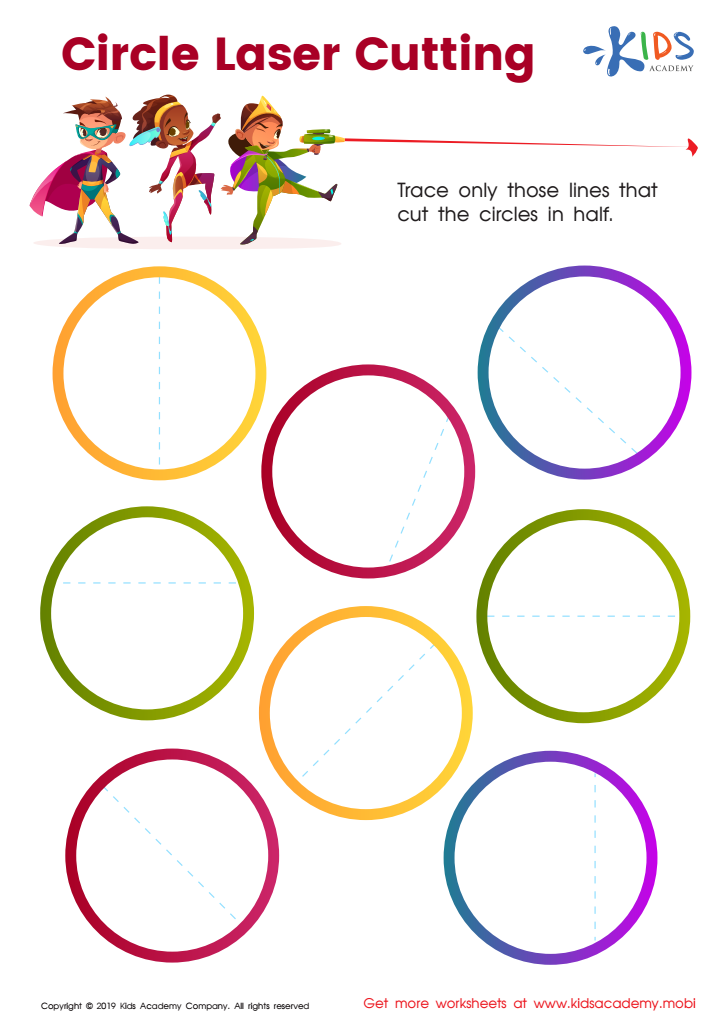
Circle Laser Cutting Worksheet
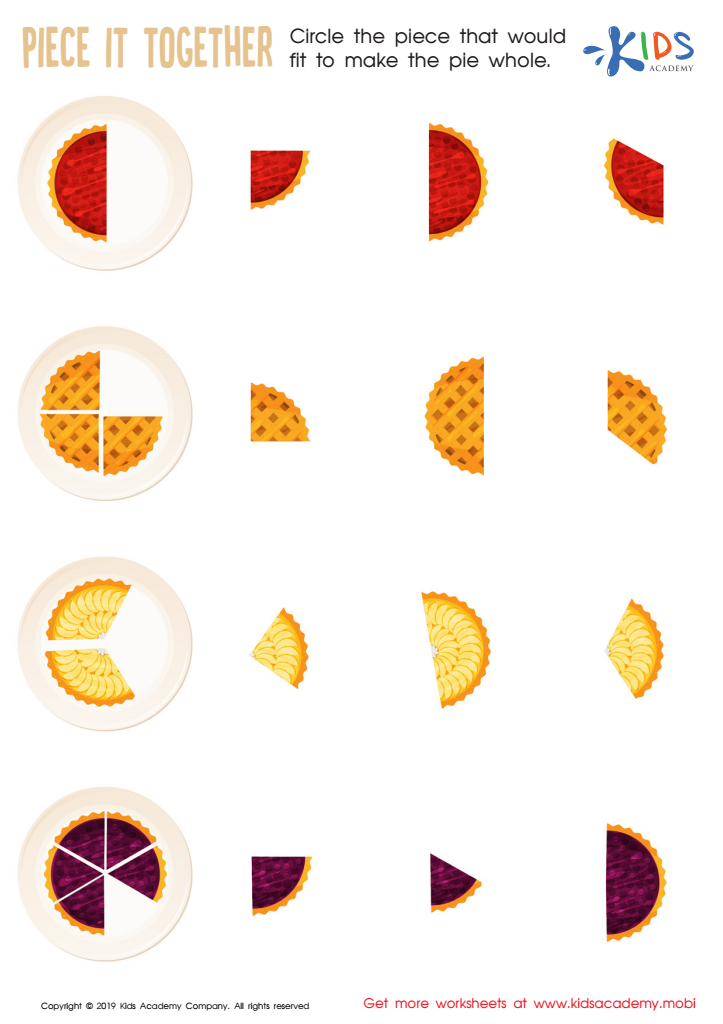
Piece it together Worksheet








Cultivating fine motor skills and understanding fractions can significantly benefit children aged 8-9 in both academic and everyday contexts. Fine motor skills involve the use of small muscles in the hands and fingers, crucial for writing, cutting, and other precise tasks. When children work with fractions of shapes, such as dividing a rectangle into halves or a circle into quarters, they engage these fine motor skills through drawing and cutting. This not only enhances their dexterity and hand-eye coordination but also fosters better handwriting and the ability to complete detailed tasks efficiently.
Understanding fractions of shapes introduces children to foundational mathematical concepts in a visual and tangible form. Demonstrating how shapes can be divided equally helps them grasp the idea of parts and wholes, which is crucial for higher-level math. For example, seeing that two halves make a whole sets the stage for recognizing equivalent fractions, adding and subtracting fractions, and understanding ratios.
Combining these two skill sets stimulates brain development, encouraging both fine motor and cognitive growth. Additionally, these activities promote patience and concentration, building a strong foundation for more complex skills in future learning. Thus, focusing on fine motor skills and fractions in early education helps in developing well-rounded, capable, and confident learners.