Filters

6 filtered results

Clear all filters
Favorites
With answer key
Interactive

6 filtered results

Difficulty Level

Grade


Discover our engaging Basic Addition Numbers Worksheets designed for children aged 8-9. These worksheets provide a fun and interactive way for young learners to enhance their addition skills through various exercises and creative activities. Tailored to meet educational standards, our resources make learning math enjoyable and effective. Each worksheet encourages practice and reinforces core concepts, helping students build confidence in their numeric abilities. Perfect for both classroom and home use, these materials allow children to develop a strong foundation in math while enjoying the process. Start your child’s journey to mathematical proficiency today with our comprehensive worksheets!

Check out this FREE Trial Lesson on Numbers for age 8-9!

Introduction to Arrays

Favorites
With answer key
Interactive
  • 8-9
  • Basic Addition
  • Numbers
Fishy Numbers Worksheet

Fishy Numbers Worksheet

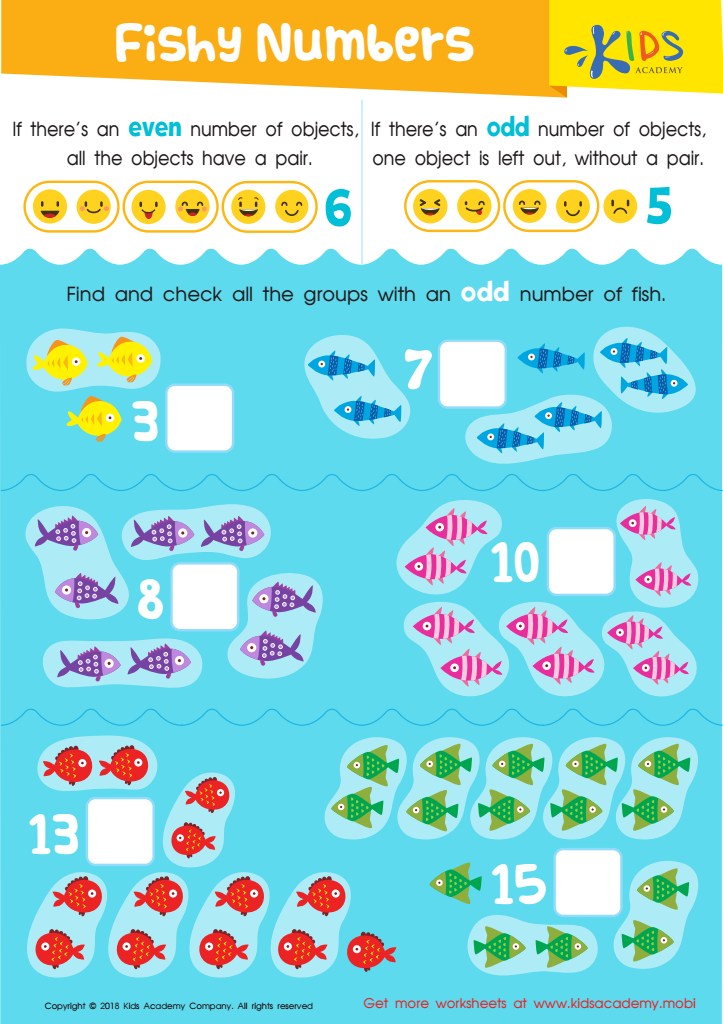
Explain to your kids even and odd numbers using this worksheet. All objects in a group of even numbers can be paired in twos, while an odd number leaves one object unpaired. Ask your students to find and check the groups with an odd number of fish, counting and figuring out which ones are odd.
Fishy Numbers Worksheet
Worksheet
Fruity Array Quest Worksheet

Fruity Array Quest Worksheet

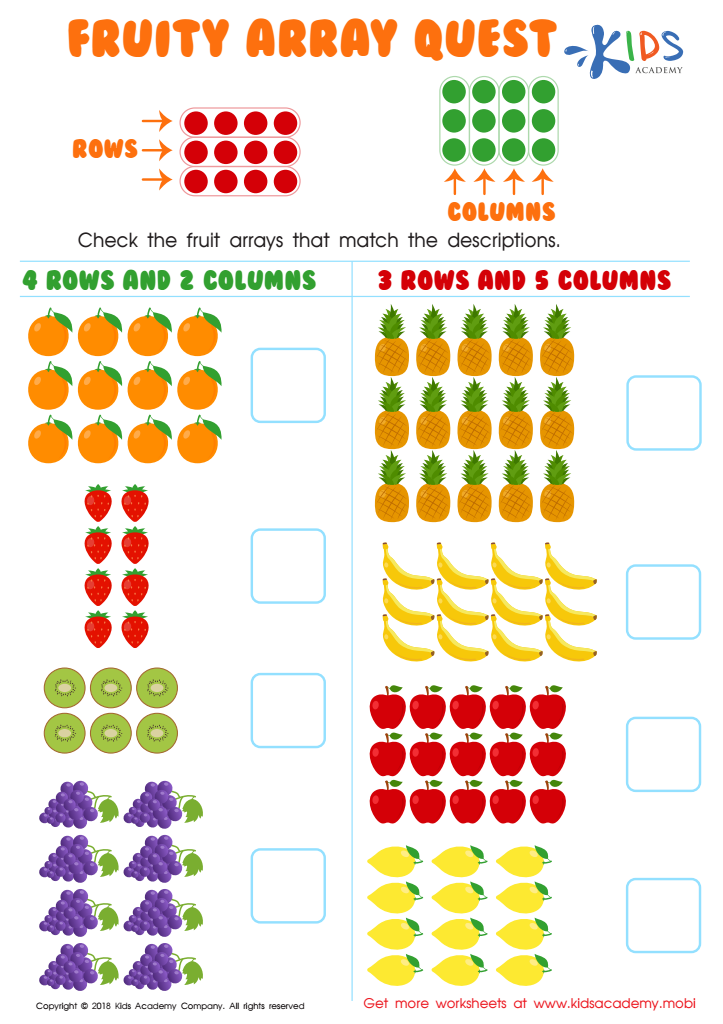
Explain rows (horizontal) and columns (vertical) to your child before starting the worksheet. Show them the picture and the arrows indicating direction. Your child should be able to answer the questions easily after that. Help them match the fruit arrays that match the descriptions.
Fruity Array Quest Worksheet
Worksheet
Place Value: Chapter 1 Worksheet

Place Value: Chapter 1 Worksheet

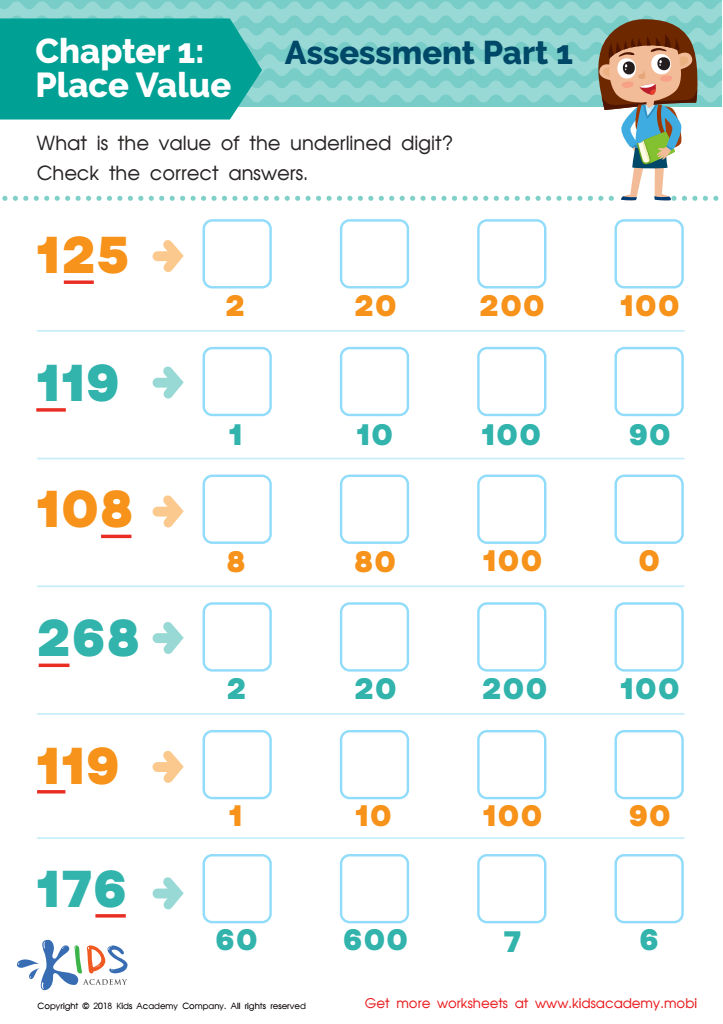
Check your kid's place value understanding with this assessment worksheet. It features 6 questions with one digit underlined for your child to determine the correct value of. Get the download and see if they can correctly choose the answer from the options given. It's a great way to test progress and keep their minds sharp!
Place Value: Chapter 1 Worksheet
Worksheet
Sea Math Worksheet
Sea Math Worksheet

Sea Math Worksheet

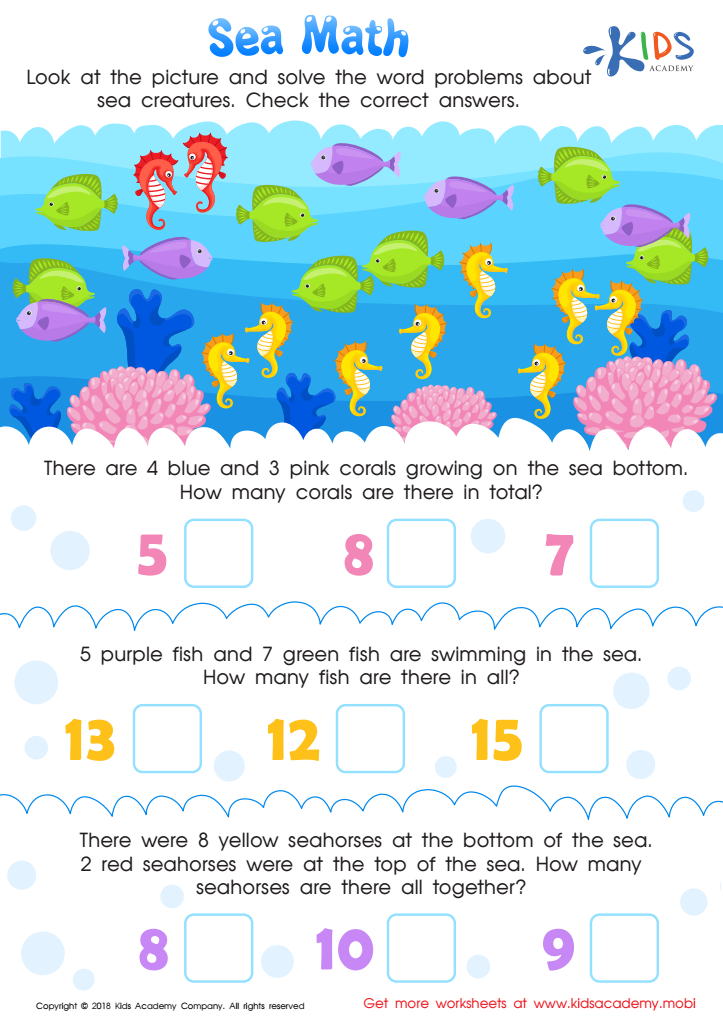
Dive into an ocean of addition with this fun math worksheet! Help your little mathematician count and add colorful coral and fish. Point out phrases like "in total" or "all together" as a reminder to use addition. Watch them add to find the answer and check the boxes to finish!
Sea Math Worksheet
Worksheet
Problem Solving: Tony's Wreath Worksheet

Problem Solving: Tony's Wreath Worksheet

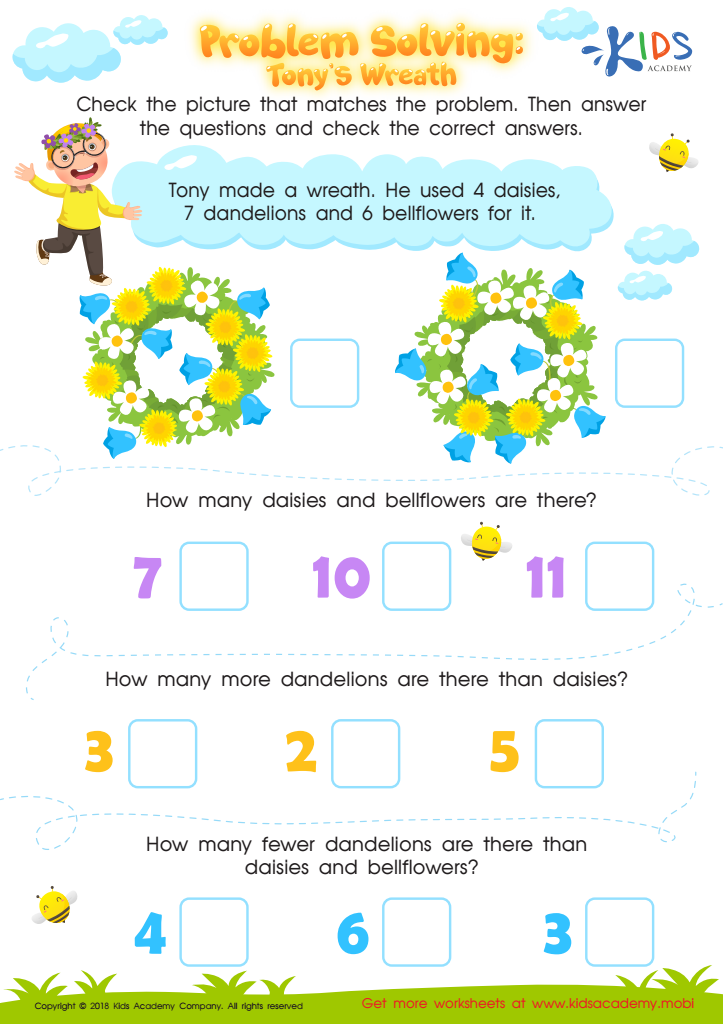
Tony needs help! He's made a beautiful, colorful wreath and needs help counting the flowers. Your math student can read the word problems, match answers to the problems and solve basic addition and subtraction. They'll practice with two and three addends, minuends and subtrahends to find sums and differences and help Tony and his bee friends.
Problem Solving: Tony's Wreath Worksheet
Worksheet
Counting with Drawings:Fruits & Flowers Worksheet


Counting with Drawings:Fruits & Flowers Worksheet

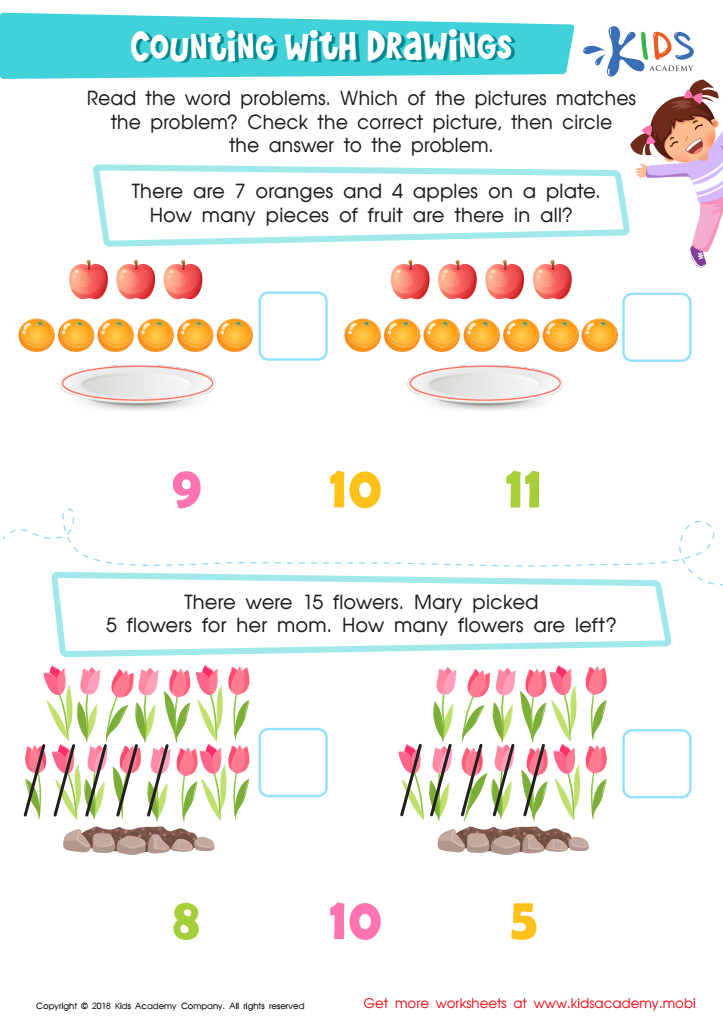
At Kids Academy, we know pictures make math come alive and make sense. This worksheet is perfect for early learners to practice word problems. Kids read each problem and count the images that represent the numbers, then solve the problem with addition or subtraction to get the right answer.
Counting with Drawings:Fruits & Flowers Worksheet

Worksheet


Basic addition skills are crucial for children ages 8-9 as they lay the foundation for their future mathematical understanding and overall academic success. At this developmental stage, children are transitioning from simple addition to more complex mathematical concepts, such as subtraction, multiplication, and even early fraction work. Mastering basic addition not only enhances their computational skills but also boosts their confidence in tackling problem-solving tasks.

Moreover, these skills are essential for daily life; children encounter situations requiring addition in various contexts, such as shopping, cooking, and time management. Parents and teachers play a pivotal role in reinforcing these skills through engaging activities and real-world applications, making learning meaningful and enjoyable.

Additionally, strong addition skills contribute to better performance in standardized assessments and foster a positive attitude toward mathematics. By emphasizing the importance of basic addition, adults can help cultivate a growth mindset in children, encouraging persistence and resilience when faced with challenges. Ultimately, prioritizing basic addition fosters critical thinking and prepares students for future academic and life challenges, ensuring they become proficient, confident learners.