Enhancing critical thinking Numbers Worksheets for Ages 8-9
5 filtered results
-
From - To
Unlock the power of critical thinking with our engaging Numbers Worksheets designed for ages 8-9. These thoughtfully crafted resources guide learners through fun, interactive activities that challenge their reasoning, problem-solving, and analytical skills. Each worksheet encourages kids to think outside the box, enhancing their understanding of mathematical concepts and application. From puzzles to real-life scenarios, these exercises foster a love for learning while developing essential cognitive abilities. Perfect for home or classroom use, our worksheets promote independent thinking and boost confidence in young mathematicians. Explore our collection today and watch your child's critical thinking skills soar!
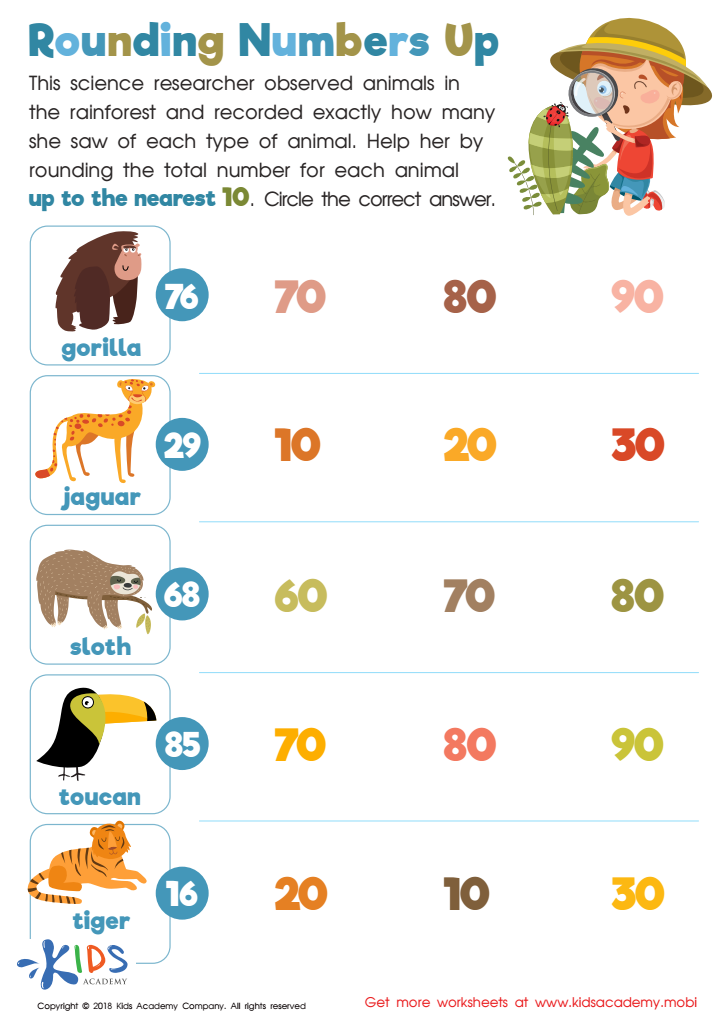
Rounding Numbers Up Worksheet
 Assign to My Students
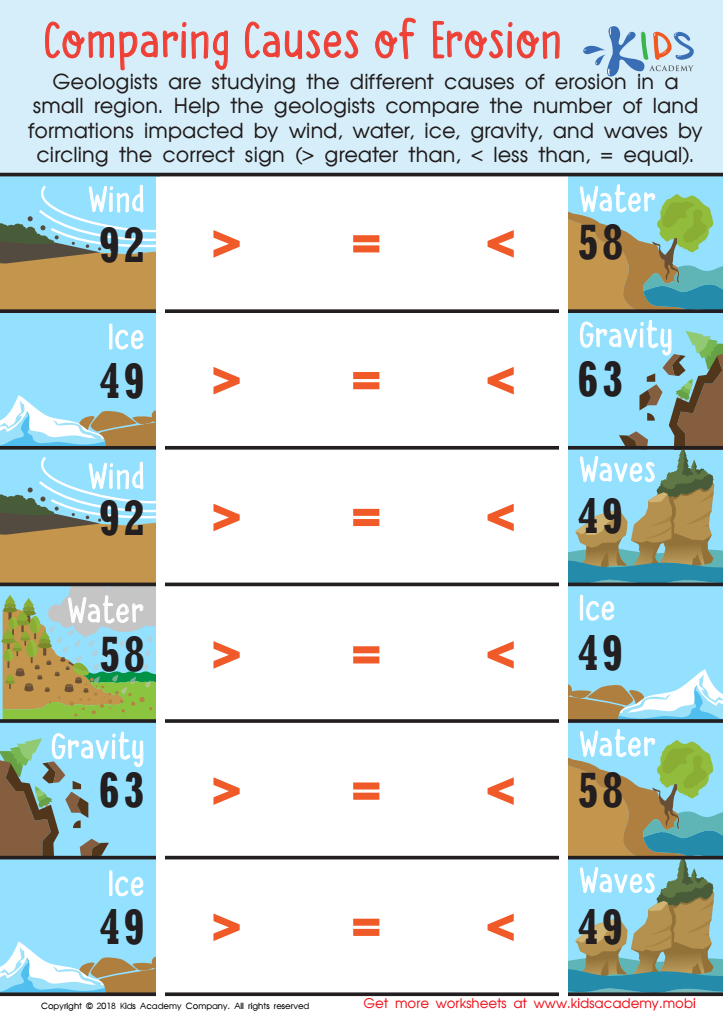
Comparing Causes of Erosion Worksheet
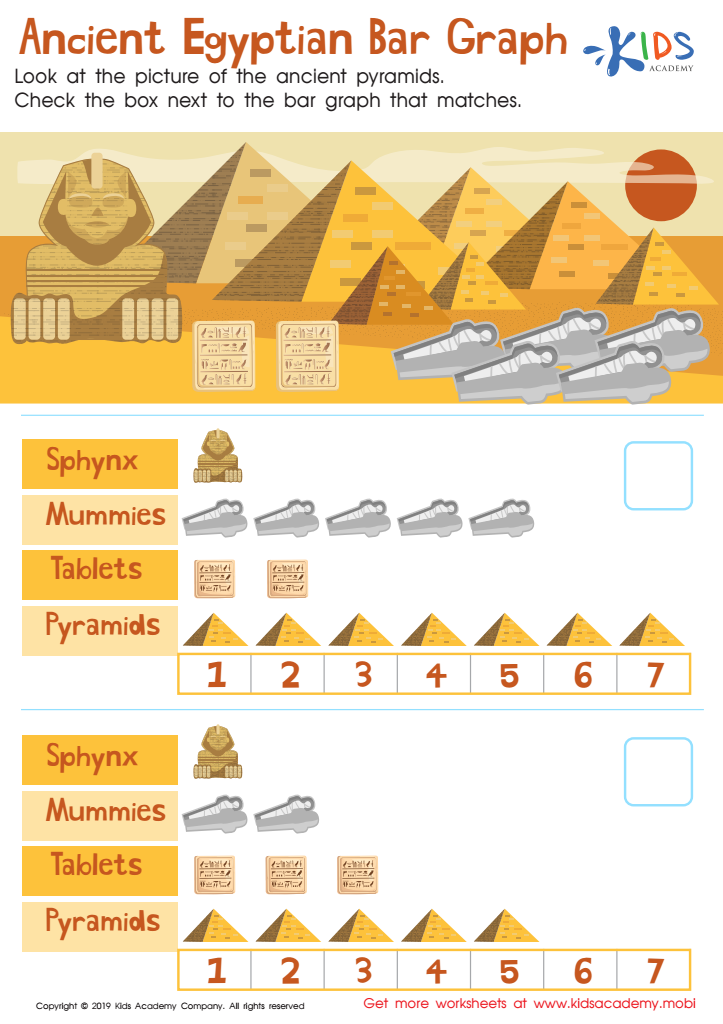
Egyptian Bar Graph Worksheet
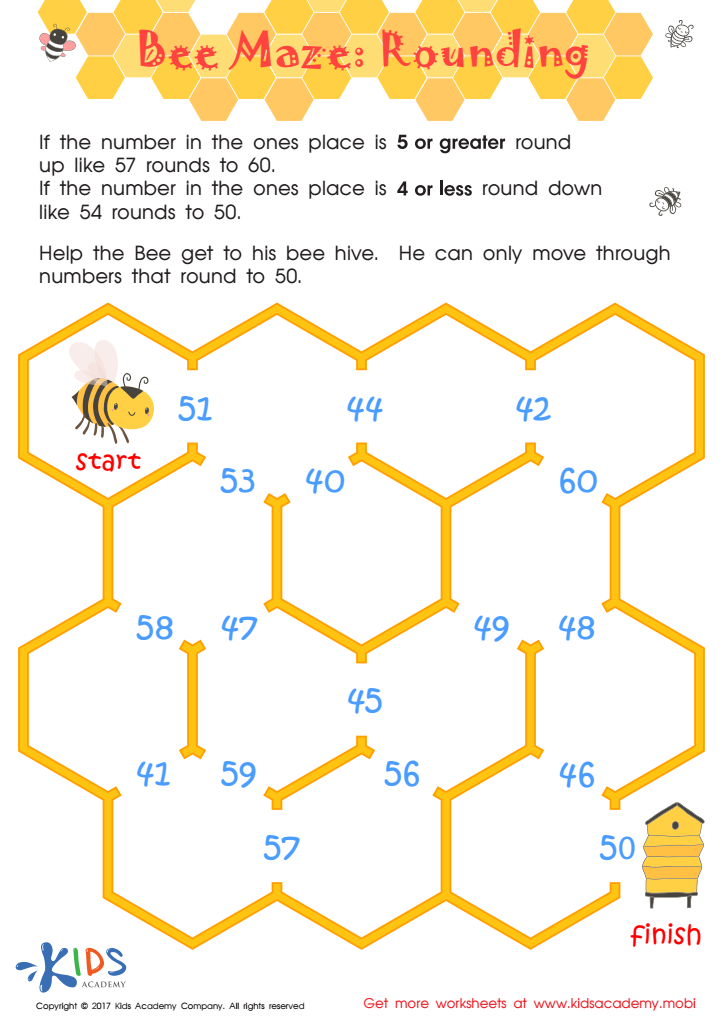
Bee Maze Worksheet
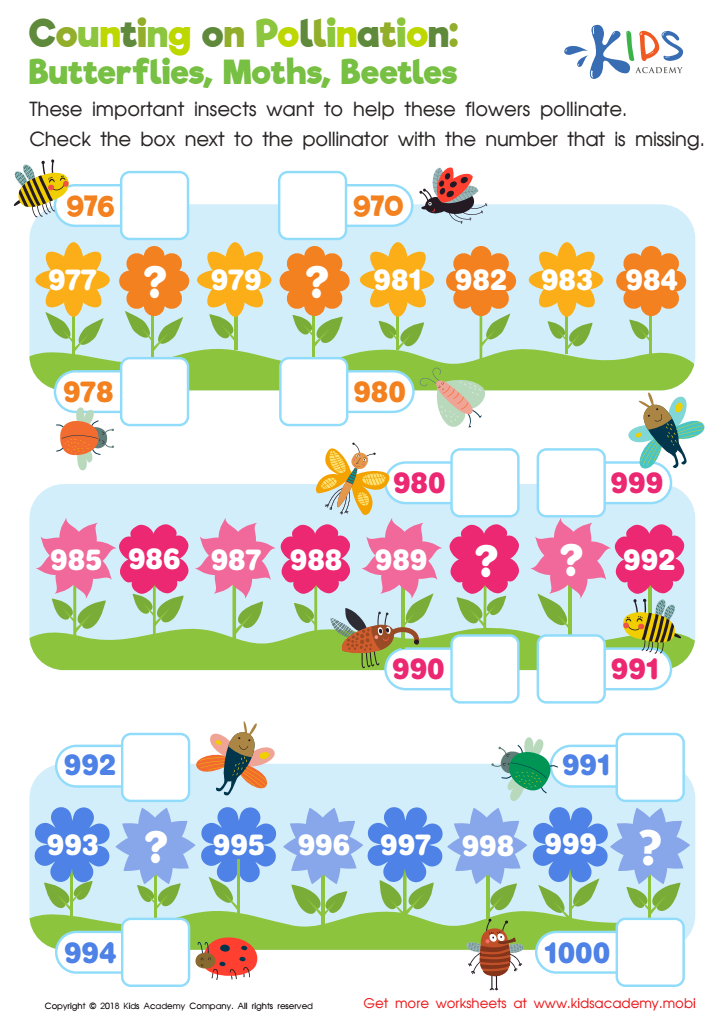
Counting on Pollination: Butterflies, Moths, Beetles Worksheet








Enhancing critical thinking skills in children aged 8-9 is essential for their overall development and success in a rapidly changing world. At this age, children begin to think more logically and abstractly, making it an ideal time to nurture their analytical skills. Parents and teachers should care about fostering critical thinking in mathematics because it encourages not just rote memorization of numbers, but also engagement with concepts, problem-solving, and mathematical reasoning.
When children learn to analyze numerical patterns, make predictions, and evaluate outcomes, they develop a strong foundation for more advanced math and real-life applications. Critical thinking in numbers enables them to approach complex situations with confidence and creativity, enhancing their decision-making skills in everyday contexts.
Furthermore, these skills encourage perseverance, as children learn to approach challenges with patience and curiosity. By focusing on critical thinking, educators can create an enriching environment where students feel empowered to question, hypothesize, and explore various solutions. This not only builds mathematical competence but also fosters a love for learning. Ultimately, developing critical thinking in young learners prepares them for future academic success and equips them with the tools needed for informed citizenship in an increasingly complex world.








