
Number Sequencing Numbers Worksheets for Ages 8-9
4 filtered results
Difficulty Level
Grade
Age
-
From - To
Subject
Activity
Standards
Discover an engaging collection of number sequencing worksheets designed specifically for children aged 8-9. Our thoughtfully crafted materials help develop essential skills in ordering and recognizing number patterns, enhancing both mathematical proficiency and logical thinking. These worksheets offer a mix of fun and educational exercises that challenge students to identify sequences, complete patterns, and master numerical progression. Ideal for classroom use or at-home learning, our worksheets cater to various learning styles, making math enjoyable and accessible for every child. Empower your young learners to improve their number sequencing abilities while building confidence in their math skills with our targeted resources!
Favorites
With answer key
Interactive
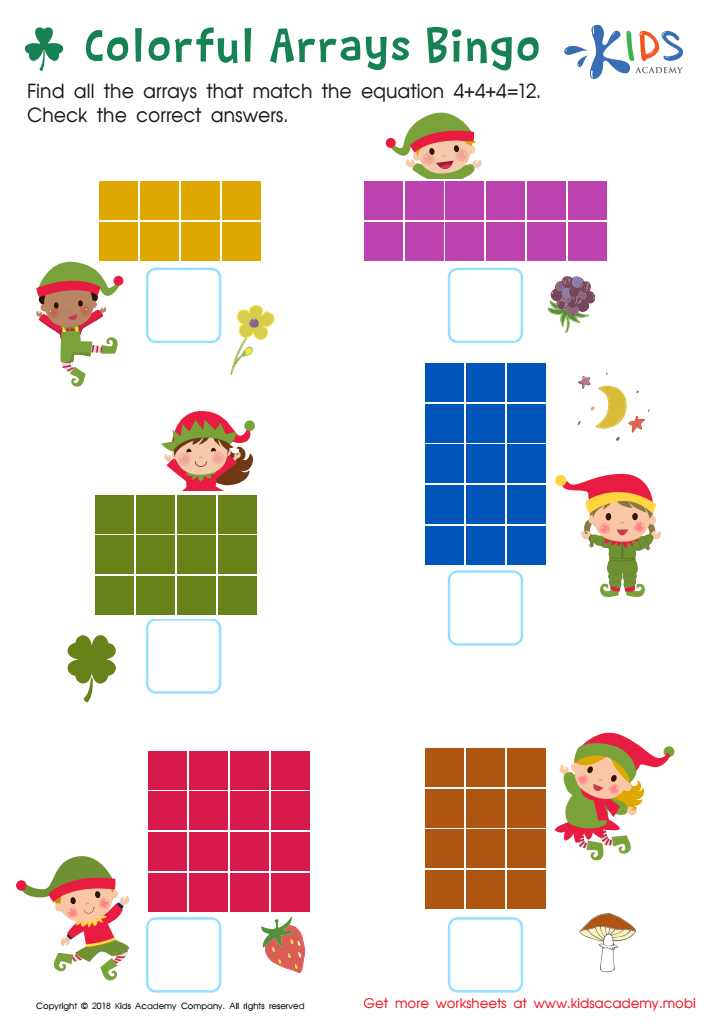
Colorful Arrays Bingo Worksheet
This worksheet stimulates thinking about arrays and how to represent them. Instruct students to count the 6 arrays and find which ones sum up to 12. Ask them to check the answers for accuracy.
 Assign to My Students
Colorful Arrays Bingo Worksheet
Worksheet
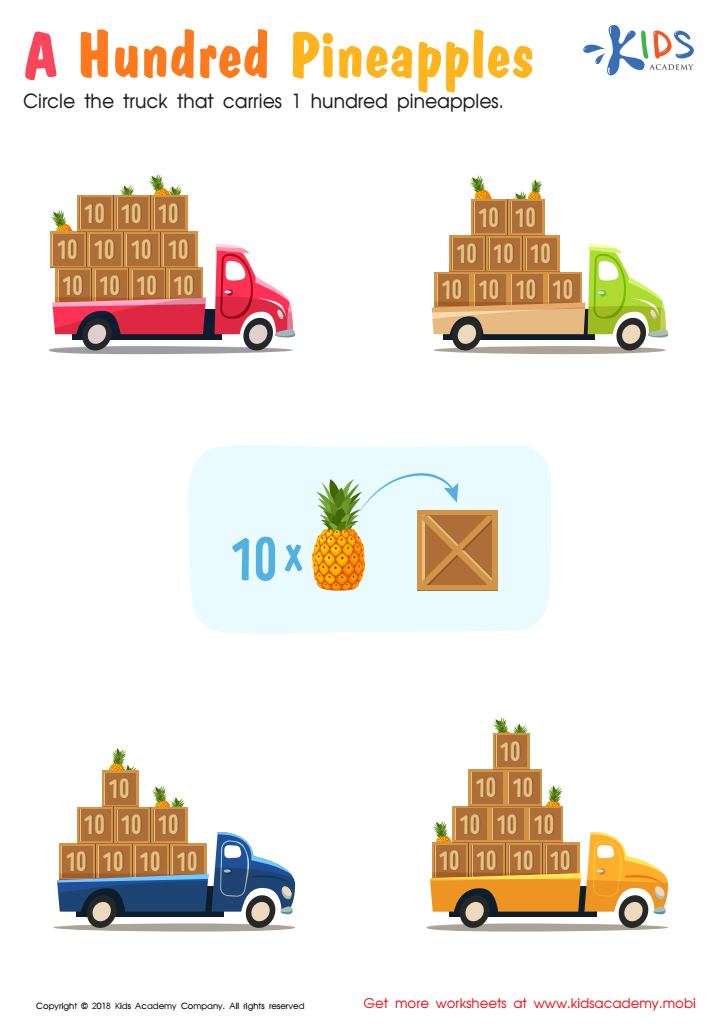
A Hundred Pineapples Worksheet
Can your child count in tens? Show them how to count 100 boxes in stacks of tens. A worksheet can help them understand the concept. Ask them to count boxes of pineapples in stacks of tens and circle the truck with 100 pineapples.
A Hundred Pineapples Worksheet
Worksheet
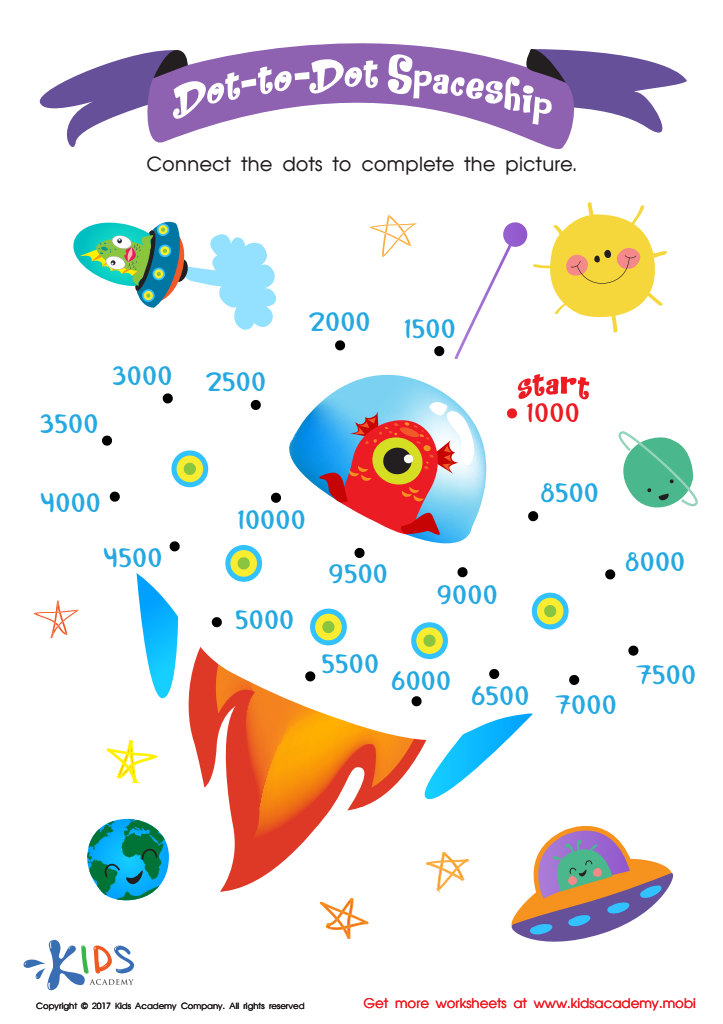
Dot to Dot Worksheet for 3rd Grade
Let your 3rd grader develop better number skills with this dot-to-dot worksheet! They can have fun outlining a spaceship as they skip count by 500 up to 10,000. It's a great way to boost their number sense and make learning more exciting.
Dot to Dot Worksheet for 3rd Grade
Worksheet
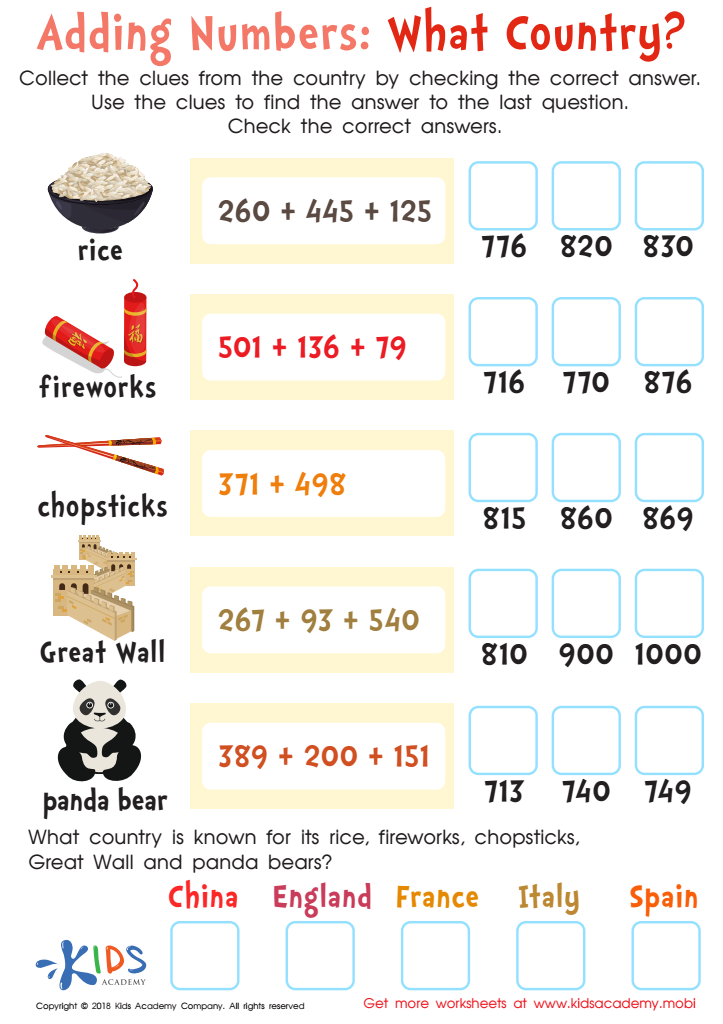
Adding Numbers: What Country Worksheet
Students can use this worksheet to learn more about different countries. Have them collect clues from the worksheet to answer the last question. Help them check the correct answer, and they'll gain knowledge about each country's food, animals, celebrations, and landmarks.
Adding Numbers: What Country Worksheet
Worksheet
Join Kids Academy for Free
Who is primarily going to use this learning content?








Number sequencing is a fundamental skill that plays a crucial role in the cognitive development of children aged 8-9. This skill not only enhances a child’s mathematical ability but also fosters critical thinking, problem-solving, and reasoning skills. Understanding number sequences helps children recognize patterns, which is essential for future mathematical concepts such as arithmetic operations, geometry, and even algebra.
Parents and teachers should prioritize number sequencing as it also builds a solid foundational understanding of number relationships. When children can identify sequences and understand their progression, they’re better equipped to handle more complex mathematical concepts in later grades. It also lays the groundwork for lesson topics involving counting, fractions, and data interpretation.
Moreover, sequencing skills can be integrated into real-life situations, making math more relatable. Activities like arranging objects, scheduling daily events, or ordering similar items can help strengthen these skills. Strong number sequencing competence instills confidence and enthusiasm for math learning, enabling children to engage actively in their education. By investing time in fostering these skills, parents and teachers equip children with the tools they need for academic success and prevent future difficulties in more advanced mathematical areas.








