Enhance comprehension math worksheets for ages 8-9 are designed to help young learners master foundational math concepts while improving their critical thinking skills. Filled with engaging activities, these worksheets cover key topics such as addition, subtraction, basic geometry, and word problems, encouraging students to apply their mathematical knowledge in real-world scenarios. Each worksheet is aligned with curriculum standards, ensuring a balanced approach to learning. Perfect for both classroom settings and at-home practice, these resources foster a love for math and build confidence in problem-solving abilities. Unlock your child's potential and make math fun with our comprehensive and interactive worksheets!
Check out this FREE Trial Lesson on Math for age 8-9!

P

Favorites
With answer key
Interactive
  • 8-9
  • Enhance comprehension
  • Math
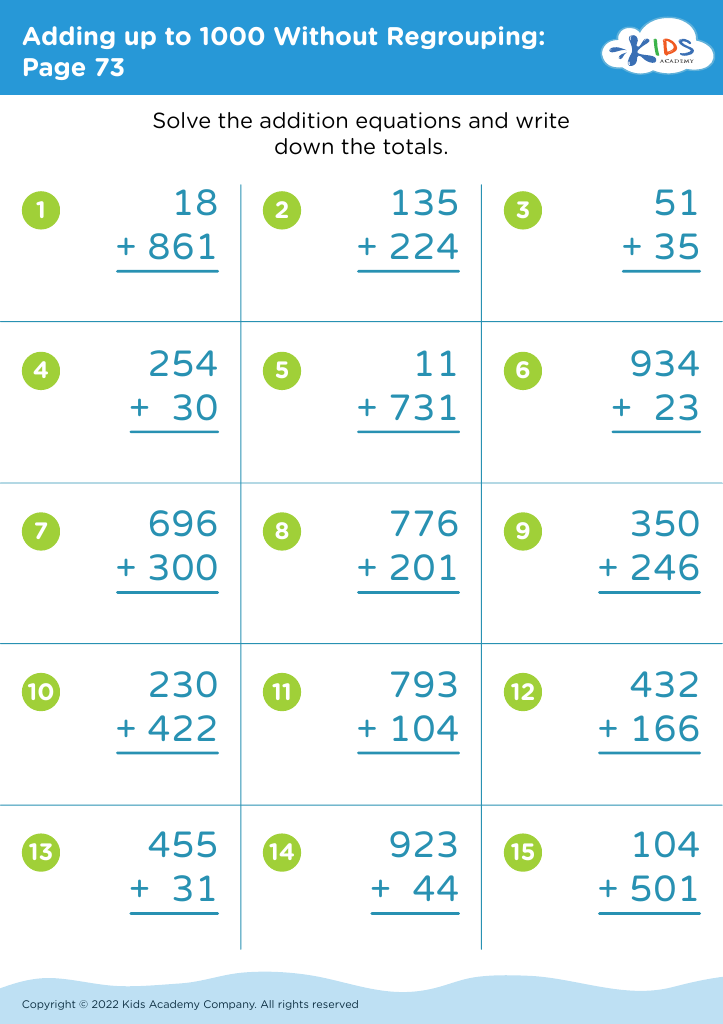
Adding up to 1000 Without Regrouping: Page 73
Worksheet
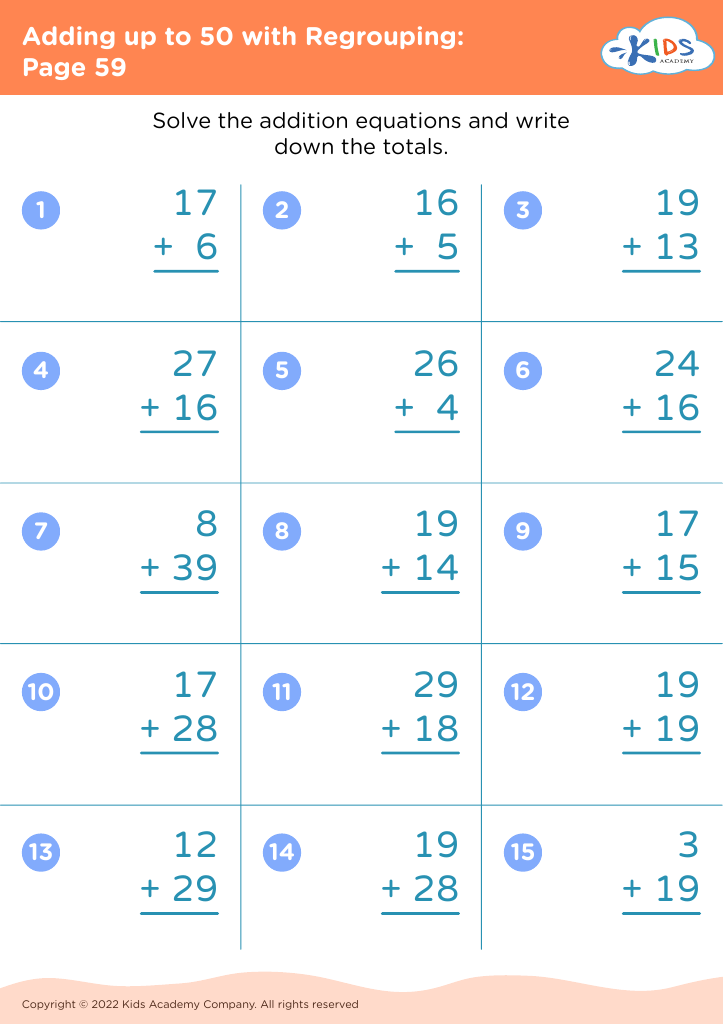
Adding up to 50 with Regrouping: Page 59
Worksheet
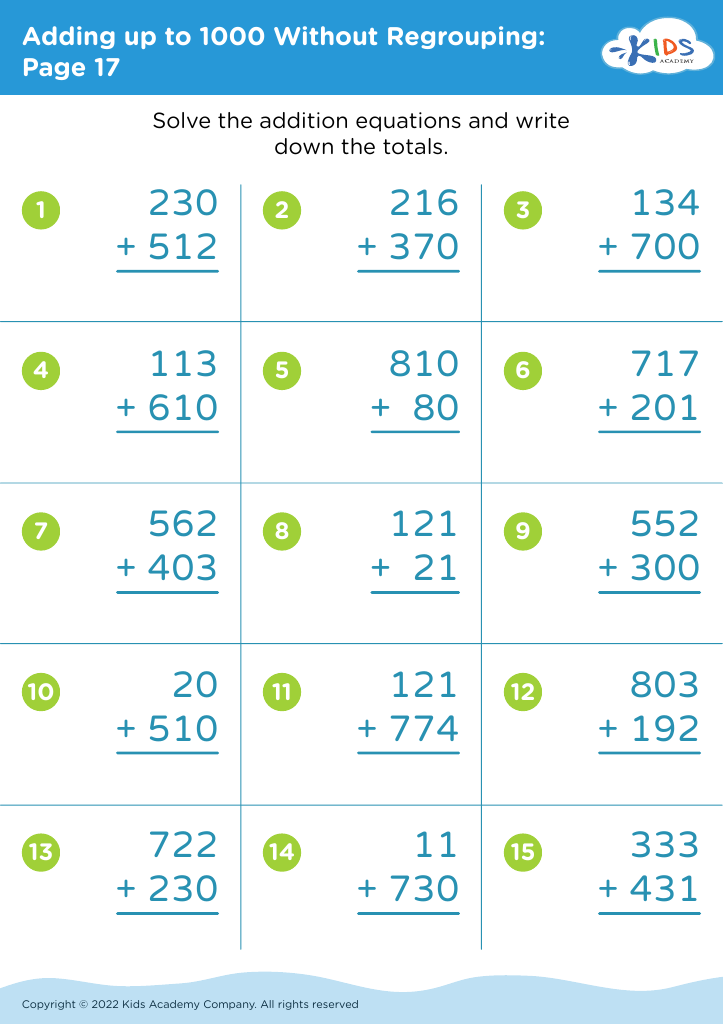
Adding up to 1000 Without Regrouping: Page 17
Worksheet
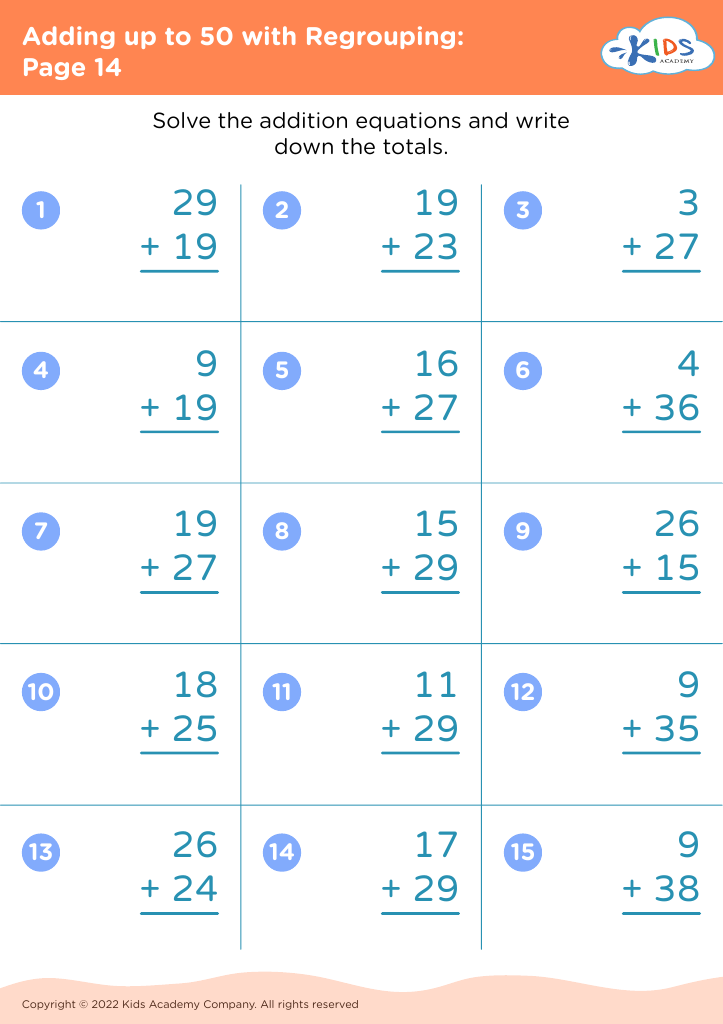
Adding up to 50 with Regrouping: Page 14
Worksheet
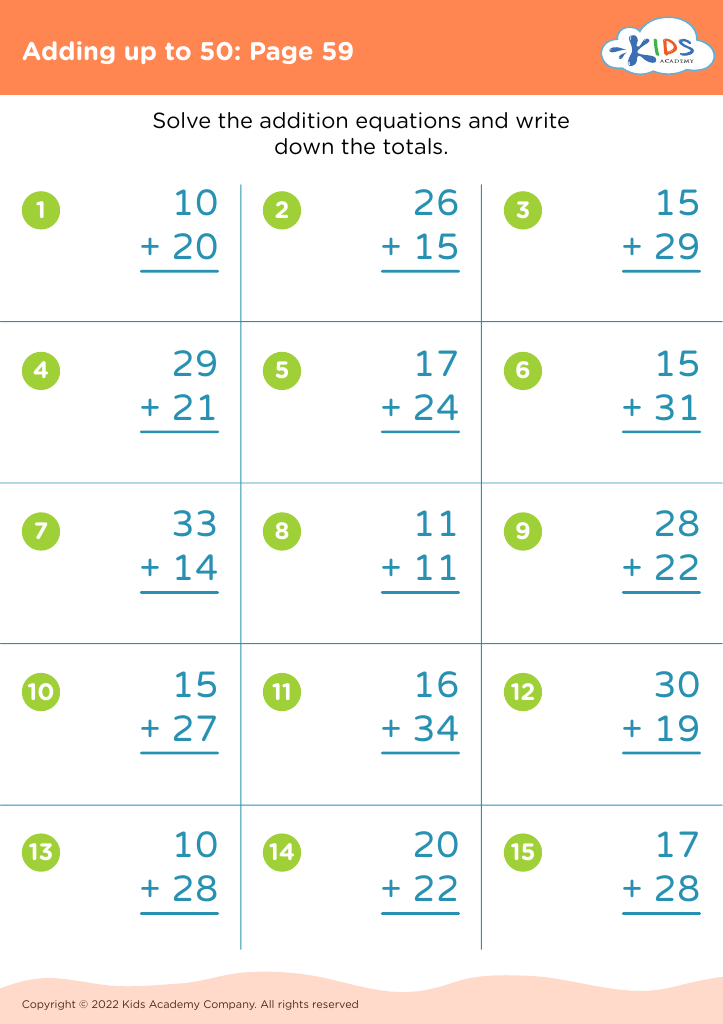
Adding up to 50: Page 59

Adding up to 50: Page 59

Adding up to 50: Page 59
Worksheet
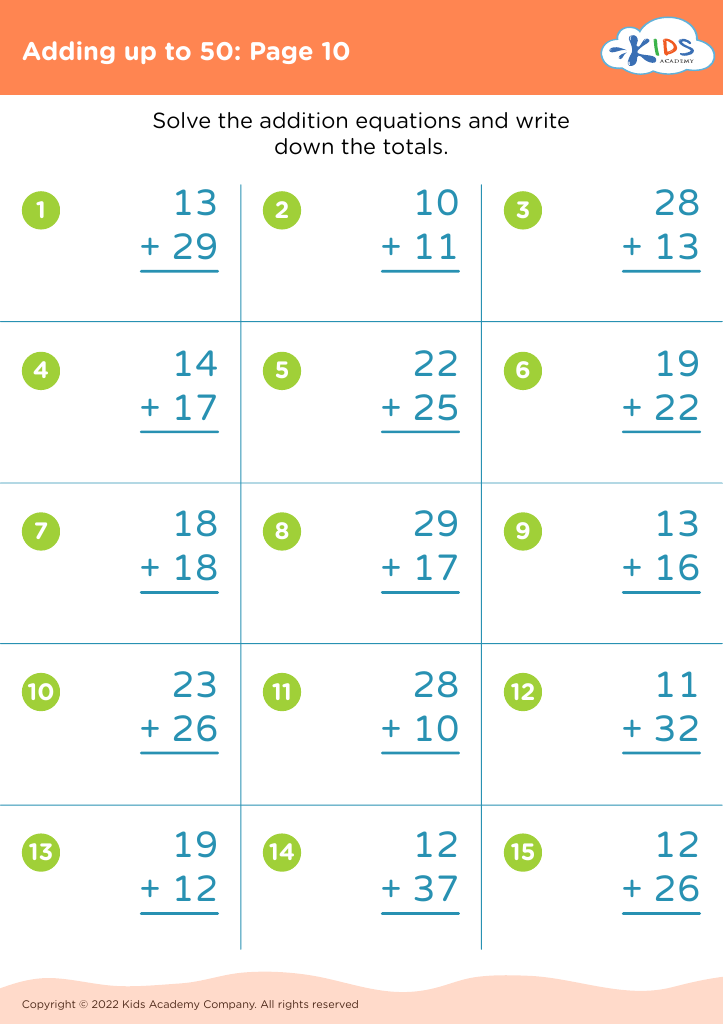
Adding up to 50: Page 10

Adding up to 50: Page 10

Adding up to 50: Page 10
Worksheet
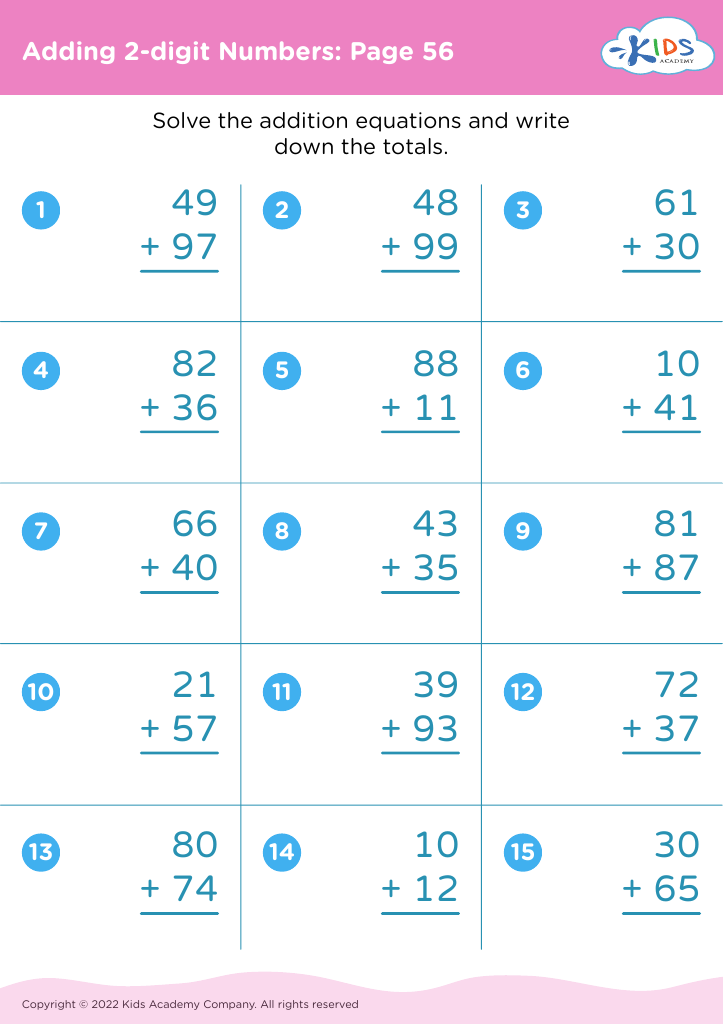
Adding 2-digit Numbers: Page 56

Adding 2-digit Numbers: Page 56

Adding 2-digit Numbers: Page 56
Worksheet
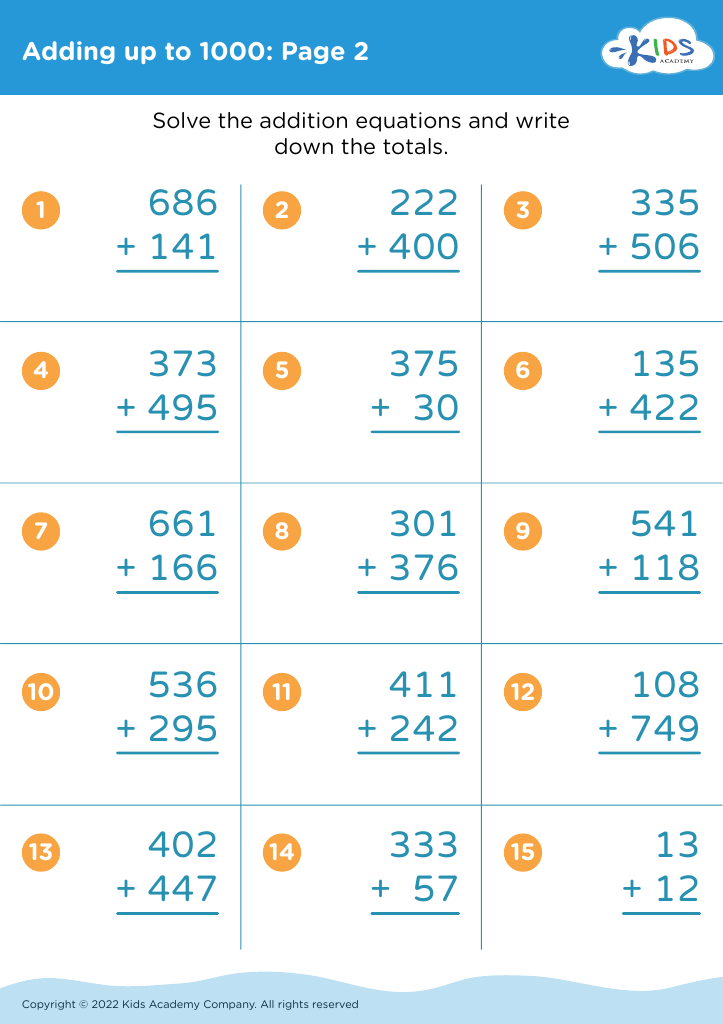
Adding up to 1000: Page 2

Adding up to 1000: Page 2

Adding up to 1000: Page 2
Worksheet
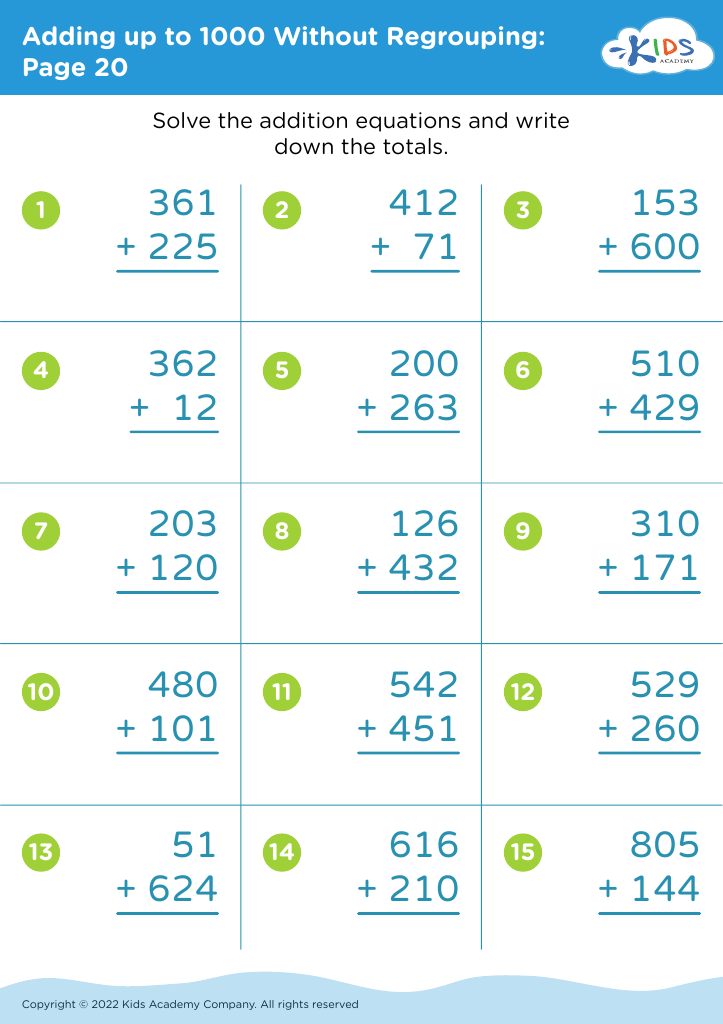
Adding up to 1000 Without Regrouping: Page 20
Worksheet
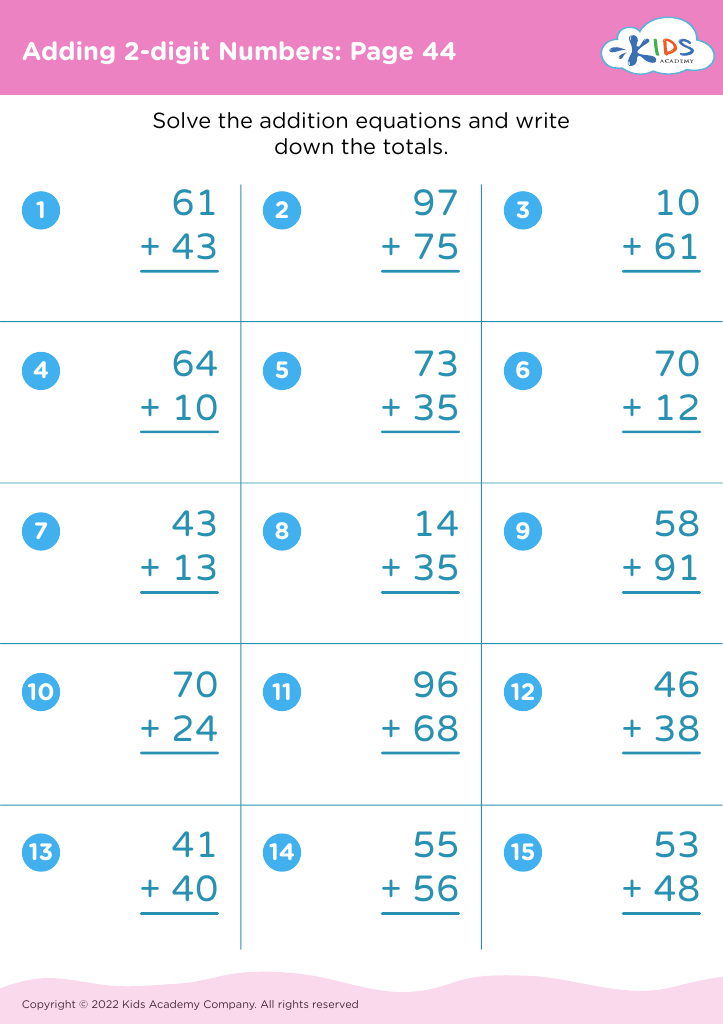
Adding 2-digit Numbers: Page 44

Adding 2-digit Numbers: Page 44

Adding 2-digit Numbers: Page 44
Worksheet
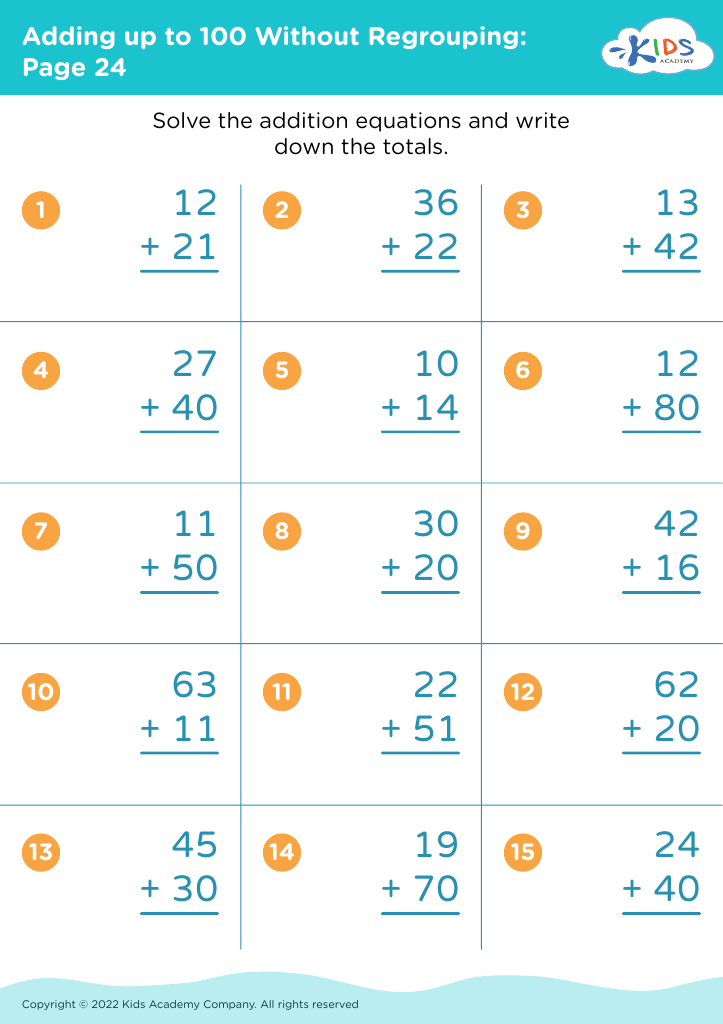
Adding up to 100 Without Regrouping: Page 24
Worksheet
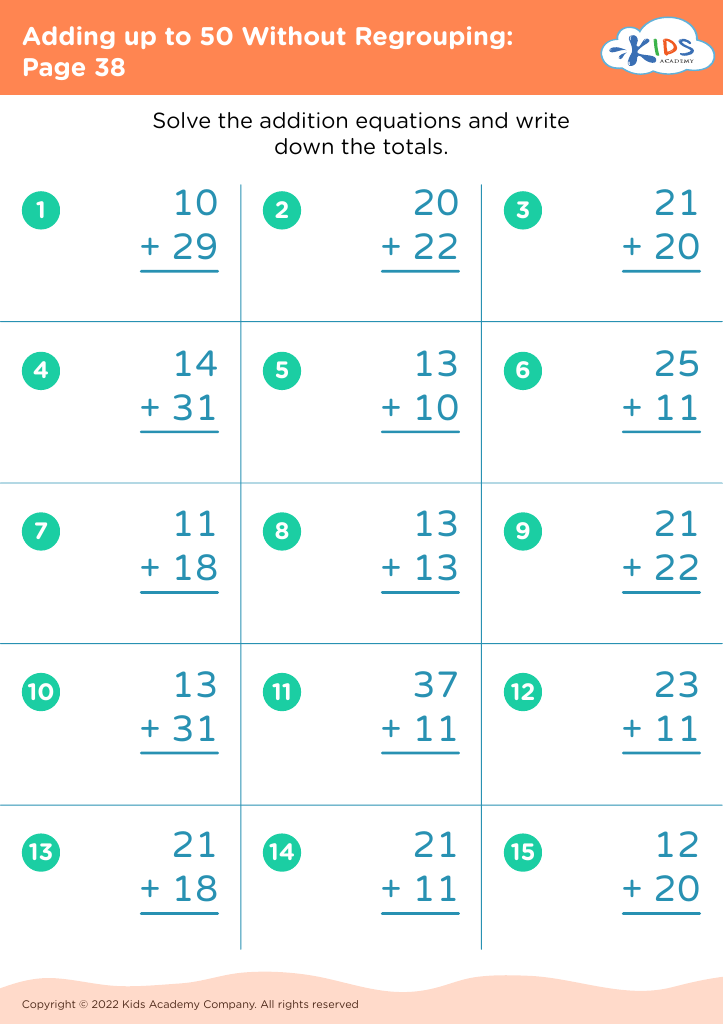
Adding up to 50 Without Regrouping: Page 38
Worksheet
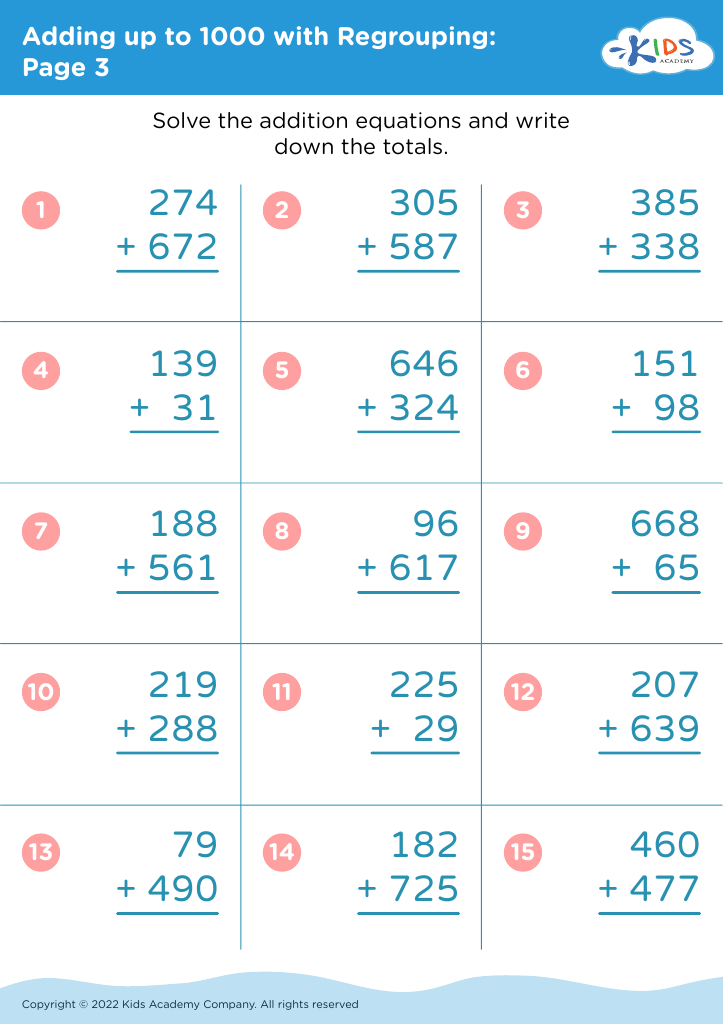
Adding up to 1000 with Regrouping: Page 3
Worksheet
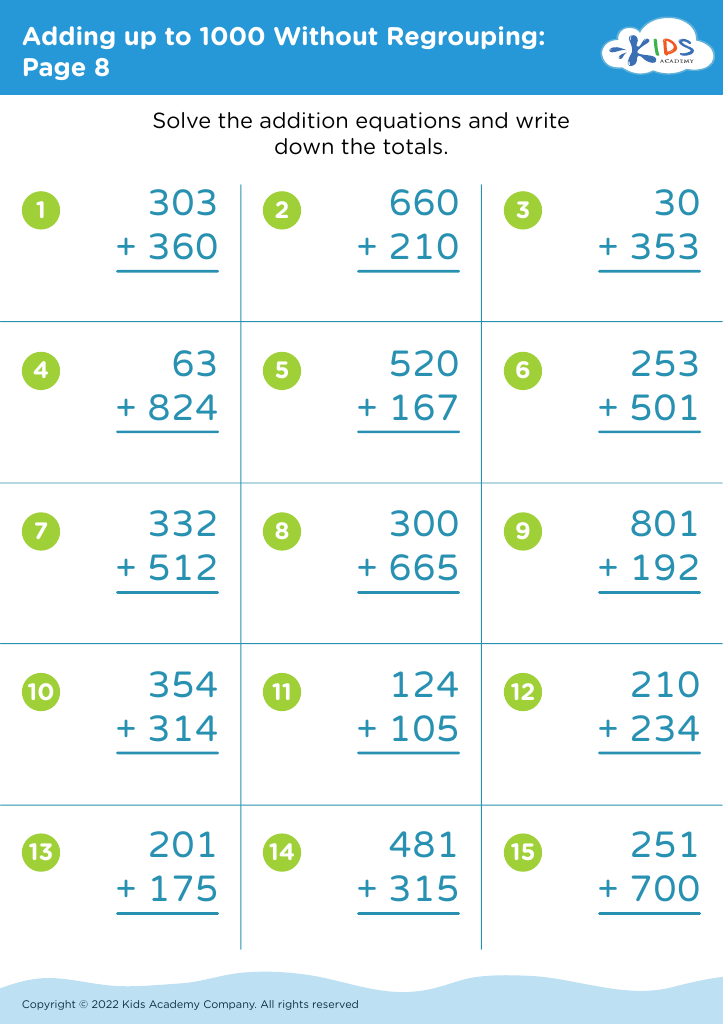
Adding up to 1000 Without Regrouping: Page 8
Worksheet
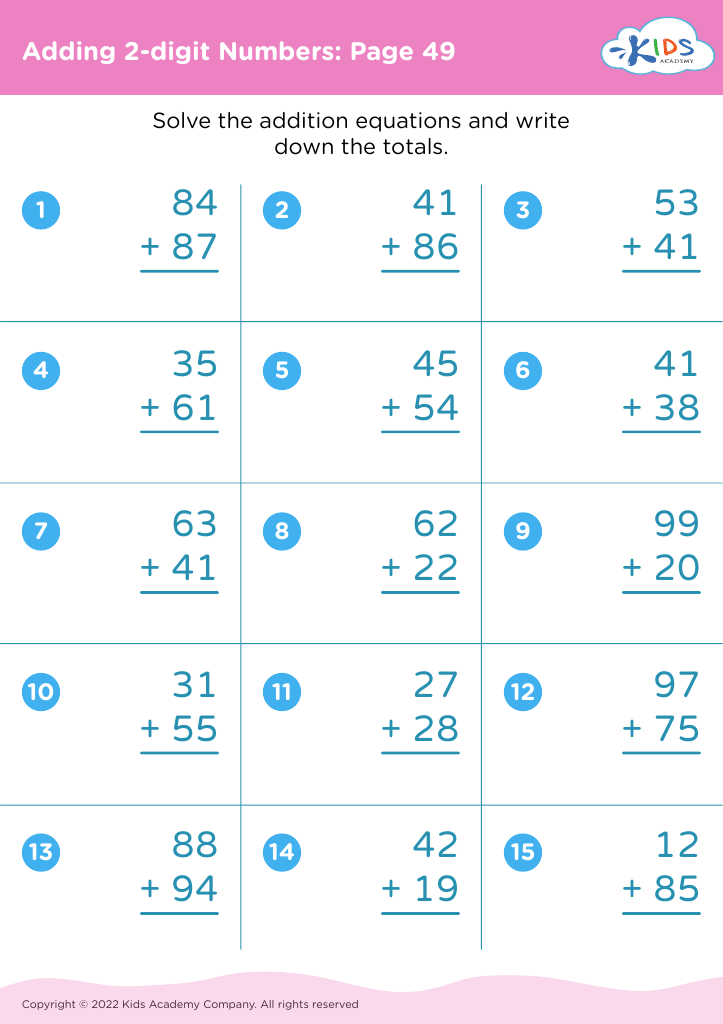
Adding 2-digit Numbers: Page 49

Adding 2-digit Numbers: Page 49

Adding 2-digit Numbers: Page 49
Worksheet
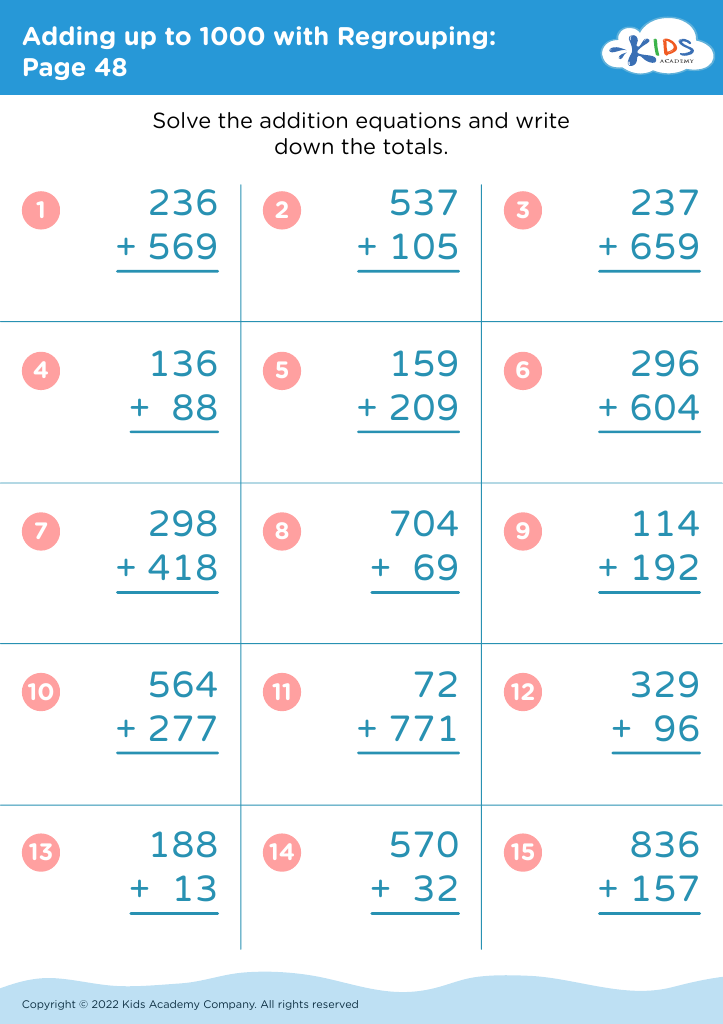
Adding up to 1000 with Regrouping: Page 48
Worksheet
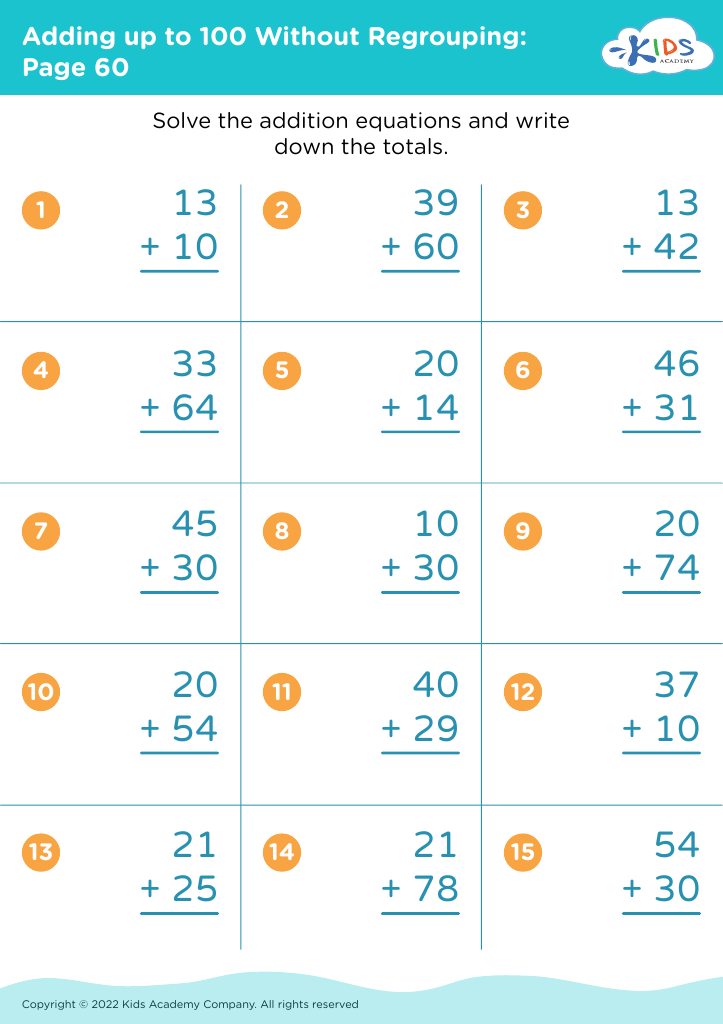
Adding up to 100 Without Regrouping: Page 60
Worksheet


Enhancing math comprehension for ages 8-9 is crucial for fostering solid foundational skills that will support children's long-term academic success. During this age range, children transition from basic arithmetic to more complex concepts, such as multiplication, division, and early problem-solving skills. A deep understanding of these concepts not only boosts their confidence but also nurtures a positive attitude toward math.

Parents and teachers play a pivotal role in this developmental phase. Engaging children in math comprehension helps them develop critical thinking skills, encourages logical reasoning, and promotes creativity in finding solutions. Furthermore, strong math skills are linked to higher performance in other subjects, as logical reasoning often translates across disciplines.

When parents and teachers actively participate in enhancing math comprehension, they create environments that foster curiosity and intellectual engagement. This collaborative effort helps children see the relevance of math in everyday life, increasing their motivation to learn. By focusing on comprehension, educators and caregivers can identify gaps in understanding early on, providing timely interventions that ensure mastery of important skills. Ultimately, investing time and effort into this area empowers children not just academically, but also prepares them for future challenges in a rapidly evolving world.