Shape identification Math Worksheets for Ages 8-9
20 filtered results
-
From - To
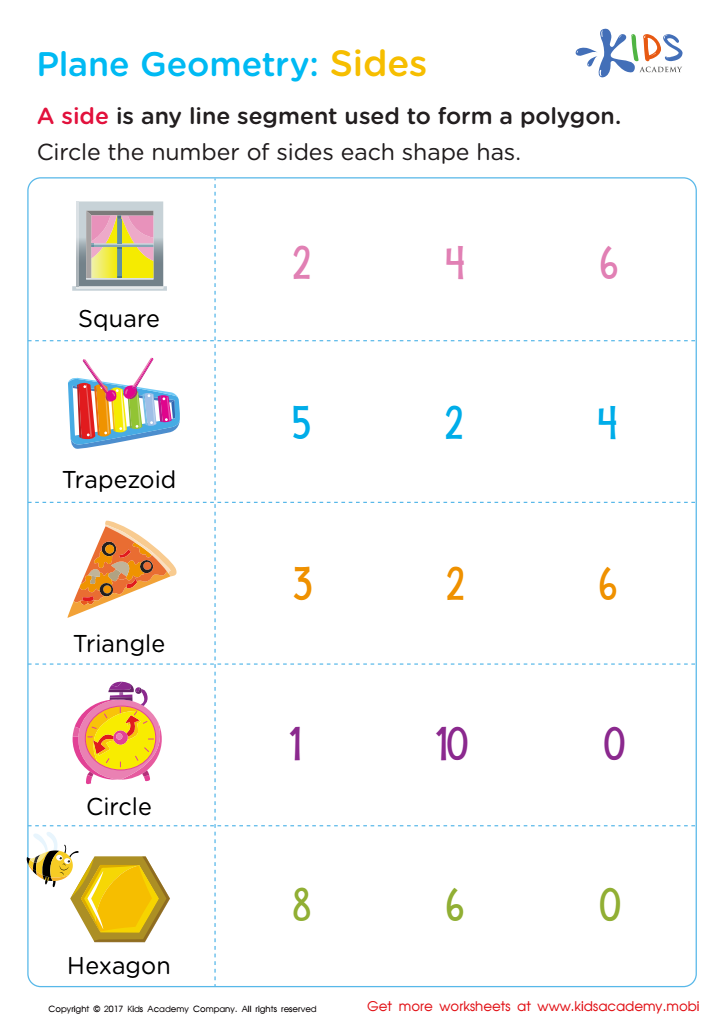
Enhance your child's geometric understanding with our Shape Identification Math Worksheets designed for ages 8-9! These engaging worksheets are perfect for helping students recognize, classify, and understand various shapes, from basic to more complex forms. With a variety of activities, including matching, drawing, and identifying shapes in everyday objects, these worksheets offer a fun, interactive way to solidify essential math skills. Tailored to align with educational standards, our resources aim to support and challenge young learners. Foster a love for geometry and boost confidence in math with our thoughtfully created shape identification worksheets available for instant download. Perfect for teachers and parents alike!
 Assign to My Students
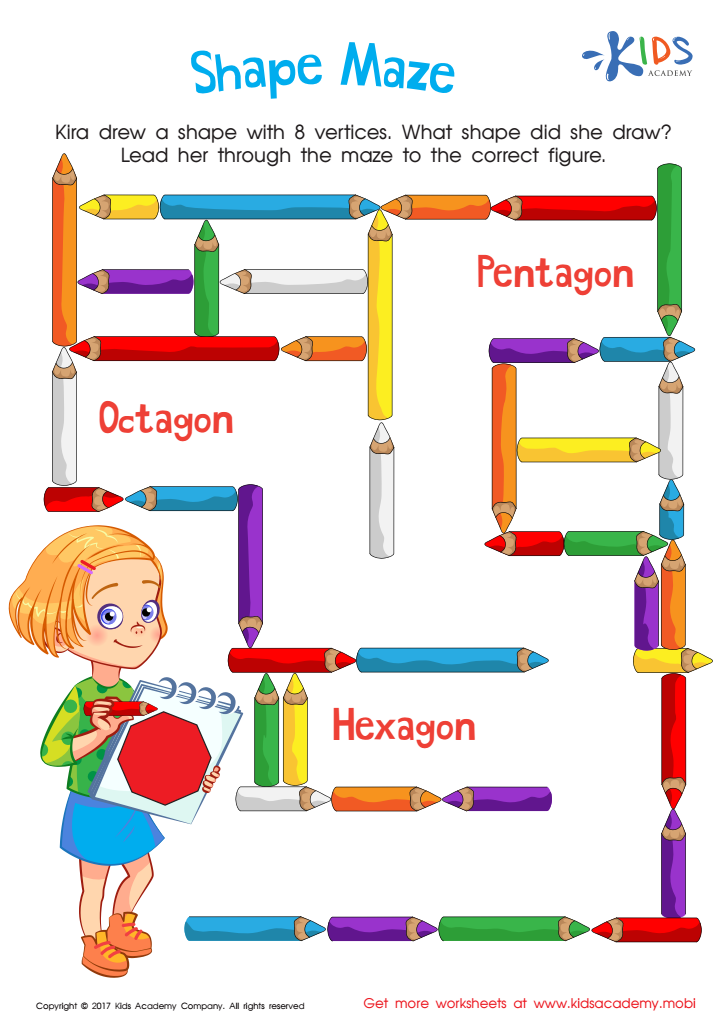
Shape Maze Worksheet
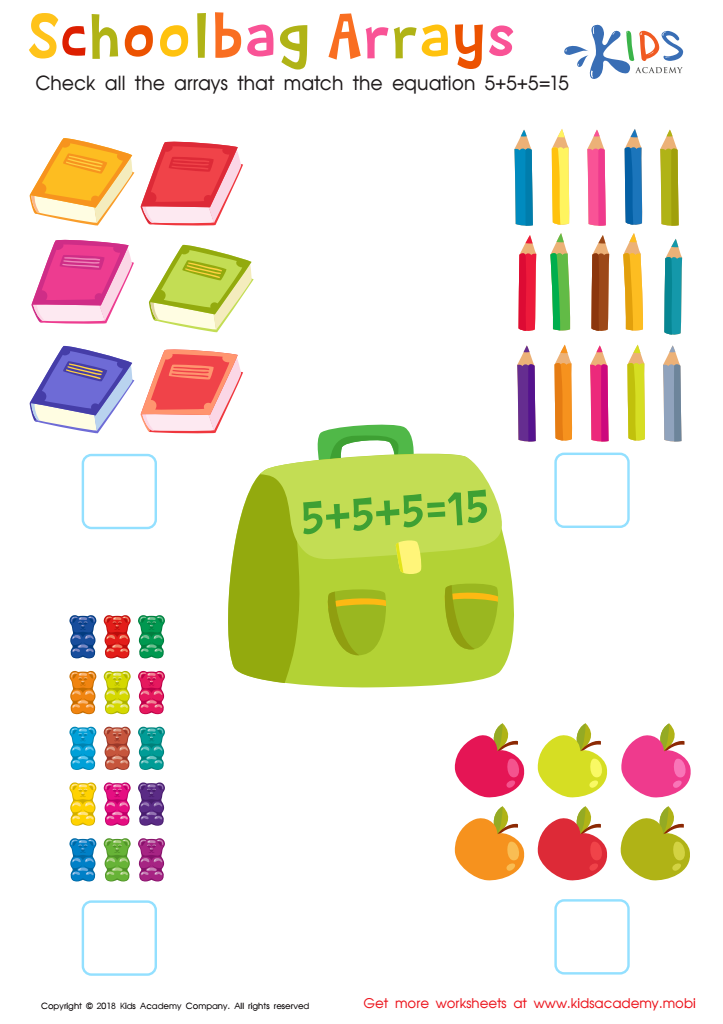
Schoolbag Arrays Worksheet
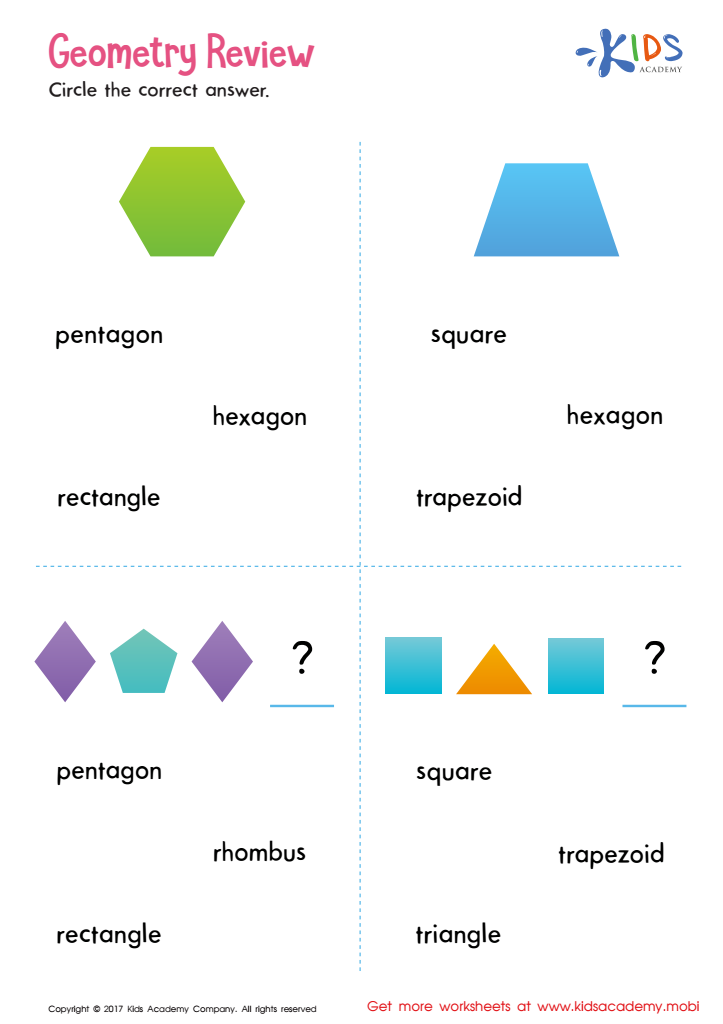
Geometry Review Printable
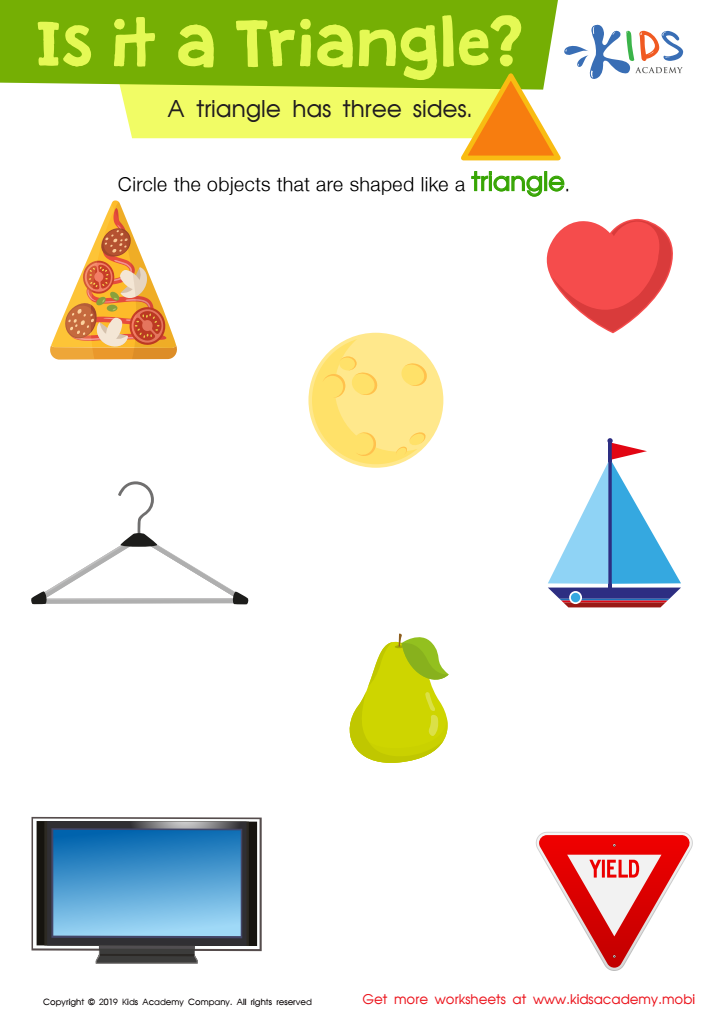
Is It a Triangle? Worksheet
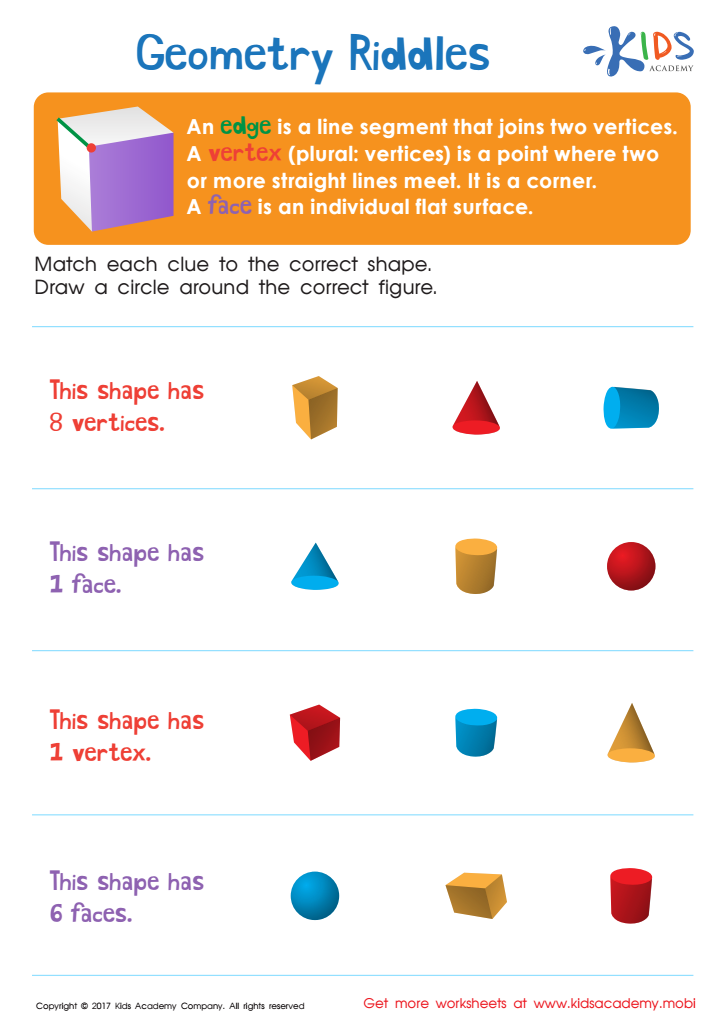
Geometry Riddles Printable
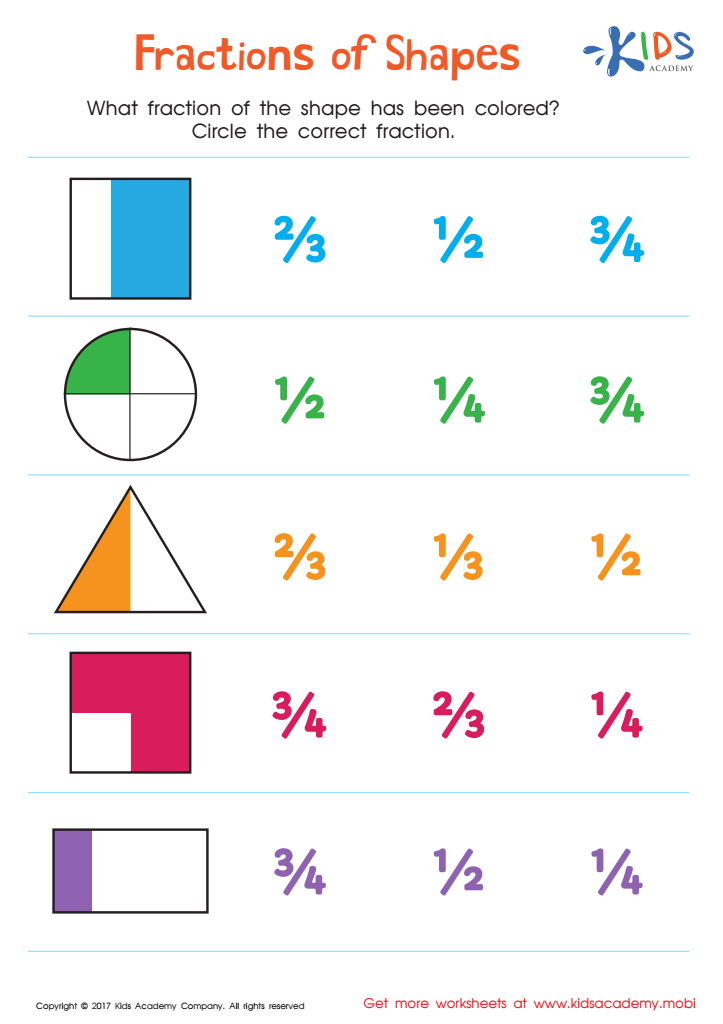
Fractions of Shapes: Math Concept Worksheet






Shape identification is a fundamental aspect of mathematical learning for children ages 8-9, and both parents and teachers should prioritize it for several reasons. First, shape identification enhances spatial awareness, which is crucial for problem-solving and comprehension in various subjects, not just math. Understanding shapes helps children recognize and model patterns, an important component in later mathematics concepts such as geometry and algebra.
Moreover, mastering shape identification builds a foundation for critical thinking skills. As children learn to identify and differentiate between shapes, they develop analytical skills that apply to real-world situations, such as architecture, engineering, and even art. Encouraging discussions about shapes allows children to articulate their thoughts, boosting verbal skills and confidence.
Incorporating shape identification also supports cognitive development. Engaging in shape-based activities helps strengthen memory and attention. Plus, learning about 2D and 3D shapes deepens children’s understanding of physical space and object properties.
Parents and teachers should also recognize that integrating playful activities—like sorting, building, and real-world explorations of shapes—makes learning enjoyable and engaging. Ultimately, a firm grasp on shape identification not only prepares children academically but also enriches their day-to-day understanding of the world around them.








