Check out this FREE Trial Lesson on Math for age 8-9!

Making a Whole

Favorites
With answer key
Interactive
  • 8-9
  • Shape Recognition
  • Math
Circle Laser Cutting Worksheet

Circle Laser Cutting Worksheet

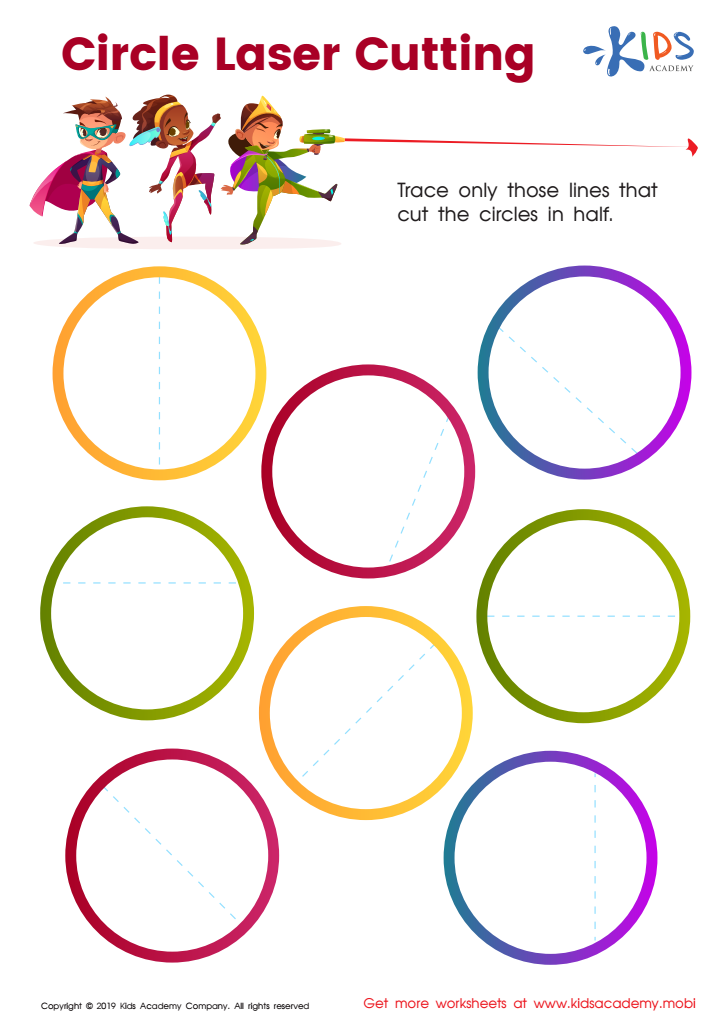
Encourage your kids to learn geometry! Remind them that when shapes are cut into two equal parts, they are called halves. Have them look at the circles in the worksheet, and trace the lines that cut the circles in half. Geometry is an essential part of education, and although it may not be exciting, it's a valuable skill to have.
Circle Laser Cutting Worksheet
Worksheet
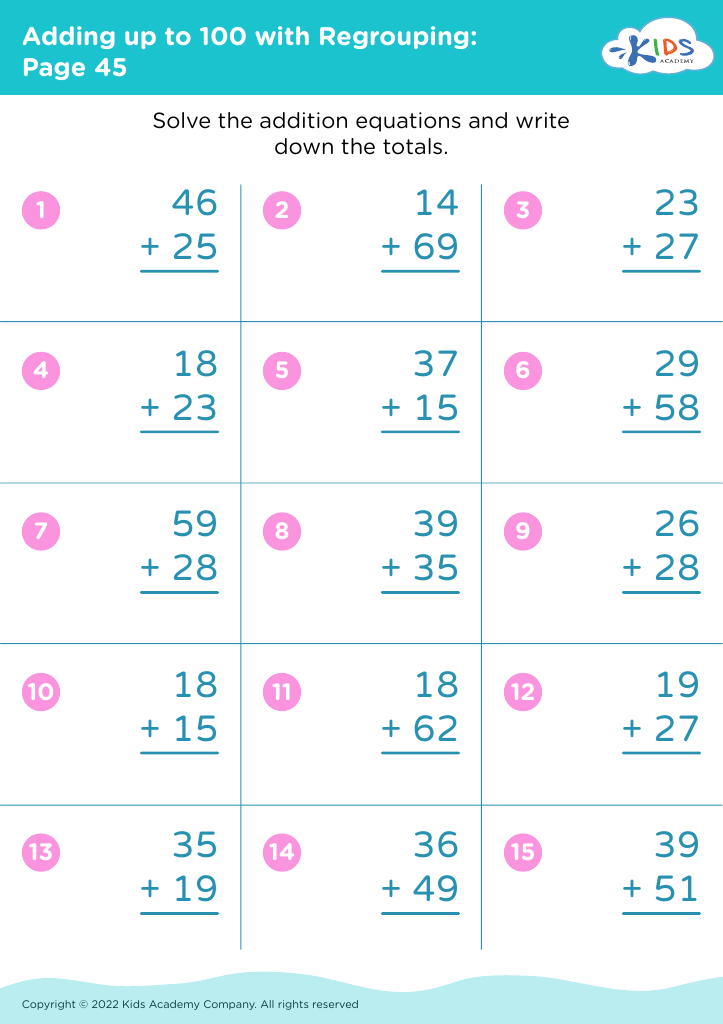
Adding up to 100 with Regrouping: Page 45
Worksheet
Piece it together Worksheet

Piece it together Worksheet

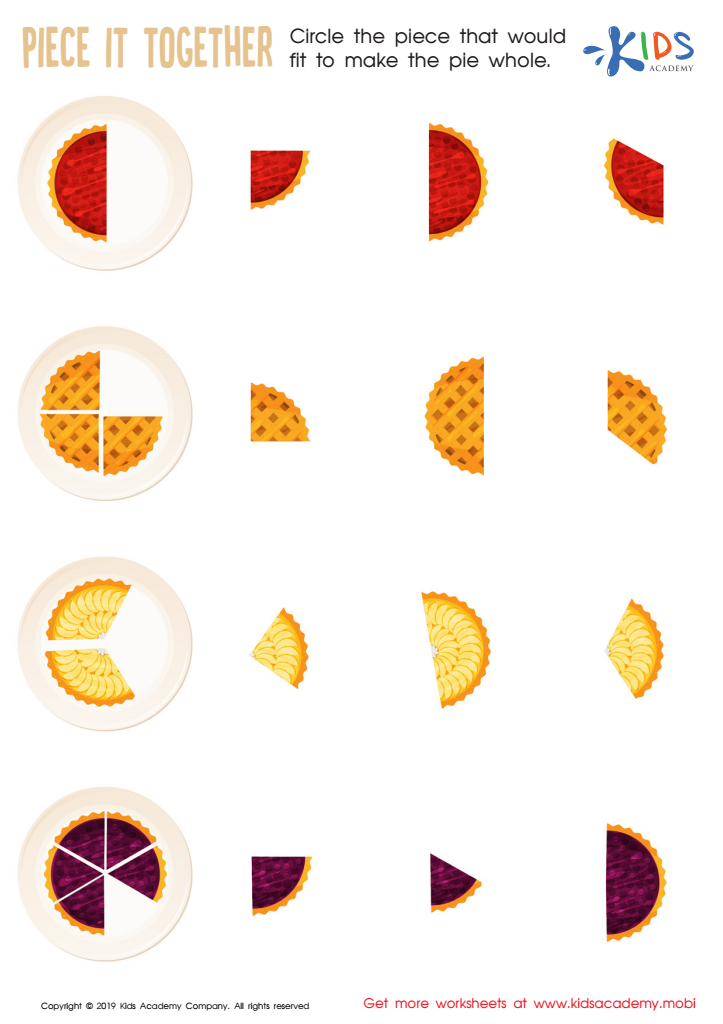
Help your kids learn fractions! Even if they're not eager, teach them as they get older. Teachers will provide enough lessons and homework, but you can go a step further. Look at a worksheet with your kids and help them circle the piece that would make the pie whole.
Piece it together Worksheet
Worksheet
Whole Shape from Halves, Thirds and Fourths Worksheet
Whole Shape from Halves, Thirds and Fourths Worksheet

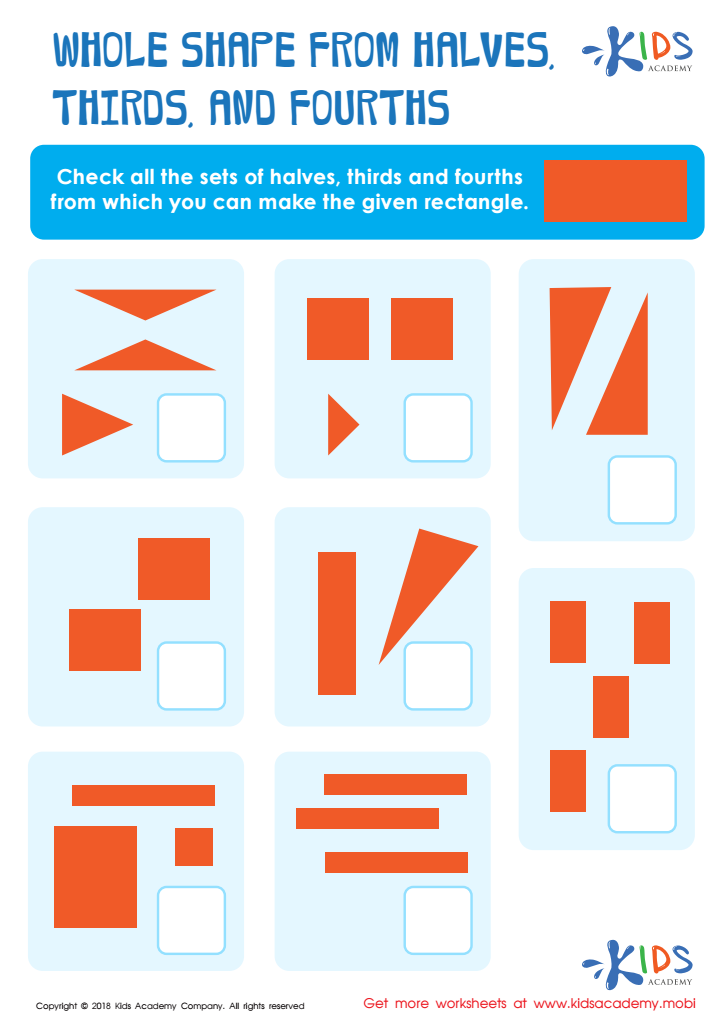
Explain to your students that they can make a new shape by combining halves, thirds, and fourths of a shape. Show them the worksheet with the rectangle at the top and ask them to find which sets of halves, thirds, and fourths make it. Have them check all the correct sets.
Whole Shape from Halves, Thirds and Fourths Worksheet

Worksheet
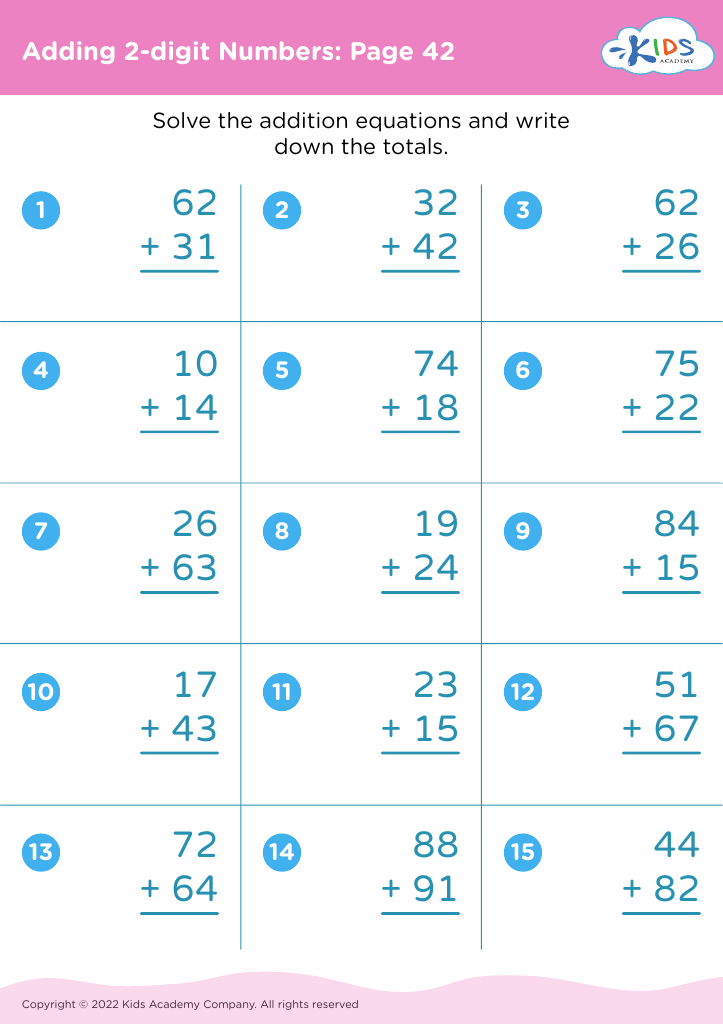
Adding 2-digit Numbers: Page 42

Adding 2-digit Numbers: Page 42

Adding 2-digit Numbers: Page 42
Worksheet
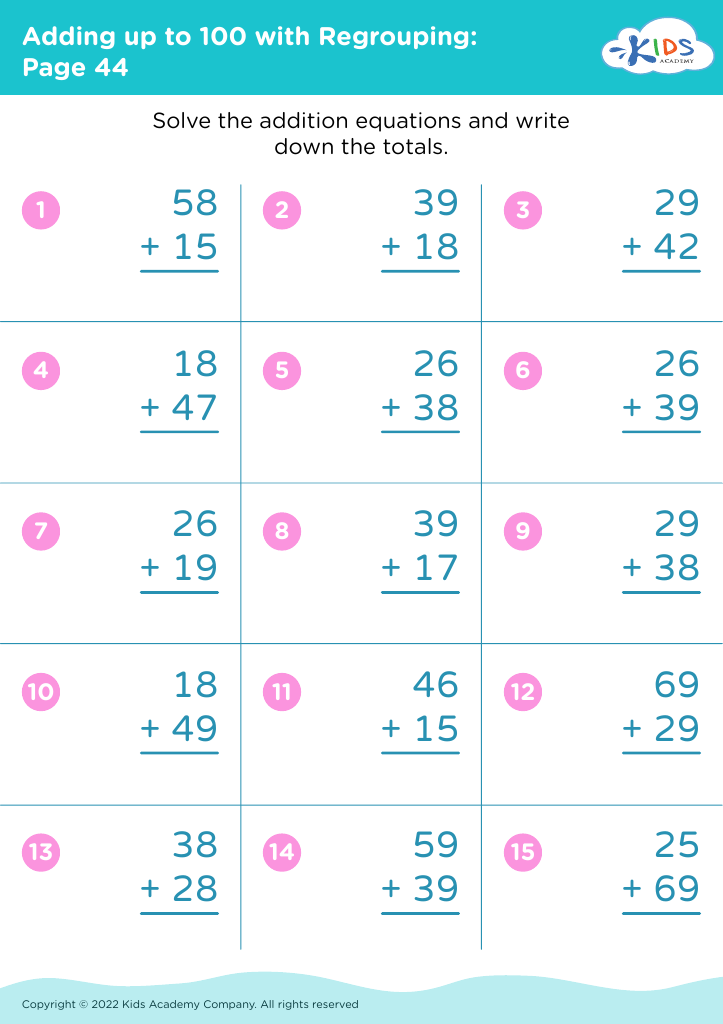
Adding up to 100 with Regrouping: Page 44
Worksheet


... 2 3

Shape recognition is a crucial component of early mathematics education for children aged 8-9. At this developmental stage, children not only enhance their spatial awareness but also foster critical thinking and problem-solving skills. Understanding shapes and their properties helps lay the foundation for more complex concepts such as geometry and algebra, which they will encounter in higher grades.

Parents and teachers should care about shape recognition because it supports children's ability to interpret and interact with their environment. By learning to identify, compare, and manipulate shapes, children improve their observational skills and express creativity through arts and crafts activities. Additionally, recognizing shapes and patterns enhances logical reasoning and encourages them to think systematically.

Moreover, shape recognition plays a significant role in everyday tasks, from reading maps to understanding architectural designs. Engaging children in shape-related activities can also strengthen their communication and collaboration skills, as they often work together to identify and classify shapes in games and projects. Overall, establishing a strong understanding of shape recognition at this age not only boosts academic performance but also equips children with essential life skills that will benefit them in real-world situations.