
Understanding patterns Multiplication Worksheets for Ages 8-9
11 filtered results
Difficulty Level
Grade
Age
-
From - To
Subject
Activity
Standards
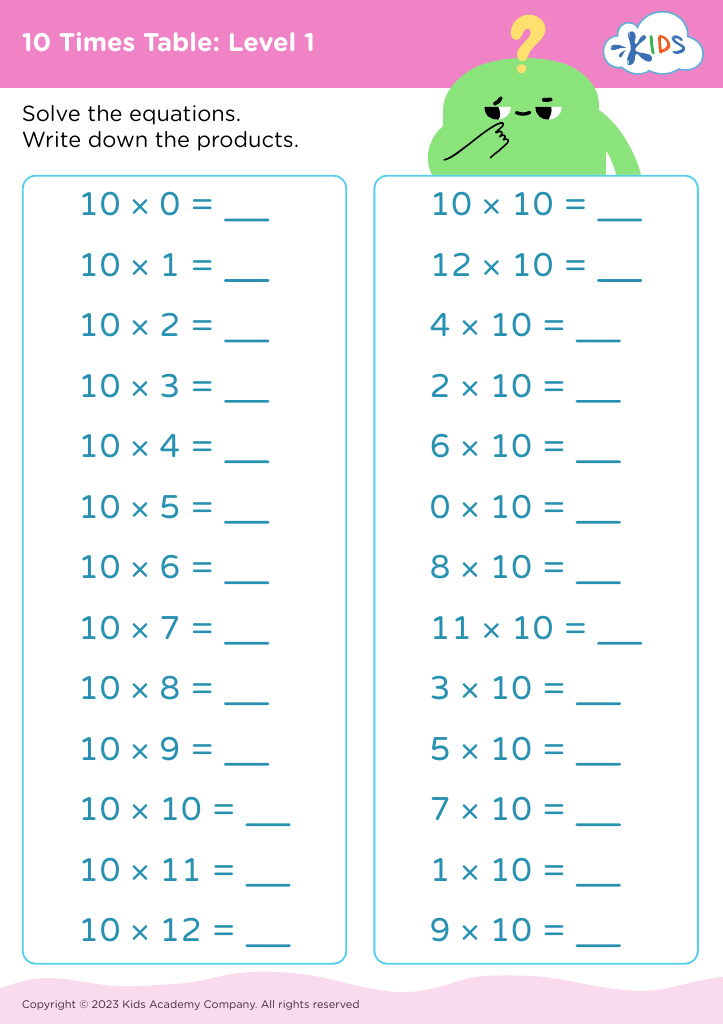
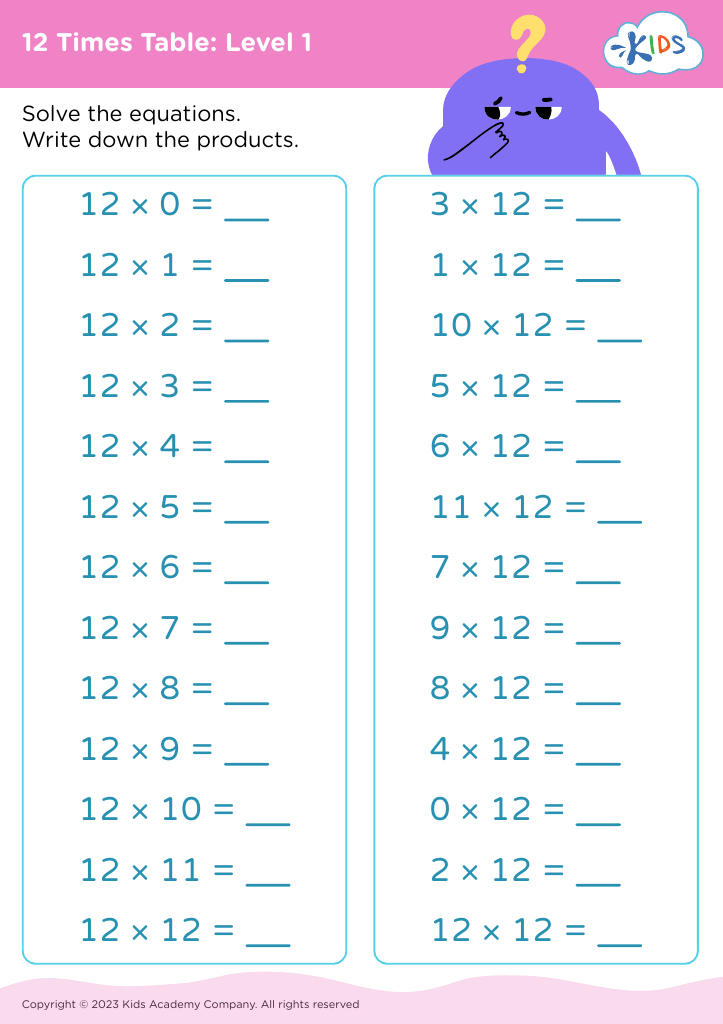
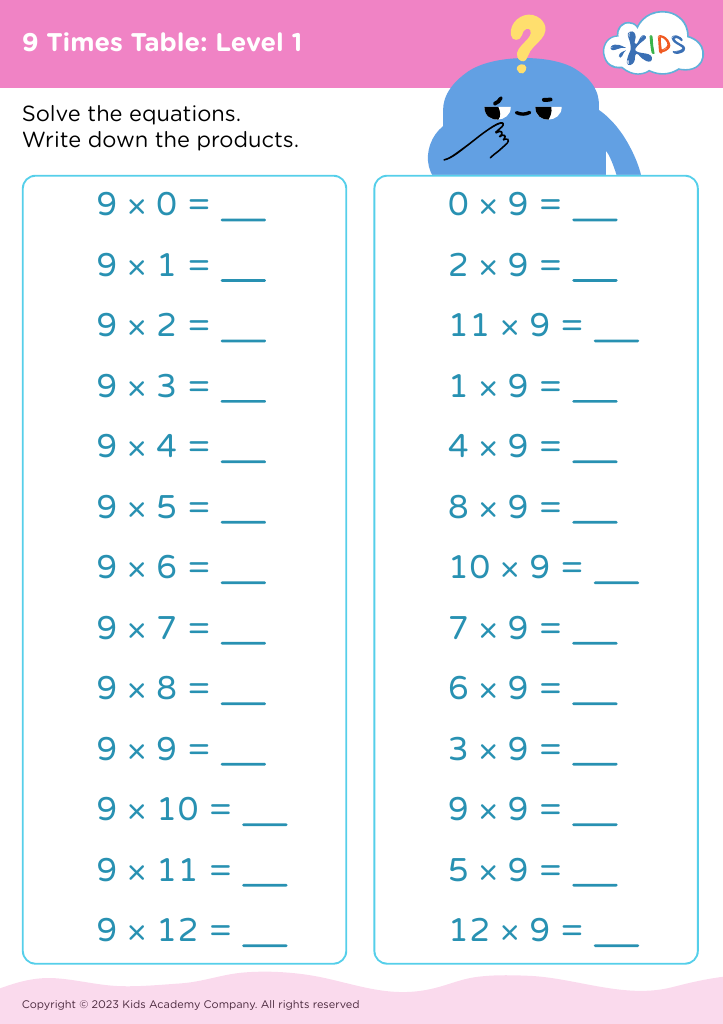
Unlock the power of multiplication with our "Understanding Patterns Multiplication Worksheets" designed for children ages 8-9. These engaging worksheets introduce young learners to the foundational concept of patterns in multiplication, helping them grasp how numbers relate to one another. By recognizing numerical patterns, students will enhance their problem-solving skills and build confidence in their mathematical abilities. Our carefully crafted exercises include visual aids and varied challenges that cater to all learning styles, making math both fun and effective. Perfect for classroom use or at-home practice, these worksheets ensure that your child develops essential skills while enjoying the learning process!
Favorites
With answer key
Interactive
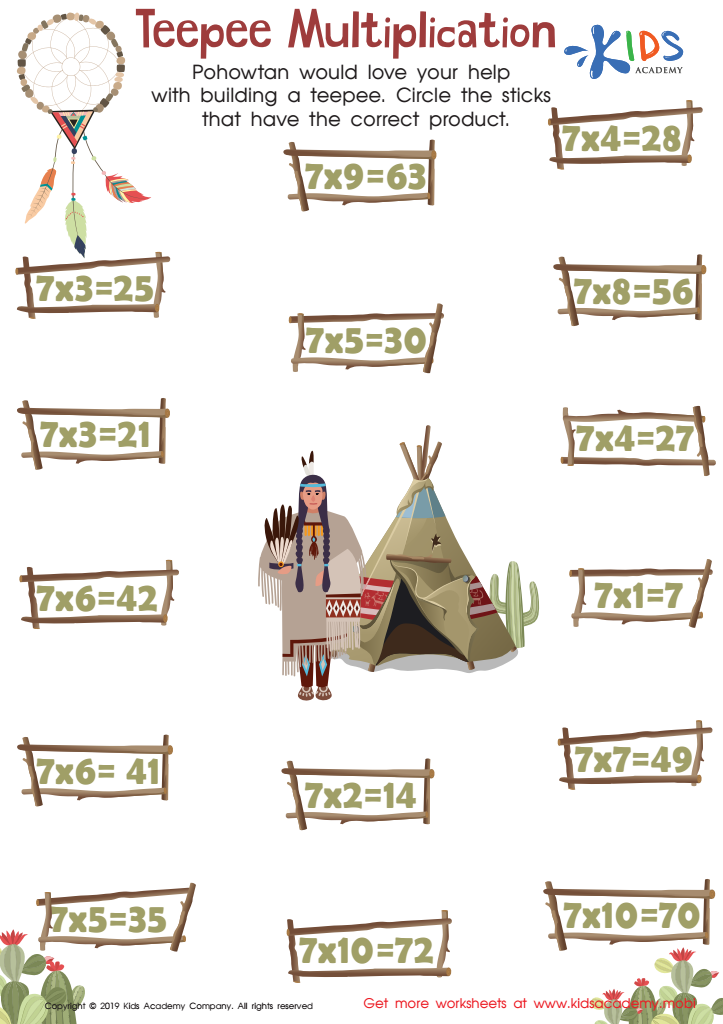
Teepee Multiplication Worksheet
Help the Native American man build his teepee by checking multiplication facts! Learners are given purpose and excitement with this fun math worksheet. Check each set of sticks, find, and circle the ones with the correct product to complete.
 Assign to My Students
Teepee Multiplication Worksheet
Worksheet
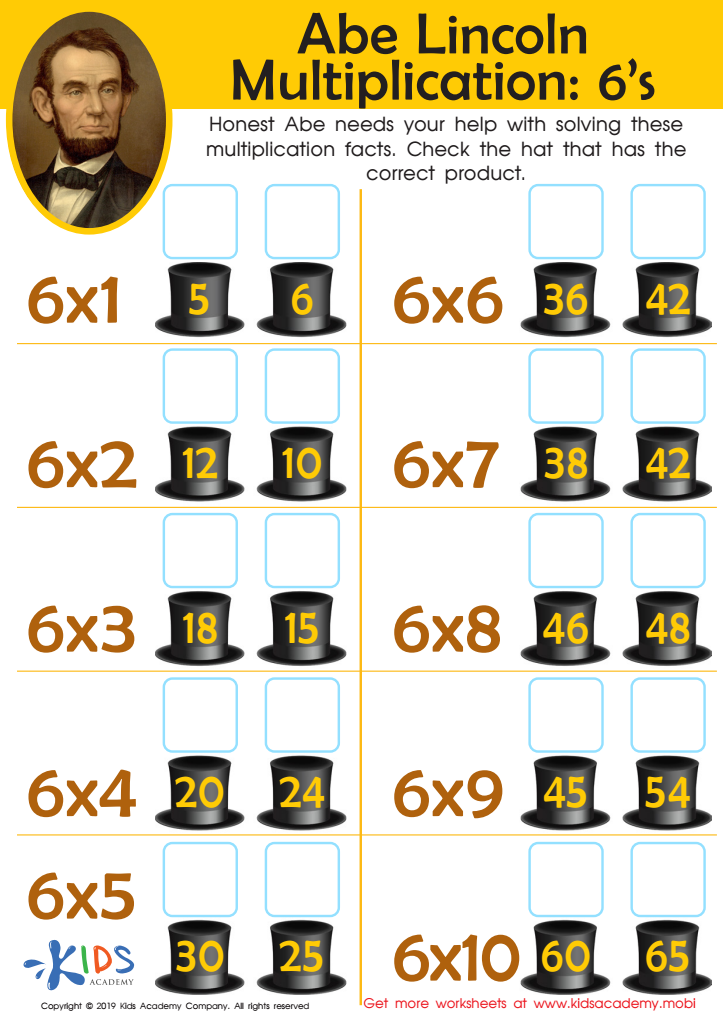
Abe Lincoln Multiplication: 6’s Worksheet
Abraham Lincoln is a key figure in US history. Remind your kids of his contributions and challenge them with this multiplication worksheet! Ask them to solve the facts in the picture and check the hat with the correct product.
Abe Lincoln Multiplication: 6’s Worksheet
Worksheet
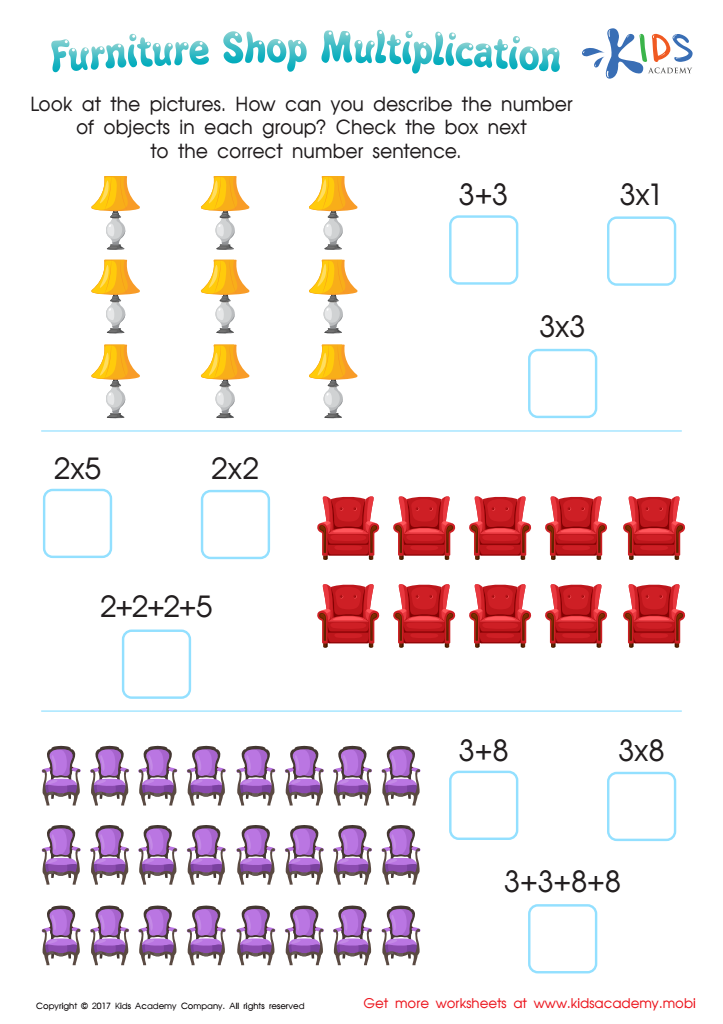
Furniture Shop Worksheet
Our multiplication PDF worksheets for 3rd grade use a visual strategy to help kids understand multiplication. Fun and colorful furniture engages kids as they use number sentences to describe each picture, aiding in memorizing multiplication tables.
Furniture Shop Worksheet
Worksheet
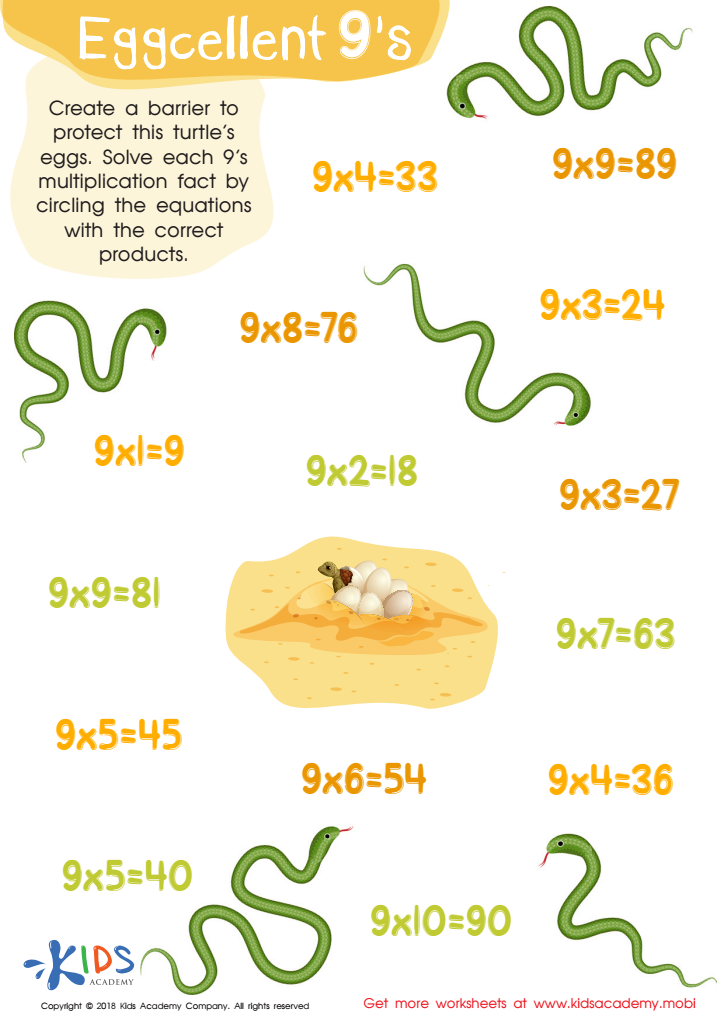
Eggcellent 9’s Worksheet
Help your kids save turtle eggs in this worksheet! Have them create a barrier by solving 9's multiplication facts, then circling the equations with the correct product. Finish up this exercise and show them how they can help protect turtle eggs from predators.
Eggcellent 9’s Worksheet
Worksheet
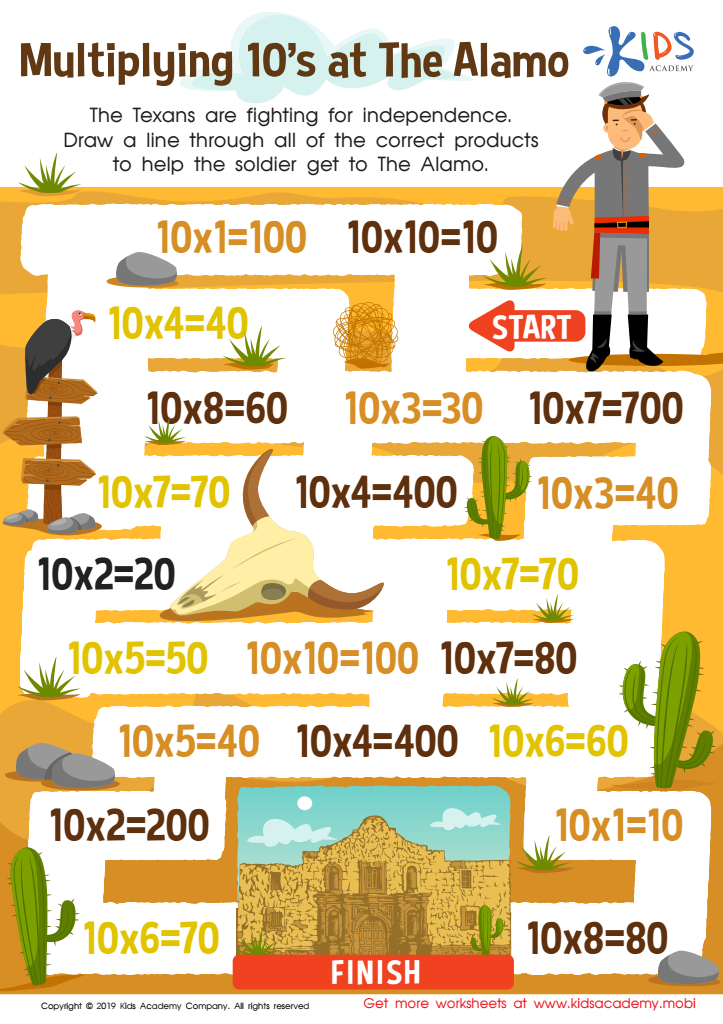
Multiplying 10’s at The Alamo Worksheet
Teach your kids easy tricks to simplify any multiplication problem. For example, when multiplying any number by 10, the result will always end in a zero. To help the Texans in this worksheet, draw a line through all of the correct products to get them to The Alamo.
Multiplying 10’s at The Alamo Worksheet
Worksheet
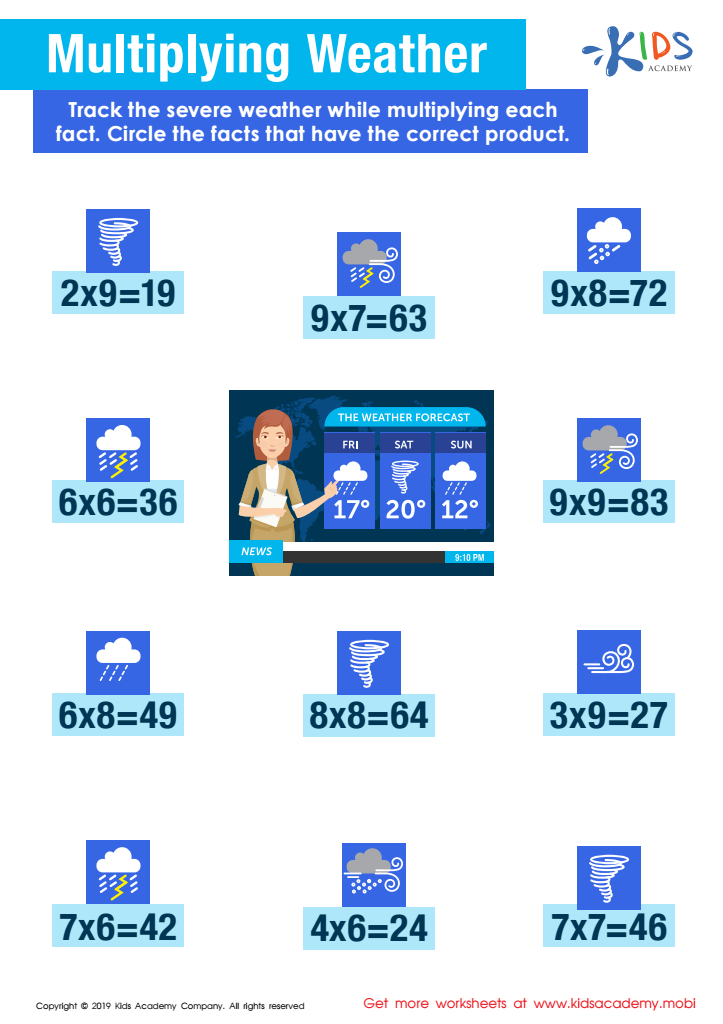
Multiplying Weather Worksheet
Most kids love playing outdoors, but weather can affect what we can do. Rain and snow can keep us from getting outside and even cancel school! Weather forecasters help us prepare for the day. In this worksheet, multiply facts to track severe weather and circle the ones with the right answer.
Multiplying Weather Worksheet
Worksheet
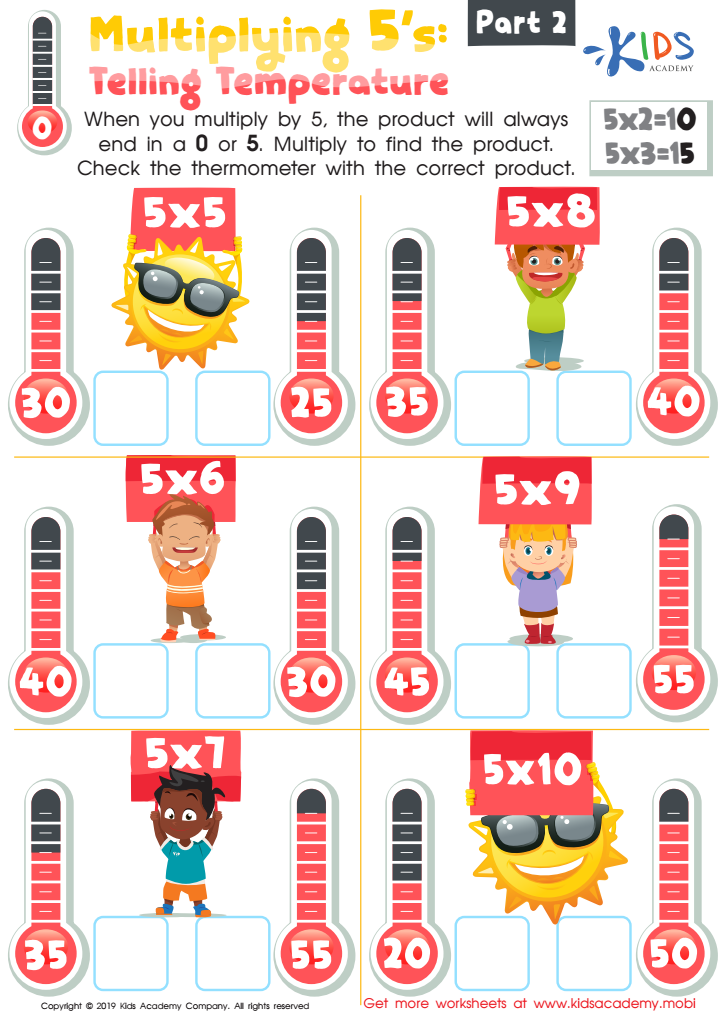
Multiplying 5’s: Telling Temperature Part 2 Worksheet
To help your child with multiplication, teach them some simple tricks. For example, when multiplying 10's the product always ends in a 0, and when multiplying by 5, the product will end in 0 or 5. Look at the problems in this worksheet and help your child find the product. Then, check the thermometer with the correct answer.
Multiplying 5’s: Telling Temperature Part 2 Worksheet
Worksheet
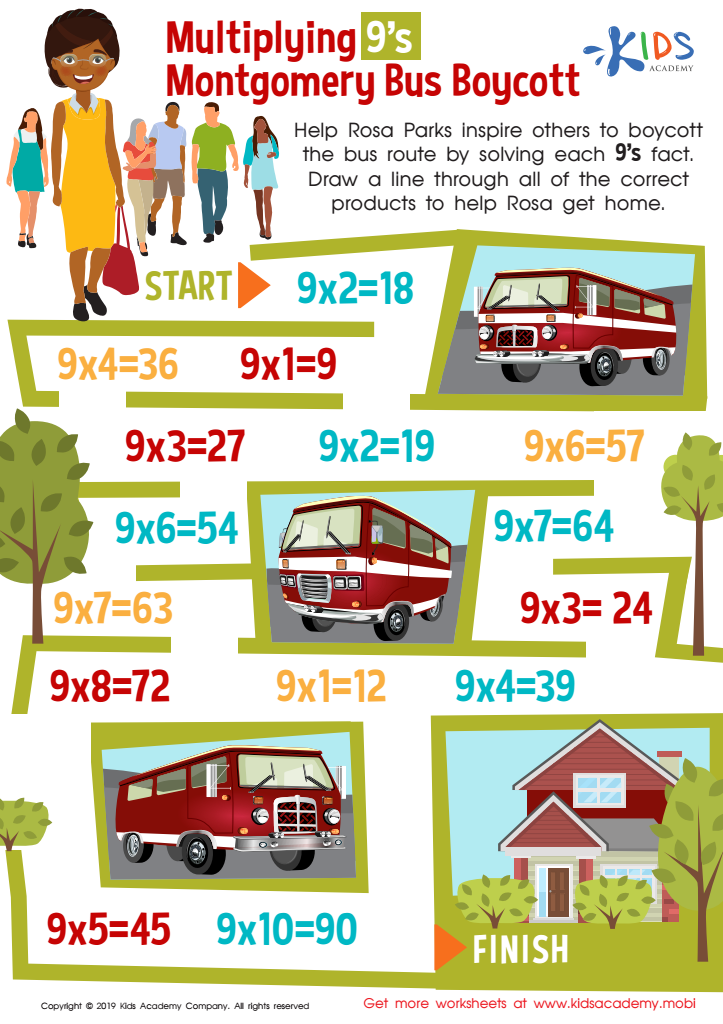
Multiplying 9’s Montgomery Bus Boycott Worksheet
As your students learn math, the numbers get bigger. This worksheet is great for learning the nine times table. Help Rosa Park get home - ask them to solve each multiplication fact, then draw a line through the correct products. Encourage your students to stand up for what's right!
Multiplying 9’s Montgomery Bus Boycott Worksheet
Worksheet
Join Kids Academy for Free
Who is primarily going to use this learning content?







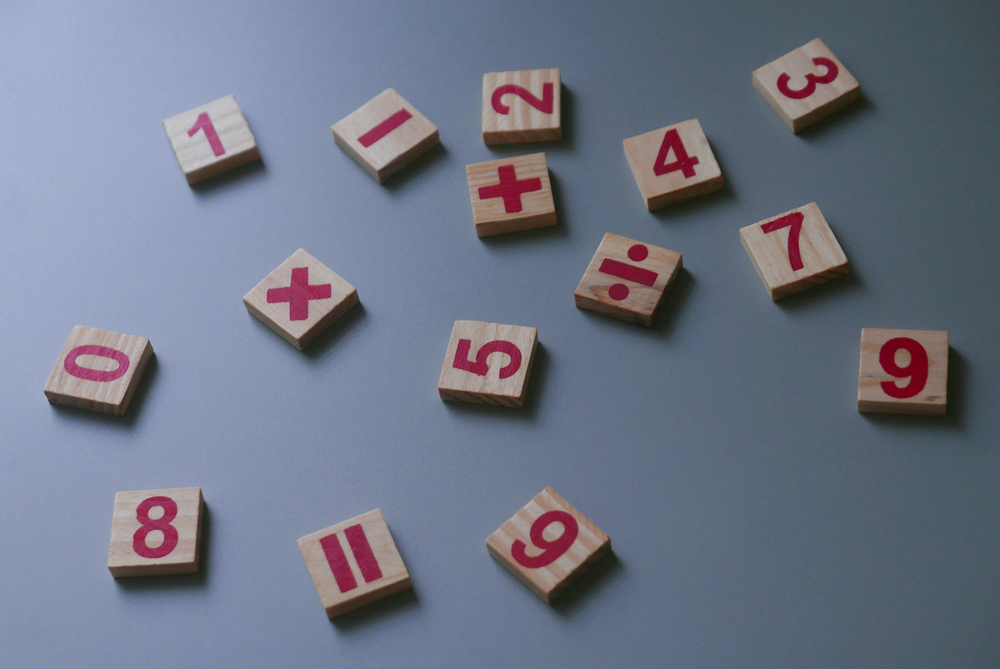
Understanding patterns in multiplication is crucial for children aged 8-9 as it builds a solid foundation for their future mathematics skills. At this age, children are transitioning from basic arithmetic to more complex mathematical concepts, and recognizing patterns significantly enhances their learning process.
Firstly, identifying patterns helps children grasp the concept of multiplication as repeated addition, making it easier for them to understand the multiplication tables. For example, recognizing that 4 times 3 is the same as adding 4 three times helps to deepen their comprehension.
Secondly, understanding patterns fosters critical thinking and problem-solving skills. Children learn to predict outcomes and make connections, such as recognizing that the product of 2 and any even number will also be even. This not only strengthens their mathematical reasoning but also encourages a positive attitude towards math, making it less intimidating.
Moreover, as they progress in their education, these patterns will become essential for more advanced topics in mathematics, such as algebra. When parents and teachers emphasize these connections, they empower students to become confident and competent learners. Overall, caring about pattern recognition in multiplication is vital for nurturing their mathematical abilities and preparing them for future academic success.








