Basic Addition Skills Reading Worksheets for Ages 8-9
3 filtered results
-
From - To
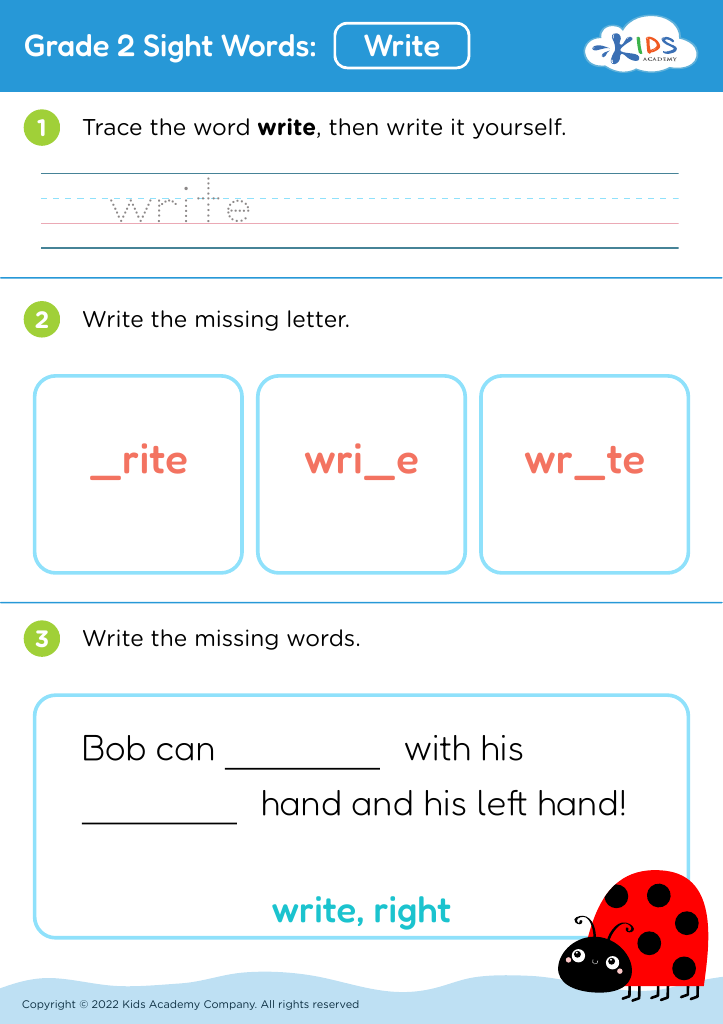
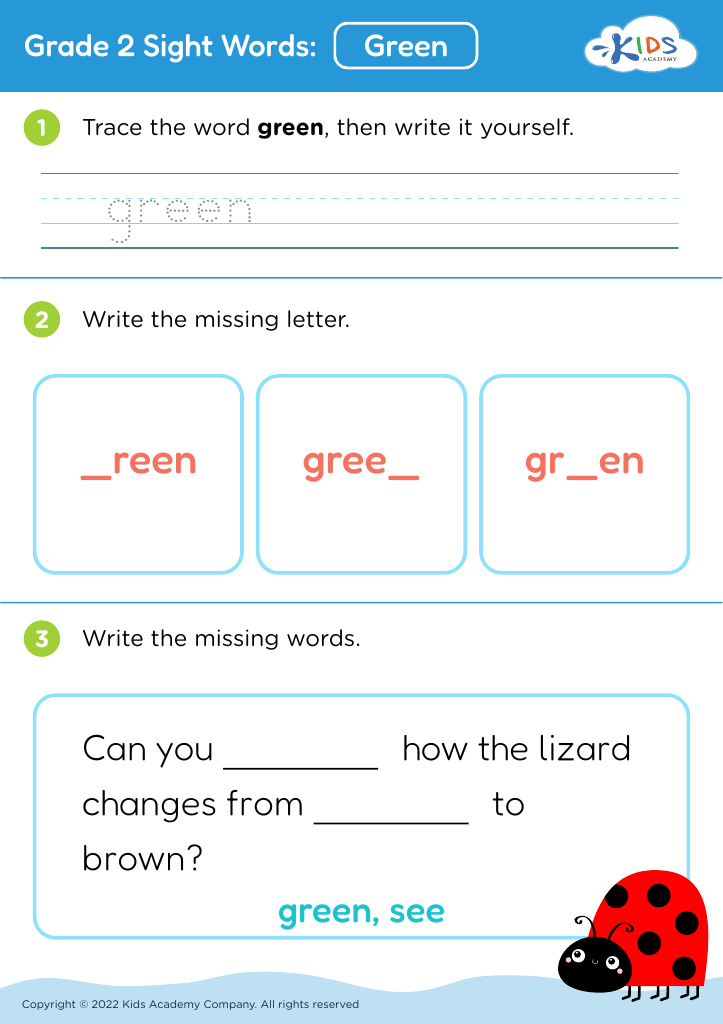
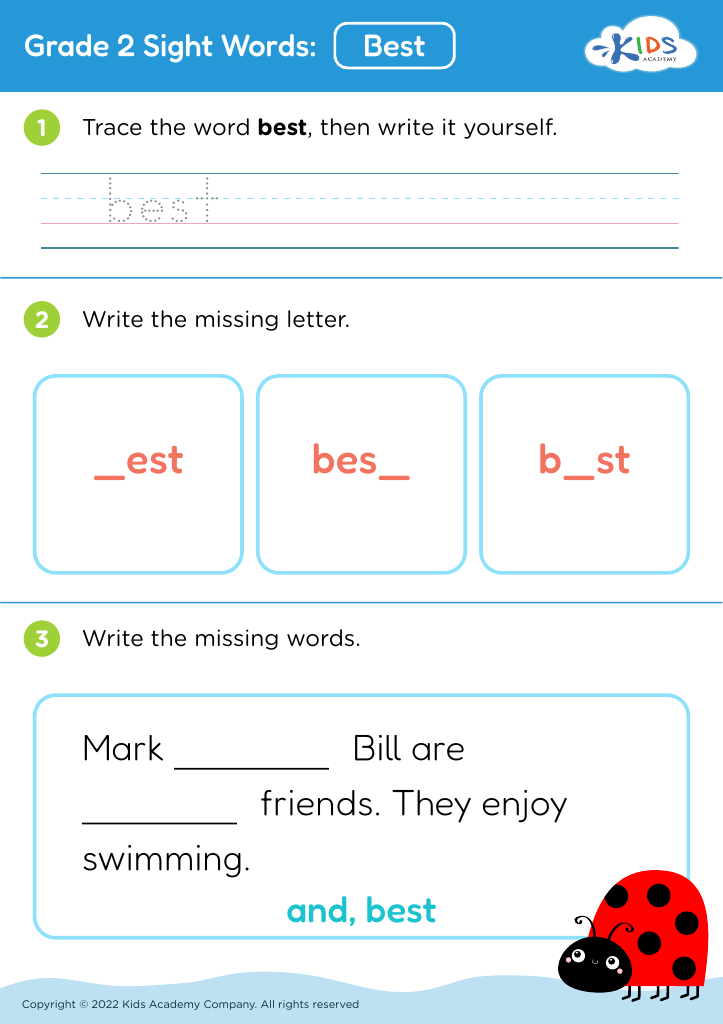
Boost your child's math and reading skills with our "Basic Addition Skills Reading Worksheets for Ages 8-9". These engaging worksheets combine fun reading activities with basic addition exercises to help children develop strong mathematical foundations and improve comprehension. Curated by educational experts, each worksheet is designed to captivate young minds while teaching essential concepts in an enjoyable manner. Perfect for home or classroom use, these worksheets offer an integrated approach to learning that both educators and parents can trust. Empower your child to master the basics of addition and enhance their reading proficiency with our expertly crafted resources.


.jpg)




Parents and teachers should place significant importance on basic addition skills for children aged 8-9 as these set the foundation for future mathematical learning and cognitive development. At this age, children are solidifying their grasp of fundamental math concepts, and proficiency in addition is crucial for tackling more advanced topics such as subtraction, multiplication, division, and fractions.
Mastering basic addition enhances a child's number sense, boosting their confidence in solving math problems and promoting a positive attitude towards the subject. Additionally, these skills are used in everyday activities, like counting money, telling time, and measuring ingredients, underscoring their practical relevance.
Moreover, early competency in addition has been linked to higher academic performance in other areas, as math fosters critical thinking, logical reasoning, and problem-solving abilities. Children who struggle with basic addition might experience a math phobia or anxiety, hindering their overall academic progress and even extending into adulthood.
For teachers, ensuring that students are adept in basic addition provides a smoother trajectory for future teaching endeavors, creating a classroom environment where more complex math can be introduced with less resistance and frustration. Consequently, parents and teachers working together to reinforce basic addition skills create a supportive learning ecosystem, crucial for each child's lifelong learning journey.








