Developing analytical skills Reading Worksheets for Ages 8-9
3 filtered results
-
From - To
Discover our engaging "Developing Analytical Skills Reading Worksheets" designed specifically for children ages 8-9! These worksheets provide young learners with the opportunity to hone their analytical thinking through interactive reading activities. Each worksheet encourages students to interpret texts, draw conclusions, and make connections, fostering critical thinking skills essential for academic success. With diverse topics tailored to captivate their interest, children will enjoy exploring literature while building a strong foundation in comprehension and analysis. Perfect for classroom use or at-home learning, our worksheets make developing analytical skills enjoyable and effective. Equip your child with the tools they need for a brighter educational future!

Author's Purpose Worksheet
 Assign to My Students
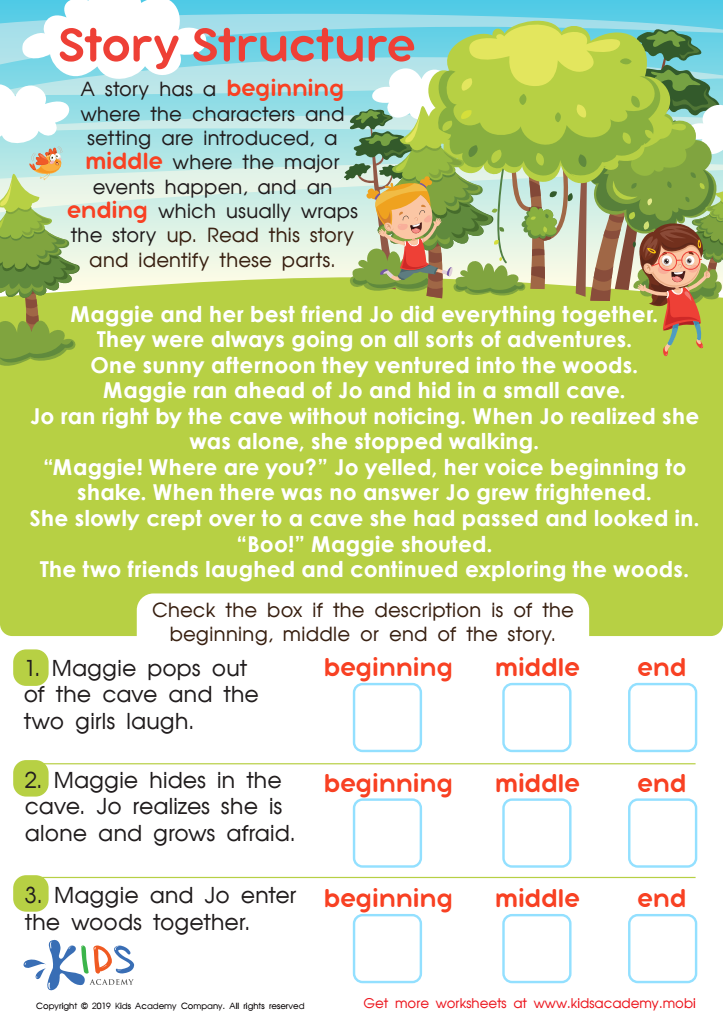
Story Structure Worksheet
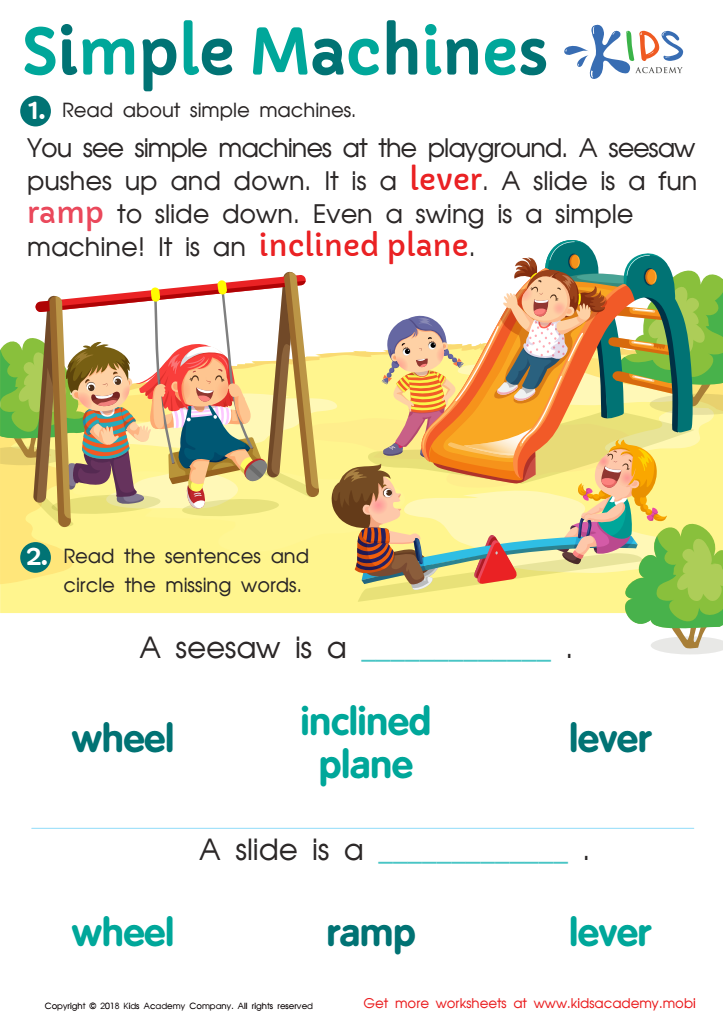
Simple Machines Worksheet








Developing analytical reading skills in children aged 8-9 is crucial for several reasons. At this stage, children begin to navigate more complex texts, requiring them to interpret information and draw conclusions from what they read. Enhancing analytical skills helps them move beyond simple comprehension to evaluating arguments, identifying biases, and making inferences, which are essential for academic success.
Moreover, strong analytical skills foster critical thinking. When children learn to ask probing questions, assess the credibility of sources, and synthesize information from various texts, they become discerning readers and informed citizens. This skill set not only improves their academic performance across subjects but also prepares them for real-world problems as they develop solutions through informed analysis.
Parents and teachers play a key role in nurturing these skills. They can encourage children to discuss what they read, compare different perspectives, and explore underlying themes. Engaging children in group discussions or book clubs further promotes collaborative analysis and confidence in articulating thoughts.
Ultimately, nurturing analytical reading skills equips children with the tools they need for lifelong learning and empowers them to navigate a complex world, making it essential for both parents and educators to prioritize this developmental aspect.








