
Phonics Skills Reading Worksheets for Ages 8-9
6 filtered results
Difficulty Level
Grade
Age
-
From - To
Subject
Activity
Standards
Enhance your child's reading abilities with our engaging Phonics Skills Reading Worksheets designed for ages 8-9. These worksheets focus on building essential phonics skills, helping young learners decipher words and improve their reading fluency. Each activity is thoughtfully crafted to reinforce key concepts such as vowel sounds, digraphs, and word blends. With a variety of exercises including matching, filling in the blanks, and decoding challenges, students will gain confidence and proficiency in their reading abilities. Whether used at home or in the classroom, these effective resources make phonics practice enjoyable and accessible for every child! Start your learning journey today!
Favorites
With answer key
Interactive
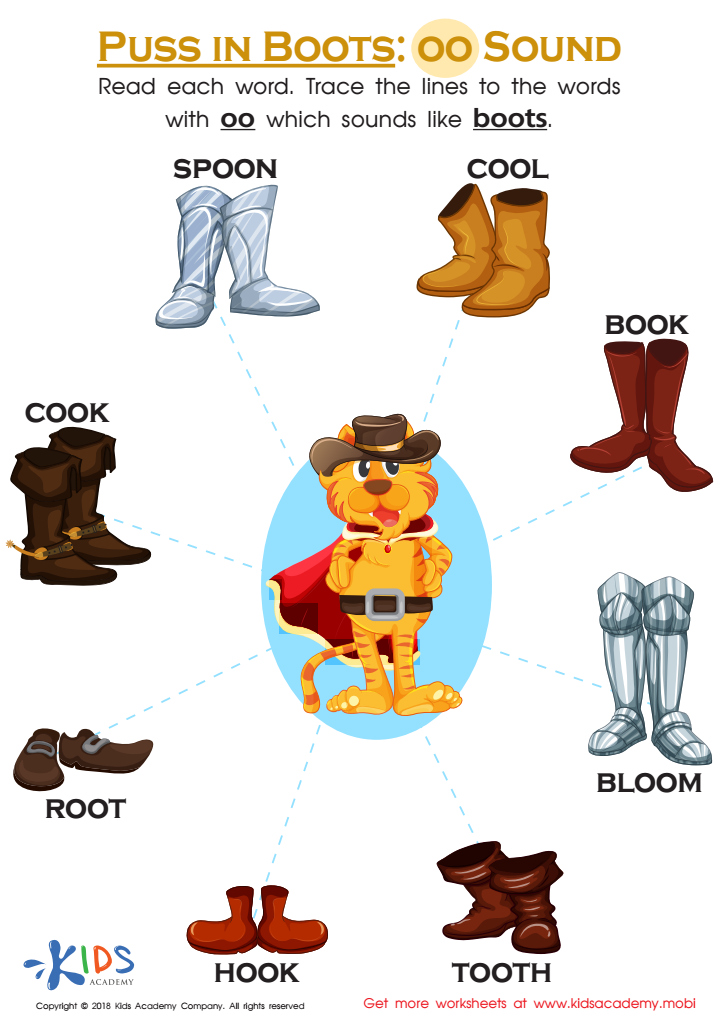
Puss in Boots: OO Sound Worksheet
Read out the words in this printout with the correct pronunciation. Have your child repeat each word after you. Then have them read the words and identify the ones with the "oo" sound. Guide their hands as they trace the lines to the right words.
Puss in Boots: OO Sound Worksheet
Worksheet
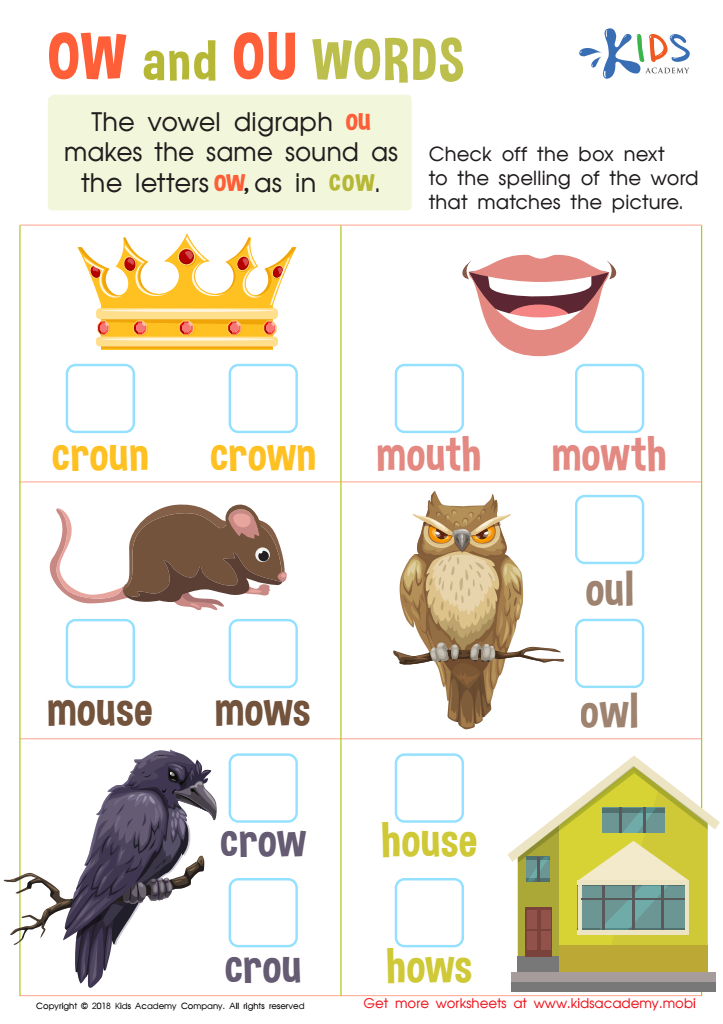
Reading: OW and OU Words Worksheet
Help your kids learn phonetics! Explain the different sounds and long/short variations. Emphasize that some vowel sounds are the same, e.g. ou = ow in cow. For practice, have them read aloud the words in the worksheet and check the box next to the spelling that matches the picture.
Reading: OW and OU Words Worksheet
Worksheet
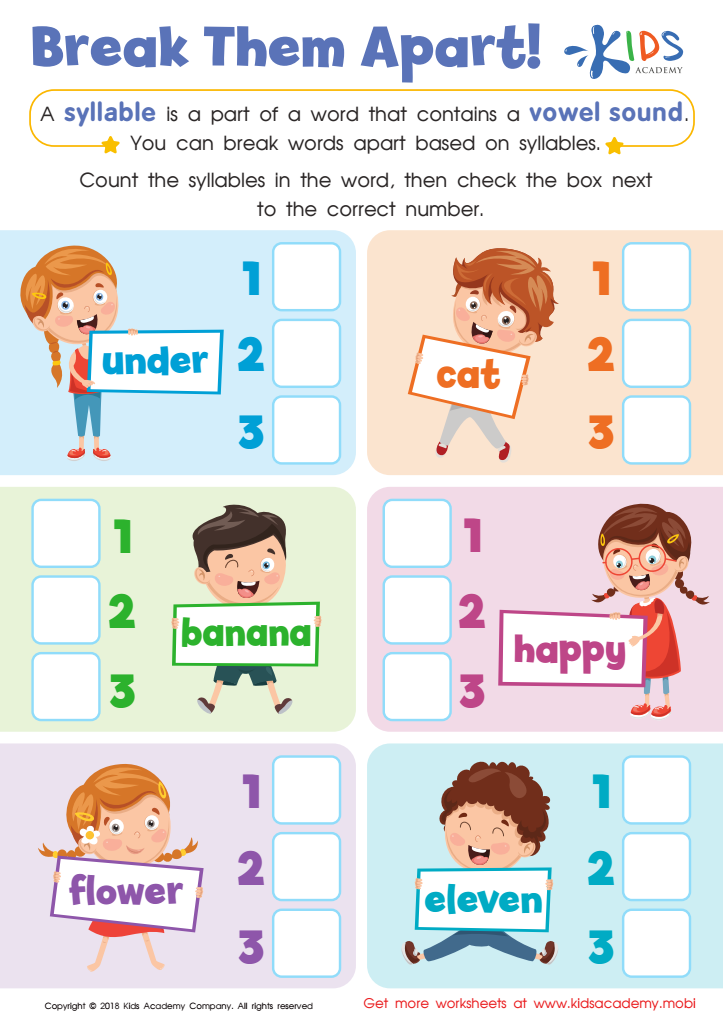
Reading: Break Them Apart Worksheet
See if students understand syllables with this fun worksheet. It teaches them that a syllable is a word part with a vowel sound. Kids read each word and choose how many parts it has. Doing this often helps them decode new words and gain confidence.
Reading: Break Them Apart Worksheet
Worksheet
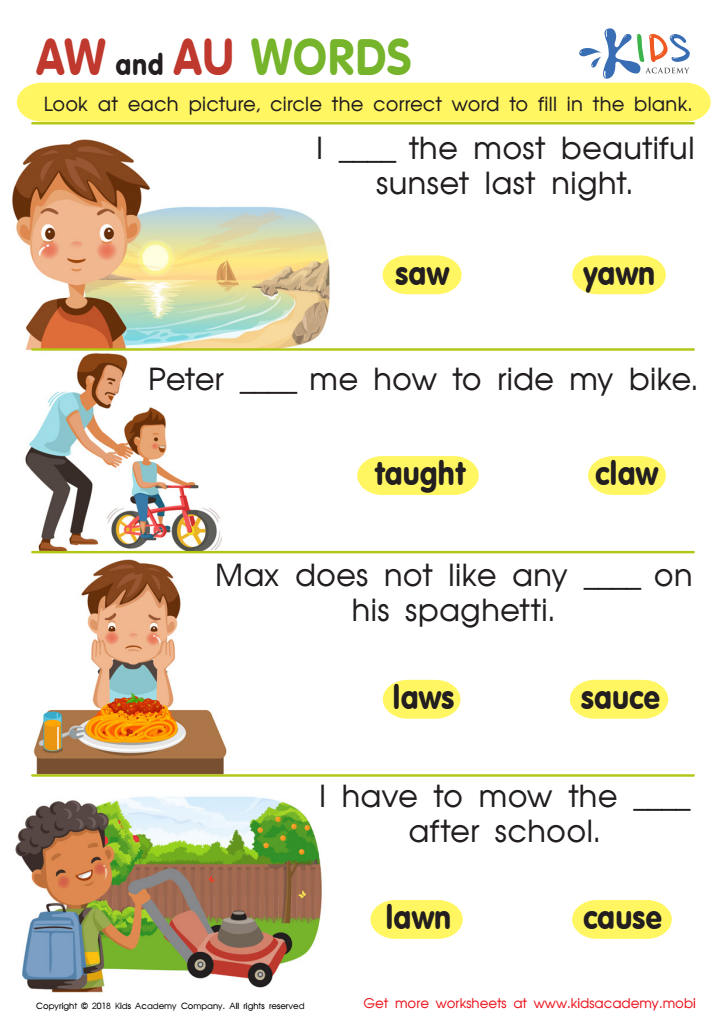
Reading: AW and AU Words Worksheet
This worksheet helps kids recognize that /au/ and /aw/ can make the same sound. Students read sentences and pick the correct word with one of the digraphs. Understanding digraphs improves decoding and reading fluency. Perfect for reading and phonics classes.
Reading: AW and AU Words Worksheet
Worksheet
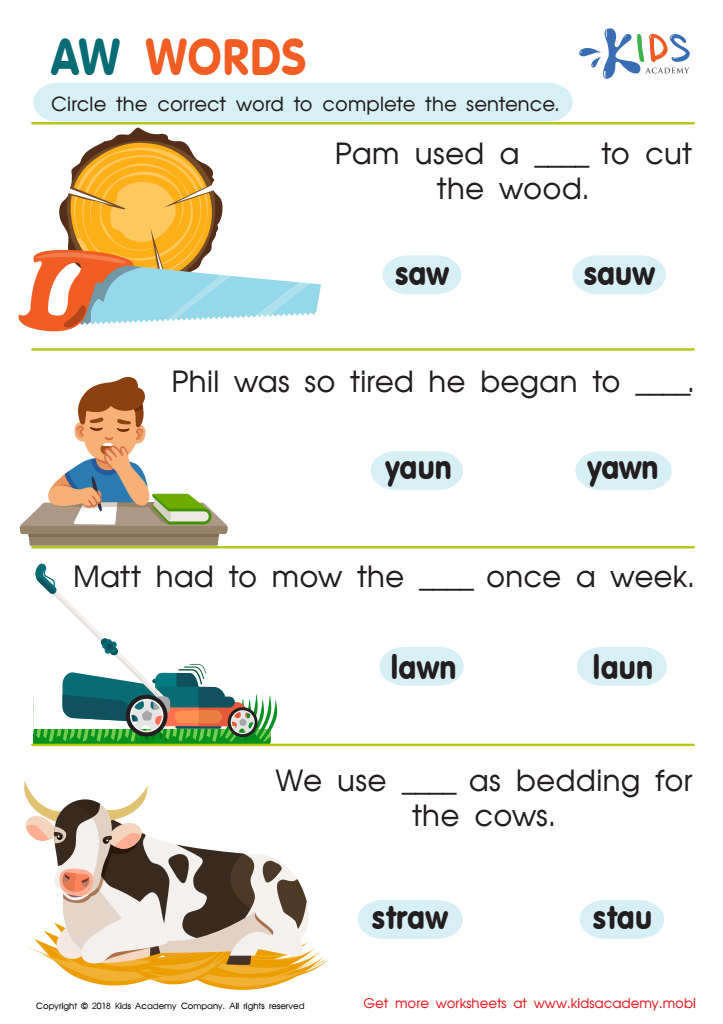
Reading: AW Words Worksheet
Practice decoding the /aw/ digraph with this printable. Students read sentences and select the word with the correct spelling to complete each one. Note, /aw/ is sometimes spelled /au/, so this worksheet helps prevent confusion. Have fun, and practice hard!
Reading: AW Words Worksheet
Worksheet

Long and Short E Worksheet
This fun printout makes learning phonics enjoyable for Grade 3 students. Get them to read the words “tree” and “bed” to recognize the different sounds of the letter “E”. After hearing the words they can color the words and the pictures to understand differences between long and short vowels.
Download (PDF)
 Assign to My Students
Assign to My Students
Long and Short E Worksheet
Worksheet
Join Kids Academy for Free
Who is primarily going to use this learning content?








Phonics skills are essential for reading development, especially for children aged 8-9 who are transitioning to more complex texts. At this age, students are expected to decode unfamiliar words fluently, which is foundational for comprehension. Strong phonics skills help children identify letter-sound relationships, allowing them to read unfamiliar words with confidence.
Parents and teachers should care about phonics because early mastery of these skills influences a child's overall academic success. Children with a solid understanding of phonics tend to perform better in reading comprehension, writing, and even in subjects like math, where word problems require reading proficiency. This age group is critical, as children are often assessed for their reading proficiency and begin to encounter a broader range of texts that require higher-level decoding skills.
Additionally, phonics instruction can aid in building a child’s self-esteem as proficient readers are more likely to participate actively in class discussions and read independently. Supporting phonics skills fosters a love for reading and learning, which is vital for long-term educational engagement. Therefore, it is imperative that parents and teachers prioritize phonics to lay the groundwork for lifelong reading habits and academic achievement.








