Understanding Sequences Reading Worksheets for Ages 8-9
3 filtered results
-
From - To
Unlock reading success with our "Understanding Sequences Reading Worksheets for Ages 8-9"! These expertly crafted worksheets help young learners master the important skill of sequencing by guiding them to identify the logical order of events and understand story flow. Designed to enhance critical thinking and comprehension, each worksheet uses engaging texts and vibrant illustrations to make learning fun and effective. Ideal for classroom or home use, these resources empower your child to confidently tackle increasingly complex reading tasks, laying a strong foundation for future literacy success. Give your 8-9-year-olds the tools they need to excel in reading today!
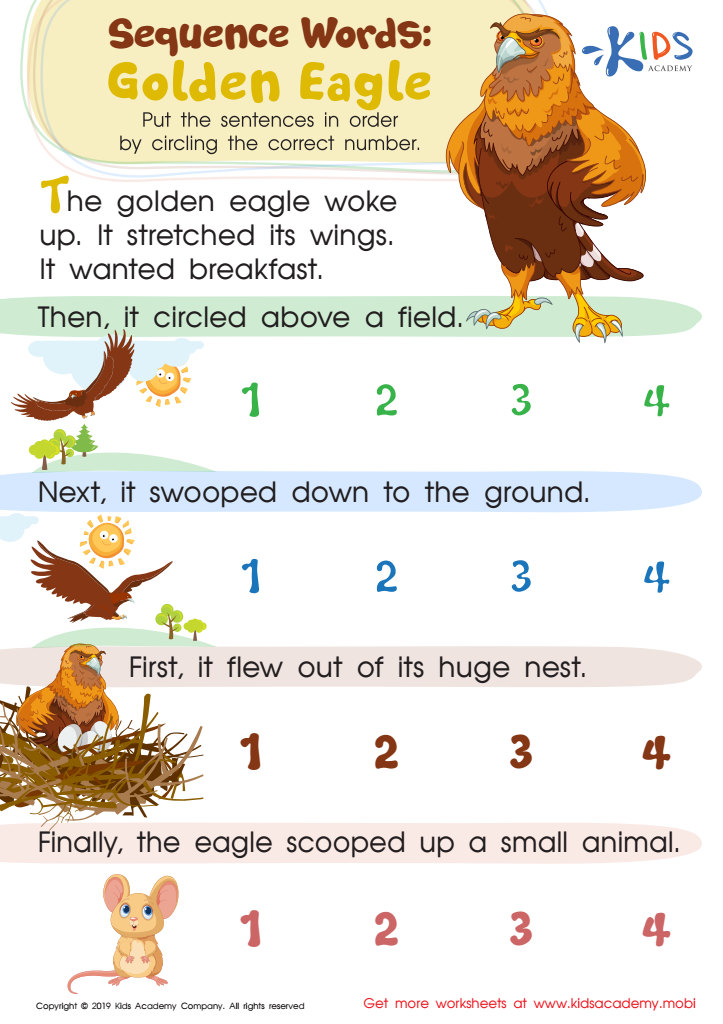
Sequence Word Eagle Worksheet
 Assign to My Students
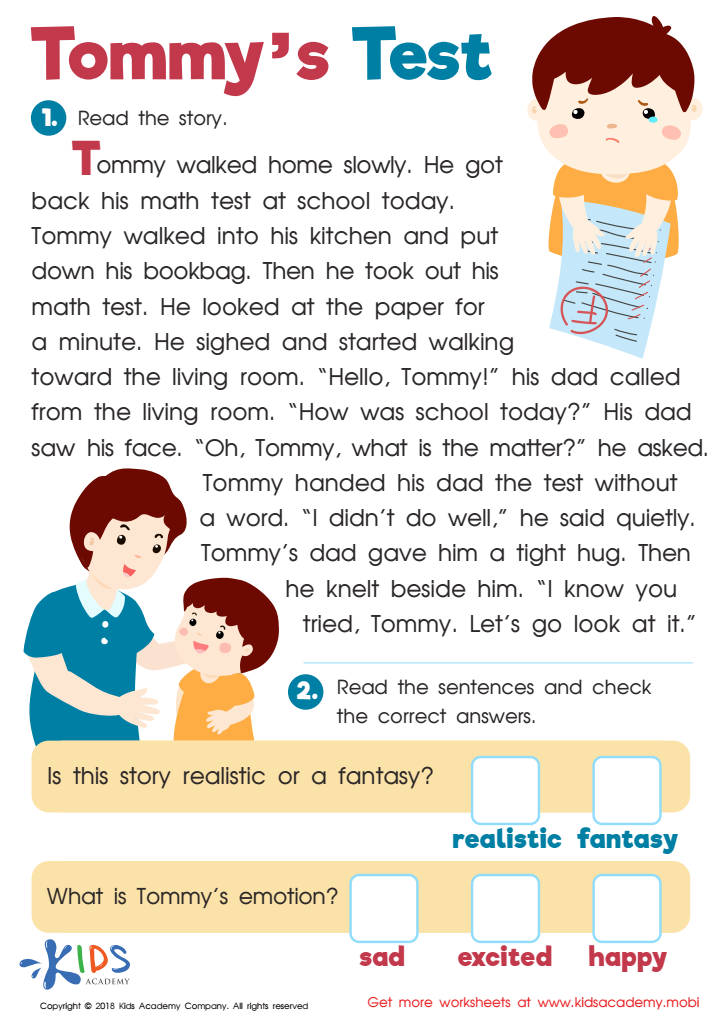
Tommys Test Worksheet
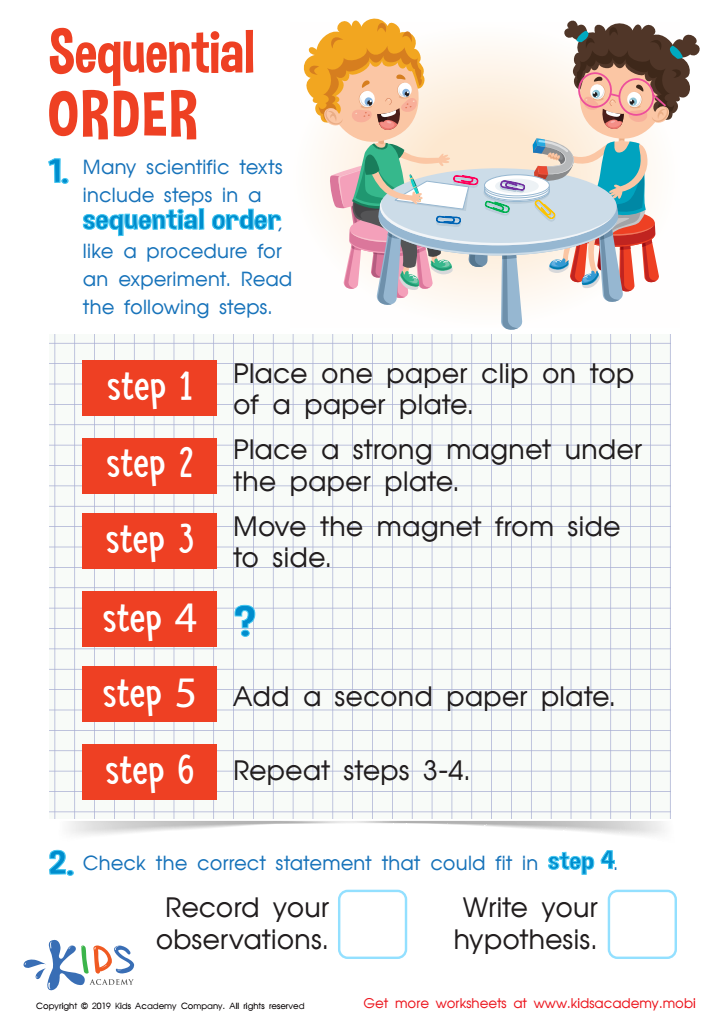
Sequencential Order Worksheet







Understanding sequences in reading is critical for children ages 8-9 because it provides the foundation for strong comprehension and critical thinking skills. At this stage, kids transition from learning to read towards reading to learn. Sequencing skills enable them to grasp the order of events in a story or informational text, establishing cause and effect relationships.
For parents, recognizing the importance of sequencing helps in supporting their child's literacy at home. Discussing daily routines or engaging in story-telling activities can enhance a child's ability to logically order events. For teachers, guiding students through sequencing tasks in reading lessons fosters a structured thought process, vital for tackling more complex material in later grades.
Moreover, sequencing benefits children's everyday problem-solving skills. When they understand the steps required to achieve a goal, whether that's following a recipe or completing a math problem, they gain a sense of order and management. It also aids memory retention as recognizing patterns makes information easier to recall.
In sum, proficiency in sequencing not only advances reading comprehension but also bolsters essential cognitive skills, striking a balance between creativity and logic. Parents and teachers play a crucial role in nurturing this skill, making sure children are equipped for future academic challenges and daily life scenarios.








