Spelling practice Reading Comprehension Worksheets for Ages 8-9
7 filtered results
-
From - To
Enhance your child's literacy skills with our expertly designed Spelling Practice Reading Comprehension Worksheets for Ages 8-9. These engaging worksheets from Kids Academy combine spelling challenges with reading comprehension activities to promote deeper learning. Each worksheet incorporates age-appropriate texts followed by thoughtfully crafted questions, enabling children to improve their spelling accuracy while honing their comprehension abilities. Perfect for classroom use or home study, our worksheets support essential learning objectives and make practicing literacy both fun and meaningful. Help your child develop a solid foundation in reading and spelling with Kids Academy’s trusted materials!
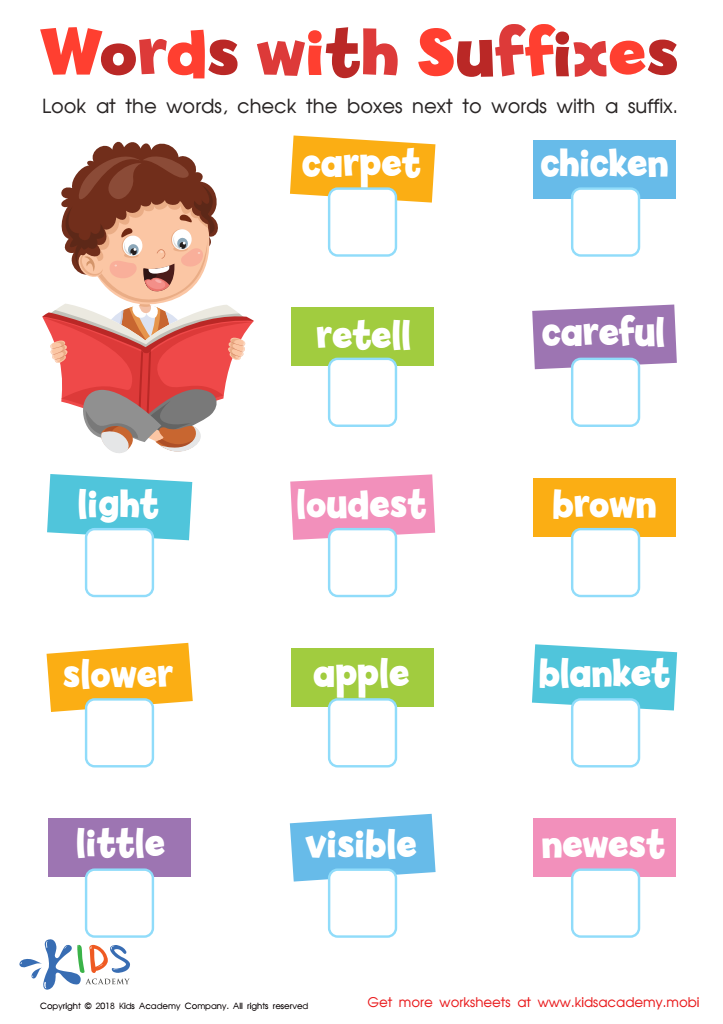
Reading: Words With Suffixes Worksheet
 Assign to My Students
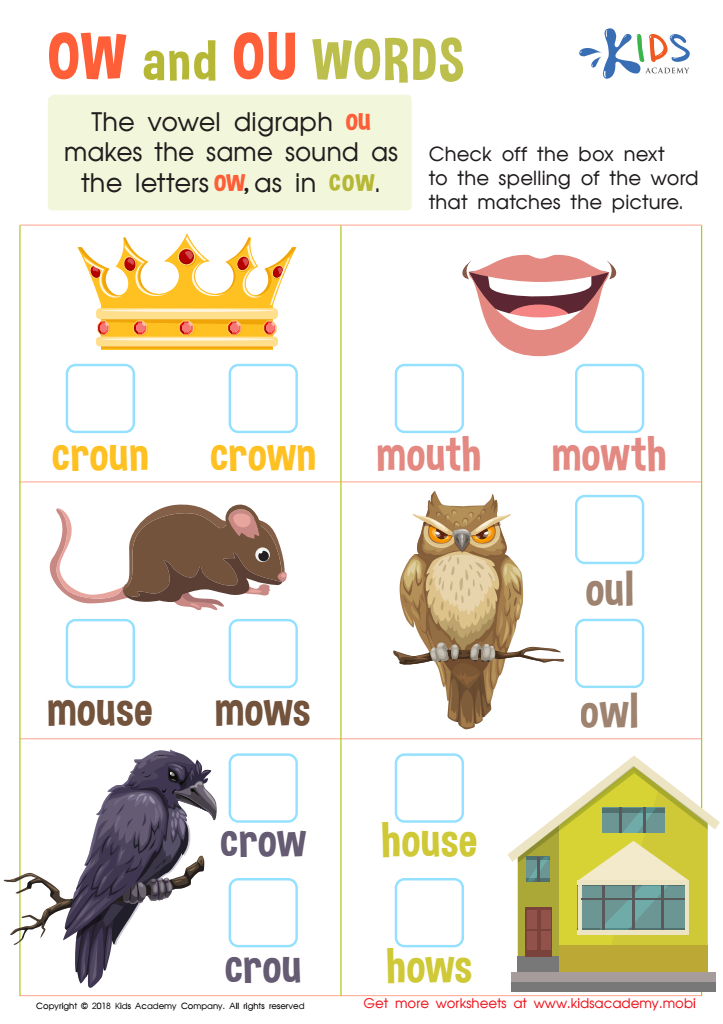
Reading: OW and OU Words Worksheet
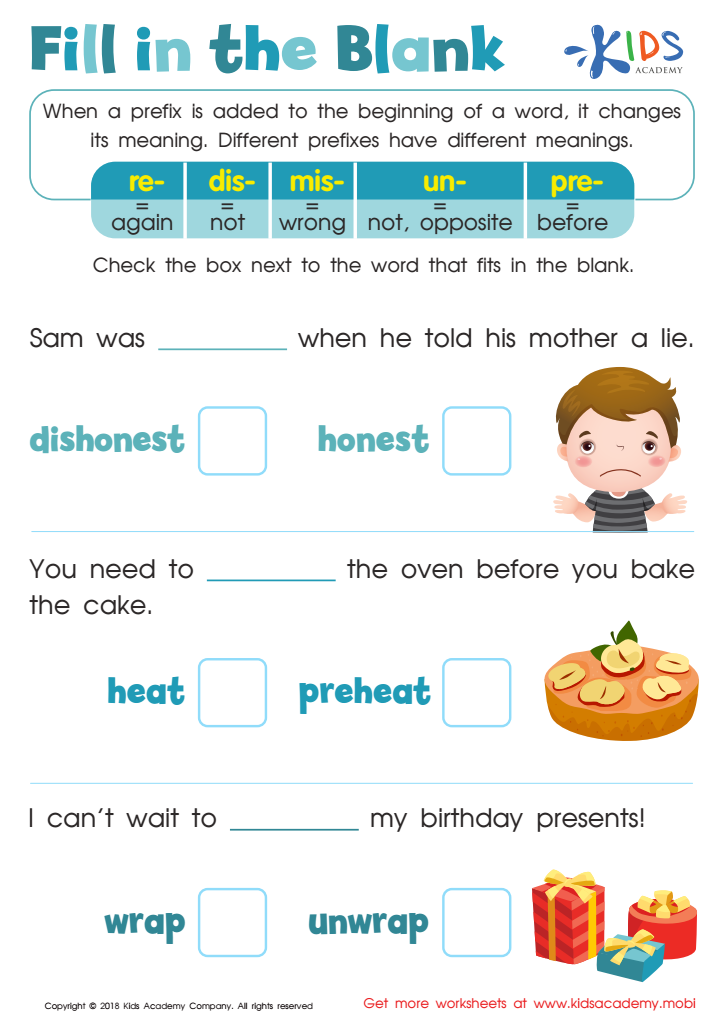
Reading: Fill in the Blank Worksheet
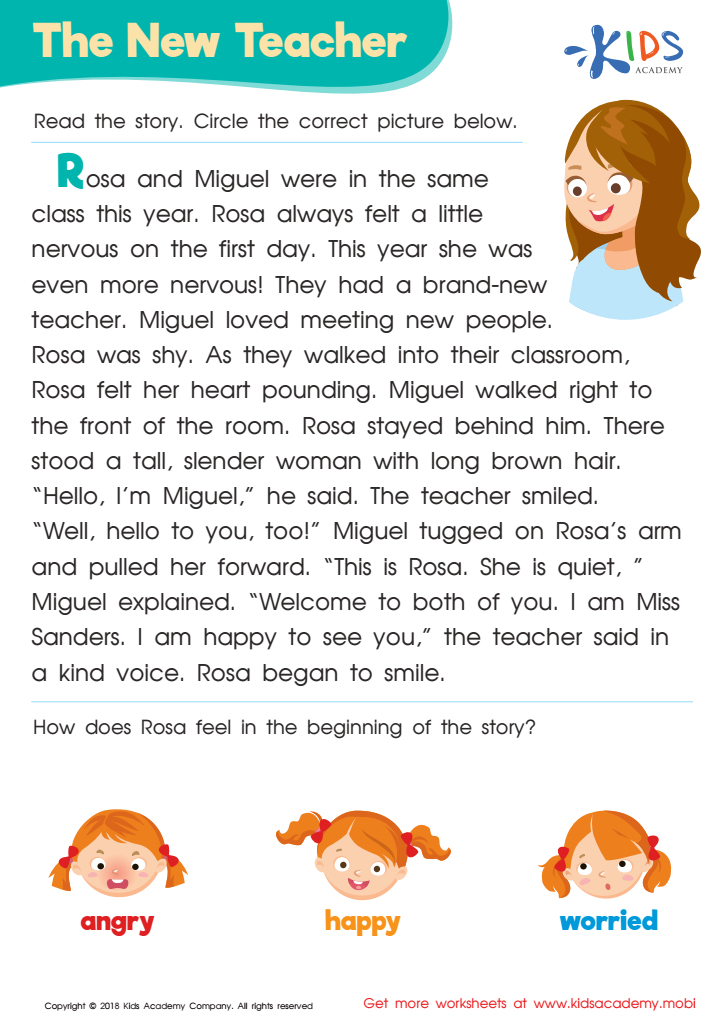
The New Teacher Worksheet
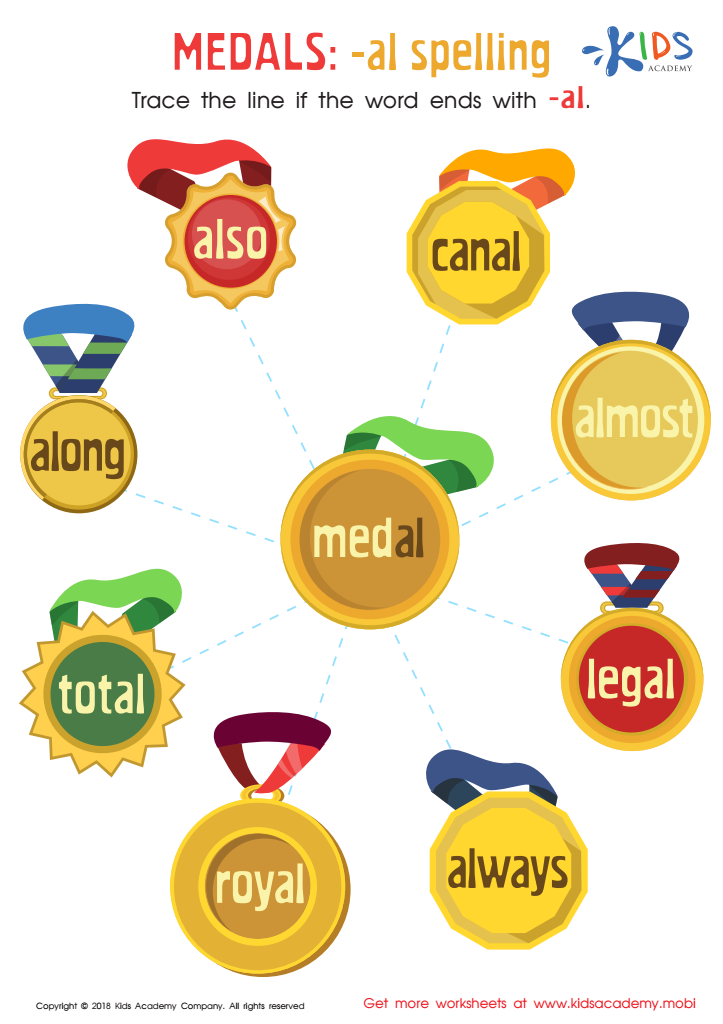
Medals: Al Spelling Worksheet
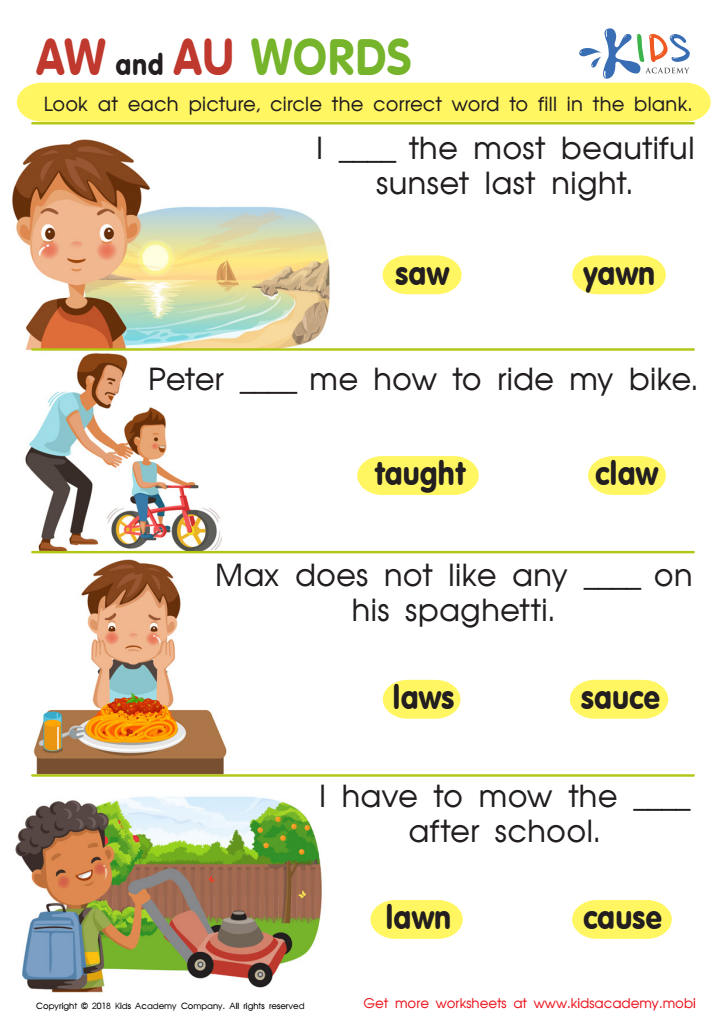
Reading: AW and AU Words Worksheet
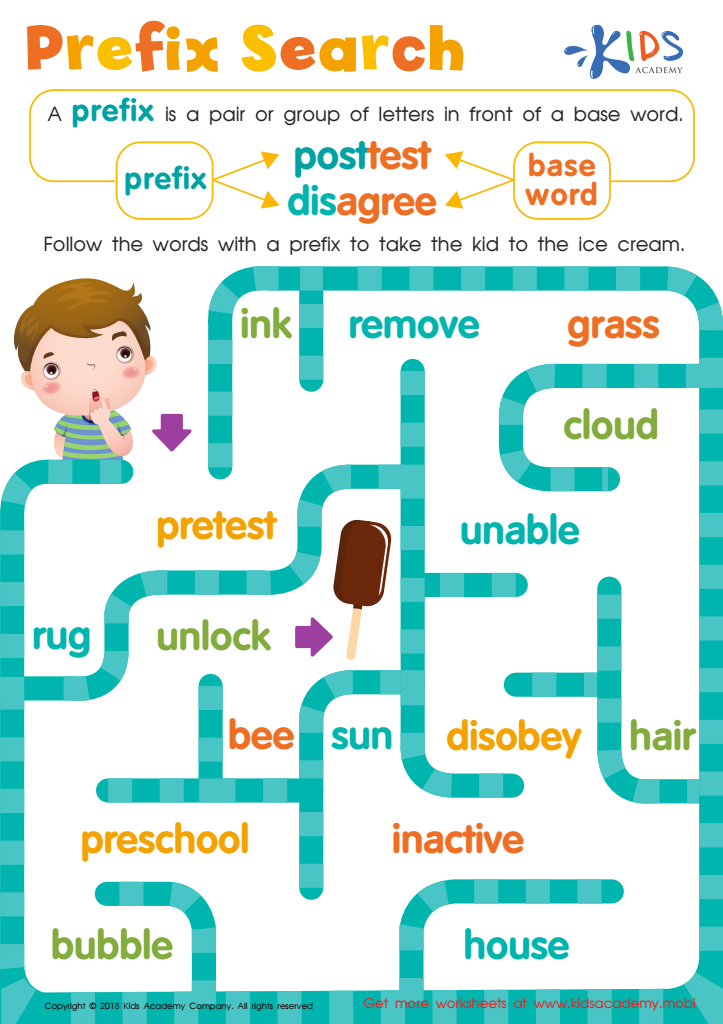
Reading: Prefix Search Worksheet






.jpg)

Spelling practice and reading comprehension are fundamental to a child's literacy development, especially for ages 8-9. At this stage, children transition from learning to read to reading to learn, making these skills crucial.
Firstly, spelling practice enhances phonemic awareness, where children understand the relationship between letters and sounds. This reinforces word recognition, allowing them to read more fluently and with greater confidence. As they master spelling, they become more comfortable writing, enabling them to express their thoughts clearly and accurately.
Reading comprehension, on the other hand, is essential for understanding and processing text. It involves more than just decoding words; it's about making sense of the information and relating it to existing knowledge. Good comprehension skills foster independent learning, as children can read to gain information, follow instructions, and understand new concepts.
Both spelling and reading comprehension cultivate critical thinking. When children practice spelling, they learn to identify patterns, apply rules, and develop problem-solving skills. Comprehension requires them to infer, predict, and synthesize information, enhancing cognitive abilities.
Parents and teachers play vital roles by providing practice opportunities and resources, offering support, and creating literacy-rich environments where children can thrive. Prioritizing these skills sets a strong foundation for academic success and lifelong learning.








