Developing research skills Science Worksheets for Ages 8-9
3 filtered results
-
From - To
Discover a world of exploration with our "Developing Research Skills Science Worksheets for Ages 8-9." Tailored to young learners, these engaging worksheets encourage critical thinking, curiosity, and the ability to gather and analyze information. By utilizing hands-on activities, students will learn how to formulate questions, conduct basic research, and present findings in an interactive way. Ideal for both home and classroom use, our worksheets integrate essential science concepts while building foundational research skills. Equip your child with the tools they need for academic success and a lifelong love for learning! Explore the fascinating world of science today!
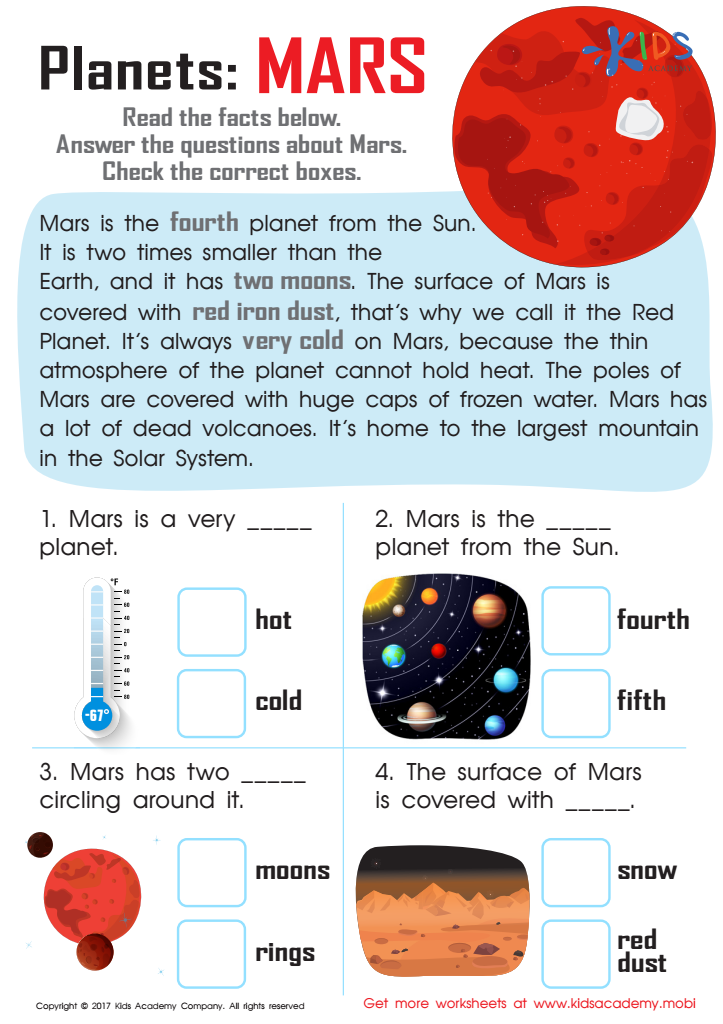
Mars Fact Printable Worksheet
 Assign to My Students
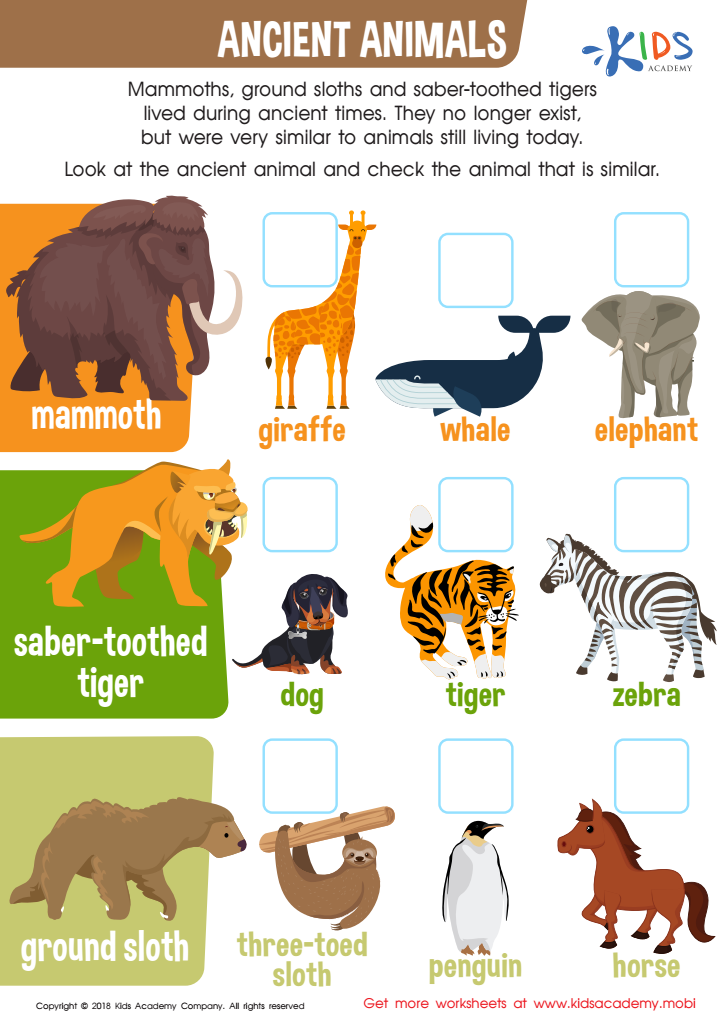
Ancient Animals Worksheet
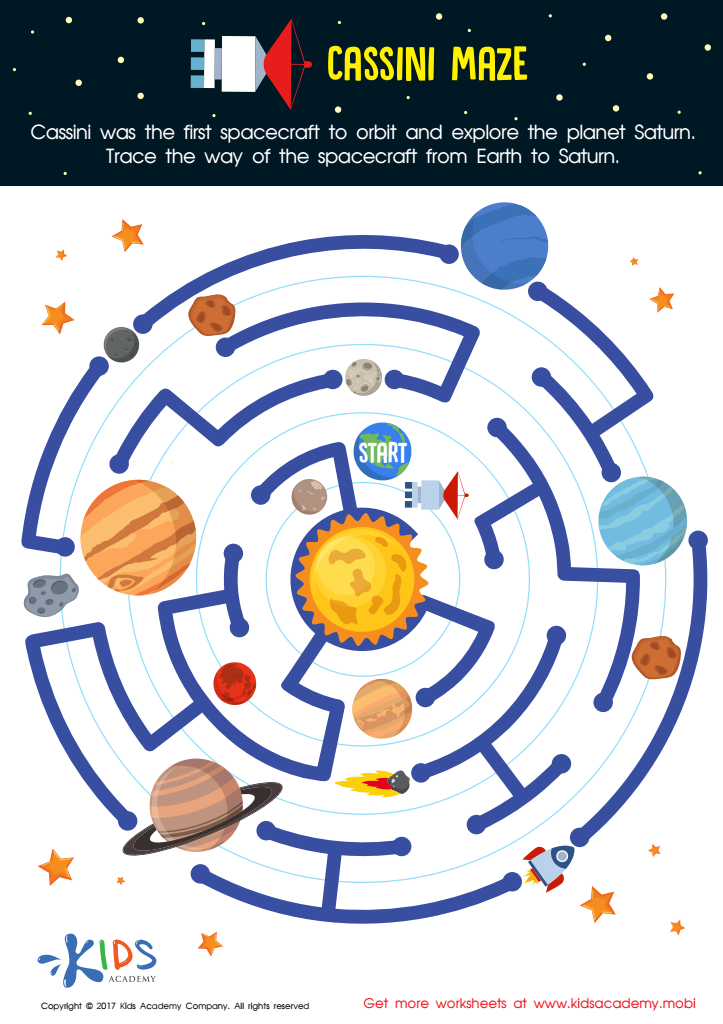
Cassini Printable Worksheet








Developing research skills in science for children aged 8-9 is crucial for several reasons. At this developmental stage, children are naturally curious and eager to explore the world around them. Teaching them research skills nurtures this curiosity, enabling them to ask questions, seek answers, and understand scientific concepts more deeply.
Engaging with science through research helps kids think critically. They learn to differentiate between credible information and misinformation, a vital skill in today's technology-driven society. By guiding children in conducting experiments, gathering data, and analyzing results, parents and teachers foster a hands-on learning environment that promotes inquiry-based education.
Moreover, research skills encourage teamwork and communication, as collaborative projects often require sharing findings and discussing ideas with peers. These experiences not only enhance their scientific knowledge but also build social and emotional skills, such as respect for others' viewpoints and the ability to listen actively.
Lastly, cultivating research skills sets the foundation for lifelong learning and a potential future in STEM fields. By prioritizing science research education, parents and teachers empower children to think independently and become informed, inquisitive citizens who are prepared to solve the challenges of tomorrow.







