Enhancing reading skills Science Worksheets for Ages 8-9
6 filtered results
-
From - To
Boost your child's reading skills with our engaging Science Worksheets designed for ages 8-9! These carefully crafted activities seamlessly blend scientific concepts with reading comprehension, making learning both fun and educational. Children will explore topics like the environment, space, and ecosystems while improving their vocabulary and critical thinking skills. Each worksheet encourages independent learning and helps reinforce essential literacy skills through interactive exercises. Perfect for classroom use or as at-home practice, our Science Worksheets aid in developing a strong foundation for future academic success. Unlock the wonders of science and reading together—visit us for printable worksheets that inspire young minds!
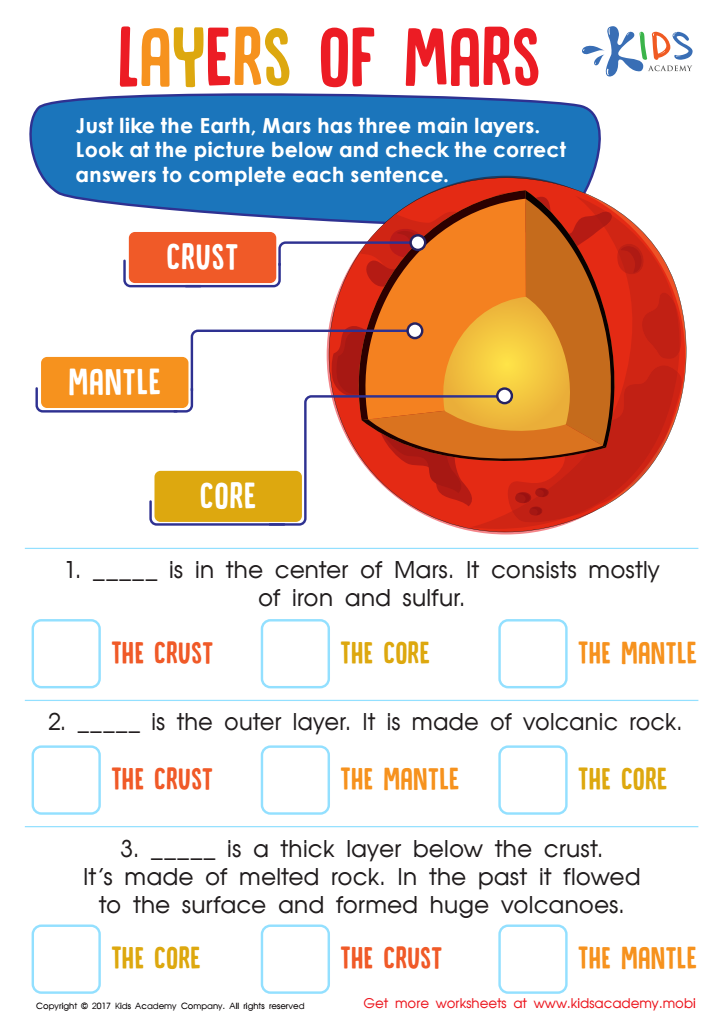
Layers of Mars Printable Worksheet
 Assign to My Students
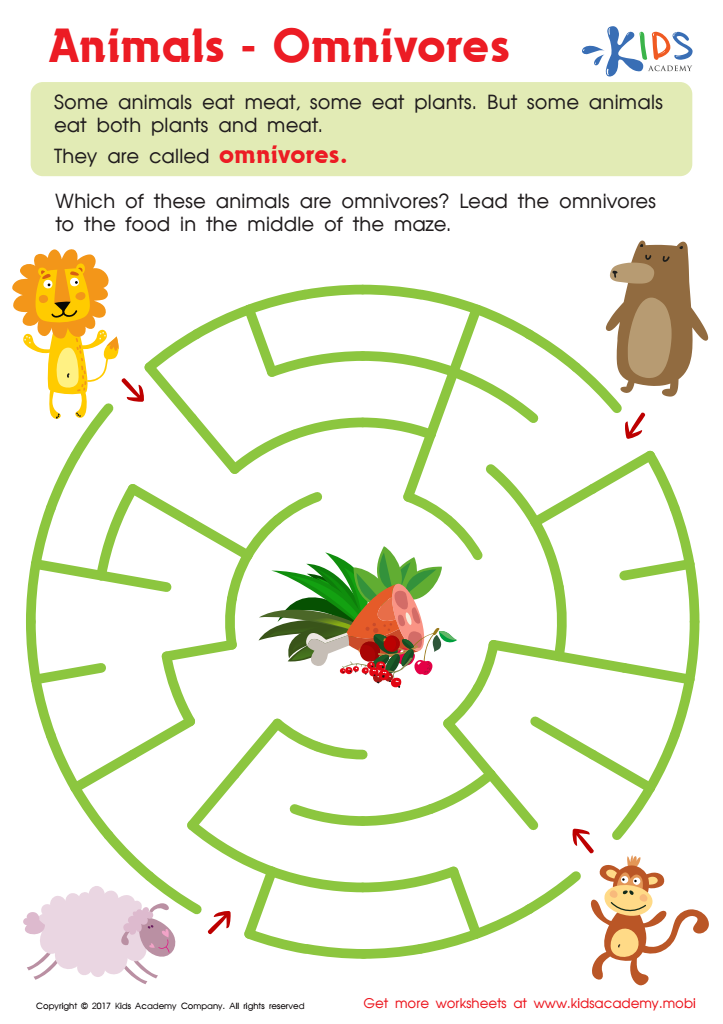
Omnivores Animals Worksheet
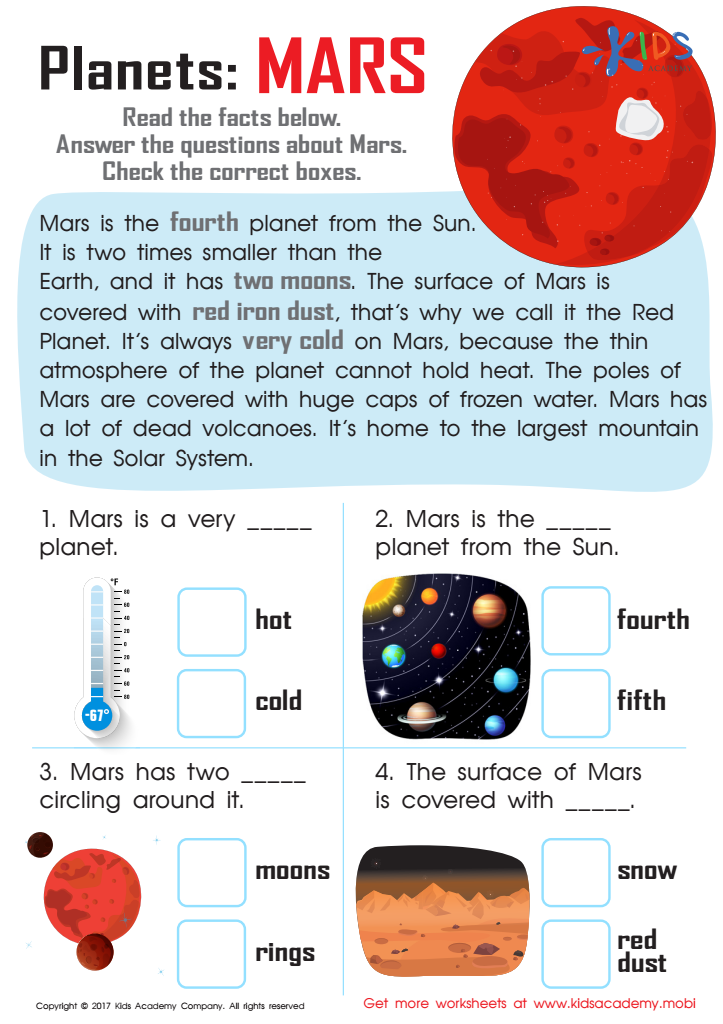
Mars Fact Printable Worksheet
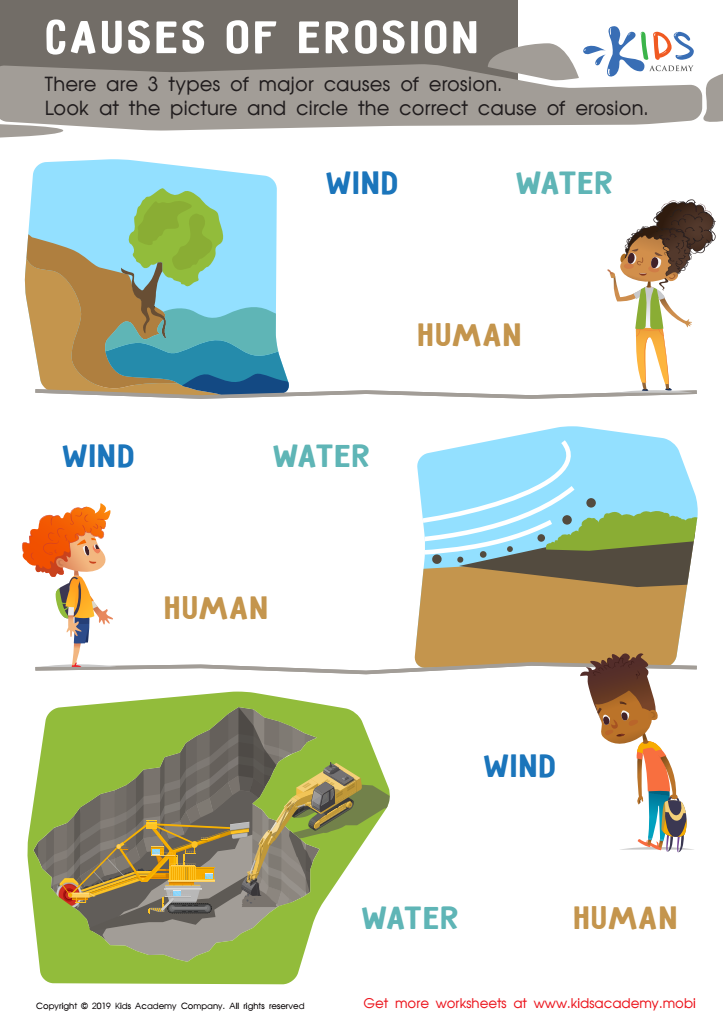
Causes of Erosion Worksheet
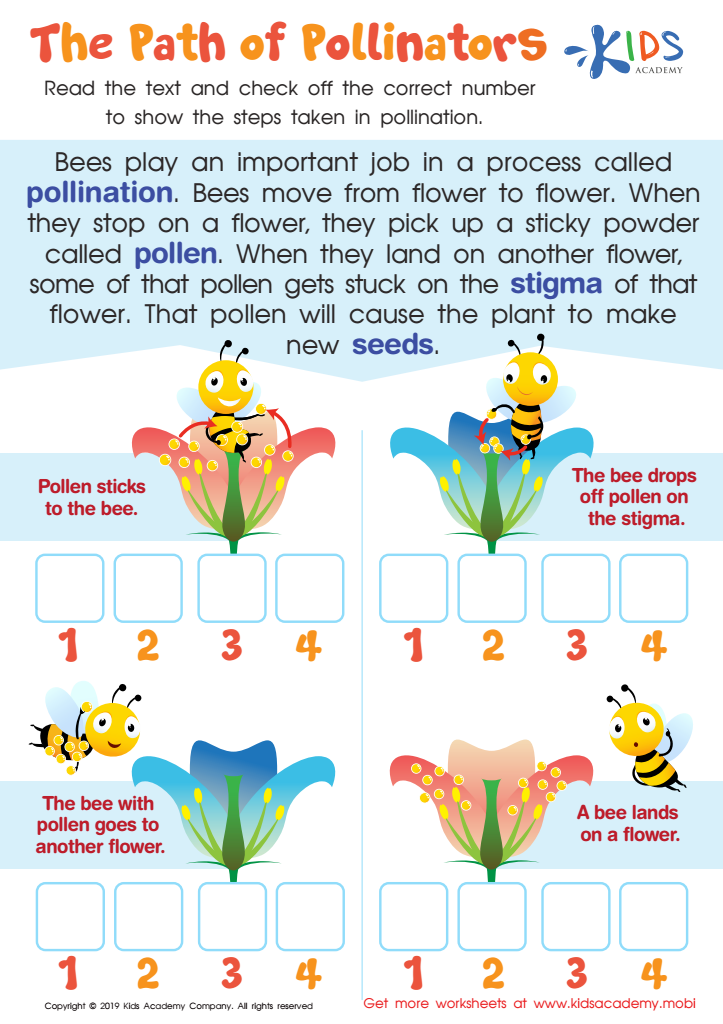
The Path of Pollinators Worksheet
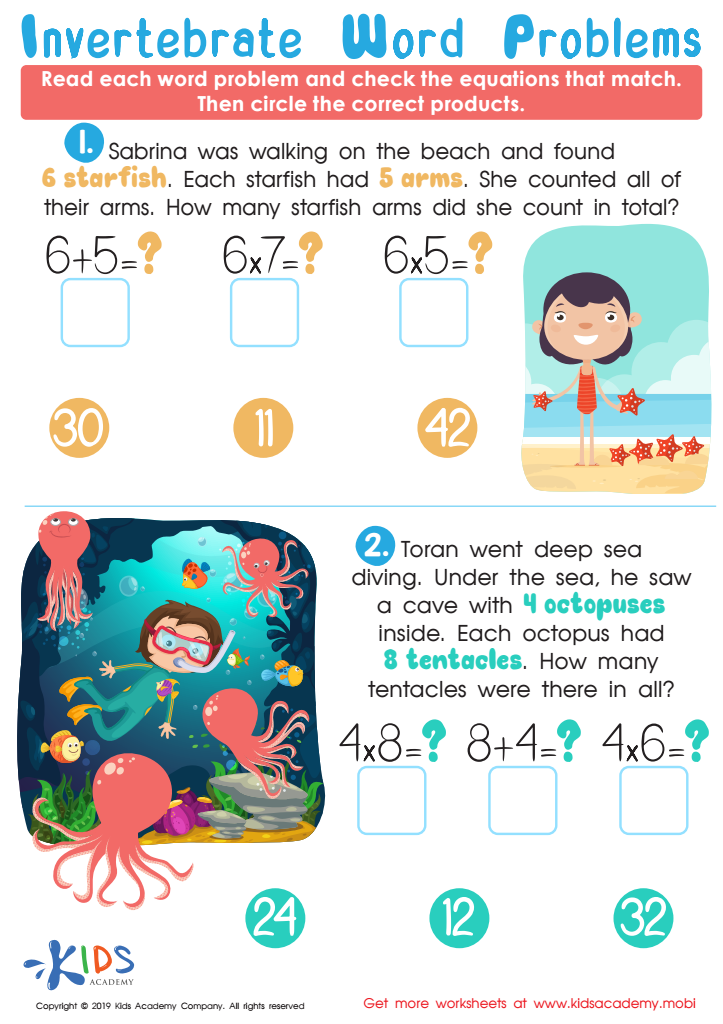
Invertebrate Problems Worksheet







Enhancing reading skills in science for children aged 8 to 9 is crucial due to several reasons. At this developmental stage, children are transitioning from learning to read to reading to learn, which sets the foundation for their future academic success. Through reading, they gain the ability to comprehend complex scientific concepts, engage in critical thinking, and foster curiosity about the world around them.
Improving reading skills in science not only aids in understanding scientific texts but also cultivates essential skills such as analyzing data, drawing conclusions, and recognizing scientific vocabulary. This early exposure prepares students for more advanced concepts in later grades, fostering a lifelong love for learning.
Additionally, strong reading abilities in science can enhance overall literacy and communication skills. These benefits extend beyond the classroom; as children read science materials, they learn to articulate their thoughts and ideas more effectively, which is beneficial in all areas of life.
Furthermore, in an increasingly technological and scientific world, literacy in science contributes to informed citizenship. It empowers children to make educated decisions about health, the environment, and technology, ultimately shaping the innovators and leaders of tomorrow. For these reasons, parents and teachers should prioritize reading skills in science for this age group.







