
Number Recognition Plants and Animals Worksheets for Ages 8-9
4 filtered results
Difficulty Level
Grade
Age
-
From - To
Subject
Activity
Standards
Explore our engaging Number Recognition Plants and Animals Worksheets designed for kids ages 8-9! These worksheets seamlessly integrate fun and education, cultivating essential math skills through captivating themes related to the animal kingdom and plant life. Perfect for home or classroom use, they offer various activities that reinforce number recognition and counting skills alongside science concepts. Young learners will enjoy identifying numbers while experiencing the wonders of nature, making every lesson a rewarding adventure. With vibrant illustrations and diverse exercises, your child will build confidence in numeracy while exploring the fascinating world of plants and animals. Get started today!
Favorites
With answer key
Interactive
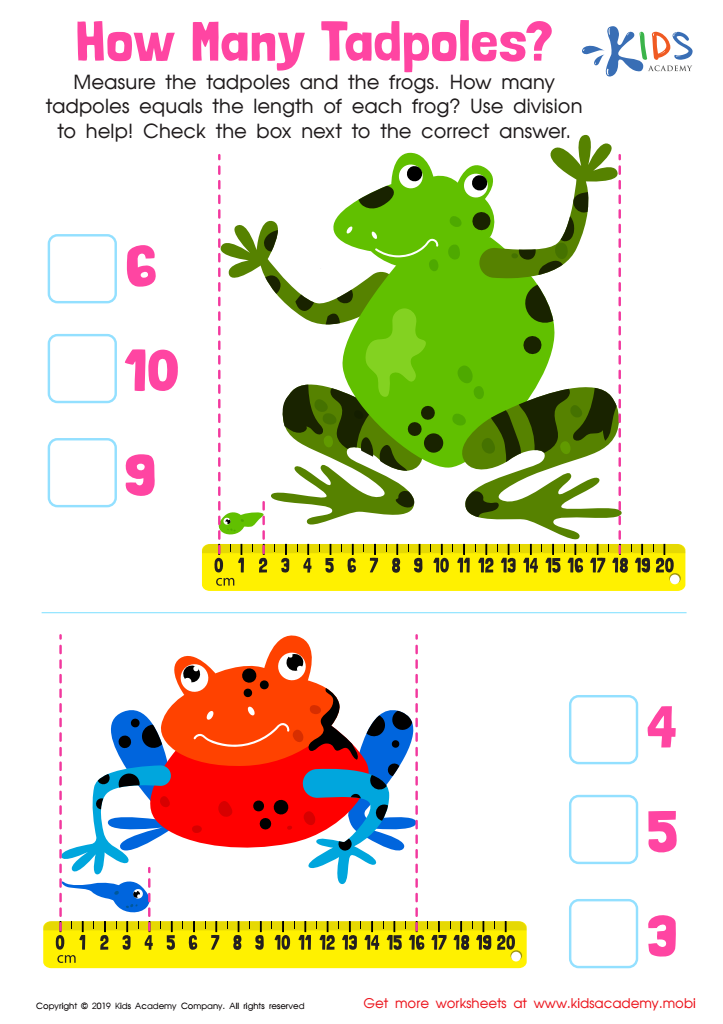
How Many Tadpoles Worksheet
Kids love tadpoles! They'll have fun using them to work out the measurements of their frog friends. By dividing the length of the frogs by the length of the tadpoles, children can deduce how many tadpoles it takes to equal a frog. With the use of 'how many' and 'each' they'll solve math problems without realizing it!
 Assign to My Students
How Many Tadpoles Worksheet
Worksheet











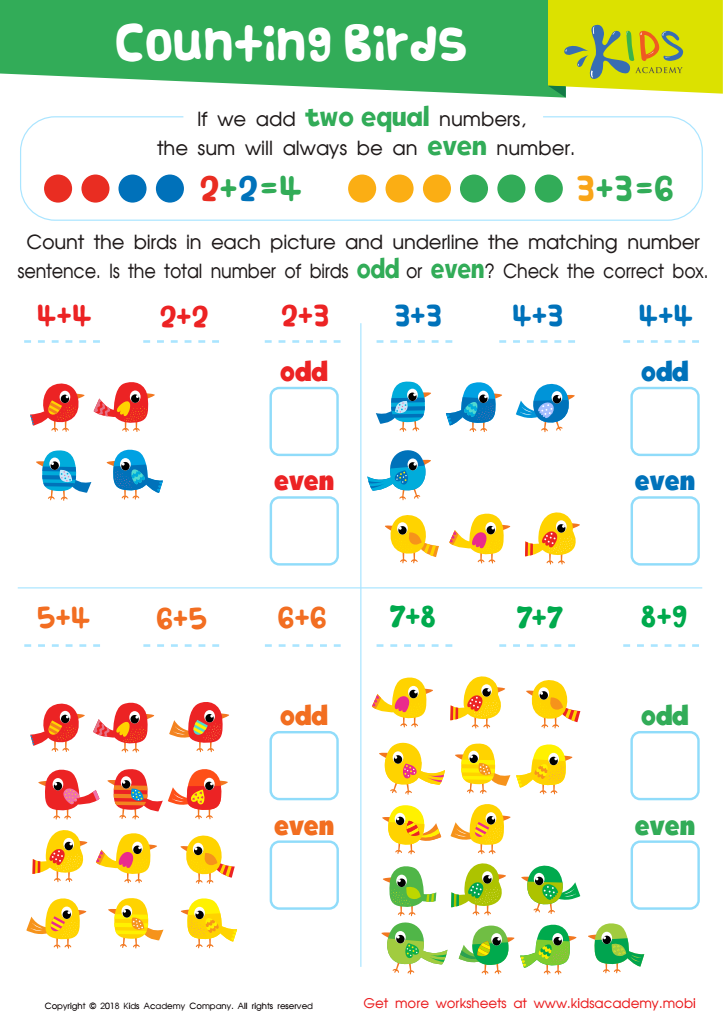
Counting Birds Worksheet
Help your child count and underline the matching number sentence in the worksheet. Ask them if the total number of birds in each picture is odd or even, then check the correct box. When two equal numbers are added, the sum is always an even number (e.g. 2+2=4, 4+4=8, both divisible by 2).
Counting Birds Worksheet
Worksheet
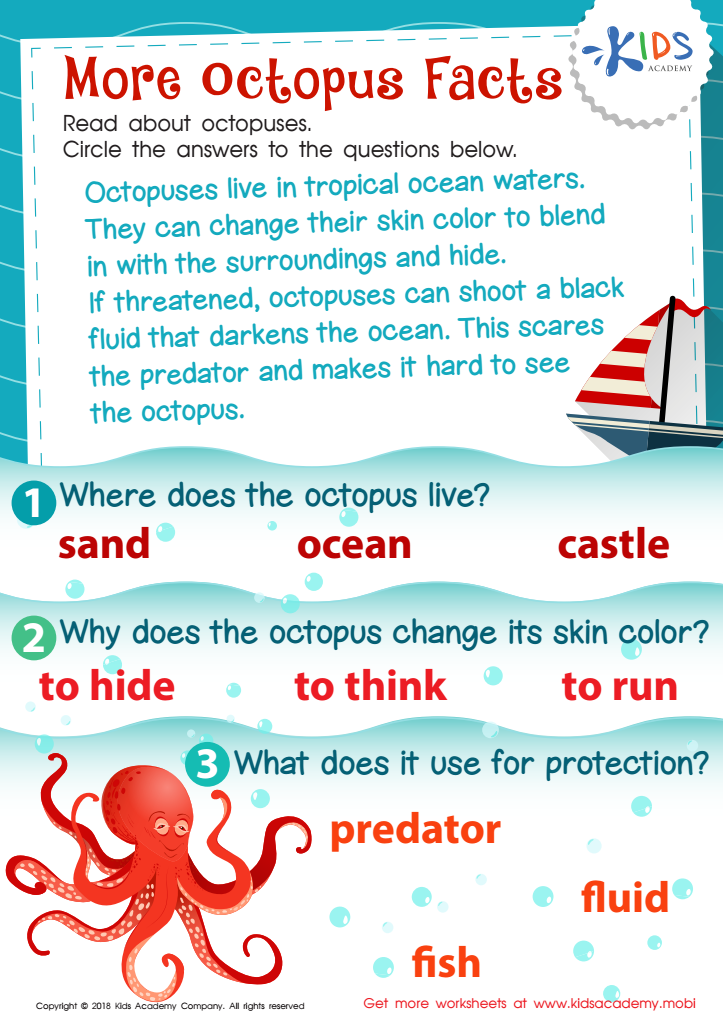
More Octopus Facts Worksheet
This worksheet will help your kids learn about the Octopus. Read the text carefully and have kids read with you. Now, ask them questions based on it and help them answer them by circling the right choices. Teaching your kids facts about animals will help them in the long run.
More Octopus Facts Worksheet
Worksheet
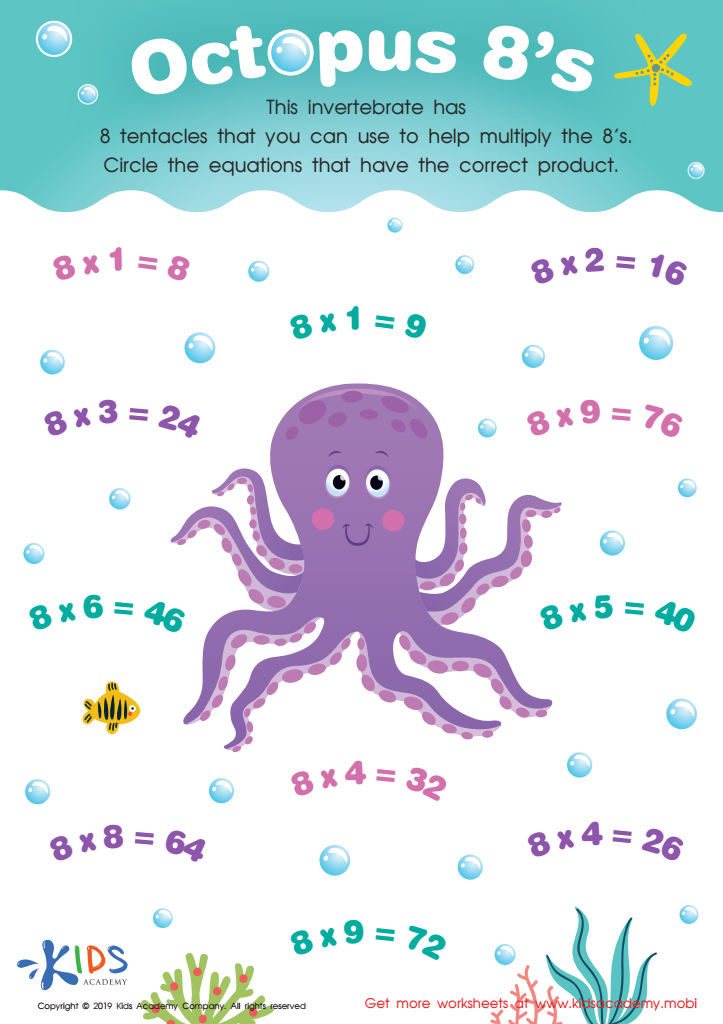
Octopus 8’s Worksheet
Can your child identify the octopus in the worksheet? It's an invertebrate with 8 tentacles. Have your child circle the equations with the correct products, and see if they can tell you some other features of the octopus too.
Octopus 8’s Worksheet
Worksheet
Join Kids Academy for Free
Who is primarily going to use this learning content?








Number recognition, particularly in the context of plants and animals, is a vital educational focus for children aged 8-9. At this stage, children are developing essential cognitive skills that lay the foundation for more complex mathematical concepts. Understanding numbers in relation to the natural world enhances their appreciation for biodiversity, promotes curiosity, and helps relate abstract mathematical concepts to tangible experiences.
By recognizing numbers associated with plants and animals—such as counting species, growth patterns, or populations—children strengthen their quantitative skills while also fostering a deeper connection with nature. This dual approach not only makes learning more enjoyable and engaging but also encourages critical thinking and problem-solving skills.
Moreover, teaching children the importance of number recognition in plants and animals can help build their environmental awareness. As they learn about ecosystems and biodiversity, they develop a sense of responsibility toward the environment and the organisms that inhabit it. For parents and teachers, fostering these insights can lead to well-rounded growth, blending analytical thinking with ethical awareness, which is essential for holistic education in today's world. In essence, number recognition in this context is not just about math; it's about cultivating responsible future stewards of our planet.








