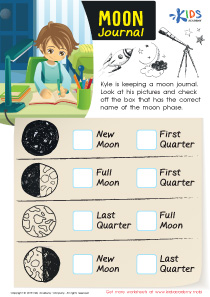
Understanding life cycles Plants and Animals Worksheets for Ages 8-9
3 filtered results
-
From - To
Discover the amazing journey of growth and development with our "Understanding Life Cycles: Plants and Animals Worksheets for Ages 8-9". These engaging, educational worksheets are designed to captivate young learners while helping them explore the fascinating stages of life for both plants and animals. Through a variety of activities, children will learn key concepts such as germination, growth, reproduction, and more. Perfect for classroom or home use, our worksheets encourage critical thinking and hands-on learning. Foster a deeper appreciation for nature and science by providing your child with these fun and informative resources from Kids Academy.
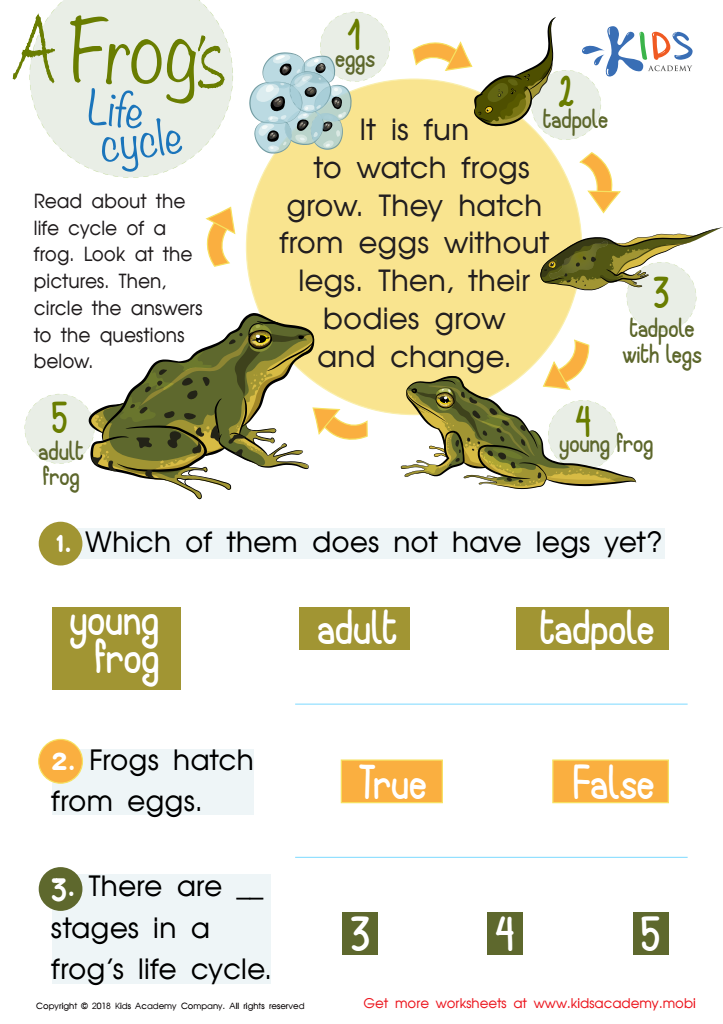
A Frog’s Life Cycle Worksheet
 Assign to My Students






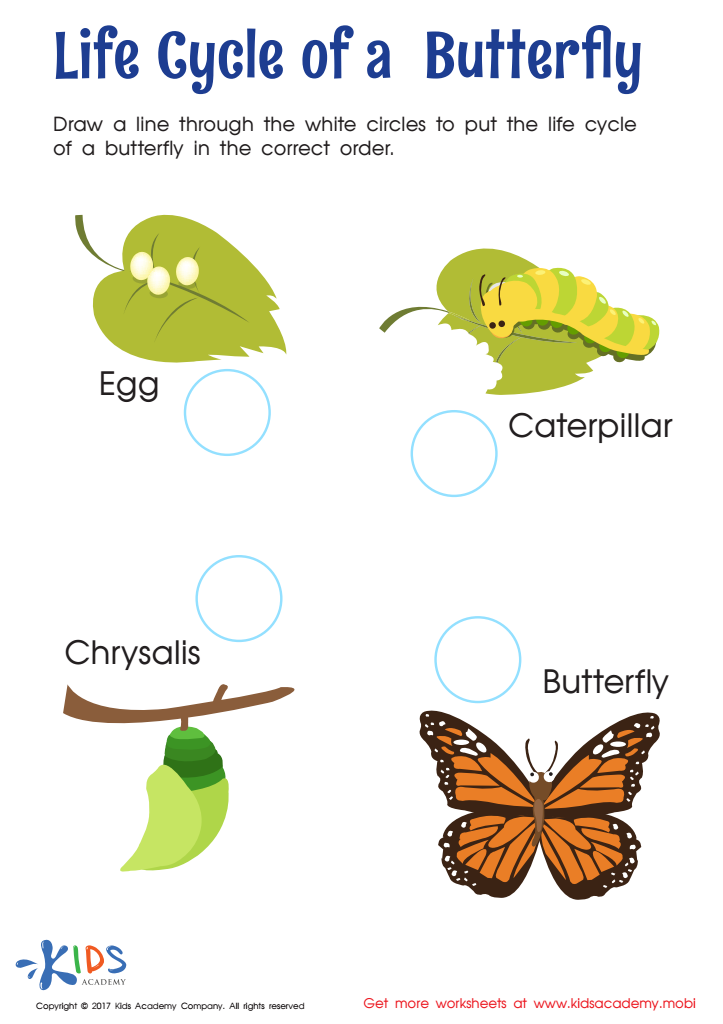
Life Cycle of Butterfly Worksheet
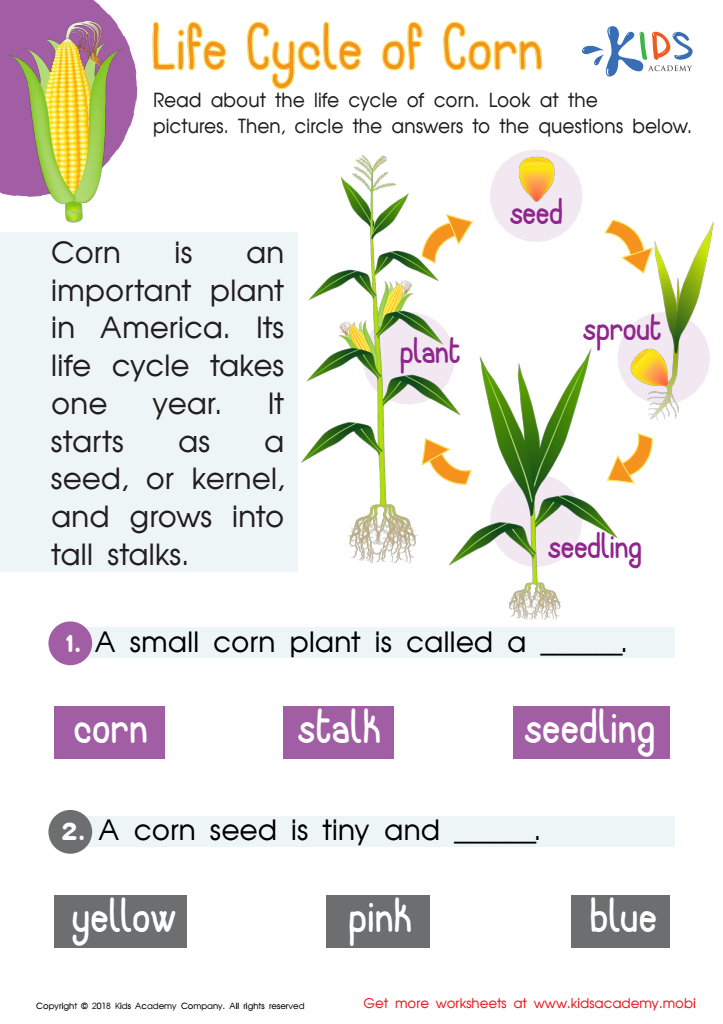
Life Cycle of Corn Worksheet







Understanding life cycles of plants and animals at ages 8-9 is crucial for fostering a child's curiosity, appreciation of nature, and foundational scientific knowledge. At this developmental stage, children are naturally eager to explore and understand the world around them. Delving into life cycles taps into this curiosity, making learning both engaging and meaningful.
Firstly, learning about life cycles teaches children about growth and development, helping them draw parallels to their own lives and grasp basic biological concepts. They observe how plants grow from seeds and see the transformation of animals, such as caterpillars turning into butterflies. These observations lay the groundwork for understanding more complex biological and ecological principles in the future.
Secondly, these lessons nurture a sense of respect for living things. When children grasp the delicate balance and interconnectedness of ecosystems, they are more likely to develop environmental stewardship. Awareness and appreciation of nature can cultivate life-long attitudes of caring for our planet.
Lastly, such topics align with key educational standards and frameworks, driving skills in scientific inquiry and critical thinking. Hands-on activities, such as growing plants or observing insects, provide practical experience, making abstract concepts tangible. Engaging with nature directly also boosts observational skills and conceptual understanding.
Overall, understanding life cycles enriches children's knowledge, emotional development, and inspires a sustainable connection with their environment.