Understanding timelines History Worksheets for Ages 8-9
5 filtered results
-
From - To
Discover the perfect tool to teach kids aged 8-9 the concept of history through "Understanding Timelines History Worksheets". These engaging and educational worksheets help students grasp the chronological sequence of historical events, enhancing their comprehension and organizational skills. With vibrant graphics and age-appropriate content, each worksheet guides young learners in placing events in the correct order. Ideal for home or classroom use, these resources provide a fun way to build foundational history knowledge and critical thinking abilities. Elevate your child's understanding of history and timelines with these expertly designed learning materials from Kids Academy.
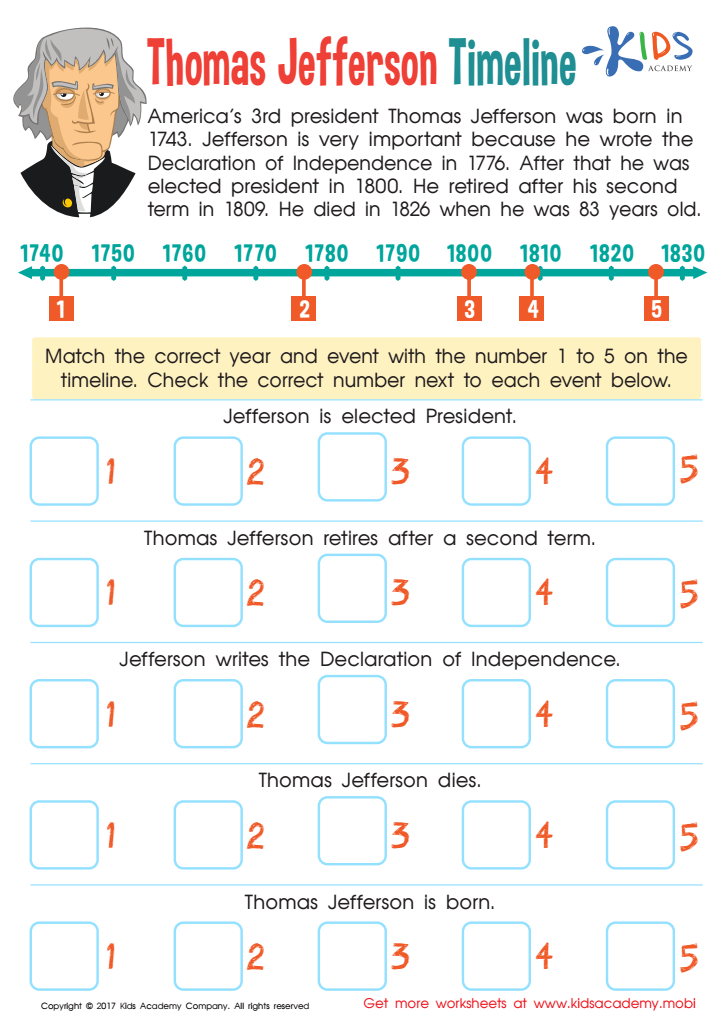
Thomas Jefferson Timeline Worksheet
 Assign to My Students
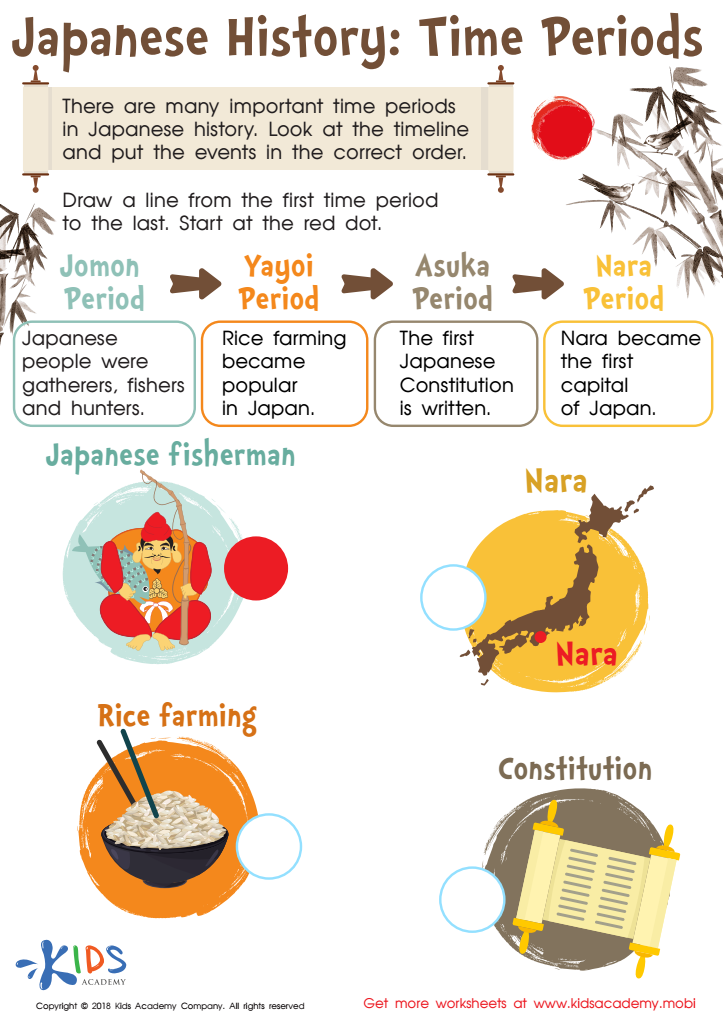
Japanese History: Time Periods Worksheet
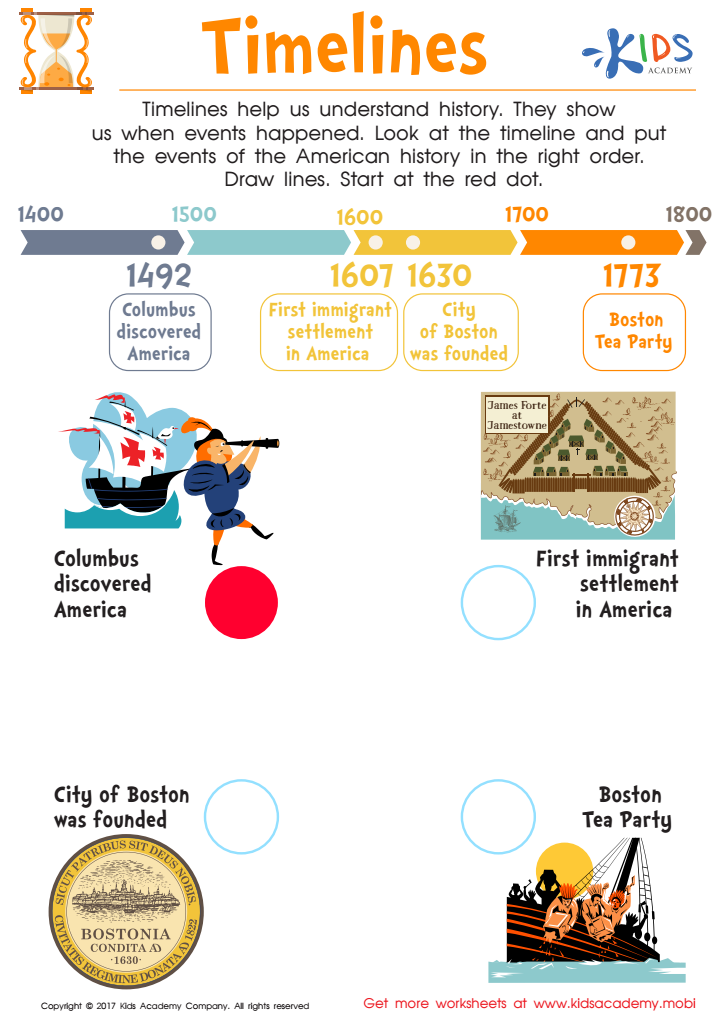
American History Timeline Worksheet
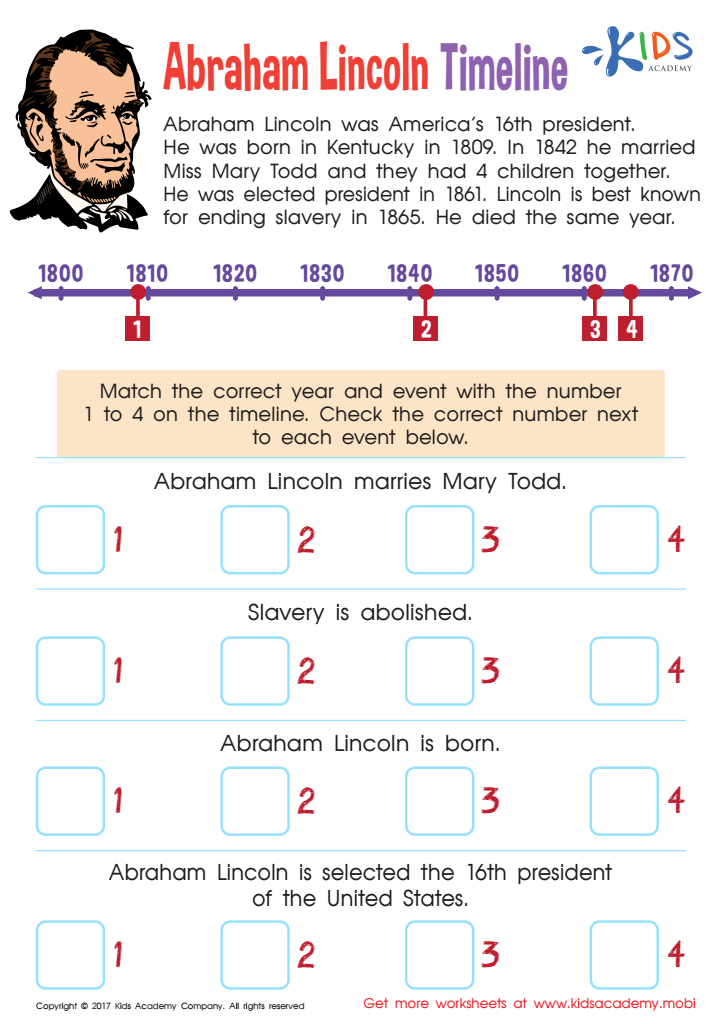
Abraham Lincoln Timeline Worksheet
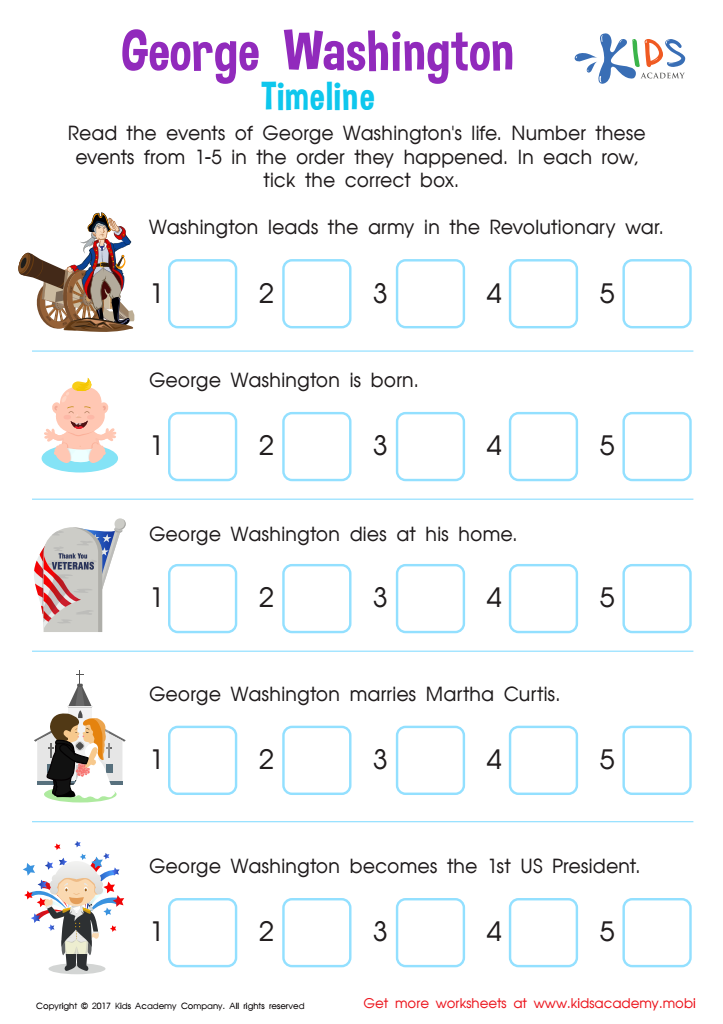
George Washington Timeline Worksheet






Understanding timelines in history is crucial for children aged 8-9 as it provides a foundational skill that supports their cognitive development and learning outcomes. At this age, children are starting to develop a sense of time and sequence, and learning to interpret and create timelines can significantly enhance these skills.
Firstly, timelines teach children about the concept of chronology – the order of events. This helps them understand cause-and-effect relationships and the progression of events, fostering critical thinking skills. For example, they can see how historical events lead to significant changes over time.
Secondly, timelines build a contextual understanding of historical events. By organizing important dates and milestones visually, children can better comprehend how different historical periods are interconnected. This can deepen their appreciation for history and can instill a sense of global awareness and citizenship.
For parents and teachers, promoting timeline mastery supports the development of organizational skills and attention to detail. It encourages children to curate information logically, enhancing their ability to handle more complex learning tasks in future subjects, both in social studies and beyond.
Moreover, using timelines can make history come alive in an engaging way, turning abstract dates and events into a coherent story that children can relate to, remember, and enjoy. This lays the groundwork for lifelong learning and curiosity about the world’s past.








