Spelling practice Social Studies Worksheets for Ages 8-9
5 filtered results
-
From - To
Enhance your child's social studies and language skills with our comprehensive Spelling Practice Social Studies Worksheets for ages 8-9. These engaging, curriculum-aligned resources are designed to reinforce spelling while exploring fascinating social studies topics. Ideal for both classroom use and at-home practice, each worksheet integrates fun activities, such as puzzles and fill-in-the-blanks, to make learning enjoyable for young minds. Encourage your child to develop strong spelling abilities and a deeper understanding of social studies concepts through our expertly crafted worksheets. Give your child an educational advantage with Kids Academy's trusted and effective learning tools.
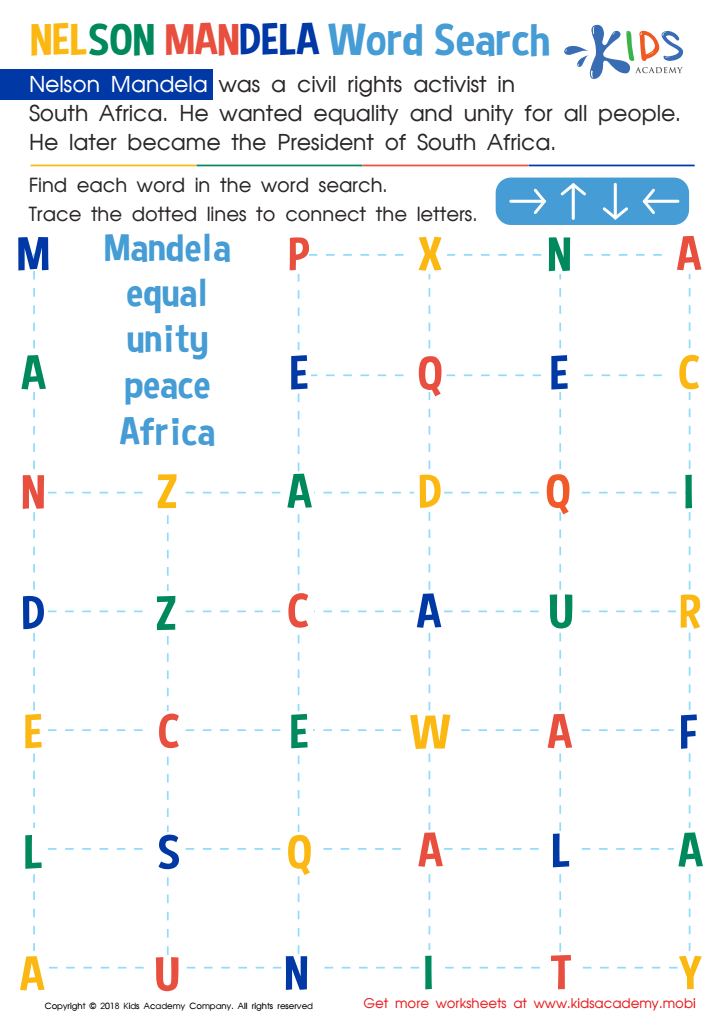
Nelson Mandela Word Search Worksheet
 Assign to My Students

National Parks Word Search Worksheet
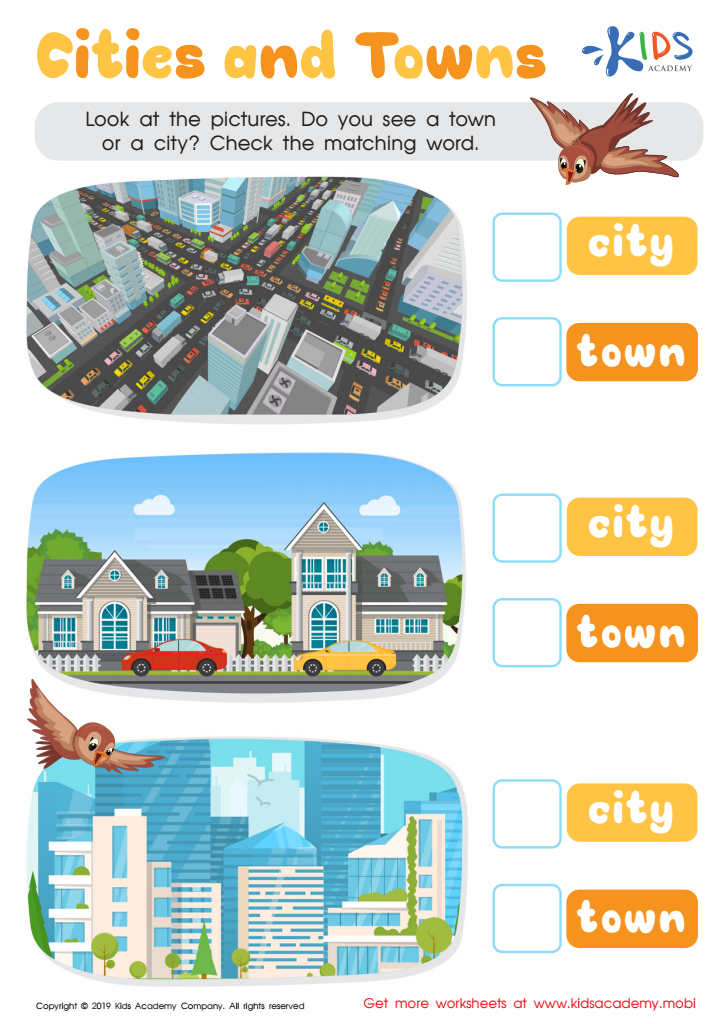
Cities and Towns Worksheet
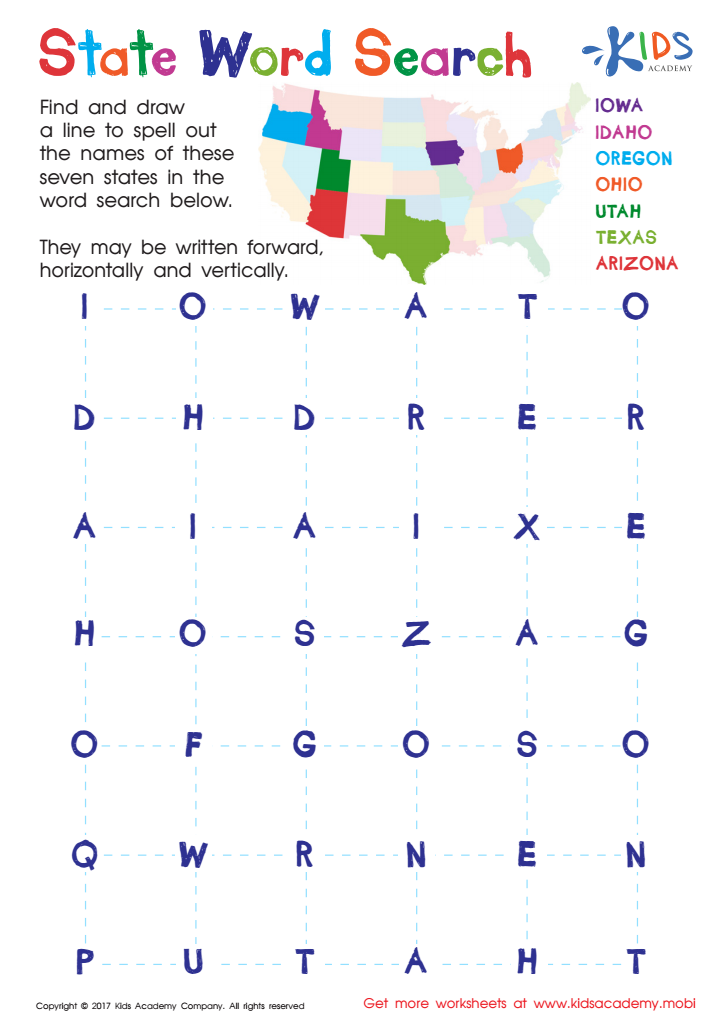
State Word Search Worksheet
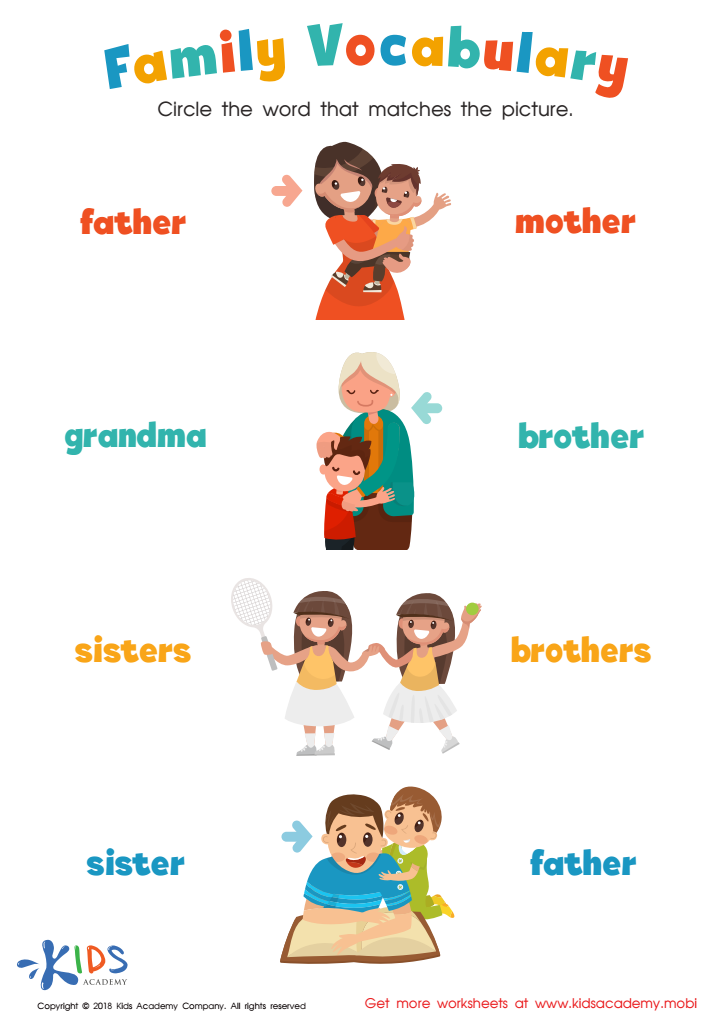
Family Vocabulary Worksheet








Parents and teachers should care about spelling practice in Social Studies for children aged 8-9 because it enhances both their literacy and comprehension skills in a crucial developmental stage. At this age, children are beginning to explore more complex ideas about history, geography, and culture. Proper spelling aids in their ability to accurately record and discuss these concepts, fostering clearer communication and deeper understanding.
Furthermore, spelling practice reinforces vocabulary acquisition. Encountering and correctly spelling words like "government," "ancient," or "civilization" helps children understand these terms in context, making Social Studies lessons more meaningful and enjoyable. It also boosts their confidence, encouraging them to participate more fully in discussions and activities.
For young students, integrating spelling with Social Studies creates an interdisciplinary approach to learning. This method not only makes abstract ideas more tangible but also reflects real-world applications of academic skills. When students see how spelling directly relates to subjects they study, they are more likely to appreciate the importance of accuracy and detail in written communication.
Overall, spelling practice within the context of Social Studies is instrumental in supporting literacy development, improving academic performance, and nurturing a lifelong interest in learning about the world. It's a foundational aspect that enriches education and prepares children for future academic challenges.