Filters

6 filtered results

Clear all filters
Favorites
With answer key
Interactive

6 filtered results

Difficulty Level

Grade


Boost your child's vocabulary with our engaging Vowel Blends Worksheets specifically designed for 8-year-olds! These interactive resources focus on helping young learners understand and use vowel blends effectively. Each worksheet features fun exercises that reinforce vowel blend recognition, broaden word comprehension, and enhance reading skills. By incorporating colorful visuals and practical examples, our worksheets make learning both enjoyable and educational. Perfect for classroom use or at-home practice, these activities promote independent learning and critical thinking. Give your child the tools they need to succeed in their reading journey by exploring our extensive collection of vowel blends worksheets today!

Check out this FREE Trial Lesson on Vowel Blends for age 8!

Digraphs

Favorites
With answer key
Interactive
  • 8
  • Vocabulary expansion
  • Vowel Blends
Reading: OW and OU Words Worksheet

Reading: OW and OU Words Worksheet

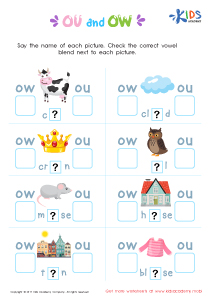
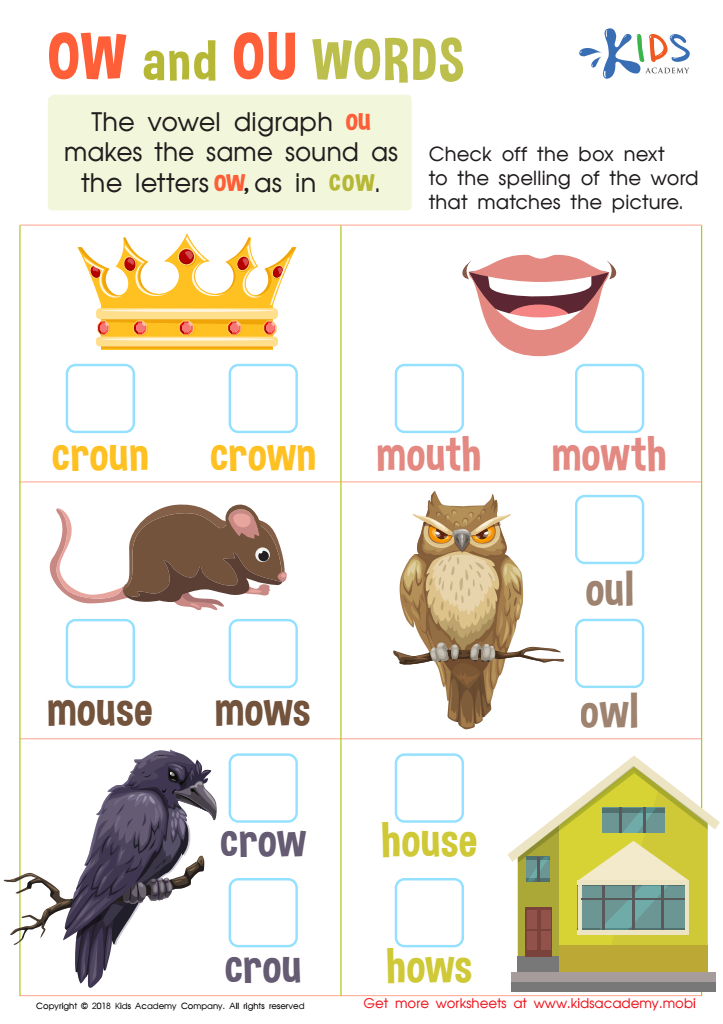
Help your kids learn phonetics! Explain the different sounds and long/short variations. Emphasize that some vowel sounds are the same, e.g. ou = ow in cow. For practice, have them read aloud the words in the worksheet and check the box next to the spelling that matches the picture.
Reading: OW and OU Words Worksheet
Worksheet
Reading: AI Vowel Team Worksheet

Reading: AI Vowel Team Worksheet

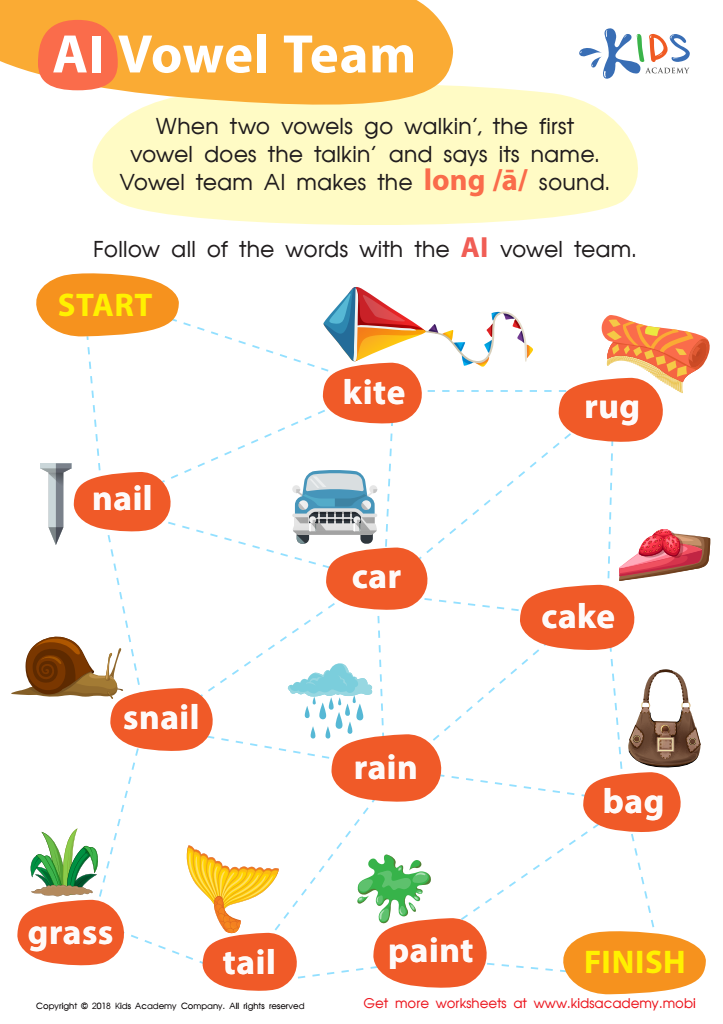
This worksheet focuses on the vowel team /ai/ which makes the long A sound. Students are challenged to find the correct path through the puzzle following only words with the /ai/ sound. Bright illustrations help kids understand unknown words.
Reading: AI Vowel Team Worksheet
Worksheet
Reading: AW and AU Words Worksheet

Reading: AW and AU Words Worksheet

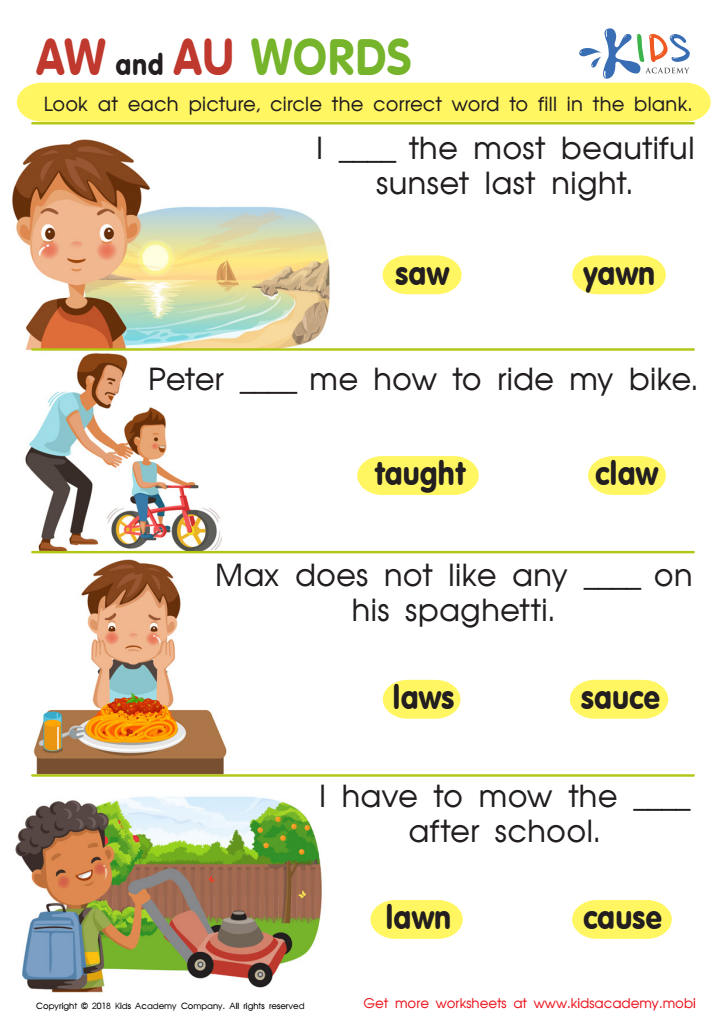
This worksheet helps kids recognize that /au/ and /aw/ can make the same sound. Students read sentences and pick the correct word with one of the digraphs. Understanding digraphs improves decoding and reading fluency. Perfect for reading and phonics classes.
Reading: AW and AU Words Worksheet
Worksheet
Reading: EA and EE Worksheet

Reading: EA and EE Worksheet

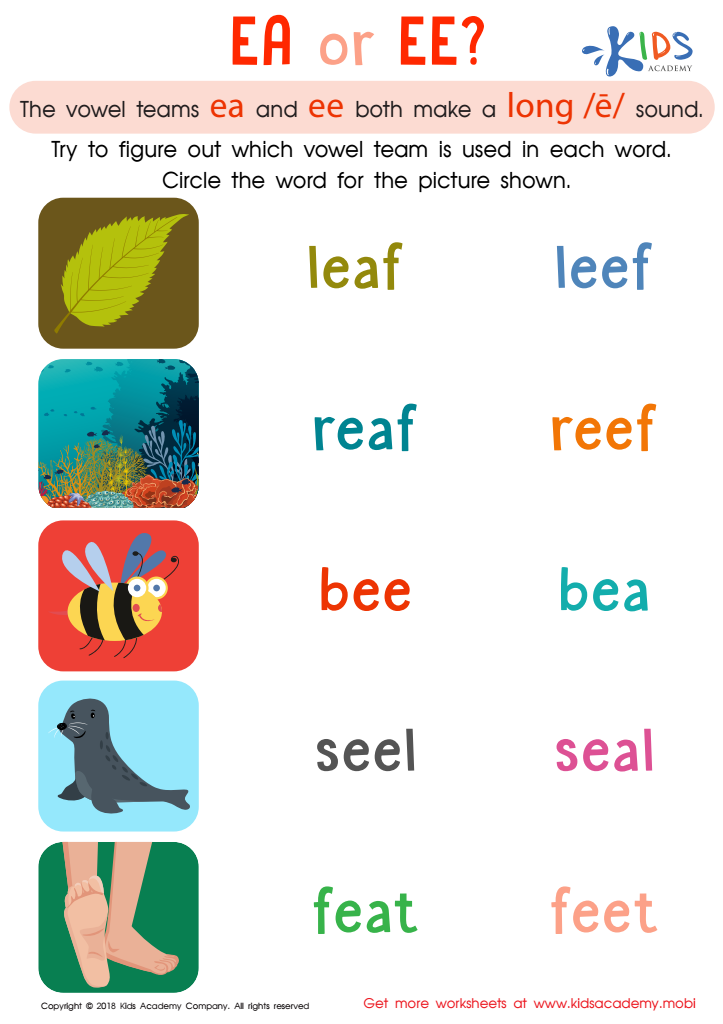
Confused by the long E sound's varying spellings? Give students practice with this printable. It will improve their reading and spelling skills by helping them identify the correct spellings for words with the /ee/ and /ea/ vowel teams. Clear up the confusion and sharpen their skills.
Reading: EA and EE Worksheet
Worksheet
Reading: OI and OY Worksheet

Reading: OI and OY Worksheet

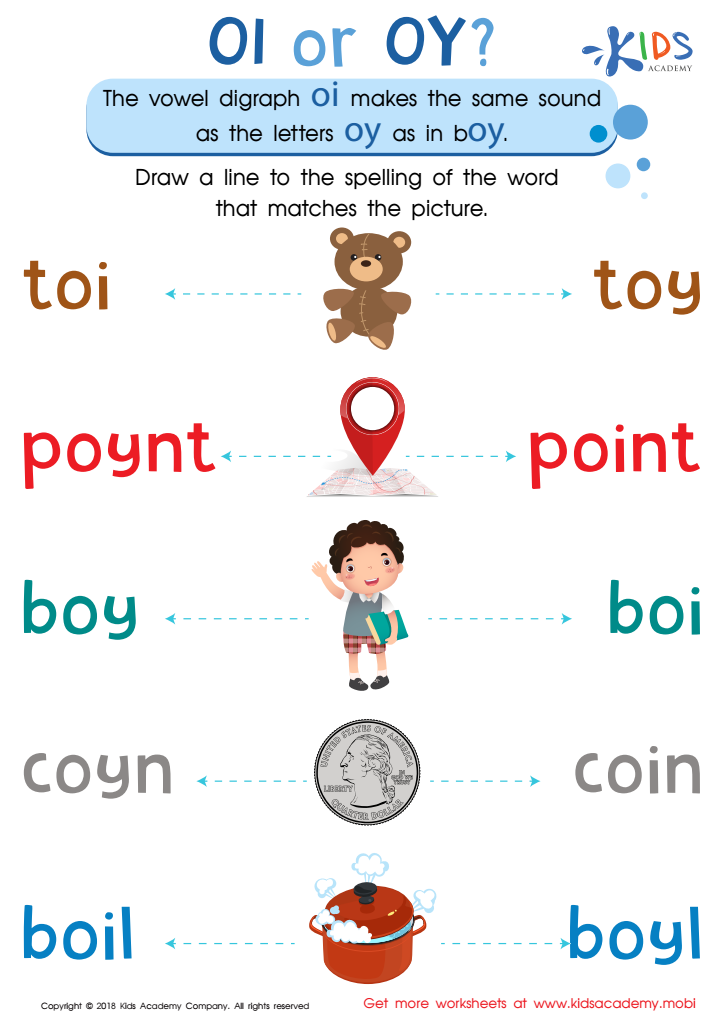
Ask your students if they know the rule for words with /oi/ or /oy/ sound. If not, it's easy to learn! Rule: If /oy/ at end of word, spell with 'oy'; if /oi/ in middle of word, spell with 'oi'. Use this worksheet to help them master these digraphs and improve their ability to decode.
Reading: OI and OY Worksheet
Worksheet
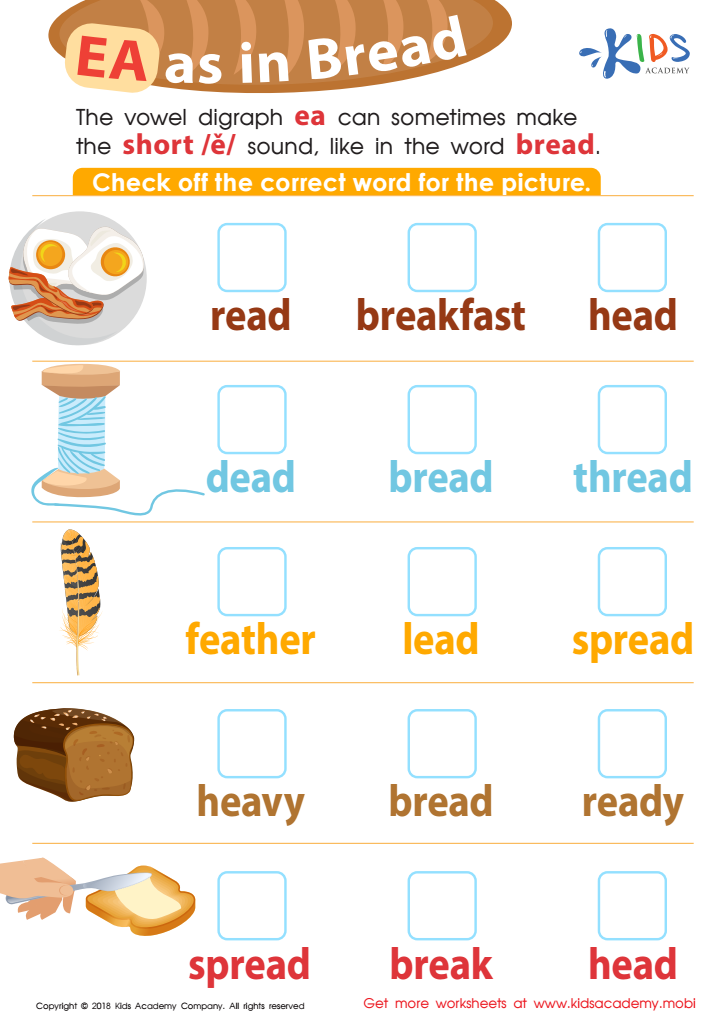
Reading: EA as in Bread Worksheet


Reading: EA as in Bread Worksheet

The vowel digraph ea can be read in two ways. Examples of the long sound are "read" and "lead"; examples of the short sound are "bread" and "head". Ask your kids to give you more examples and then have them check off the correct word for the pictures on this worksheet. This will help them understand the ea sound.
Reading: EA as in Bread Worksheet

Worksheet


Parents and teachers should prioritize vocabulary expansion and the understanding of vowel blends for 8-year-olds as this is a critical period for language development. At this age, children are increasingly exposed to reading and writing, necessitating a rich vocabulary to aid comprehension and expression. Vowel blends, such as "ai" in "rain" or "ou" in "loud," help children decode words more effectively, enhancing their reading fluency.

When children grasp vowel blends, they can tackle more complex texts, leading to a greater appreciation of literature and improved communication skills. This foundational knowledge also fosters confidence in their abilities, encouraging them to explore new words and ideas.

Moreover, vocabulary expansion is linked to academic success. A strong vocabulary aids in understanding various subjects, from science to social studies. Engaging with new words and sounds supports cognitive development and critical thinking skills, preparing them for future educational challenges.

Ultimately, enriching a child’s vocabulary and phonetic understanding sets the stage for lifelong learning, making this an essential focus for parents and educators alike. By nurturing these skills, adults contribute significantly to a child's overall literacy and enthusiasm for learning.