Discover engaging Fraction Comparison Worksheets designed specifically for 8-year-olds! Our carefully crafted resources help young learners understand how to compare fractions through fun activities and visual aids. These worksheets promote essential skills in math, enabling children to differentiate between larger and smaller fractions with confidence. With a variety of exercises that cater to different learning styles, students will enjoy the interactive opportunities to practice addition, subtraction, and simplification of fractions. Ideal for both classroom use and home learning, these worksheets support your child's mathematical development while making learning an enjoyable adventure. Start comparing fractions today!
Check out this FREE "Fraction comparison" Trial Lesson for age 8!

Short and Long Vowel Sort

Favorites
With answer key
Interactive
  • 8
  • Fraction comparison
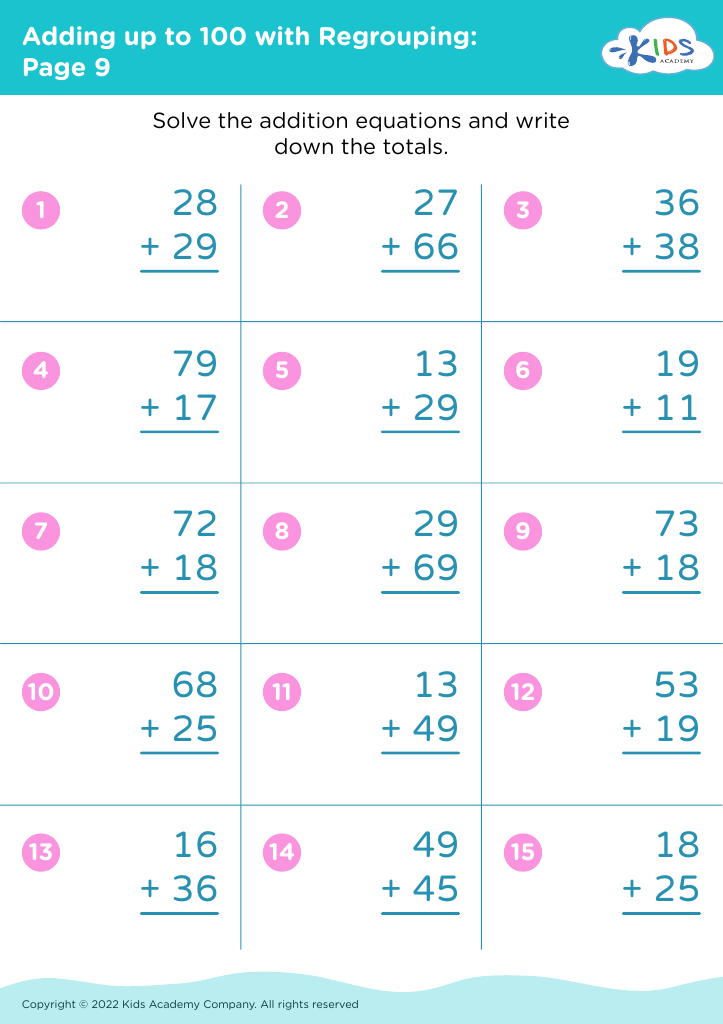
Adding up to 100 with Regrouping: Page 9
Worksheet
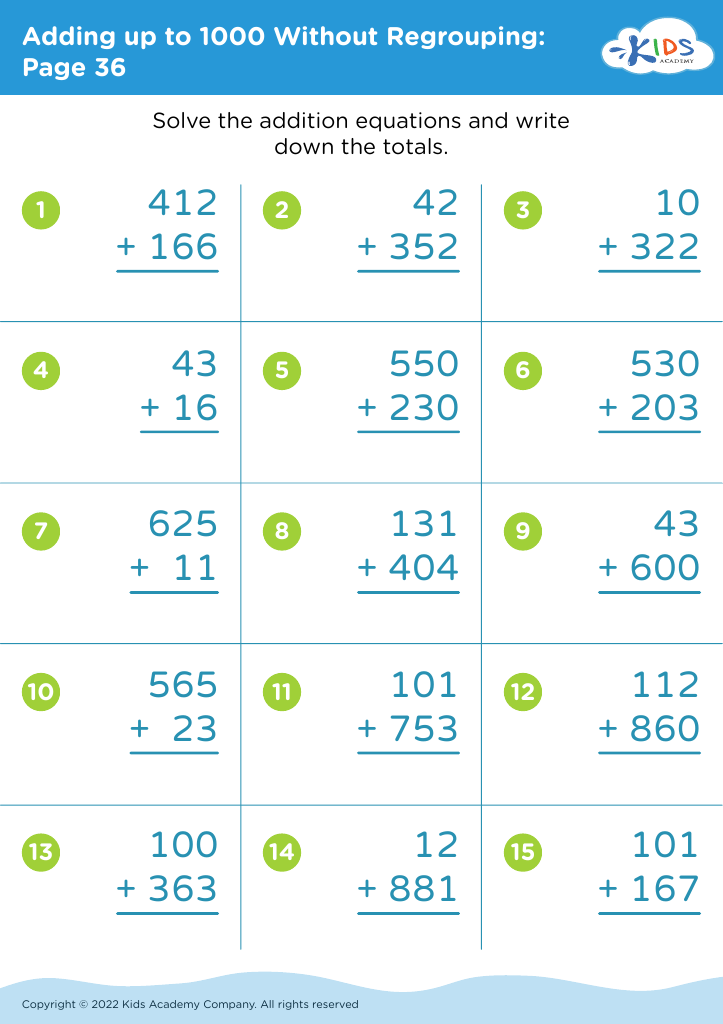
Adding up to 1000 Without Regrouping: Page 36
Worksheet
Matching Fractions Worksheet

Matching Fractions Worksheet

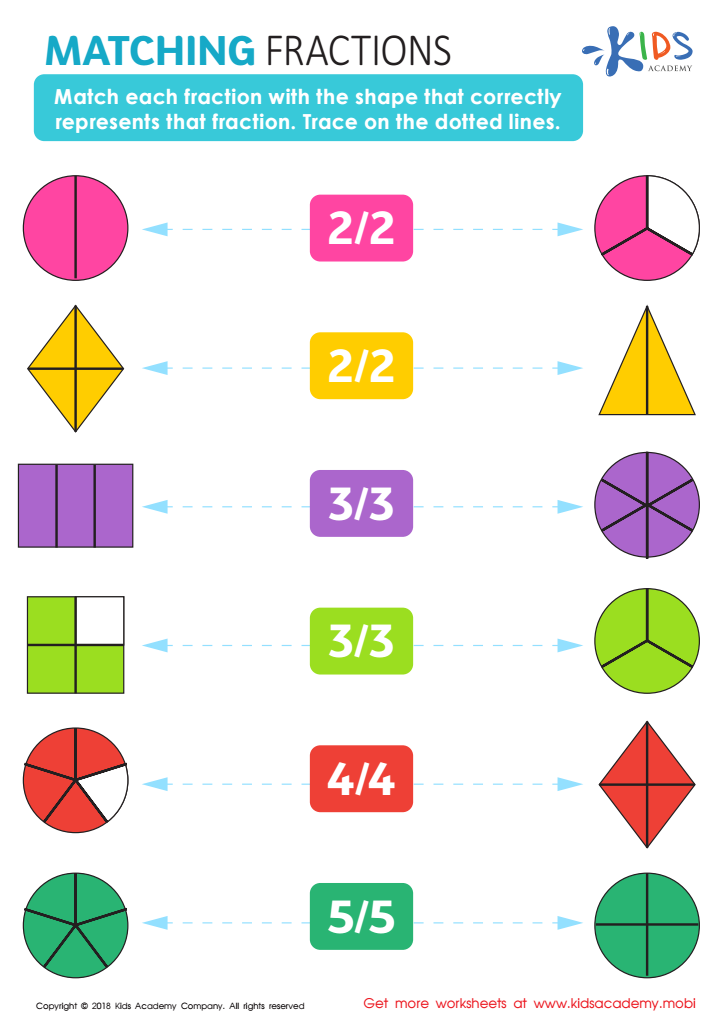
This worksheet uses colorful images to engage students. On the left are six shapes, mirrored on the right, with fractions in the middle. Students must match up the fraction with the right shape. It's a fun way to sharpen fractions skills!
Matching Fractions Worksheet
Worksheet
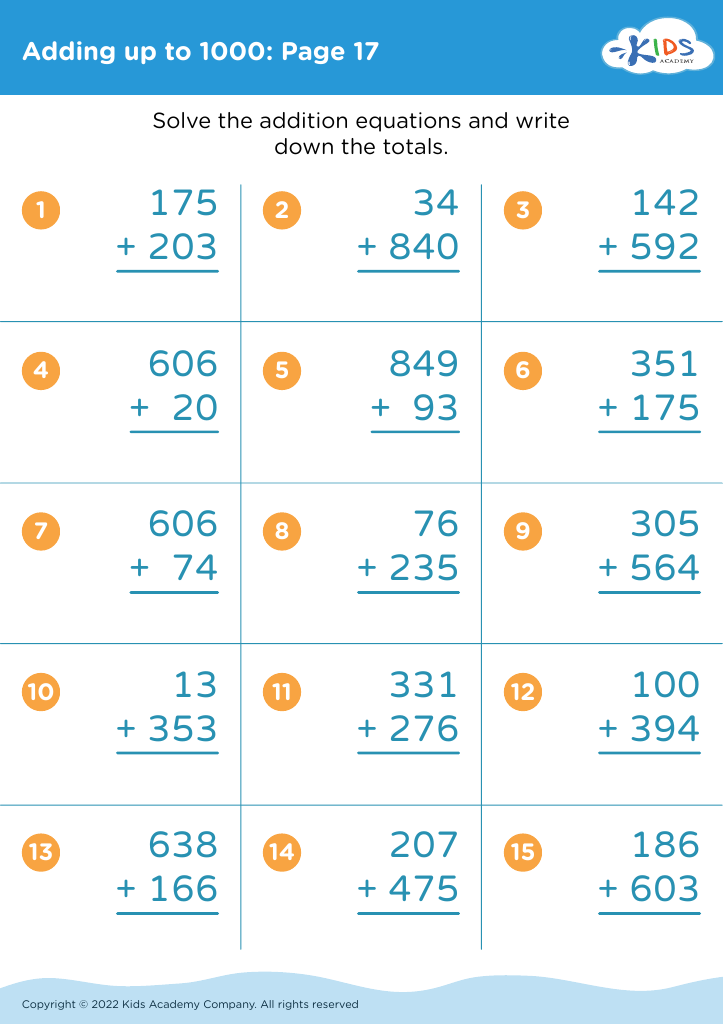
Adding up to 1000: Page 17

Adding up to 1000: Page 17

Adding up to 1000: Page 17
Worksheet
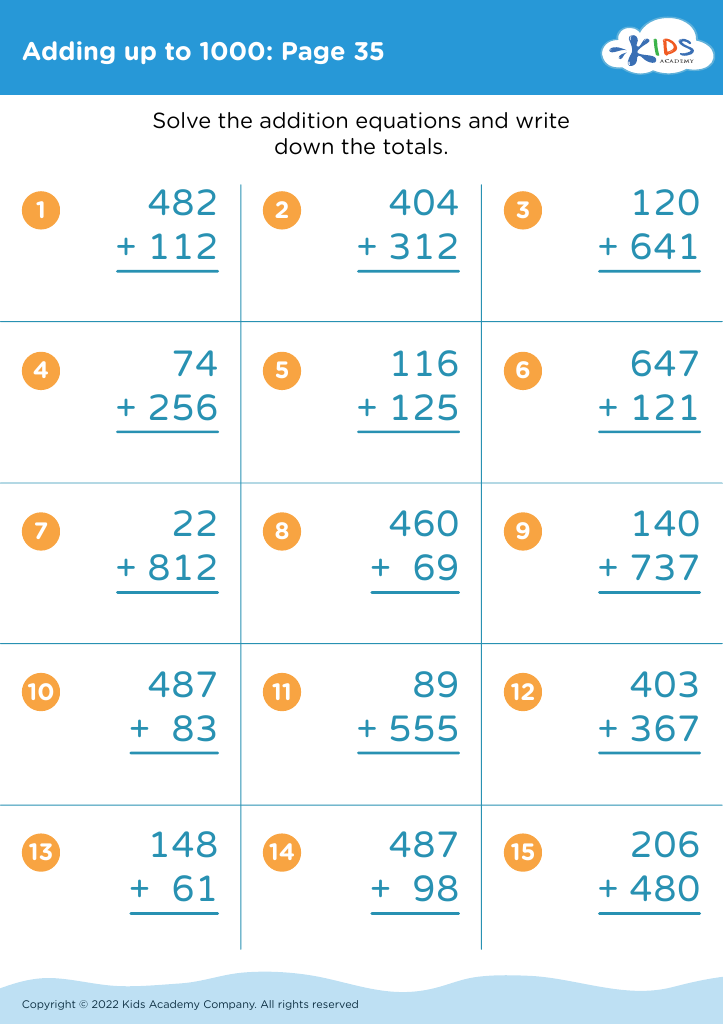
Adding up to 1000: Page 35

Adding up to 1000: Page 35

Adding up to 1000: Page 35
Worksheet
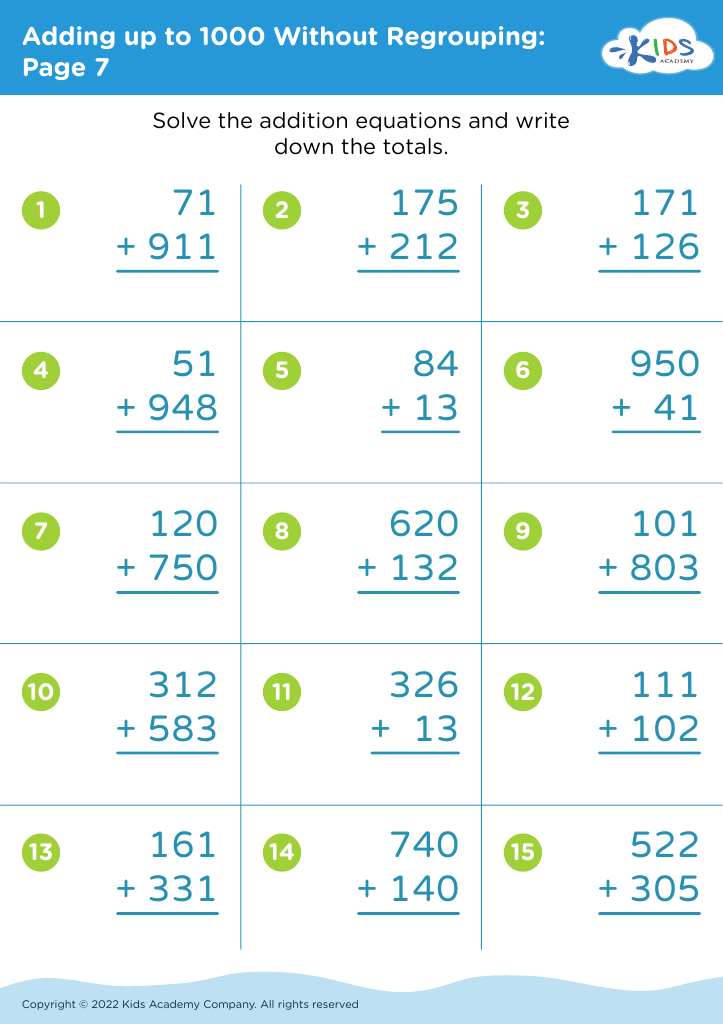
Adding up to 1000 Without Regrouping: Page 7
Worksheet
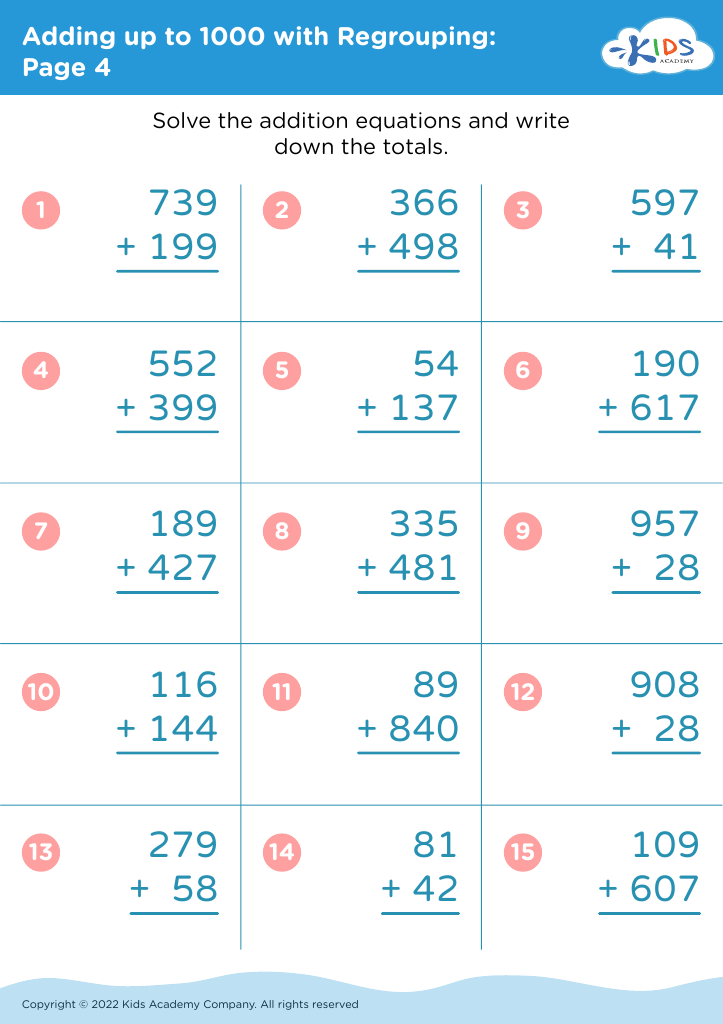
Adding up to 1000 with Regrouping: Page 4
Worksheet
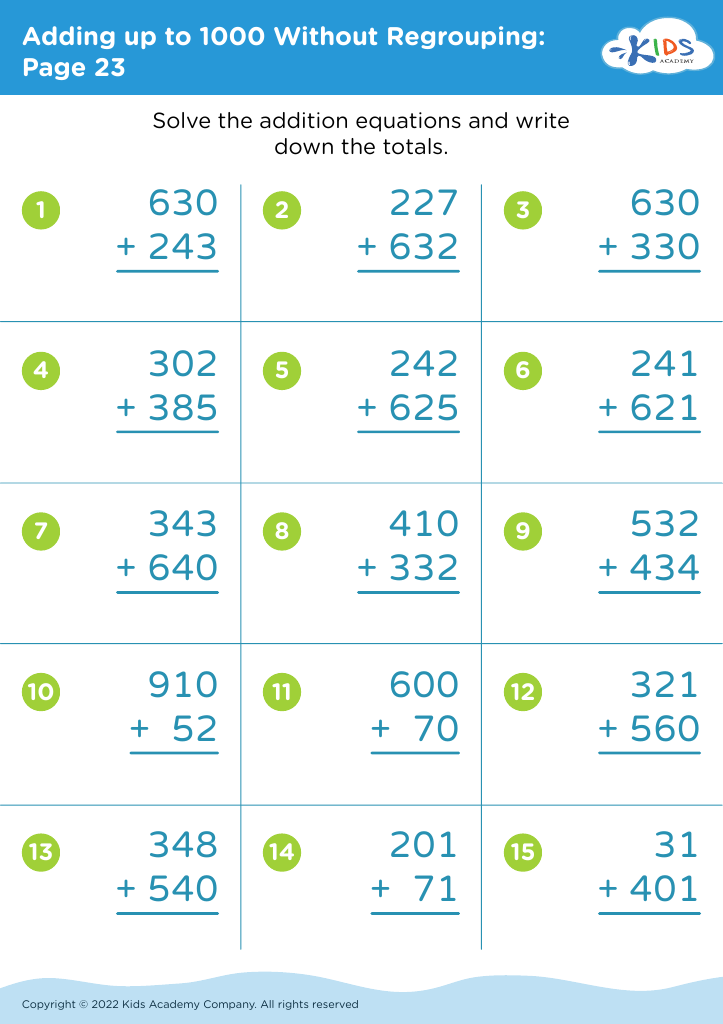
Adding up to 1000 Without Regrouping: Page 23
Worksheet
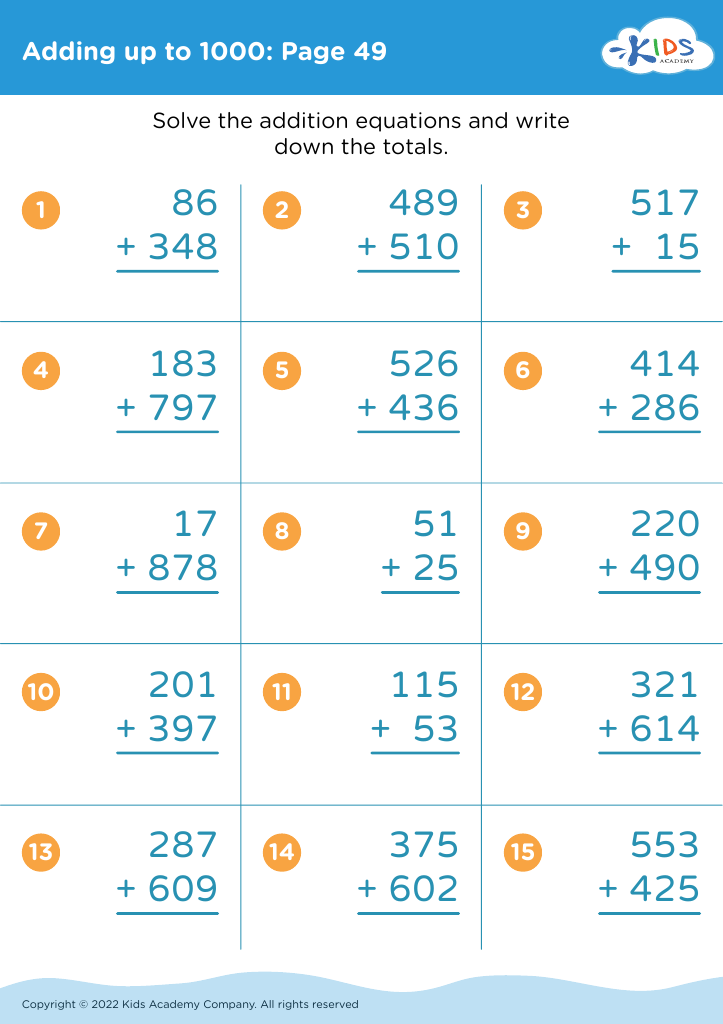
Adding up to 1000: Page 49

Adding up to 1000: Page 49

Adding up to 1000: Page 49
Worksheet
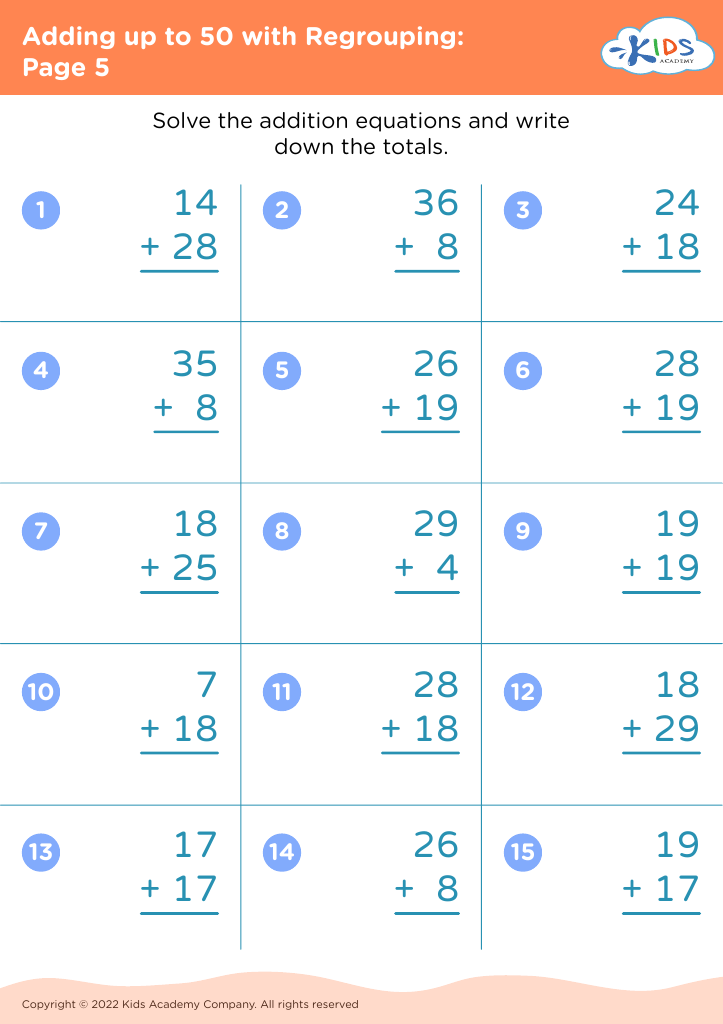
Adding up to 50 with Regrouping: Page 5
Worksheet
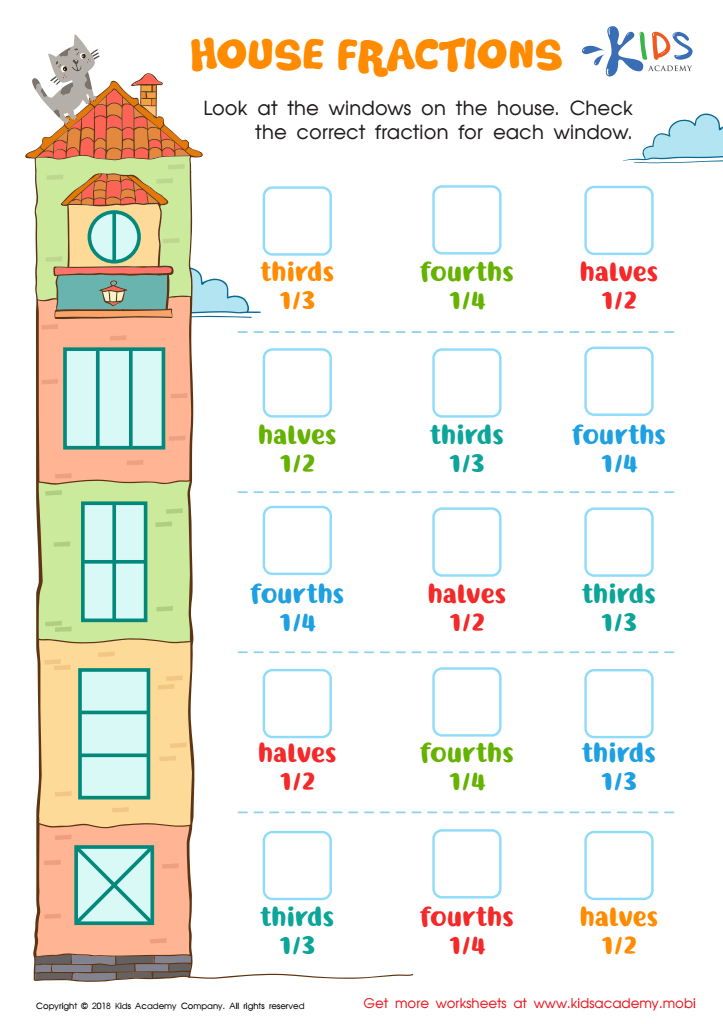
House Fractions Worksheet
House Fractions Worksheet
Test your child's knowledge of fractions with this worksheet! Have them examine the windows of a house and select the correct fraction from the options given. This is a great way to see how much they understand about wholes, fractions, halves, one thirds, and one fourths.
House Fractions Worksheet
Worksheet
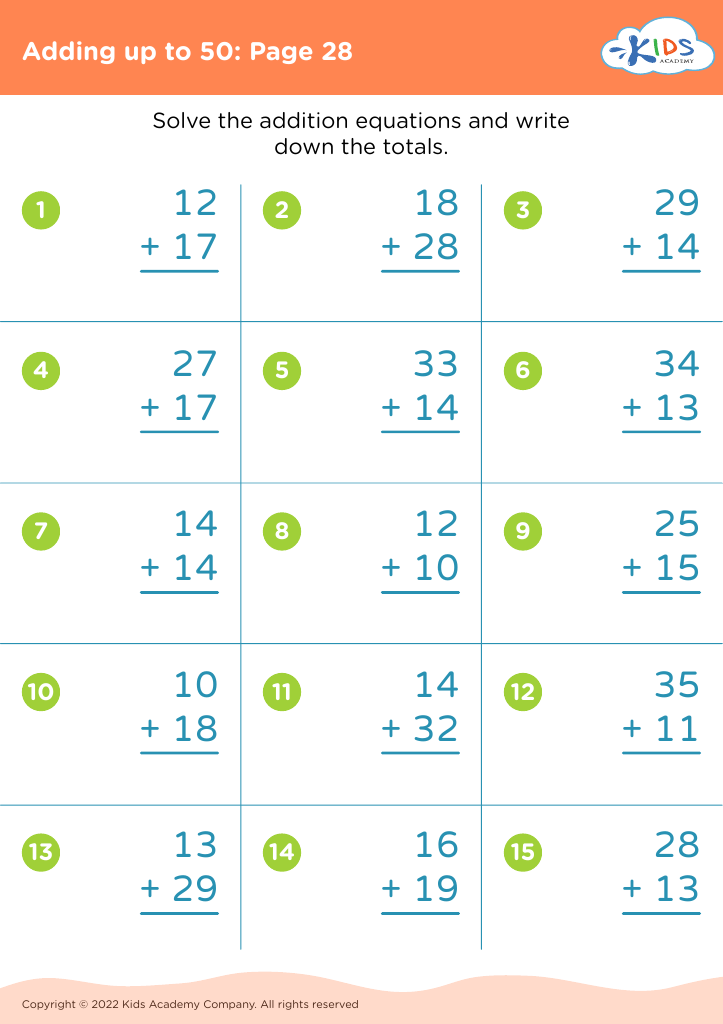
Adding up to 50: Page 28

Adding up to 50: Page 28

Adding up to 50: Page 28
Worksheet
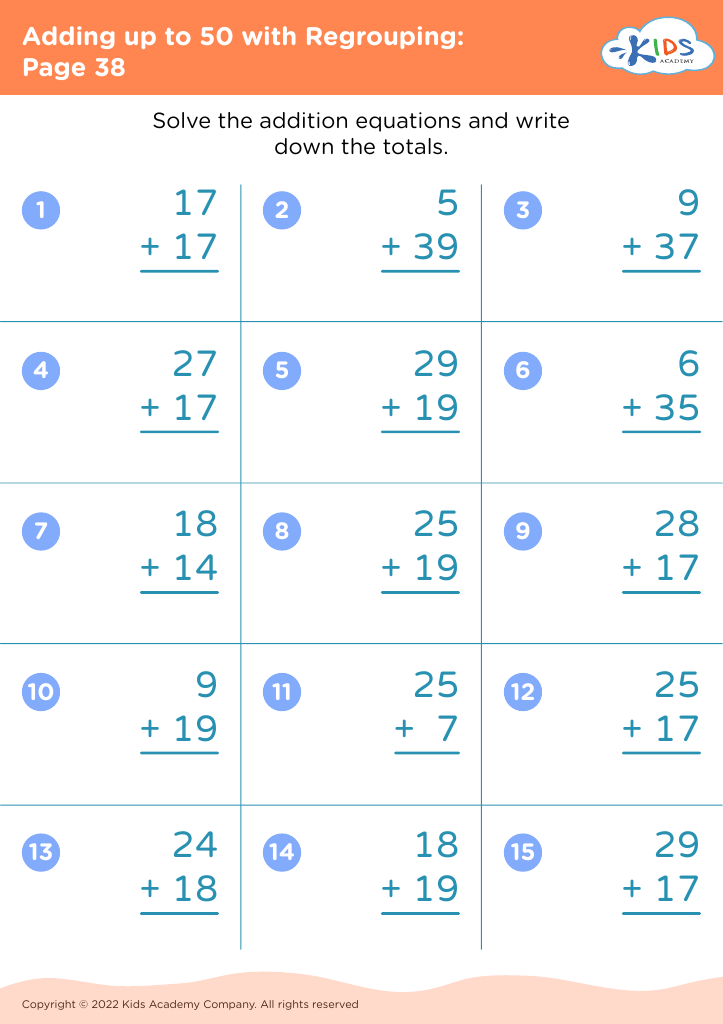
Adding up to 50 with Regrouping: Page 38
Worksheet
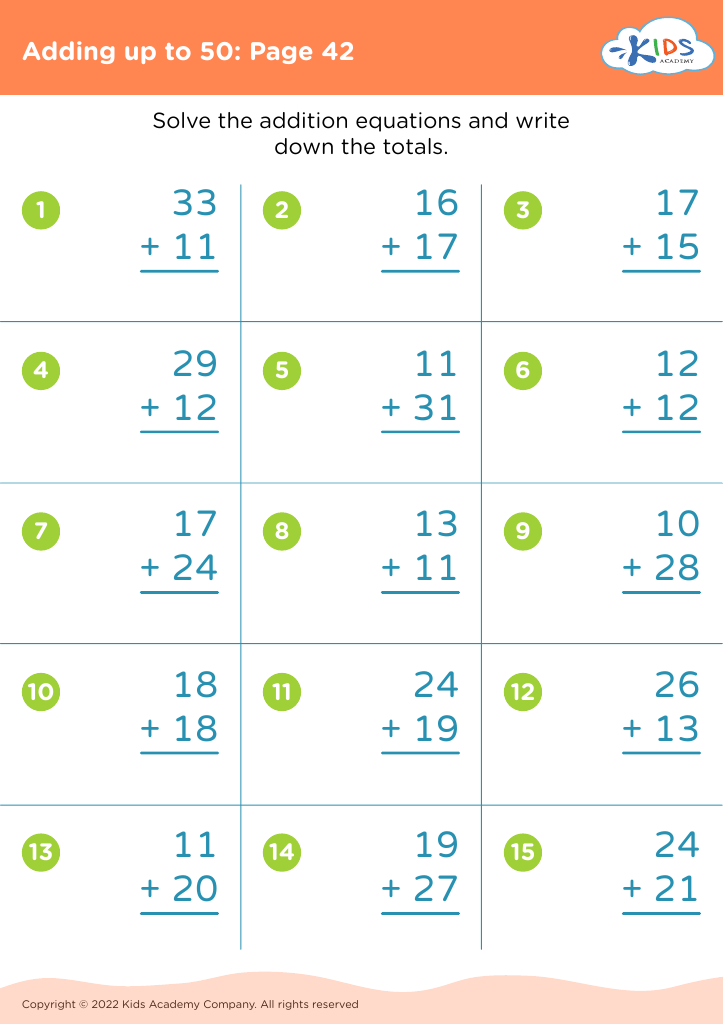
Adding up to 50: Page 42

Adding up to 50: Page 42

Adding up to 50: Page 42
Worksheet
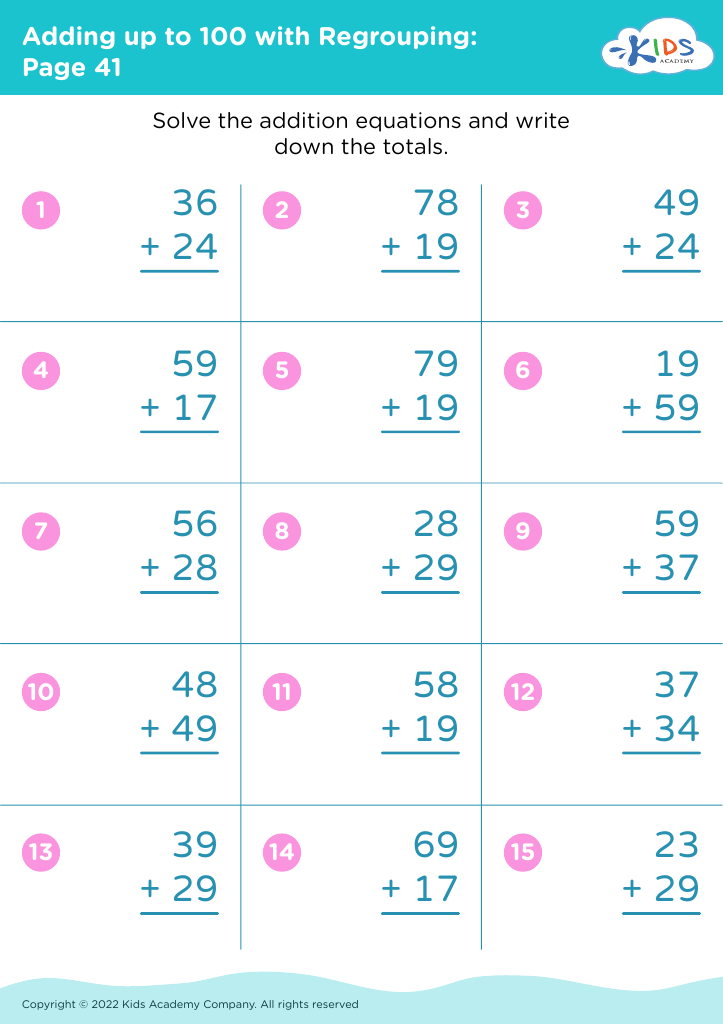
Adding up to 100 with Regrouping: Page 41
Worksheet
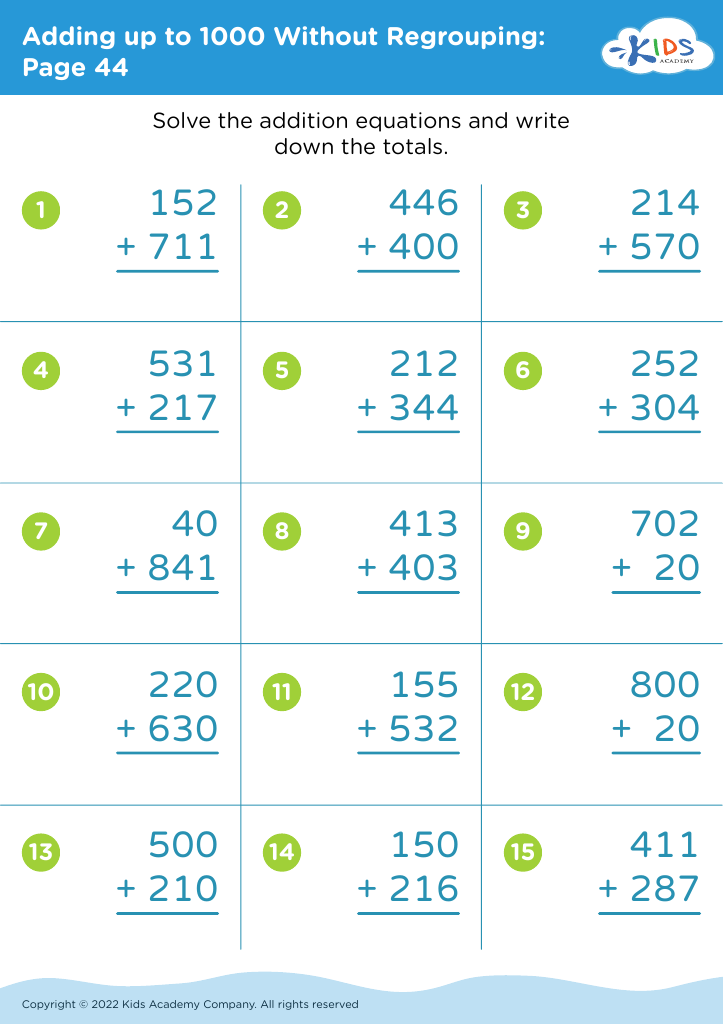
Adding up to 1000 Without Regrouping: Page 44
Worksheet
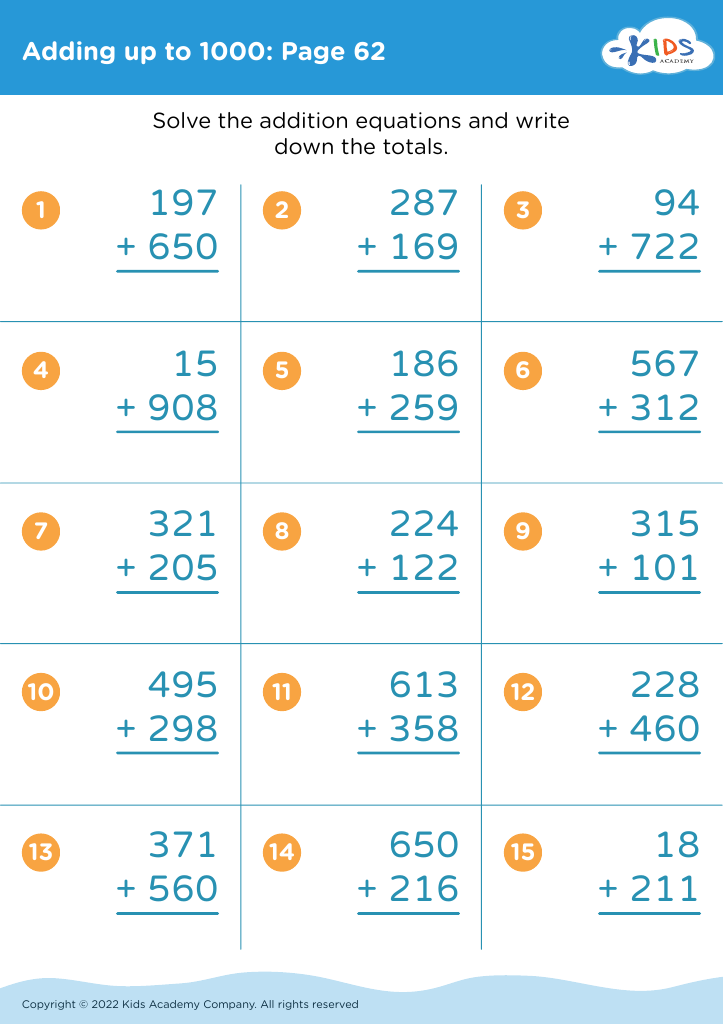
Adding up to 1000: Page 62

Adding up to 1000: Page 62

Adding up to 1000: Page 62
Worksheet
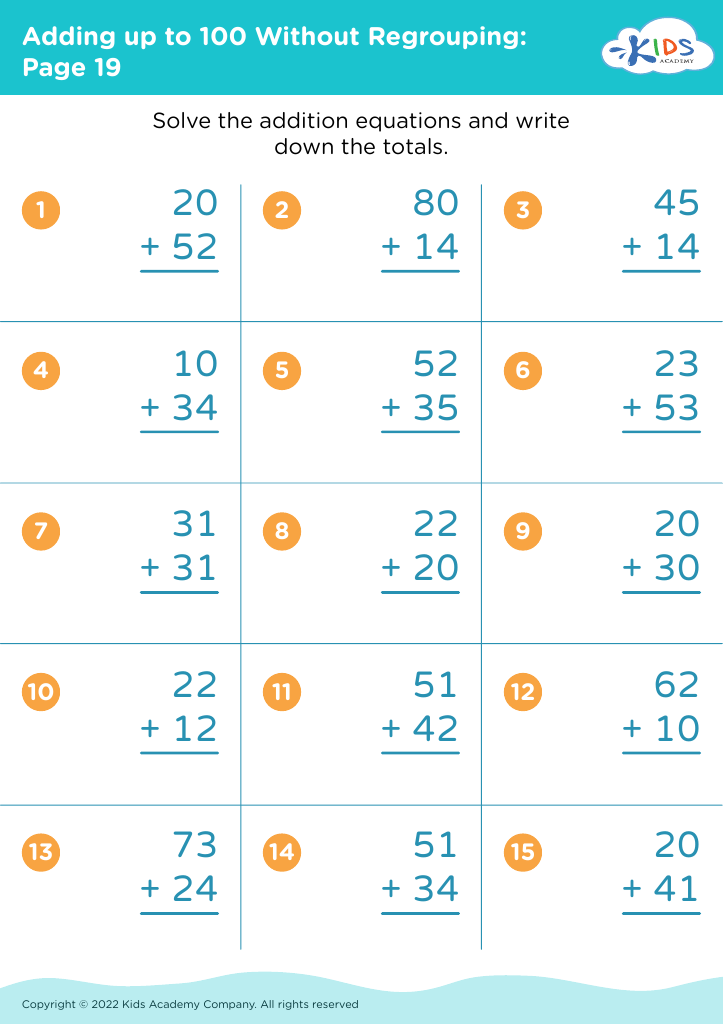
Adding up to 100 Without Regrouping: Page 19
Worksheet
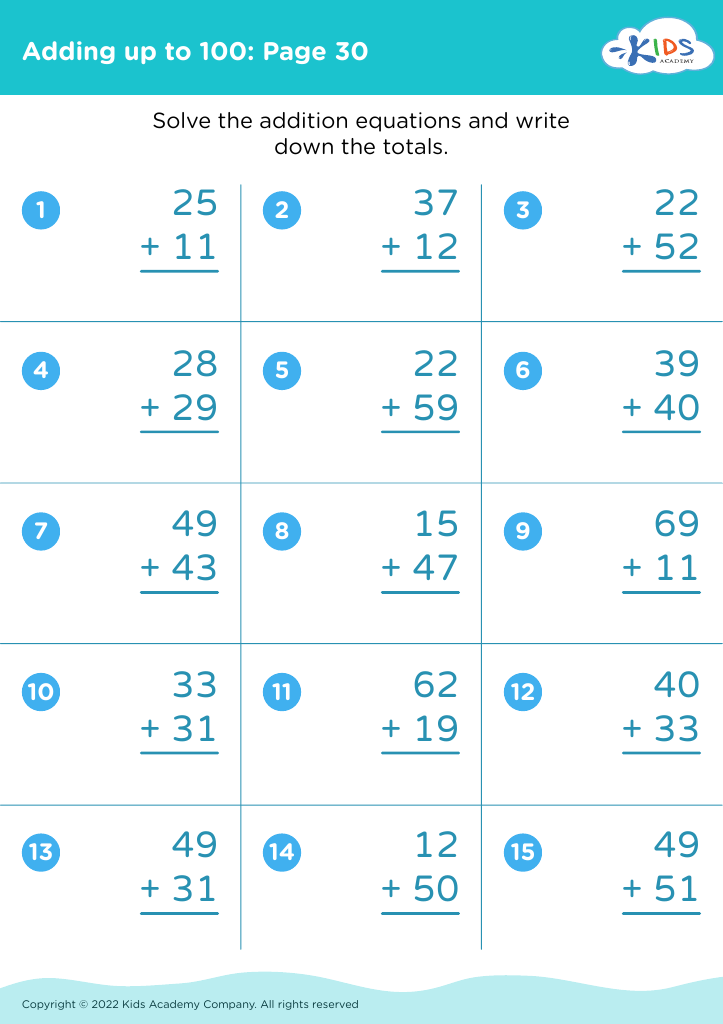
Adding up to 100: Page 30

Adding up to 100: Page 30

Adding up to 100: Page 30
Worksheet
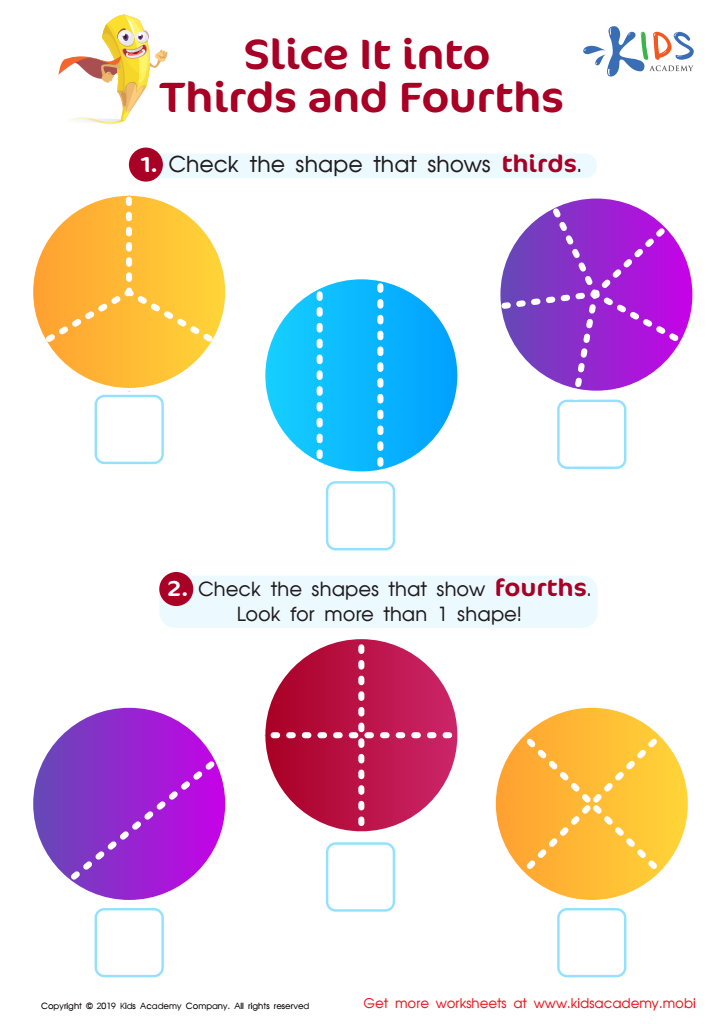
Slice in Thirds Fourths Worksheet
Slice in Thirds Fourths Worksheet
This worksheet helps kids learn fractions visually by dividing circles into thirds and fourths. They will learn that fractions must be equal parts, not just sets, by choosing the right colorful circles. It's an easy way to master fractions and have fun doing it!
Slice in Thirds Fourths Worksheet
Worksheet
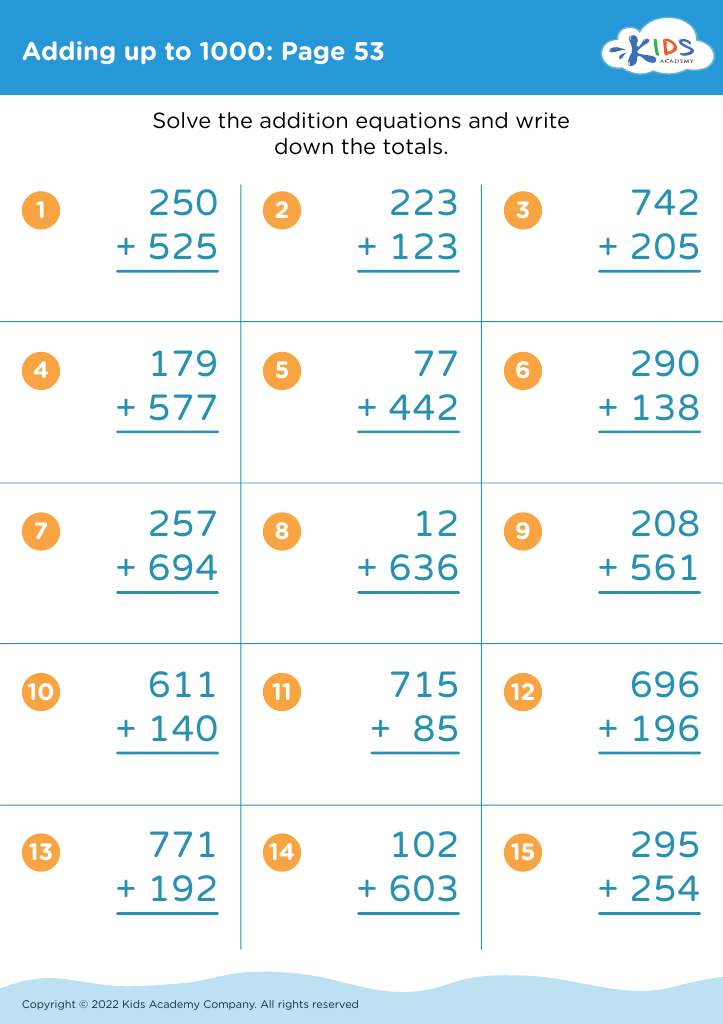
Adding up to 1000: Page 53

Adding up to 1000: Page 53

Adding up to 1000: Page 53
Worksheet
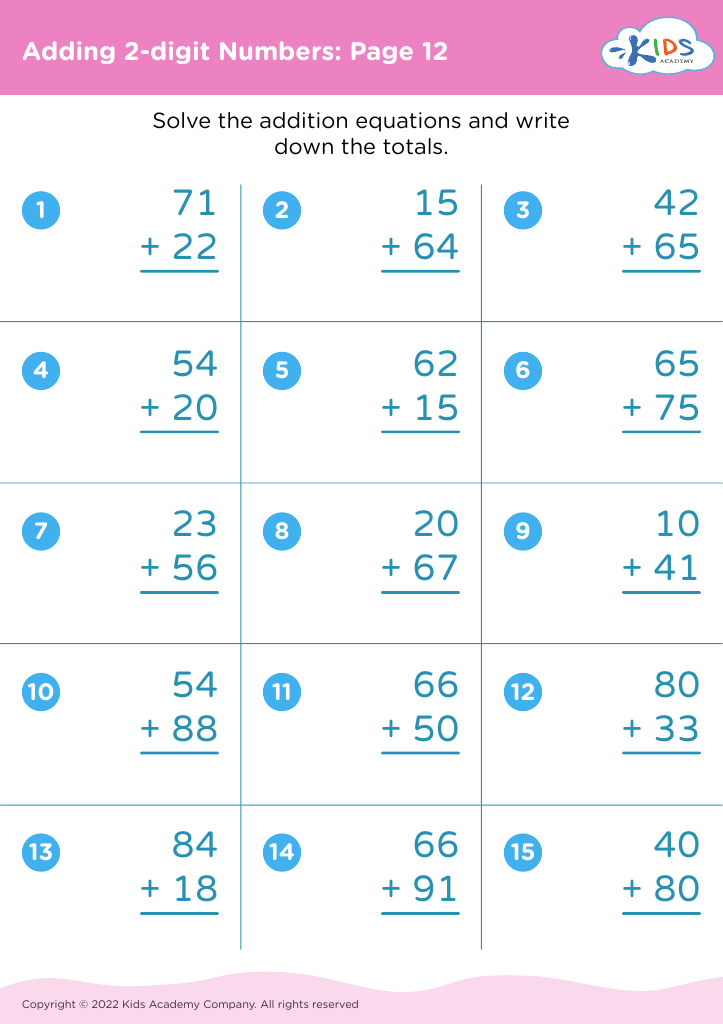
Adding 2-digit Numbers: Page 12

Adding 2-digit Numbers: Page 12

Adding 2-digit Numbers: Page 12
Worksheet
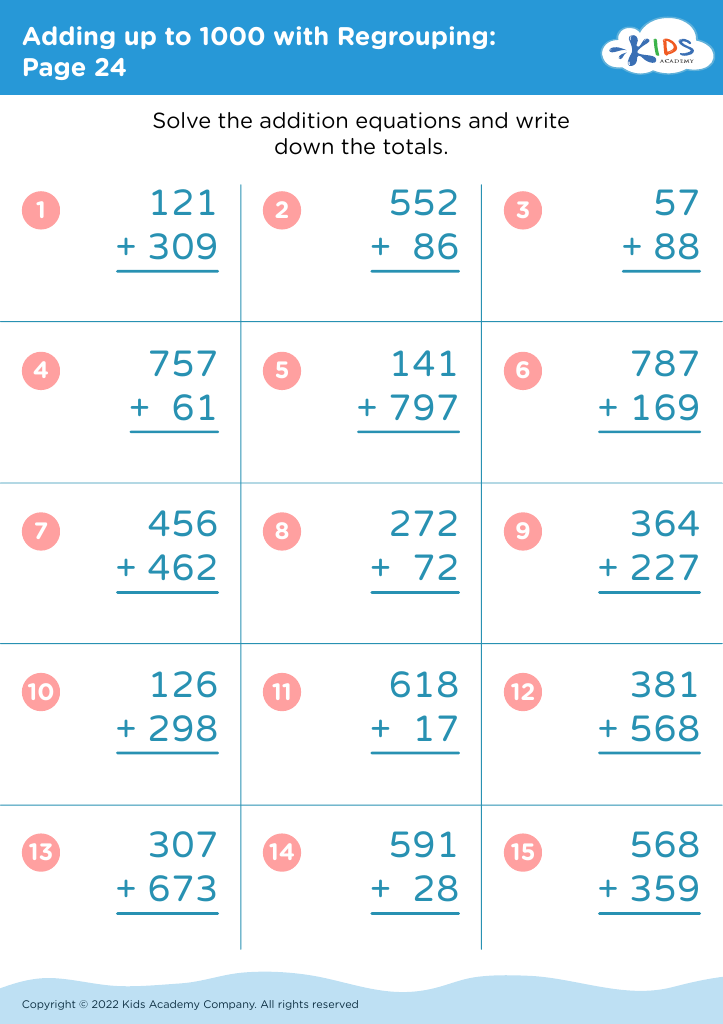
Adding up to 1000 with Regrouping: Page 24
Worksheet
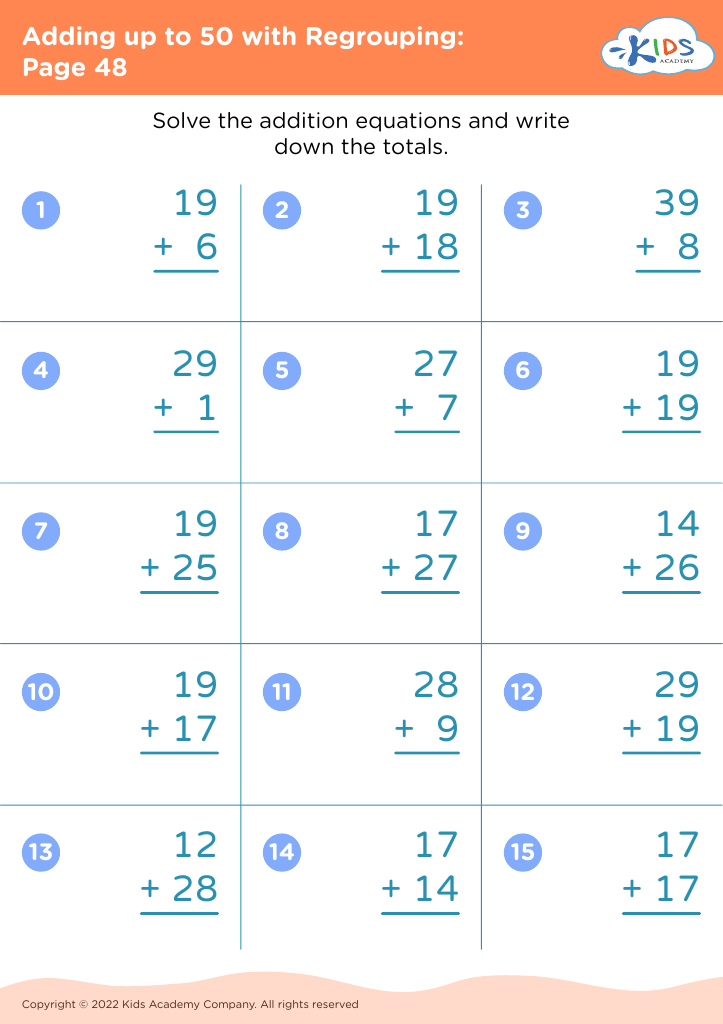
Adding up to 50 with Regrouping: Page 48
Worksheet


Understanding fraction comparison is essential for 8-year-olds as it lays the foundation for more advanced mathematical concepts. Parents and teachers should prioritize this skill because it fosters critical thinking and problem-solving abilities. By learning to compare fractions, children develop a stronger grasp of numerical relationships and proportions, skills that are vital in both academic settings and everyday life.

Fraction comparison is not just about recognizing larger or smaller numbers; it involves reasoning and understanding equivalence, which enhances overall mathematical fluency. Children who master this concept are better equipped to tackle real-life situations, such as cooking or budgeting, where they need to compare quantities. Additionally, developing a solid understanding of fractions prepares students for future topics in mathematics, including fractions, decimals, and ratios in higher grades.

Support from parents and teachers during this learning phase can enhance children's confidence and ability in mathematics. Engaging activities, discussions, and practical applications make learning fractions enjoyable and relevant. By showing interest and providing encouragement, parents and teachers can help children build a strong mathematical foundation, shaping their attitudes towards math for years to come. In summary, fraction comparison is a crucial developmental milestone that warrants attention from both parents and educators.