Identify colors Worksheets for 8-Year-Olds
3 filtered results
-
From - To
Welcome to our "Identify Colors Worksheets for 8-Year-Olds"! Designed to engage young learners, these worksheets help children sharpen their color recognition skills through fun and interactive activities. Each worksheet offers a variety of exercises, including matching colors, identifying objects based on color, and coloring activities that enhance creativity. Perfect for homeschooling or classroom settings, our resources cater to diverse learning styles while promoting cognitive development. With a focus on enjoyment and effectiveness, these worksheets make color learning an exciting adventure for every 8-year-old. Download now and watch your child gain confidence and proficiency in identifying colors!
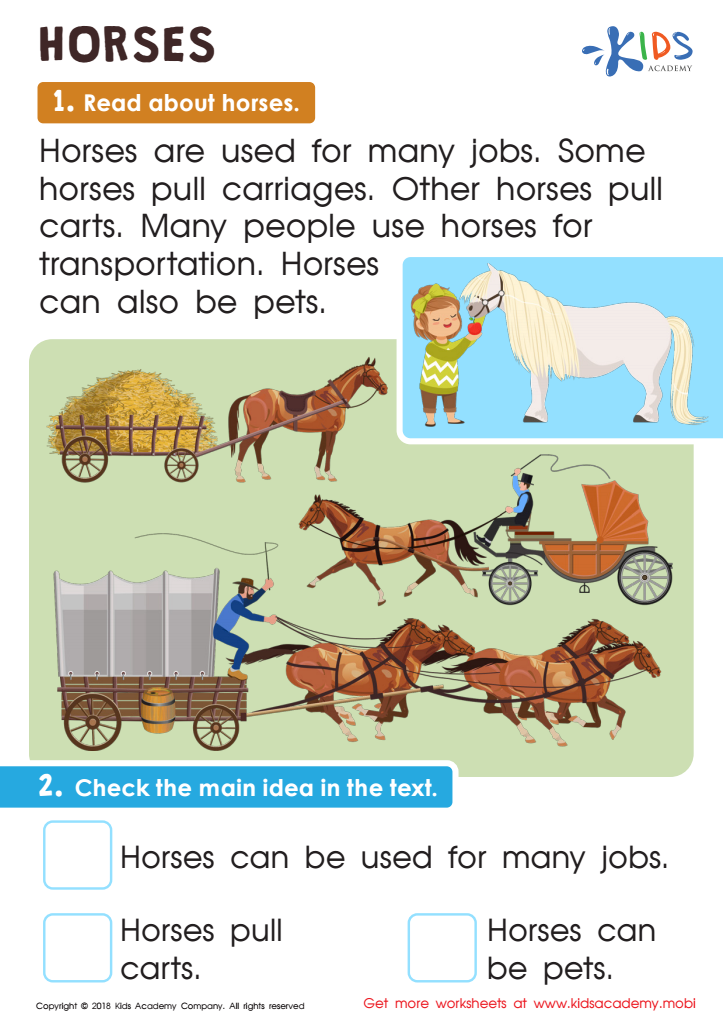
Horses Worksheet
 Assign to My Students







Understanding colors is essential for 8-year-olds as it forms a foundational aspect of their learning and development. At this age, children are honing their critical thinking and observational skills, and recognizing colors plays a critical role in that process. Colors help kids classify objects, understand patterns, and enhance their descriptive language, which improves communication abilities.
Additionally, color identification is linked to cognitive skills, as it enables children to categorize their world, aiding in memory retention and recall. It fosters creativity and self-expression through art, allowing children to explore emotions and ideas visually. Engaging with colors can spark curiosity and innovation, developing problem-solving skills as they mix colors or analyze visual elements in their surroundings.
For teachers and parents, focusing on colors invites opportunities for practical learning experiences, such as art projects, nature walks, or interactive games that strengthen bonds and encourage teamwork. Moreover, color recognition is vital in later education for subjects like science and geography, where visuals play a key role. Overall, nurturing an understanding of colors equips children with essential tools to interpret and navigate their world, making it a valuable aspect of their educational journey.








