Mental math practice Worksheets for 8-Year-Olds
7 filtered results
-
From - To
Boost your child's arithmetic skills with our Mental Math Practice Worksheets for 8-Year-Olds! Designed to develop quick thinking and problem-solving abilities, these engaging and fun worksheets cover essential math concepts such as addition, subtraction, multiplication, and more. Perfect for young learners, our printable activities help reinforce classroom learning while building confidence in mental calculations. Whether at home or in school, these exercises offer a fantastic way for kids to practice and improve their math abilities. Download and print a variety of challenging and entertaining worksheets to keep your 8-year-old on track for math success!
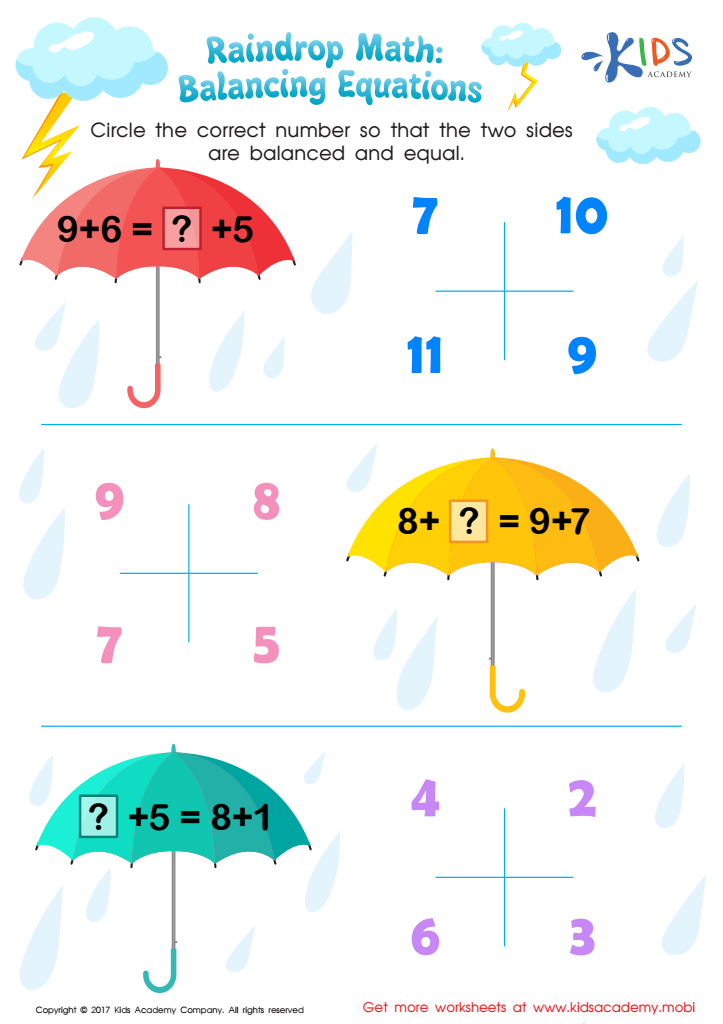
Raindrop Math Printable
 Assign to My Students
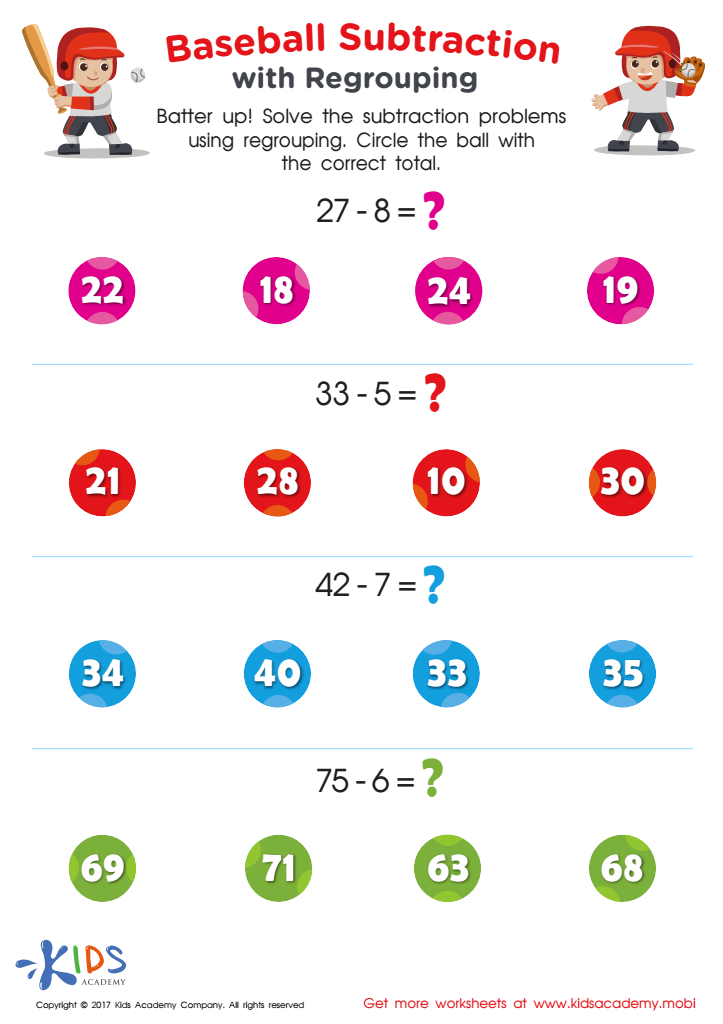
Subtraction With Regrouping for 2nd Grade Worksheet
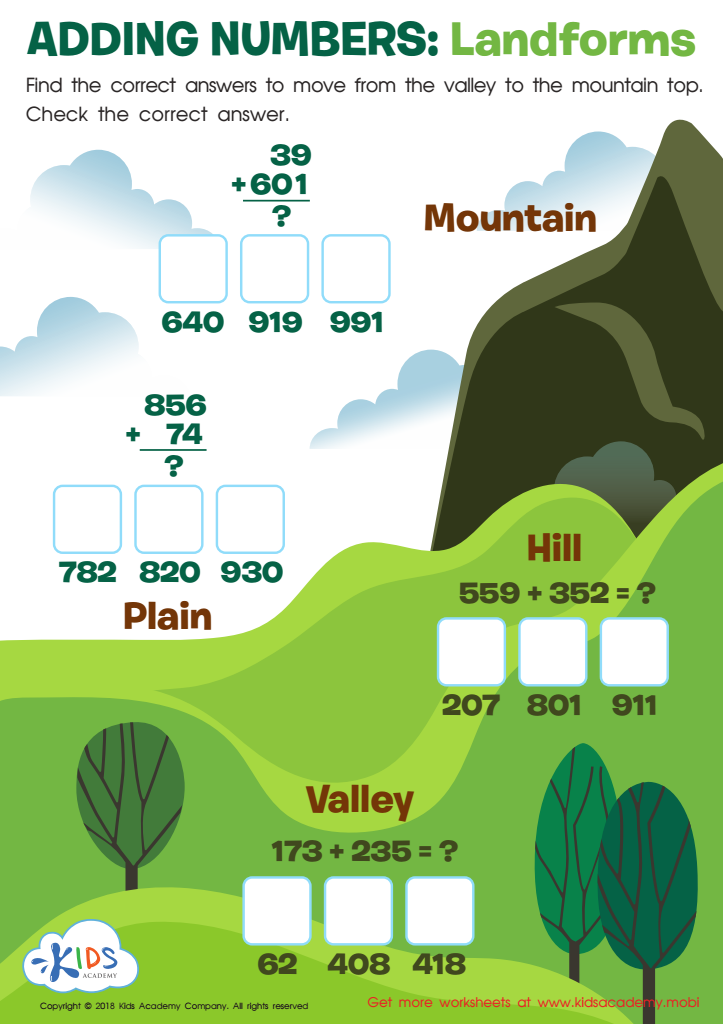
Adding Numbers: Landforms Worksheet
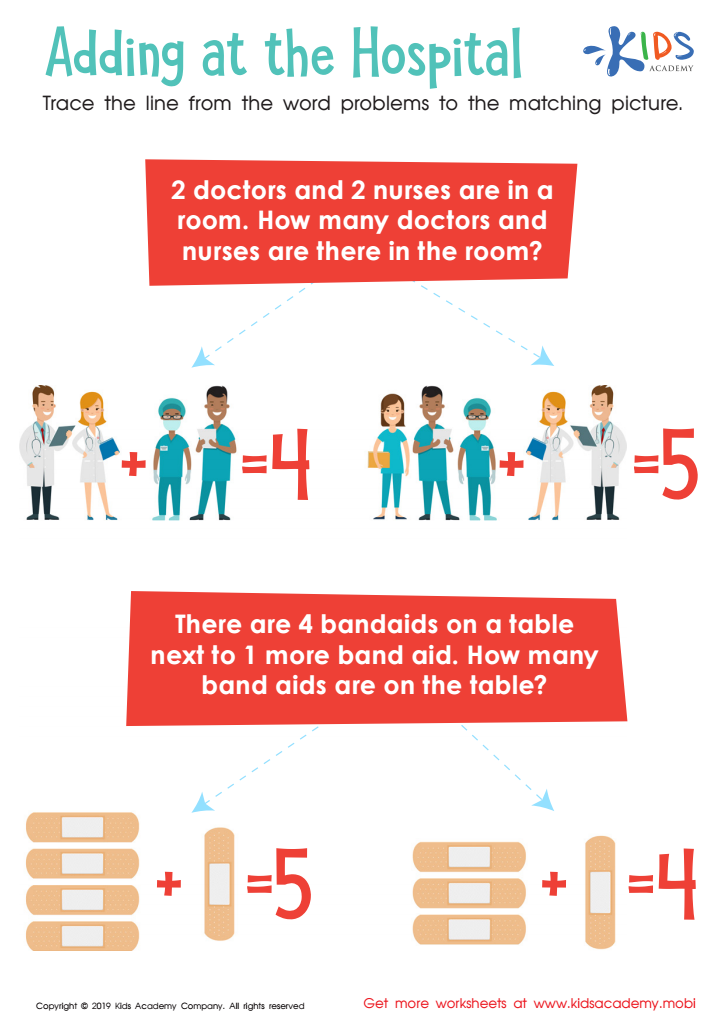
Adding at the Hospital Worksheet
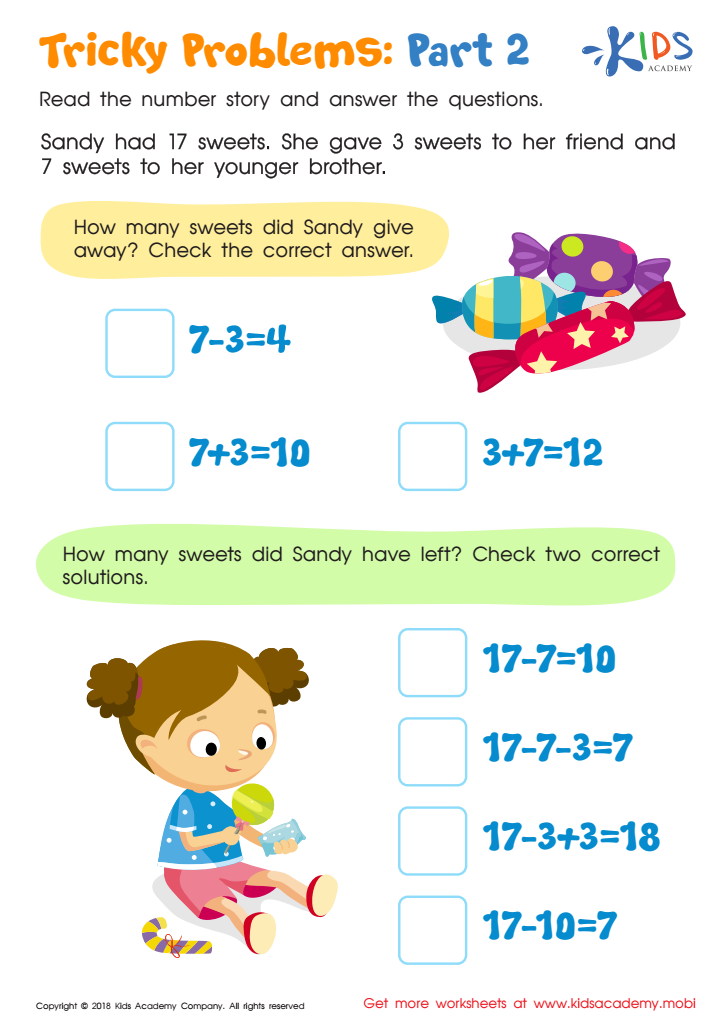
Tricky Problems Worksheet: Part 2
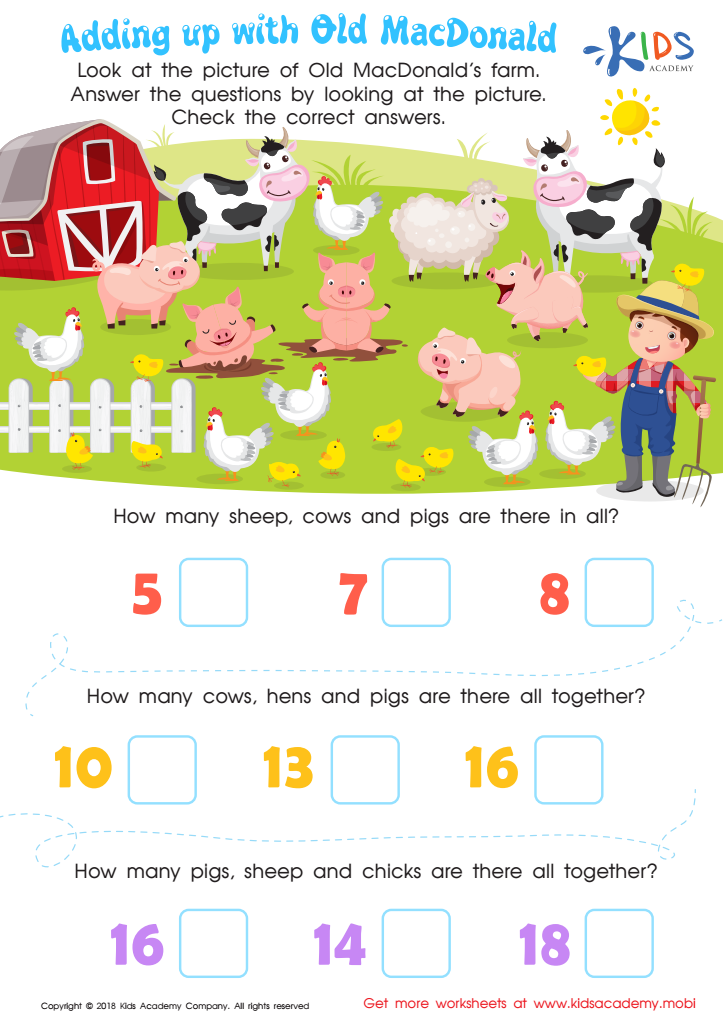
Adding Up with Old MacDonald Worksheet
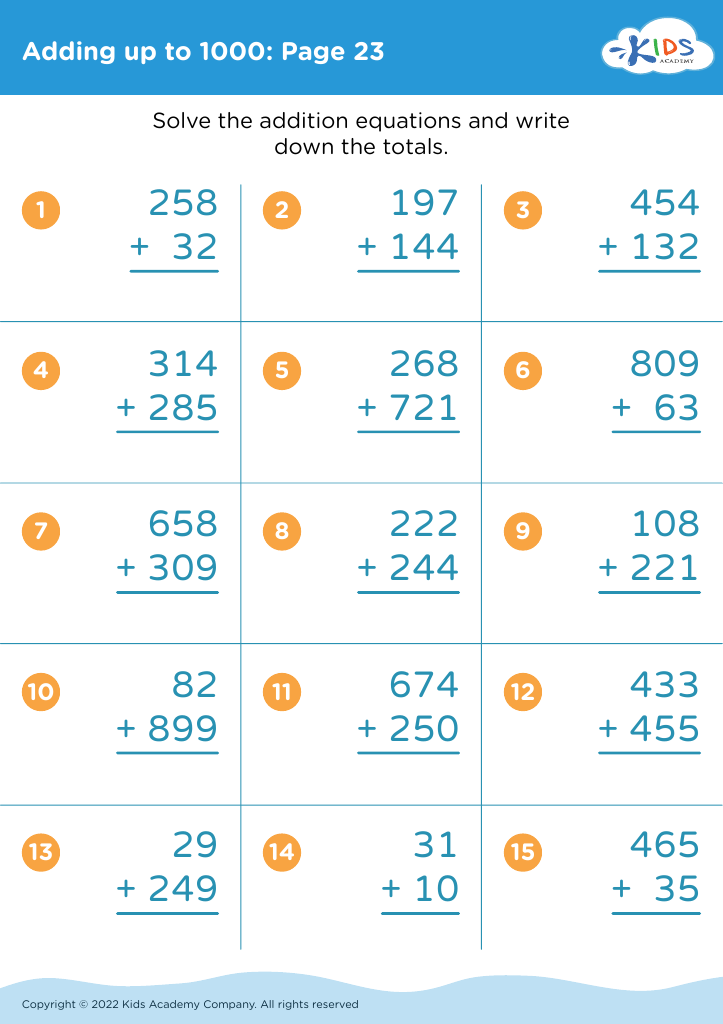






Mental math practice is crucial for 8-year-olds because it lays a strong foundation for their overall mathematical understanding and cognitive development. At this young age, children are at a prime stage for learning and absorbing new concepts. Practicing mental math helps them to reinforce these foundational numeracy skills such as addition, subtraction, multiplication, and division, which are essential for tackling more complex mathematical problems in the future.
Moreover, mental math encourages logical thinking, problem-solving, and improved memory. These cognitive skills extend beyond mathematics and contribute to a child’s overall academic performance and everyday life decision-making. For example, children learn to estimate time and money, enhancing their practicality and independence.
Consistency in practicing mental math also boosts a child’s confidence and reduces anxiety associated with mathematics. When faced with traditional pen-and-paper math problems, students who regularly engage in mental math are likelier to approach them fearlessly and with greater accuracy. This confidence can translate to a more positive attitude toward schoolwork in general.
For teachers, mental math practice is an opportunity to engage students in fun, creative activities that make learning enjoyable. For parents, it means bonding time through educational interactions, embedding a positive attitude towards lifelong learning. Overall, mental math practice is integral to nurturing well-rounded, confident, and mathematically capable individuals.








