Pronunciation practice Worksheets for 8-Year-Olds
3 filtered results
-
From - To
Enhance your 8-year-old's pronunciation skills with our engaging worksheets at Kids Academy! Designed specifically for young learners, our printable materials make mastering pronunciation fun and effective. Each worksheet offers interactive activities that focus on sound recognition, word formation, and vocal practice. These exercises help children develop clear and confident speech while boosting their reading and communication abilities. Whether practicing alone or with a parent, your child will enjoy the colorful and creative tasks that make learning exciting. Invest in your child's language development today with our expertly crafted pronunciation practice worksheets!
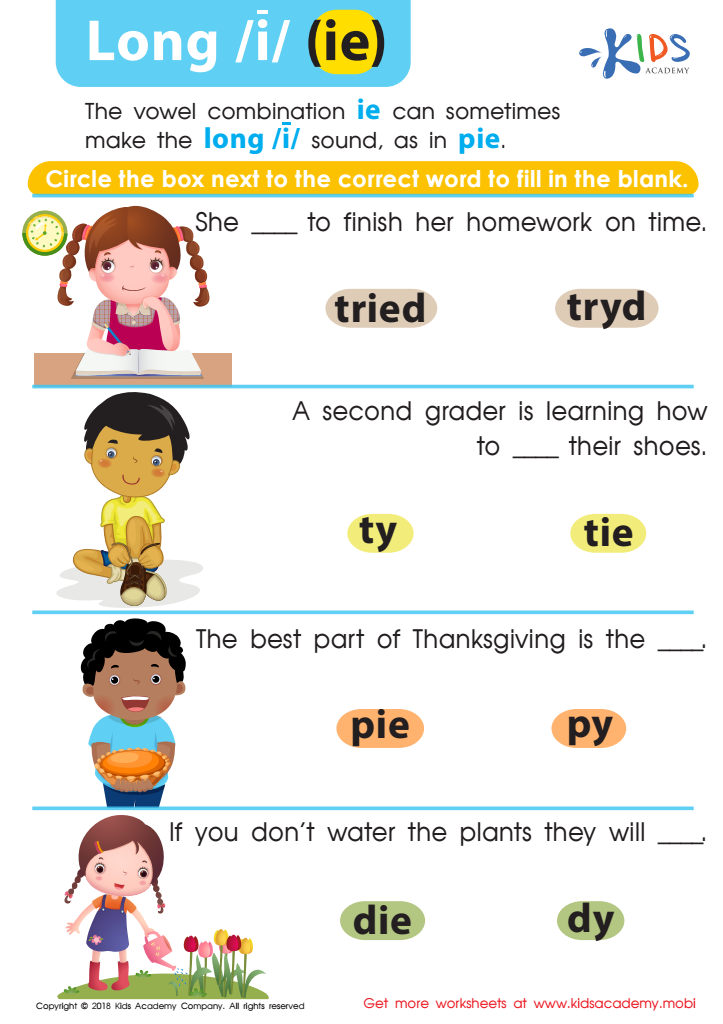
Reading: Long I and IE Worksheet
 Assign to My Students
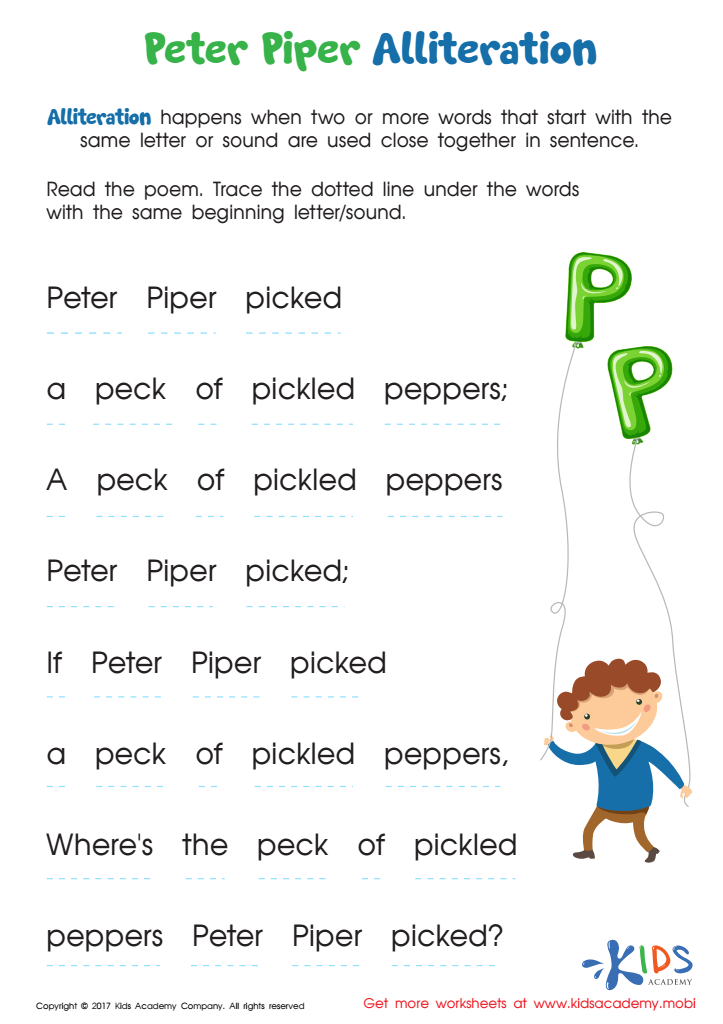
Peter Piper Alliteration Worksheet
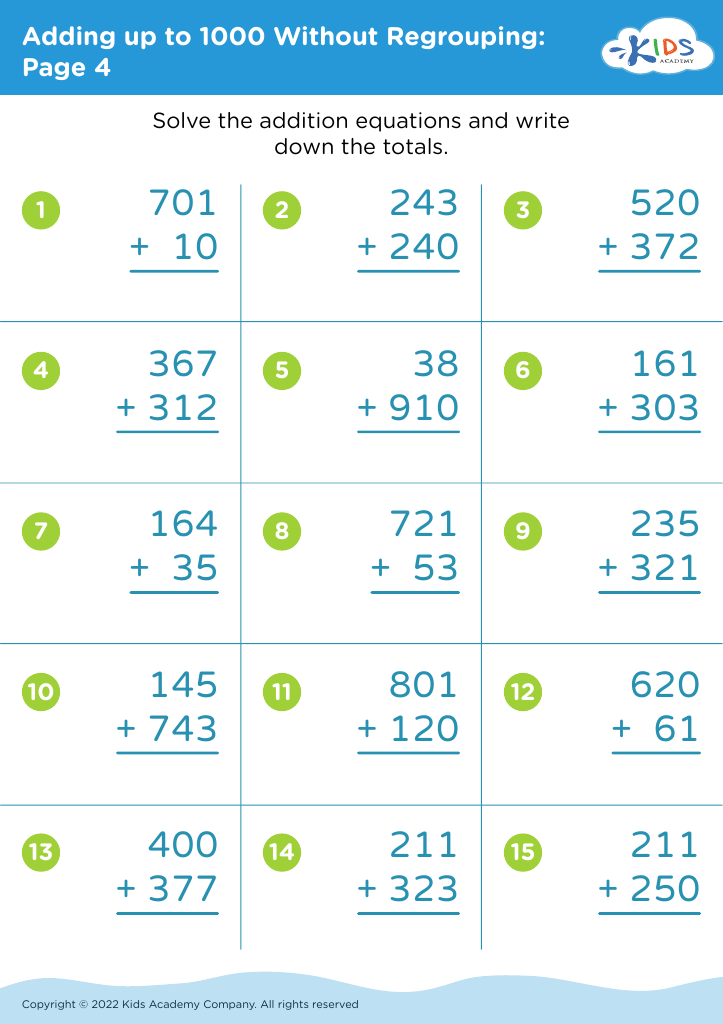








Pronunciation practice for 8-year-olds is crucial for several reasons. At this age, children are in a critical period of language development where their brains are particularly receptive to learning the nuances of sound. Good pronunciation aids in clearer communication, making it easier for them to express their thoughts and feelings. This forms a solid foundation for literacy skills, such as reading and writing, as correct pronunciation helps in the correct sounding out of words.
Effective pronunciation practice also promotes confidence. When children can accurately pronounce words, they are more likely to participate in class discussions, read aloud, and engage in social interactions, reducing feelings of self-consciousness and improving social skills.
Moreover, it helps in phonemic awareness, allowing children to better understand the relationship between sounds and their spelling, which is a key aspect of learning to decode new words. Mispronounced words can lead to misunderstandings and potential learning delays as children struggle to match spoken words to written forms.
Finally, good pronunciation equips children for successful lifelong communication in an increasingly global world, where clear speech can present universal opportunities and interpretability across various settings. Parents and teachers focusing on this ensure children are well-prepared academically, socially, and personally, fostering holistic linguistic development.








