Understanding area Worksheets for 8-Year-Olds
3 filtered results
-
From - To
Welcome to our "Understanding Area Worksheets for 8-Year-Olds" page! Designed to make learning about area engaging and fun, our printable worksheets provide young learners with clear explanations, examples, and hands-on activities. Tailored for 3rd graders, these worksheets help children grasp the concept of area through a variety of exercises, including counting squares, calculating area of different shapes, and real-life applications. Perfectly aligned with educational standards, our resources enhance problem-solving skills while encouraging creativity. Explore our diverse selection to promote a solid understanding of area, ensuring your child gains confidence and proficiency in this essential math topic!
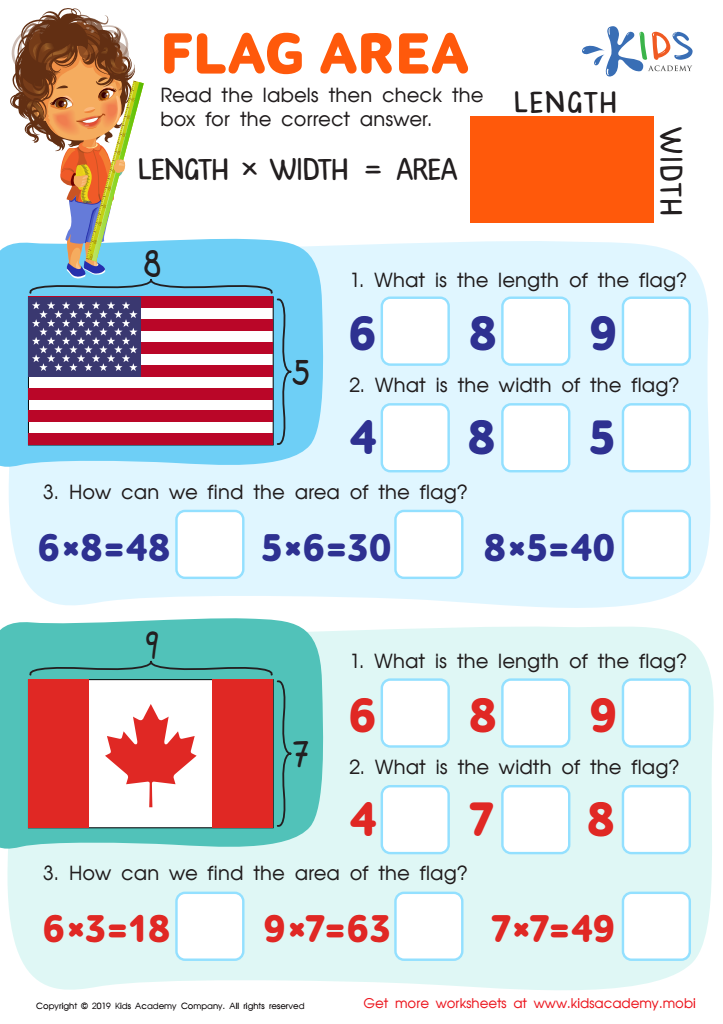
Flag Area Worksheet
 Assign to My Students
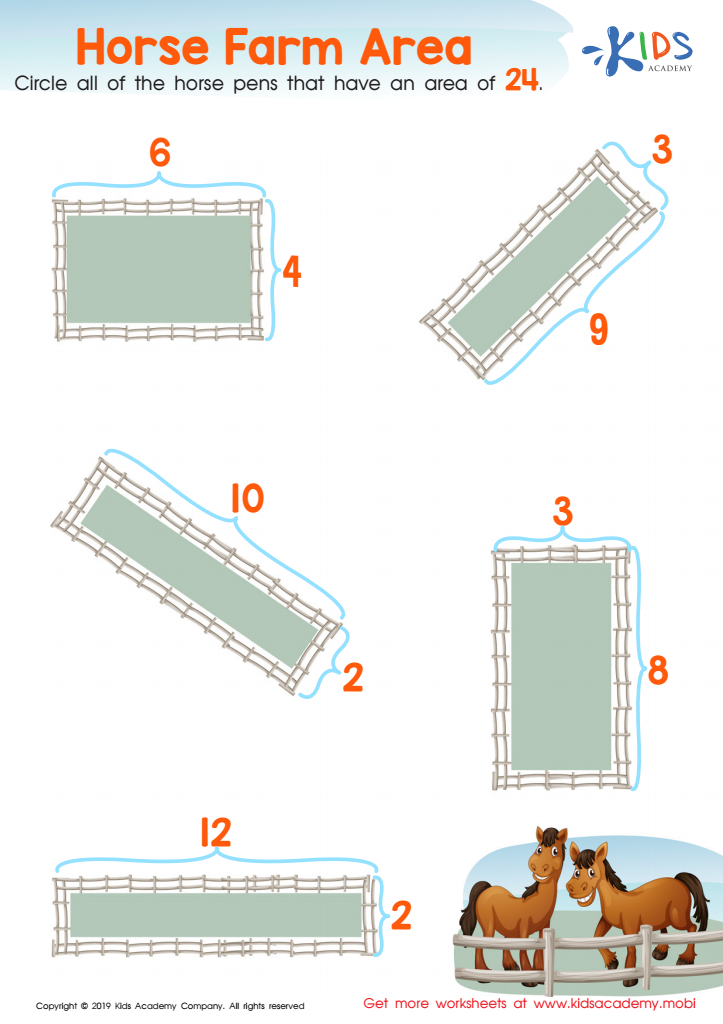
Horse Farm Area Worksheet
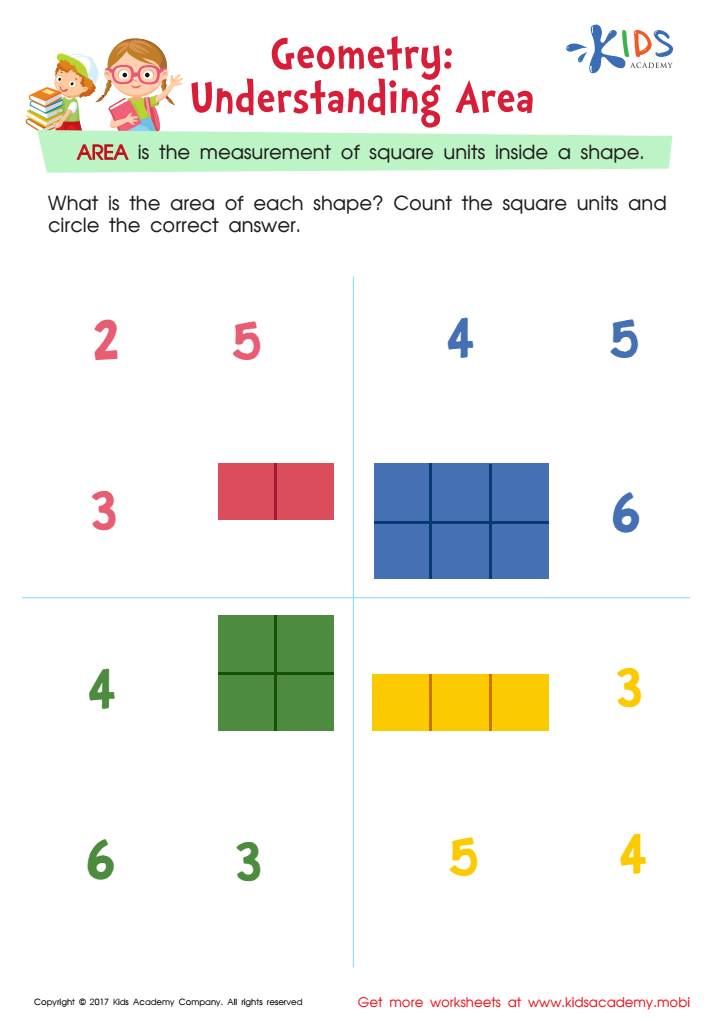
Understanding Area Worksheet



.jpg)

Understanding area is crucial for 8-year-olds as it forms a foundational component of both their mathematical education and real-world applications. At this age, children are beginning to engage in more complex problem-solving and critical thinking skills. Grasping the concept of area helps them make sense of space and quantity, thus enhancing their spatial awareness.
From a practical standpoint, knowing how to calculate area encourages skills that are applicable in everyday life. Children can relate this concept to real-world situations, such as determining how much paint is needed for a room or understanding the space requirements for furniture. This boosts their confidence and encourages a sense of independence when tackling tasks at home or school.
Moreover, the process of learning about area integrates various mathematical concepts, such as multiplication and geometry, laying a strong groundwork for future learning. It nurtures a child’s ability to visualize and interpret mathematical ideas, fostering analytical skills that are vital for academic success throughout their education.
Ultimately, caregivers and educators should prioritize understanding area not only to enhance mathematics proficiency but also to cultivate a child's critical thinking and problem-solving abilities in everyday scenarios.








