Understanding instructions Worksheets for 8-Year-Olds
3 filtered results
-
From - To
Enhance your child’s comprehension skills with our "Understanding Instructions Worksheets for 8-Year-Olds." Designed to promote critical thinking and independent problem-solving, these engaging worksheets offer fun and interactive activities tailored for young learners. Each worksheet challenges children to carefully read and follow instructions, fostering their ability to understand and execute tasks effectively. Perfect for classroom use or at-home practice, these resources align with educational standards to support reading comprehension and cognitive development. Help your 8-year-old build a strong foundation in understanding directions, which is vital for academic success. Explore our diverse collection of worksheets and watch their confidence grow!
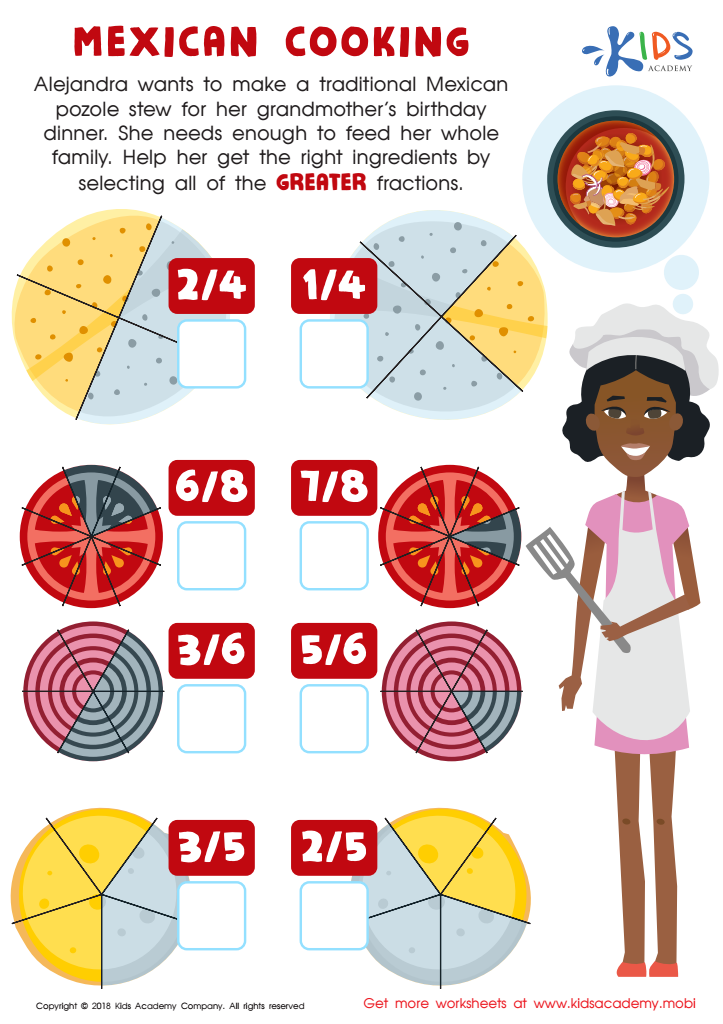
Mexican Cooking Worksheet
 Assign to My Students







Parents and teachers should prioritize helping 8-year-olds understand instructions, as it plays a crucial role in their academic and personal development. At this age, children are transitioning from learning basic skills to applying them in more complex tasks. Clear understanding of instructions not only empowers them to complete assignments successfully but also builds their confidence in tackling challenges independently.
Furthermore, comprehension of instructions enhances critical thinking and problem-solving skills. When children can accurately interpret requirements, they learn to analyze situations, make informed decisions, and communicate effectively. This skill is transferable to various areas in life, from following a recipe in cooking to adhering to safety protocols in sports.
Moreover, fostering this understanding aids in reducing frustration and anxiety around learning activities. Children who struggle with instructions may feel overwhelmed, which can lead to disengagement and diminished motivation. By cultivating this ability, educators and parents facilitate a more productive learning environment where children feel capable and inspired.
Ultimately, emphasizing this aspect of communication during a child's formative years sets a strong foundation for lifelong learning, collaboration, and self-assurance. Teaching them to comprehend instructions cultivates not just educational success but also essential life skills.








