Shape Recognition 2D Shapes Worksheets for 8-Year-Olds
9 filtered results
-
From - To
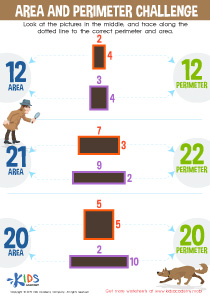
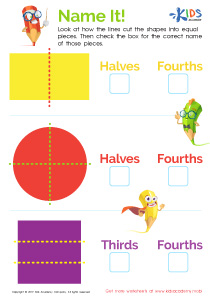
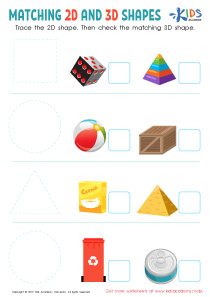
Enhance your 8-year-old's understanding of 2D shapes with our engaging Shape Recognition worksheets. Designed to make learning fun, these interactive activities encourage kids to identify, draw, and classify various shapes, fostering essential math skills in a playful environment. From circles and triangles to squares and polygons, children will develop spatial awareness and critical thinking through colorful illustrations and practical exercises. Each worksheet promotes hands-on learning, ensuring that every lesson is both educational and enjoyable. Perfect for classroom settings or home practice, our Shape Recognition worksheets create a strong foundation for future mathematical concepts while cultivating a love for learning!
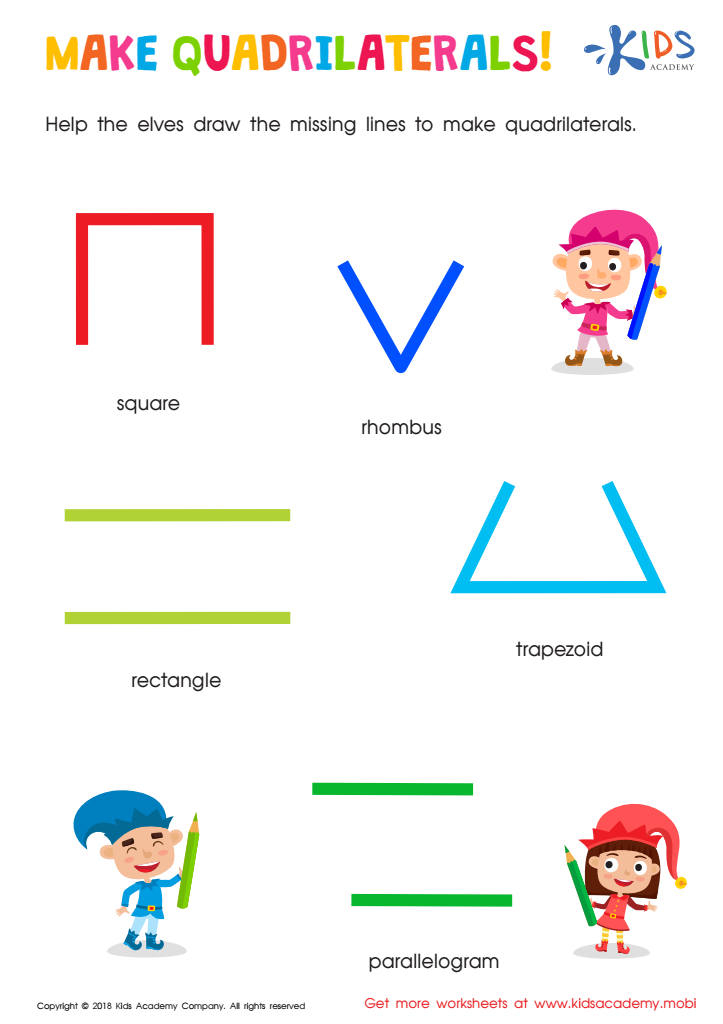
Make Quadrilaterals Worksheet
 Assign to My Students











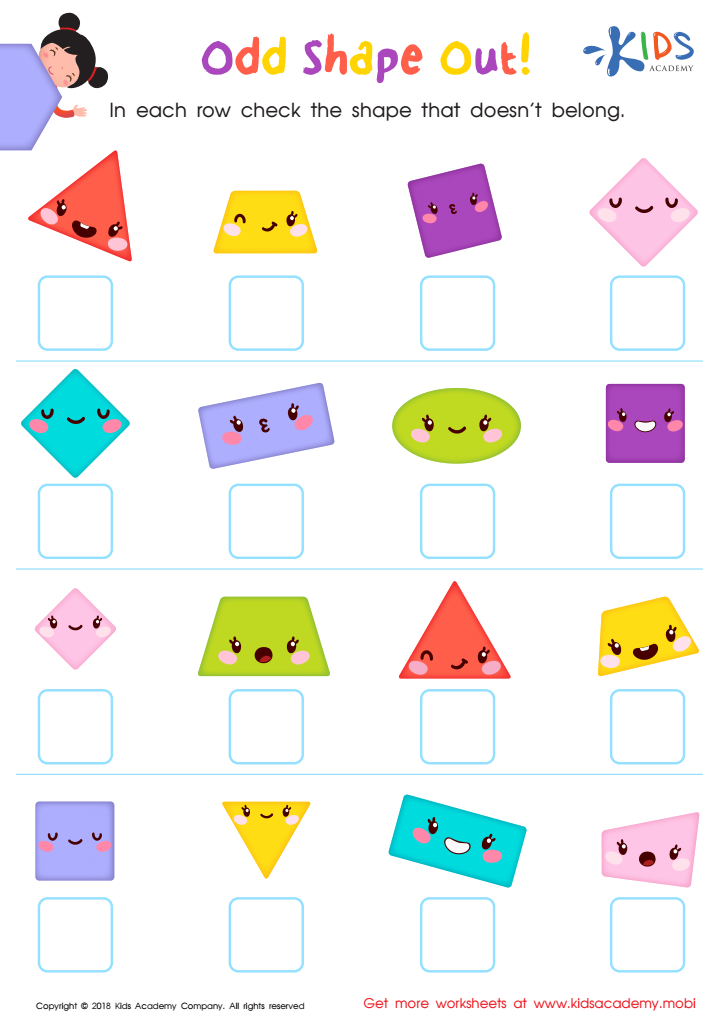
Odd Shape Out Worksheet for Grade 3
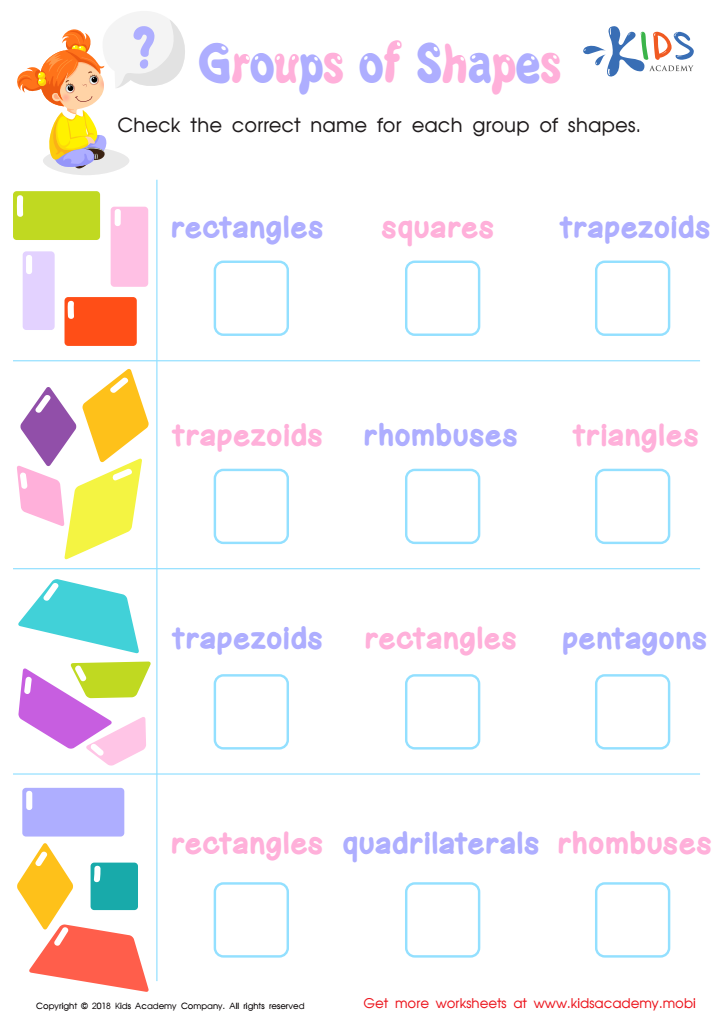
Groups of Shapes Worksheet
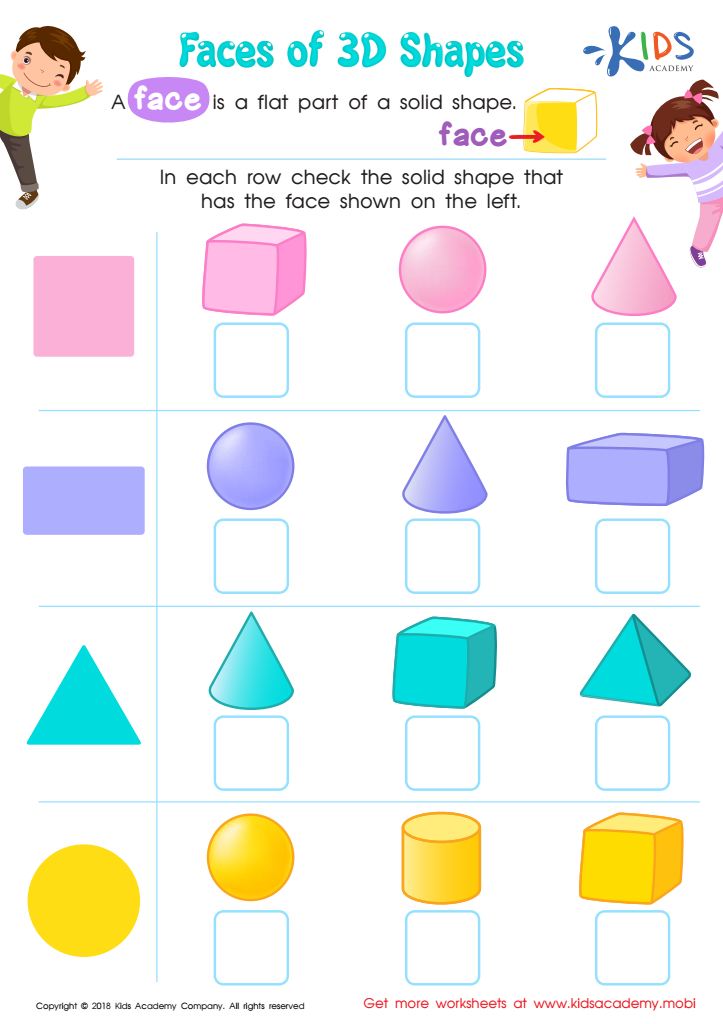
Faces of 3D Shapes Worksheet
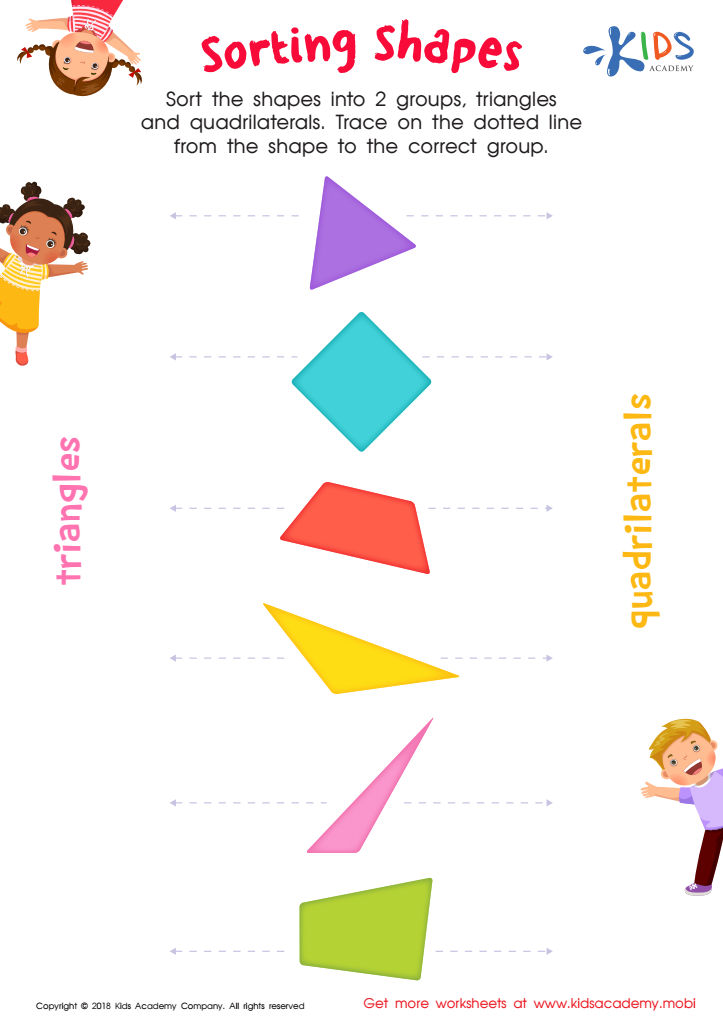
Sorting Shapes Worksheet
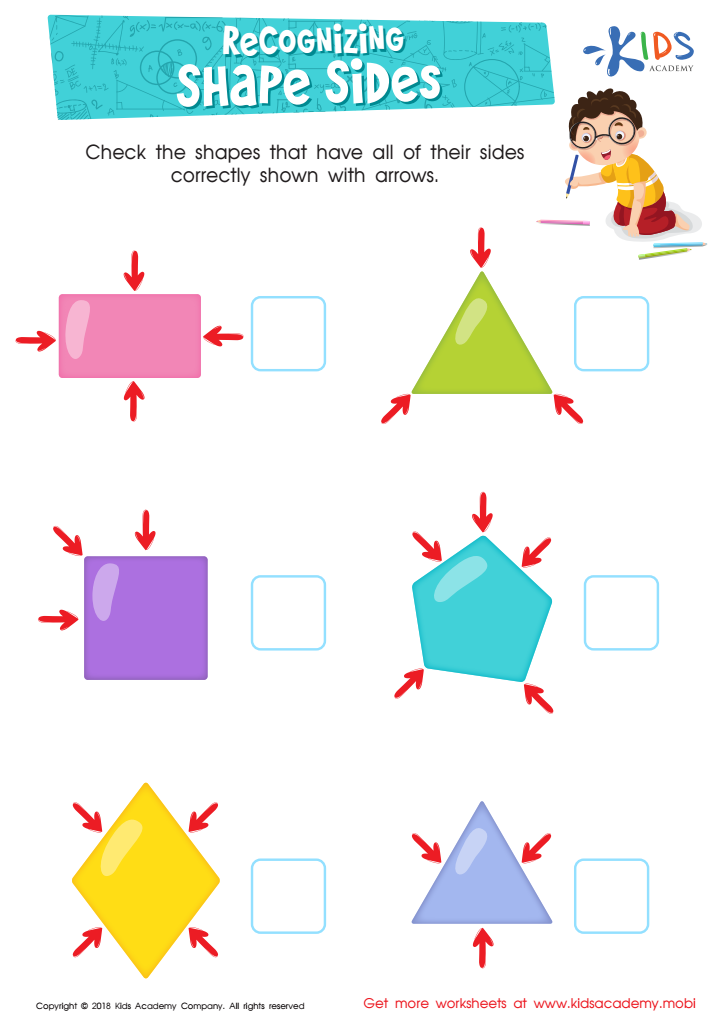
Recognizing Shape Sides Worksheet
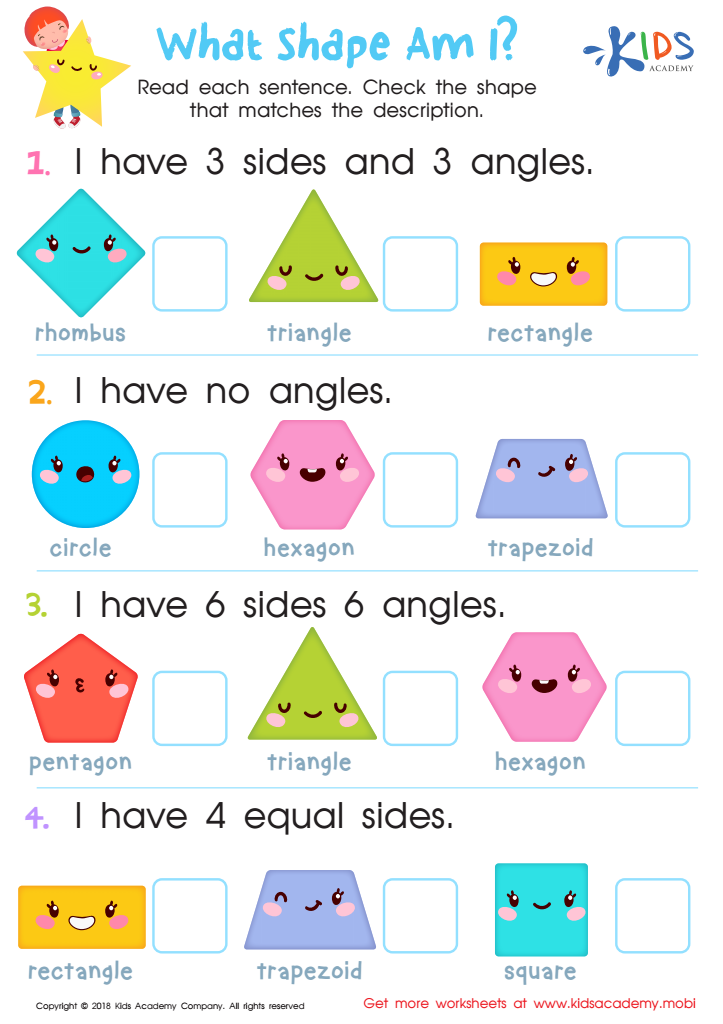
What Shape Am I? Worksheet
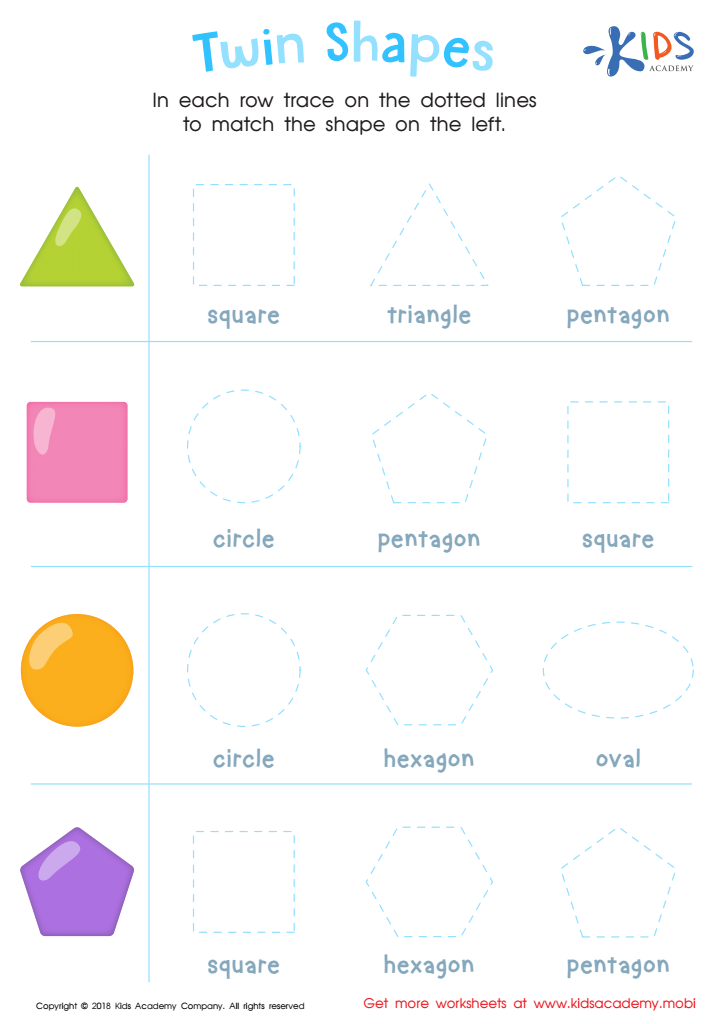
Twin Shapes Dot-to-Dot Worksheet
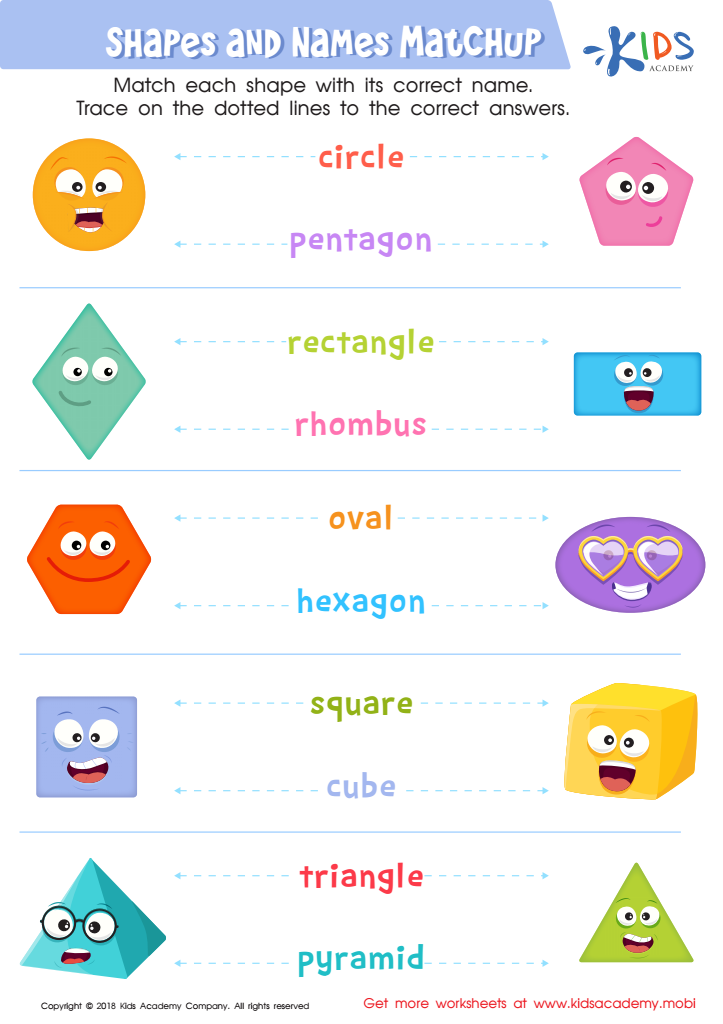
Shapes and Names Matchup Worksheet








Shape recognition is a fundamental skill in early childhood education that provides numerous benefits for 8-year-olds. Understanding 2D shapes enhances a child's visual perception and cognitive abilities, allowing them to identify shapes in their environment. This skill forms the foundation for more complex mathematical concepts, such as geometry, and helps children develop logical reasoning and problem-solving abilities, which are crucial as they progress in their education.
Moreover, learning about 2D shapes supports a child’s artistic development and creativity. By recognizing and manipulating shapes, children can improve their spatial awareness and fine motor skills, particularly when involved in activities like drawing, crafting, or building. These activities not only boost confidence but also encourage imaginative play.
Additionally, strong shape recognition skills can lead to improved academic performance, as mathematics relies heavily on understanding geometric concepts.
Parents and teachers play a pivotal role in fostering an engaging and supportive environment for shape recognition through interactive games, storytelling, and real-world applications. By emphasizing the importance of 2D shape recognition, educators and caregivers can ensure that children are better equipped for future learning challenges and equipped with essential cognitive tools for lifelong learning.