Recognizing shapes Adding up to 100 Worksheets for 8-Year-Olds
8 filtered results
-
From - To
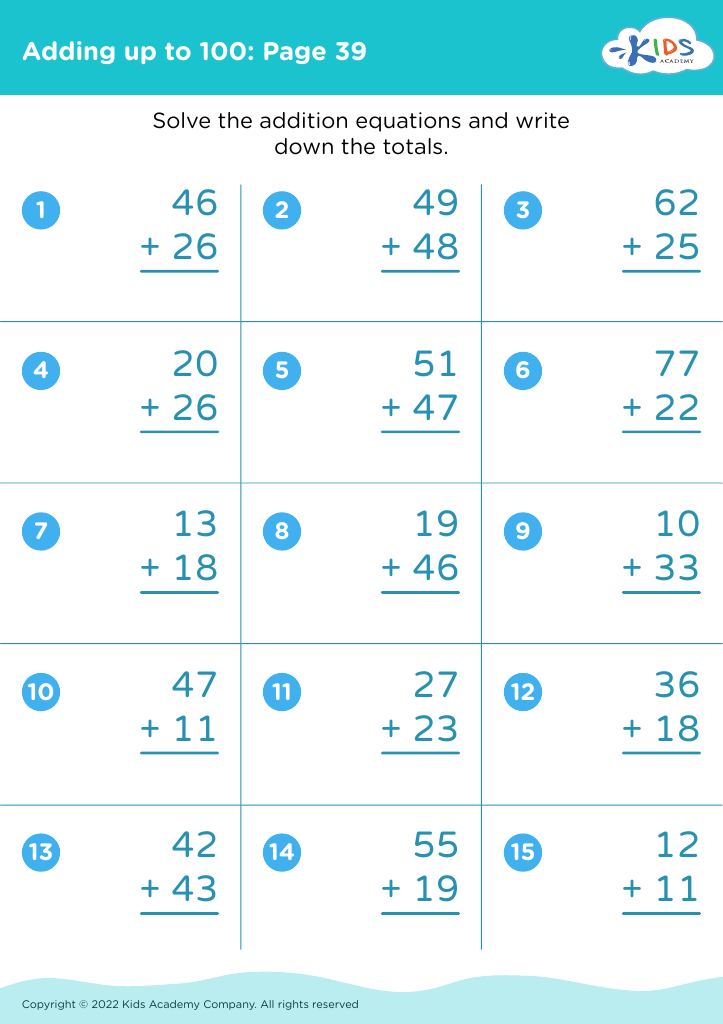
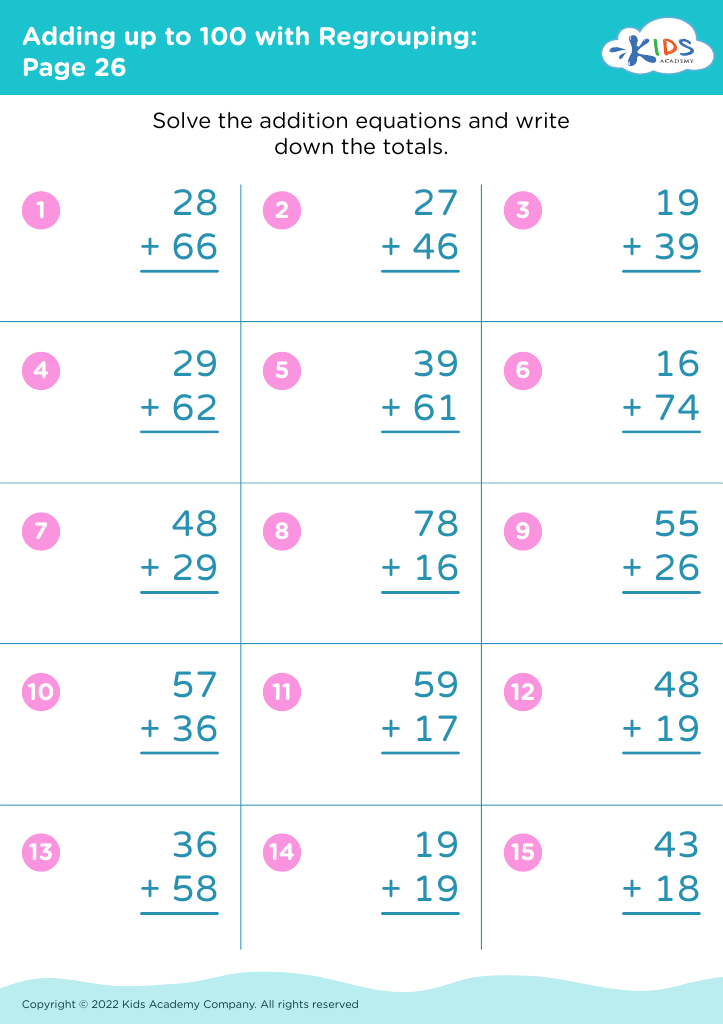
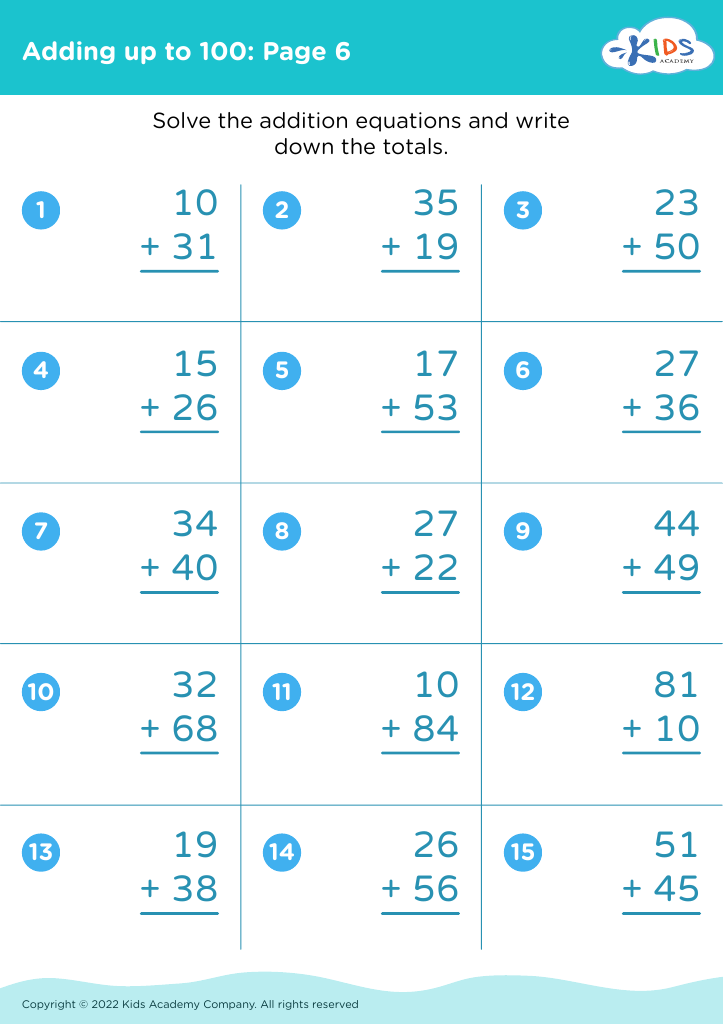
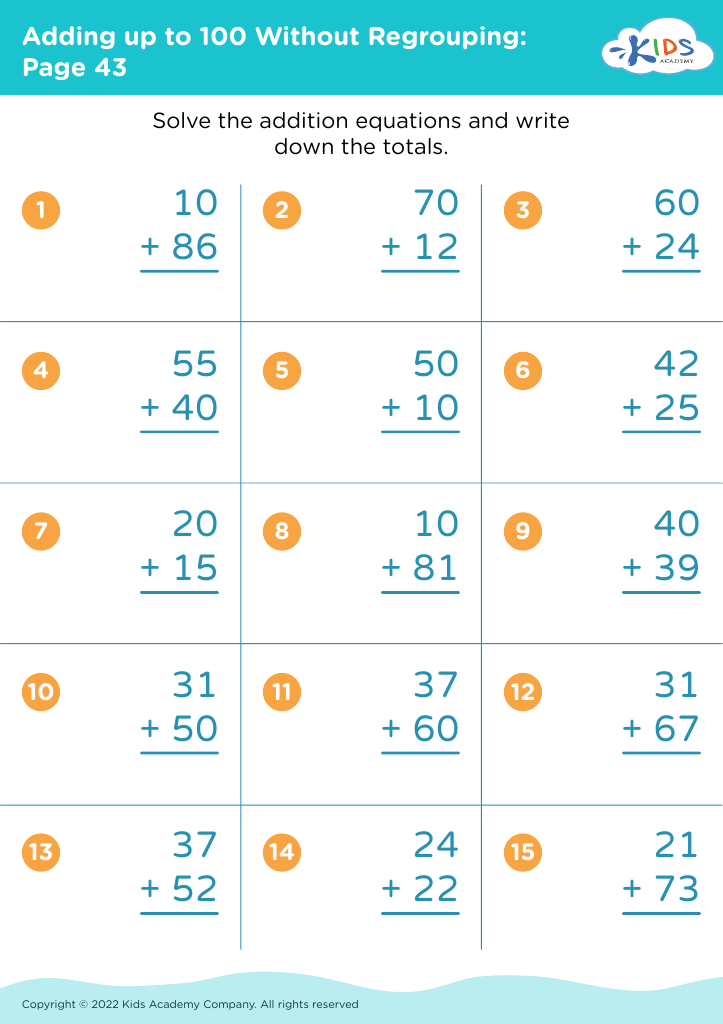
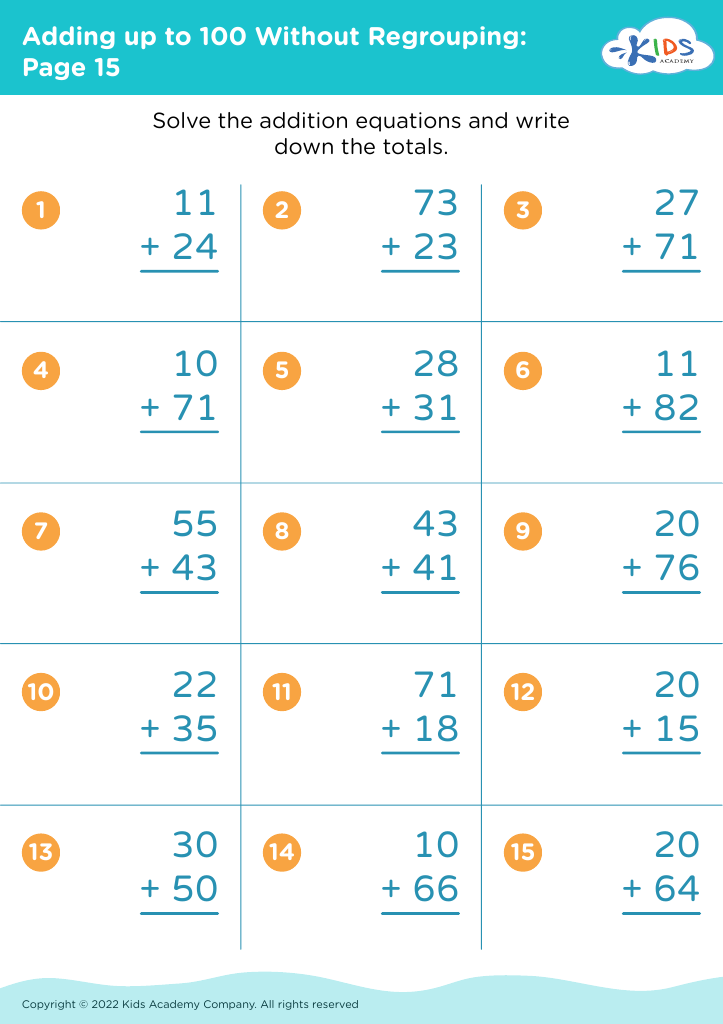
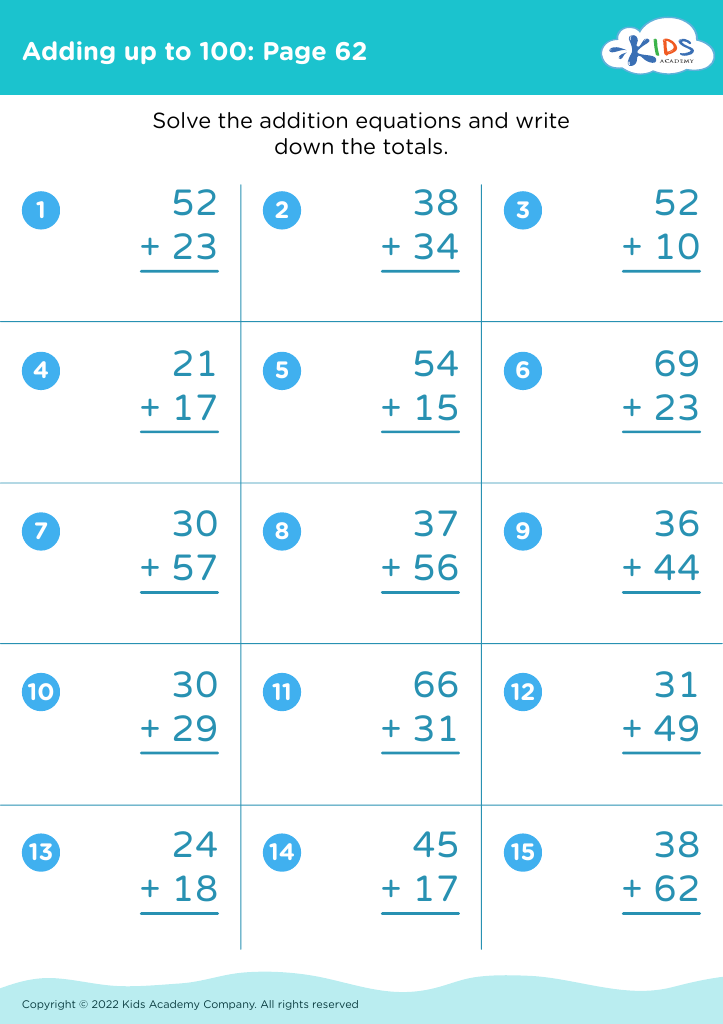
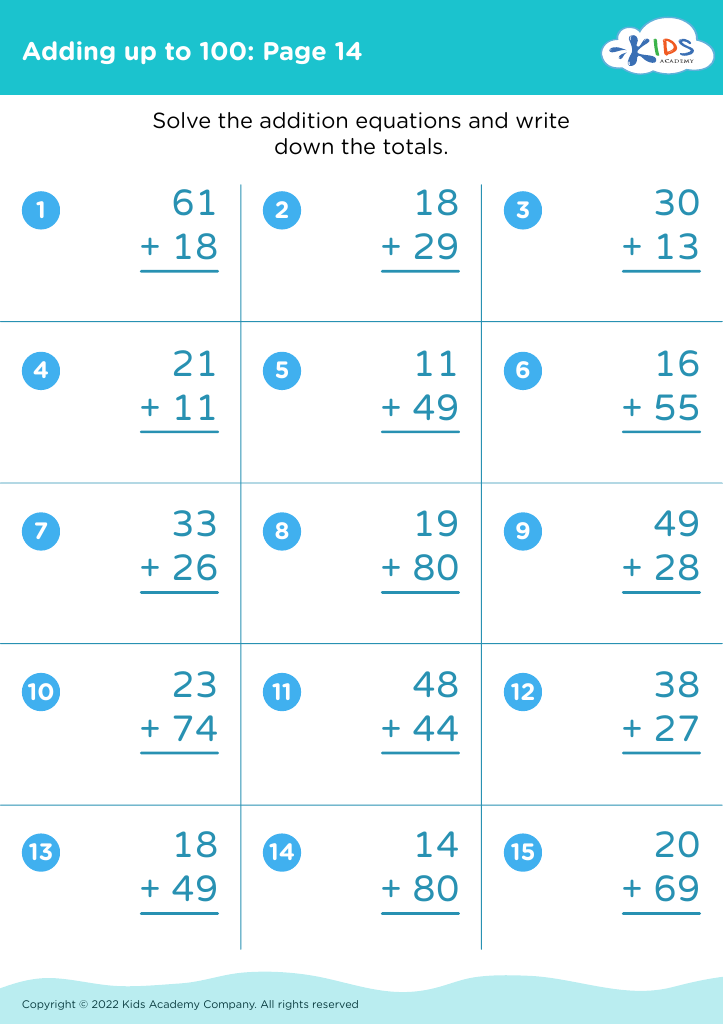
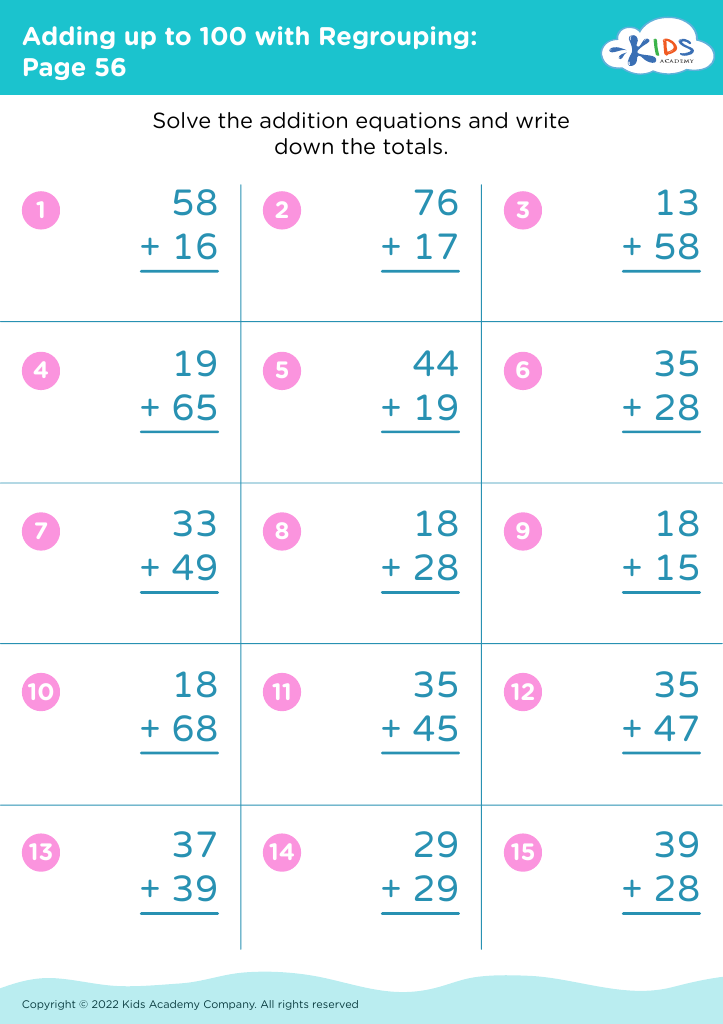
Welcome to our "Recognizing Shapes Adding up to 100 Worksheets" designed specifically for 8-year-olds! These engaging and interactive worksheets help young learners develop essential math skills while exploring the exciting world of shapes. By combining shape recognition with addition strategies up to 100, students will enhance their problem-solving abilities and boost their confidence in math. Each worksheet features colorful illustrations and fun activities that encourage critical thinking and creativity. Perfect for home or classroom use, our resources make learning enjoyable and effective. Discover the joy of math and shapes with these fun, educational worksheets today!




%20(1).jpg)


Recognizing shapes and developing skills in adding up to 100 are crucial components of an 8-year-old's mathematical foundation. Firstly, understanding shapes helps children make sense of the world around them. It enhances their spatial awareness, critical for problem-solving and everyday tasks, like reading maps or understanding architecture. In this digital age, where geometry is pivotal in fields like design and engineering, early comprehension gives kids a head start in these areas.
Secondly, proficiency in addition, particularly with numbers up to 100, strengthens overall numerical understanding. Mastery in this area promotes confidence and prepares students for more advanced arithmetic operations, such as subtraction, multiplication, and division. It fosters numerical fluency, enabling children to solve problems quickly and efficiently, a skill vital for their academic journey.
Furthermore, these two skills can be interconnected—recognizing geometric patterns can aid in visualizing and solving numerical problems. By engaging with both shapes and numbers, children build cognitive skills critical for decision-making and analytical thinking. Parents and teachers who emphasize these skills provide a robust learning environment that encourages curiosity and lifelong learning in mathematics. Supporting kids in these areas ultimately encourages their development as confident, capable learners.








