Counting skills Adding up to 50 Worksheets for 8-Year-Olds - Page 2
34 filtered results
-
From - To
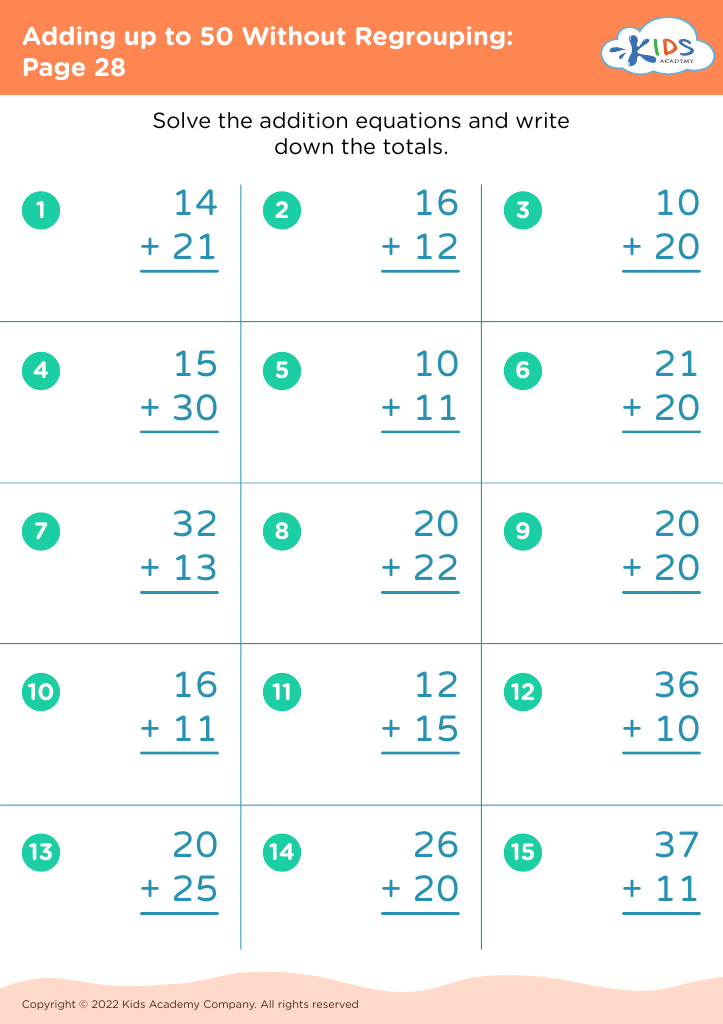
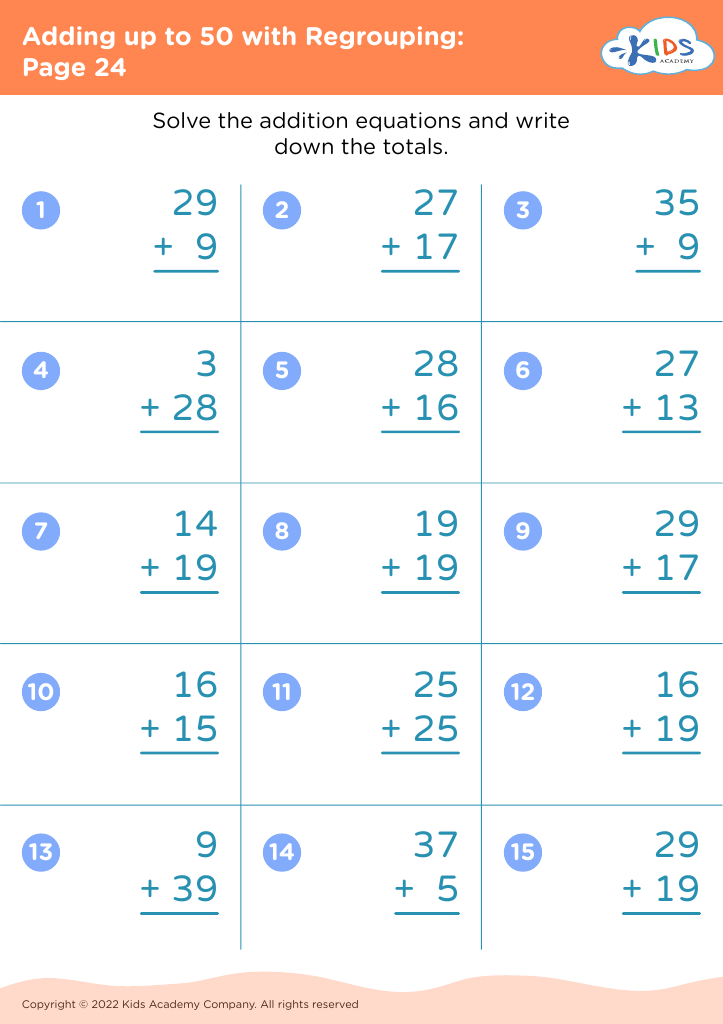
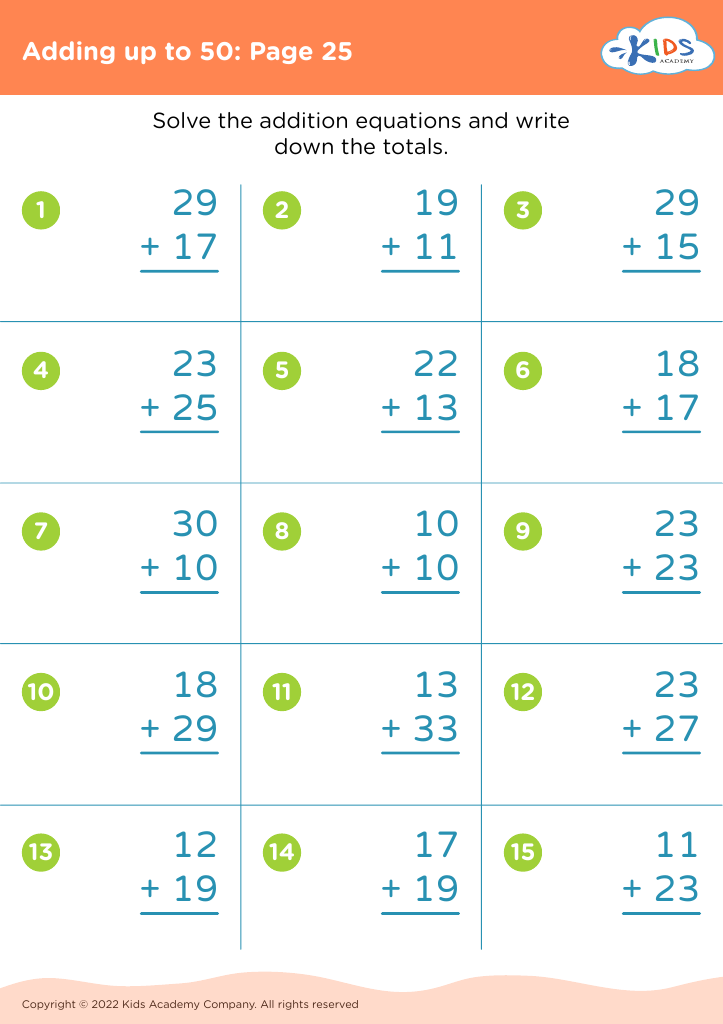
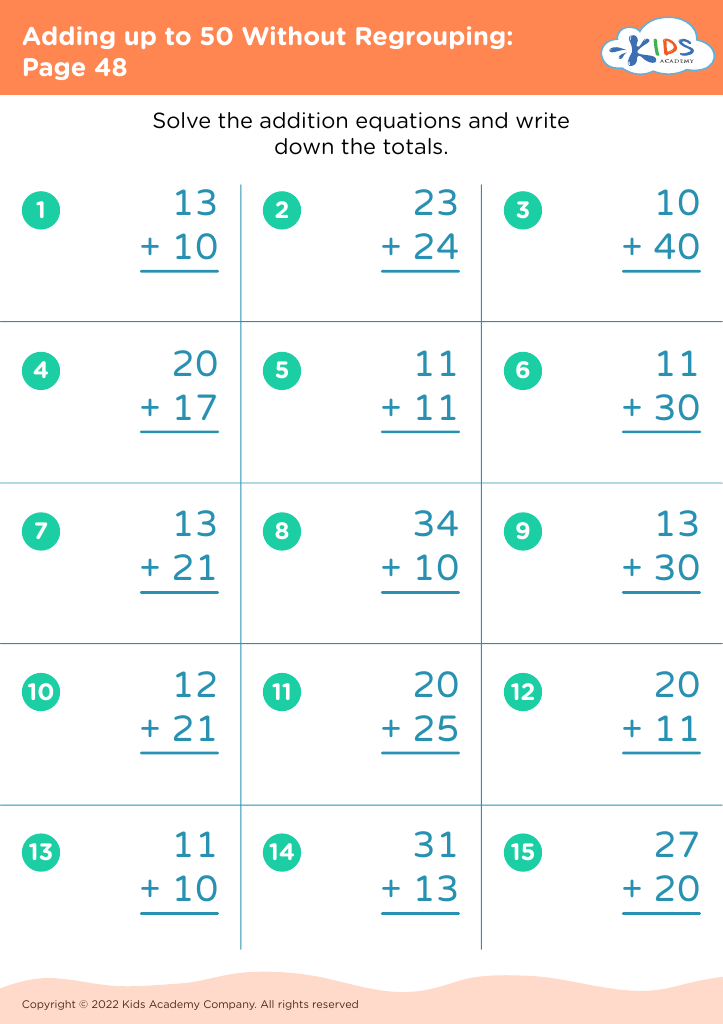
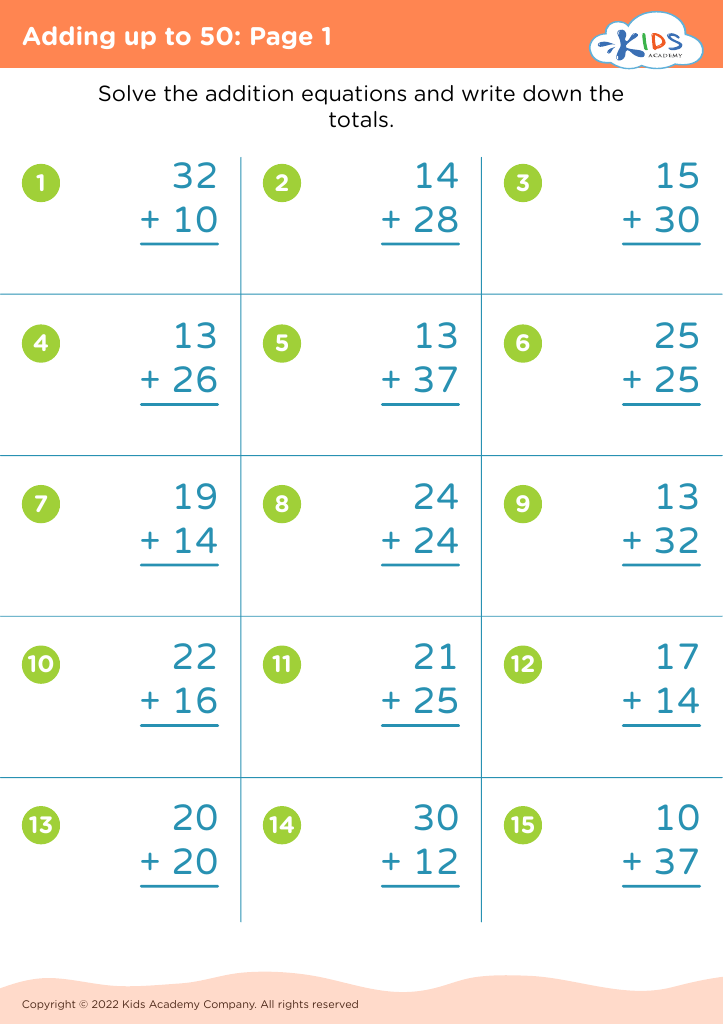
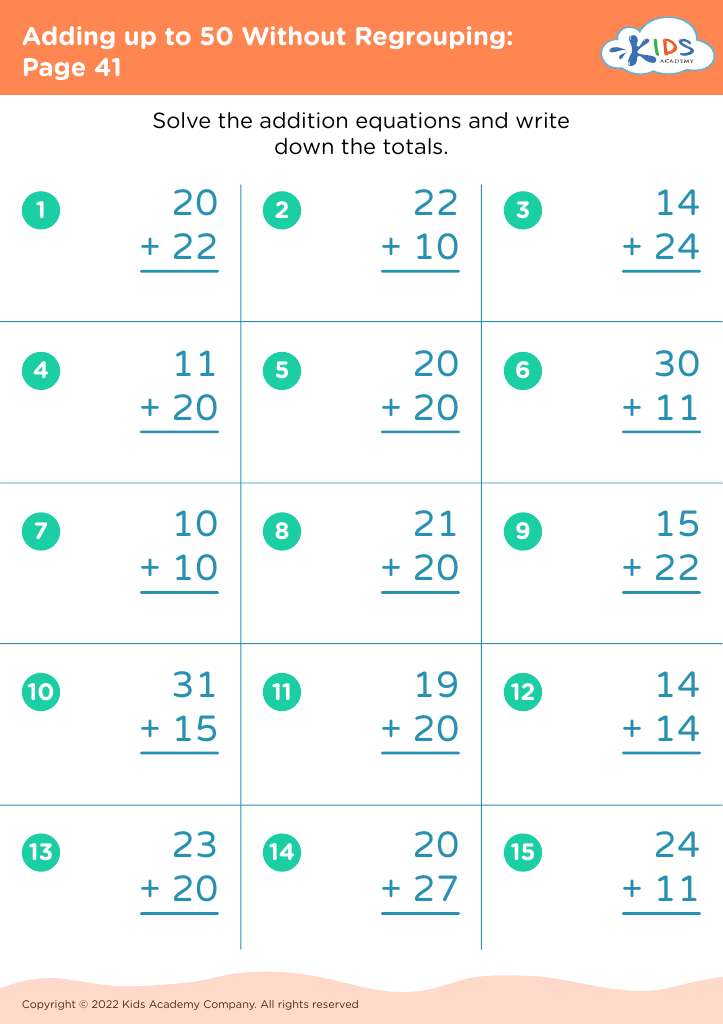
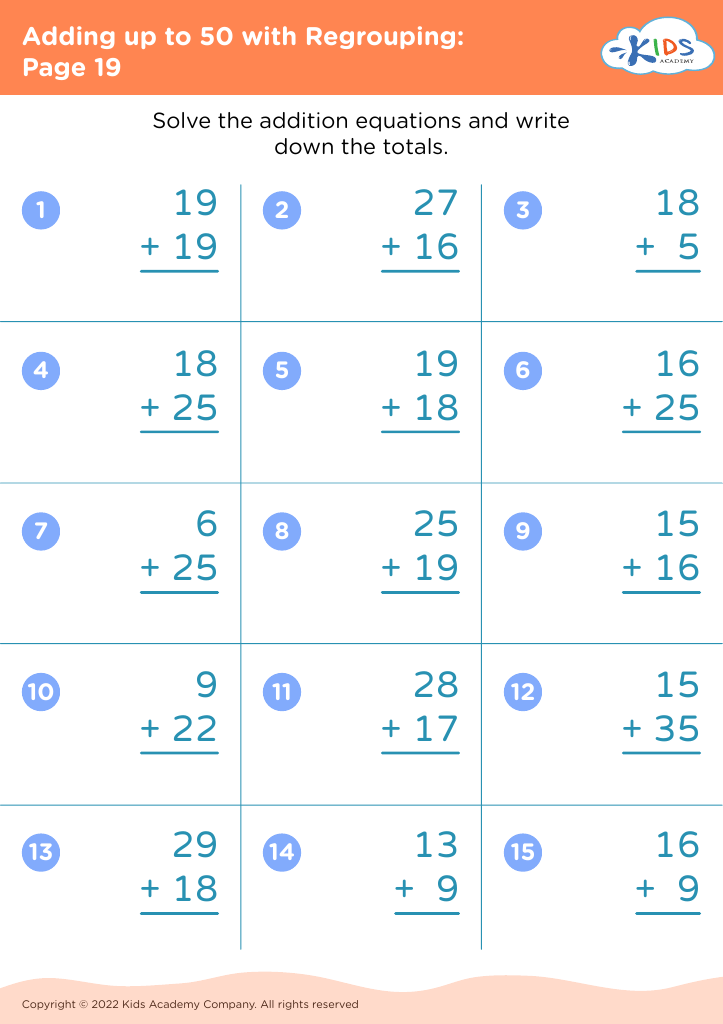
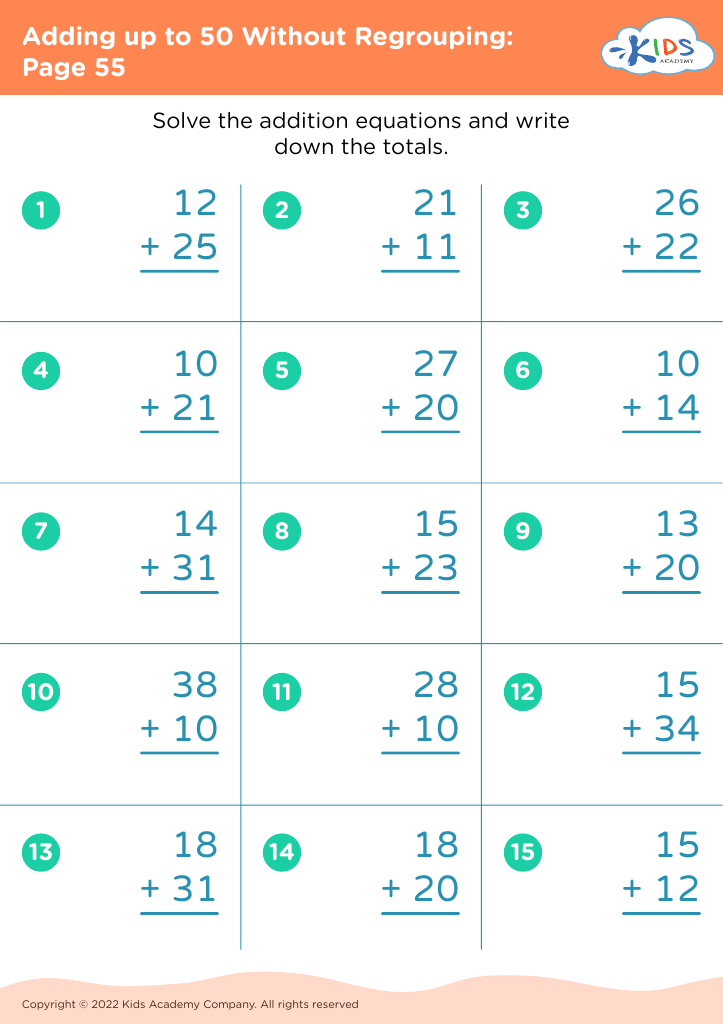
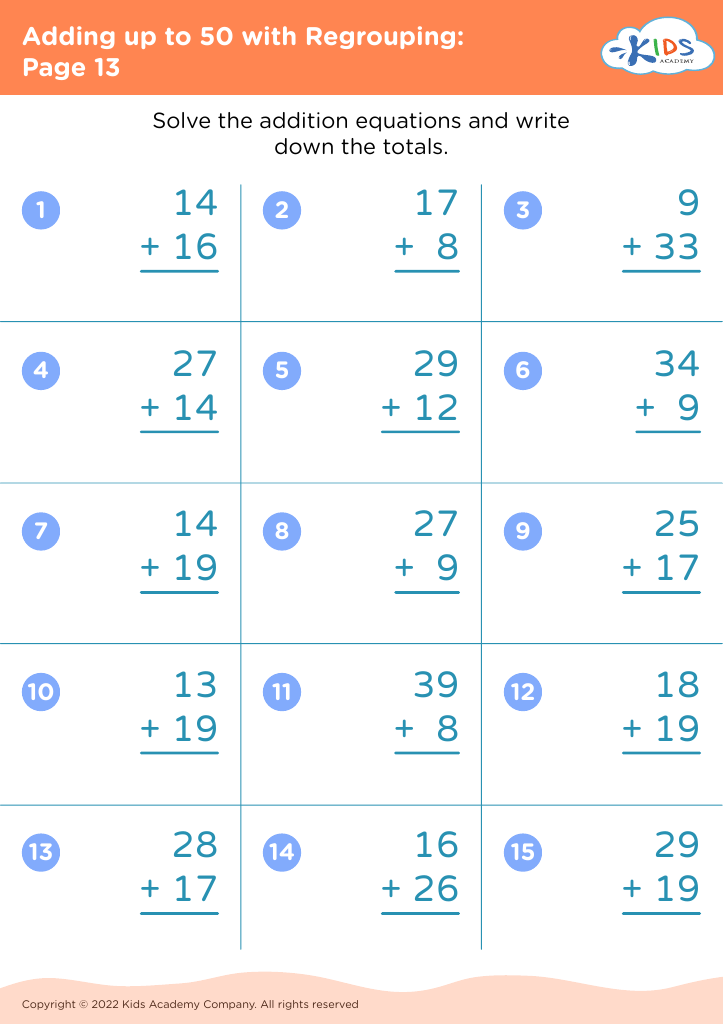
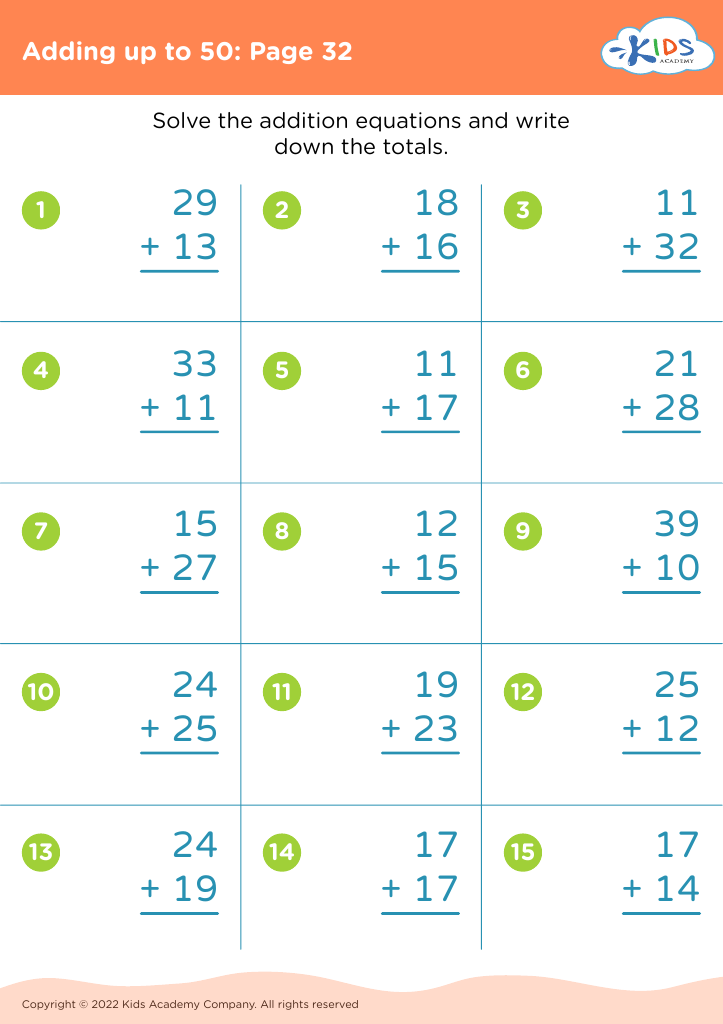




Counting skills and the ability to add up to 50 are foundational for 8-year-olds and here’s why parents and teachers should prioritize them.
Firstly, math is a core component of educational curricula and counting forms the basis for all mathematical concepts. Building strong counting and addition skills early ensures that children can progress to more complex tasks such as subtraction, multiplication, and division with confidence.
Secondly, these skills contribute to cognitive development. They enhance logical thinking, problem-solving abilities, and spatial reasoning. Engaging with numbers helps children to identify patterns, improving their overall IQ and analytical skills.
Moreover, practical applications are vast—children use counting in daily activities like cooking, shopping, and playing games. This foundational knowledge helps them engage in activities that require basic arithmetic, fostering independence and practical life skills.
Counting up to 50 also reinforces number sense, including the understanding of number order, magnitude, and the ability to estimate. These are crucial in subjects beyond math, such as science and geography.
Finally, confidence in counting and simple arithmetic establishes a positive relationship with math. Succeeding in manageable tasks encourages a growth mindset, crucial in lifelong learning. Fostering these skills sets a strong educational foundation, underscoring why parents and teachers should care about it.








