Improving counting skills Addition & Subtraction Worksheets for 8-Year-Olds
11 filtered results
-
From - To
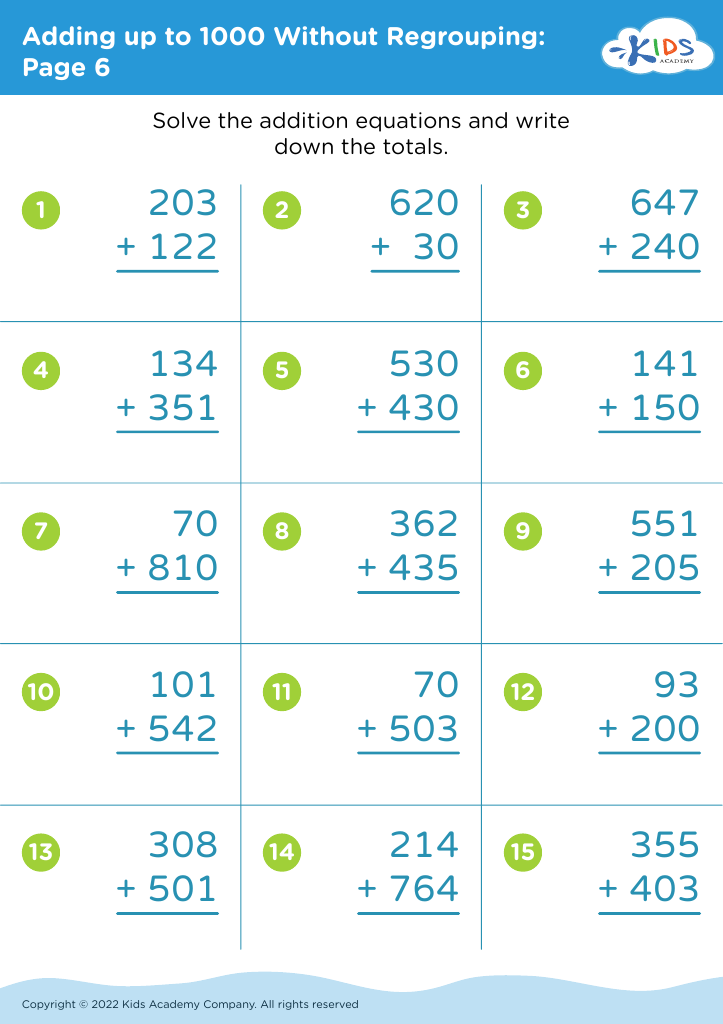
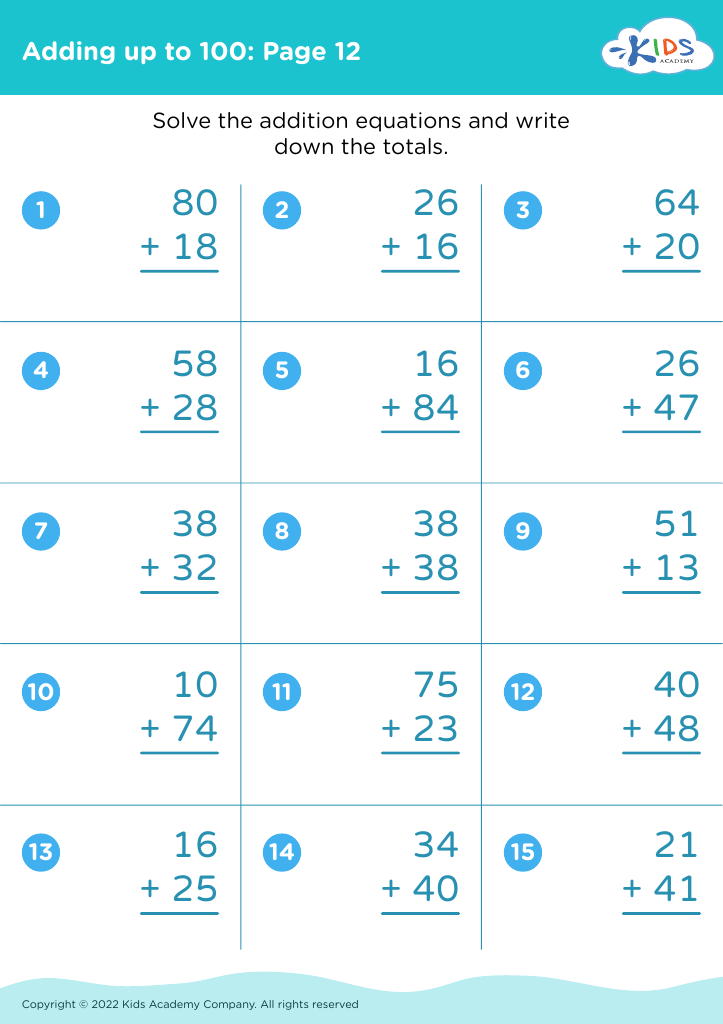
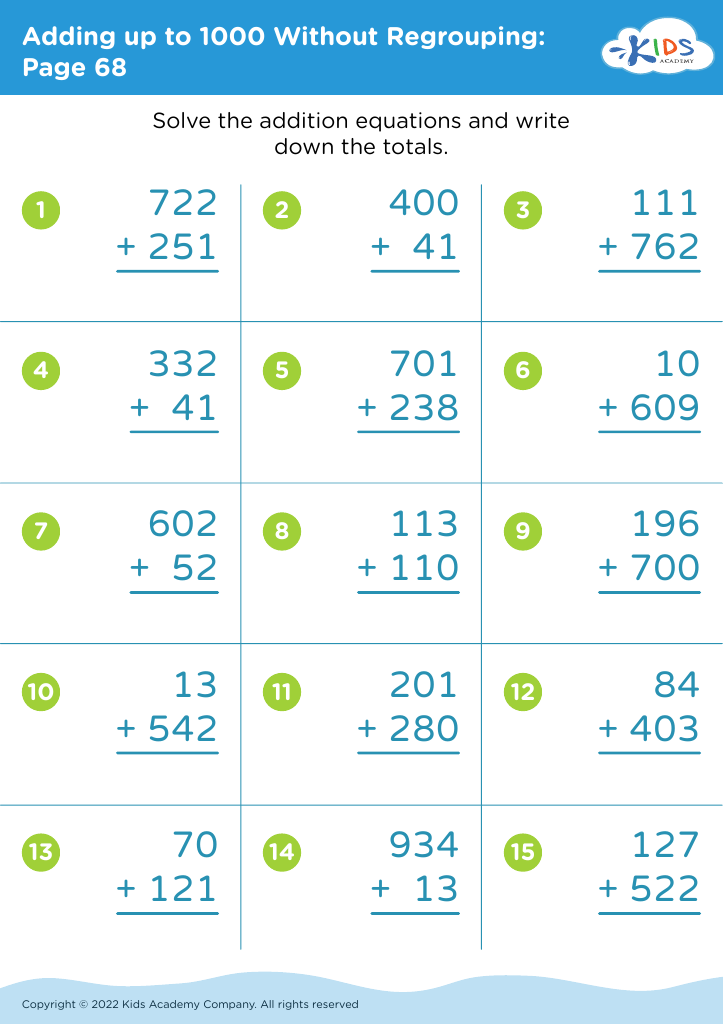
Enhance your child's counting skills with our engaging Addition & Subtraction Worksheets designed specifically for 8-year-olds! These worksheets offer a variety of fun, interactive problems that help young learners strengthen their foundational math skills. By practicing addition and subtraction through colorful exercises and real-life math scenarios, kids will gain confidence and improve their number sense. Perfect for classroom use or at-home learning, our resources cater to different learning paces, ensuring that every child can master these essential math concepts. Explore our collection today and watch your child's counting abilities grow as they enjoy the thrill of math!
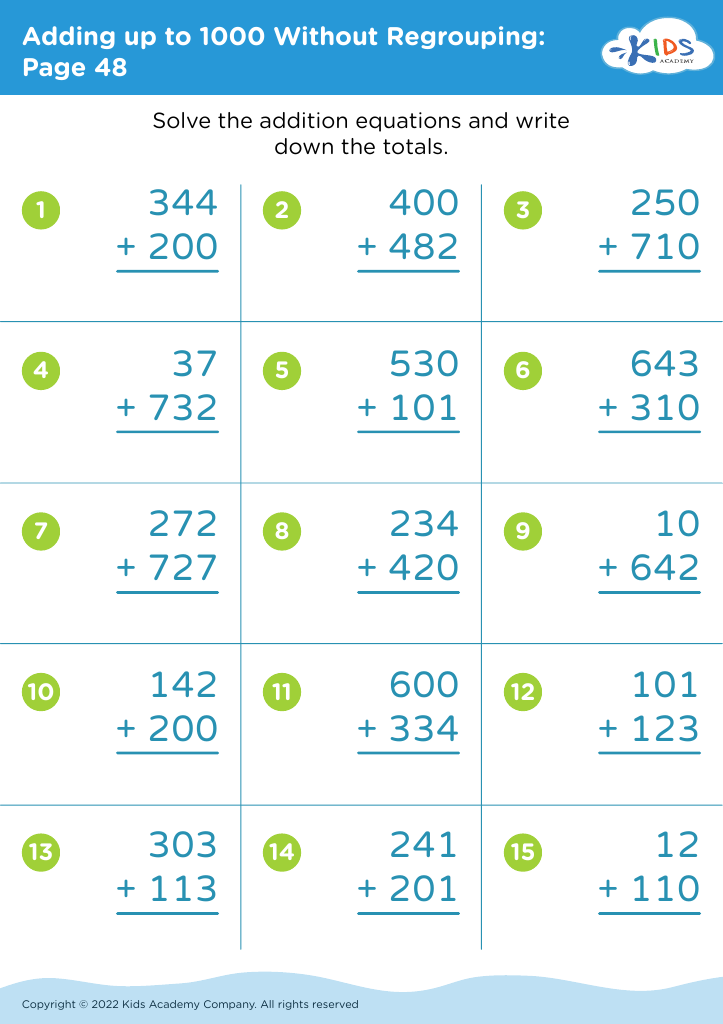
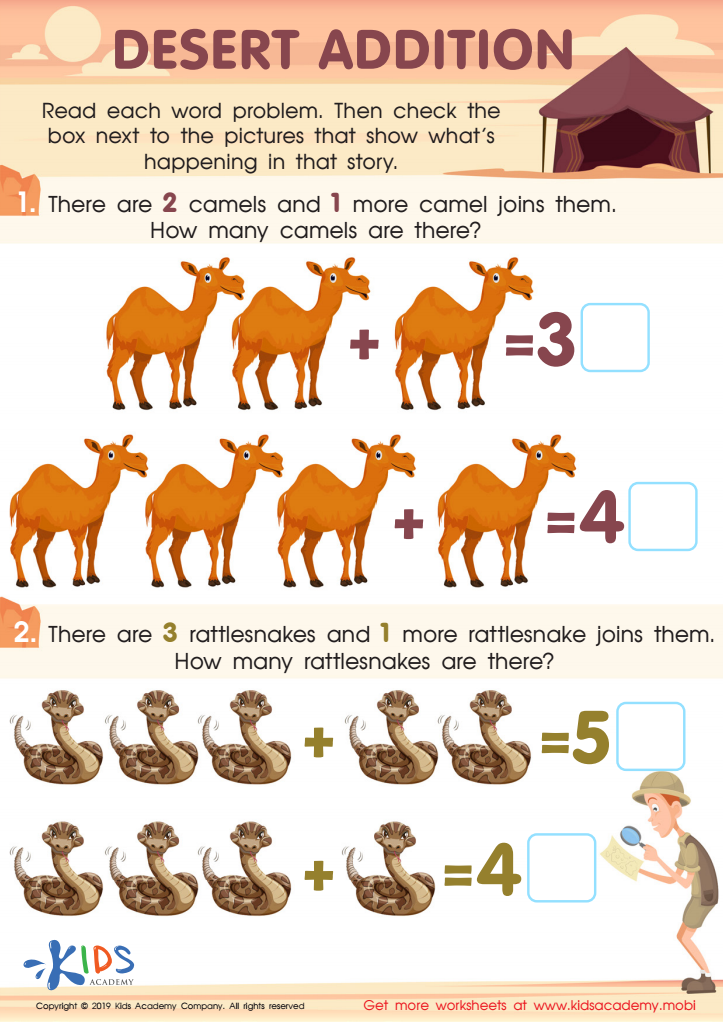
Desert Addition Worksheet
 Assign to My Students
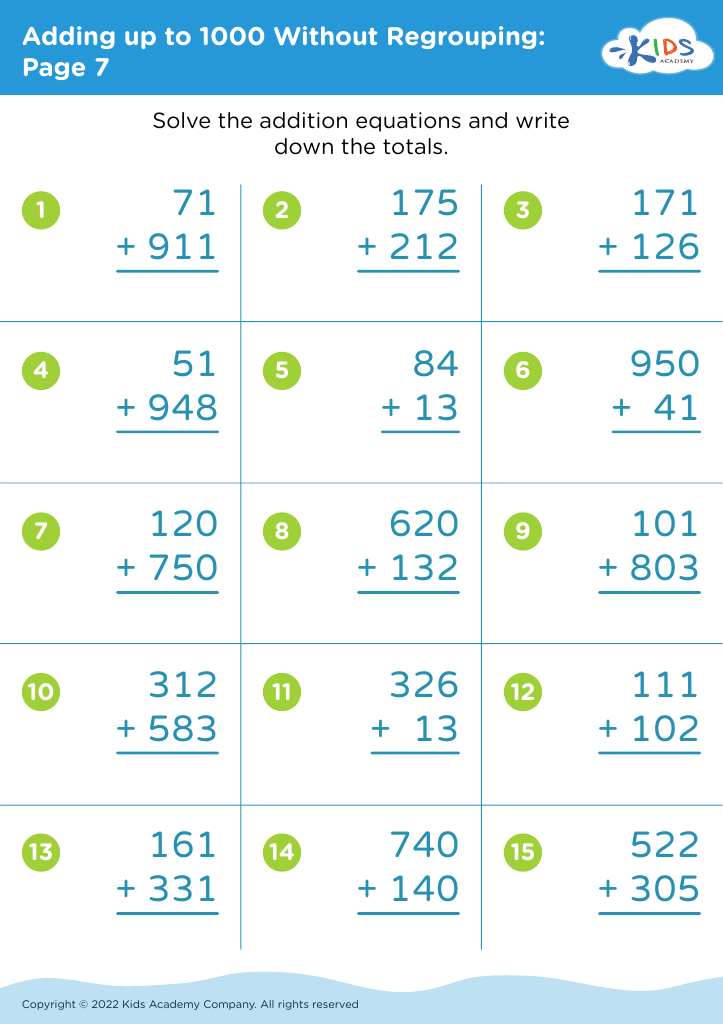
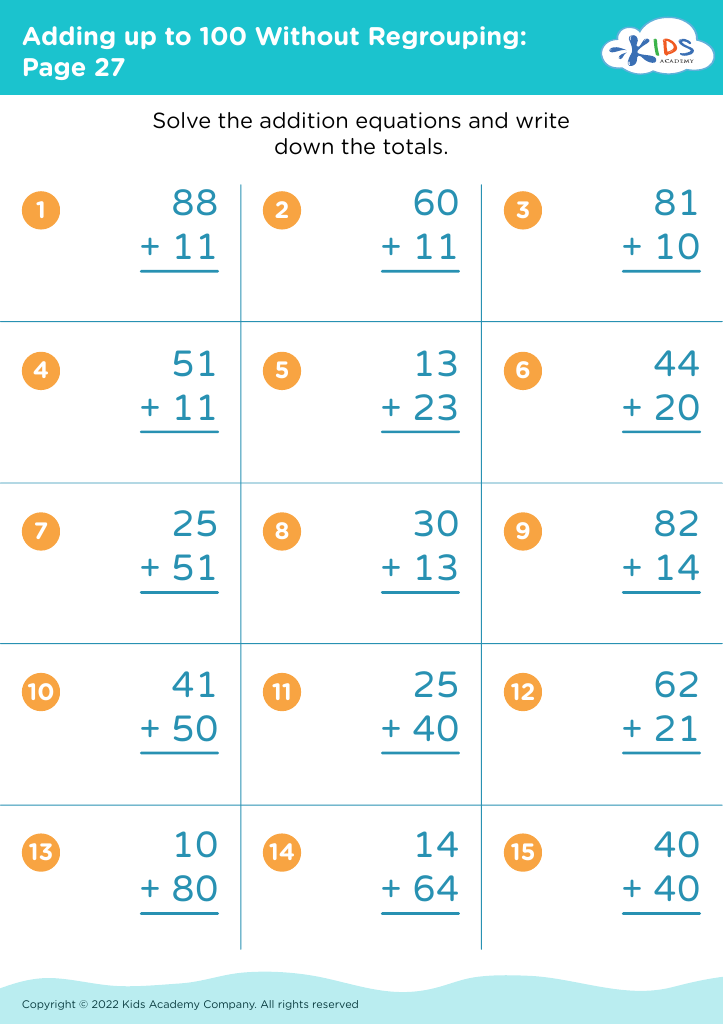
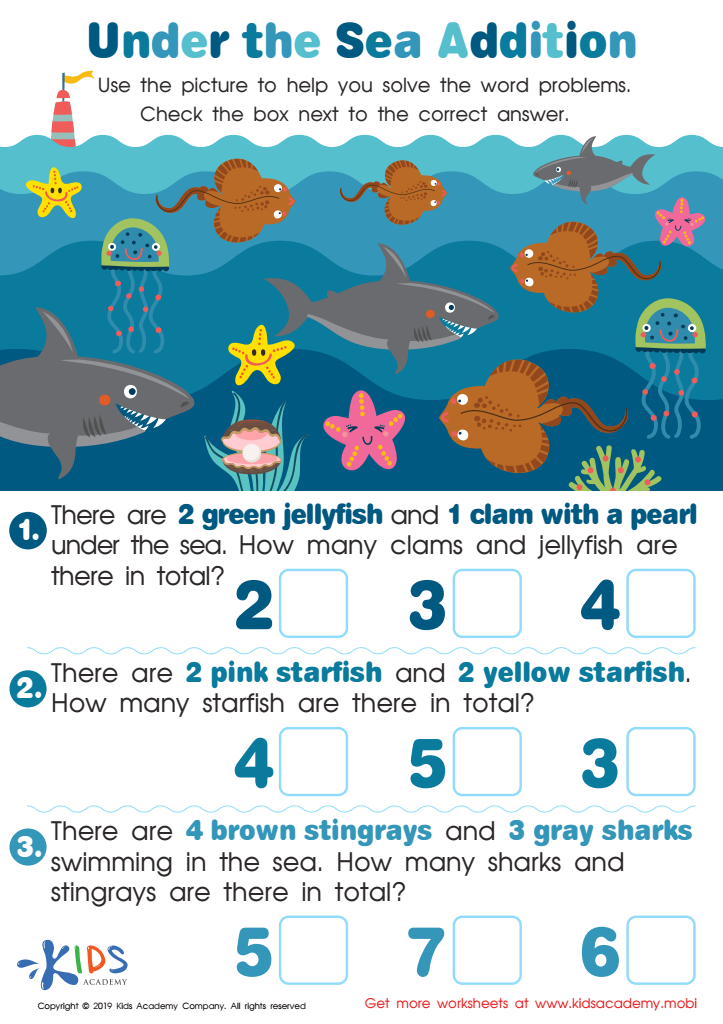
Under the Sea Addition Worksheet
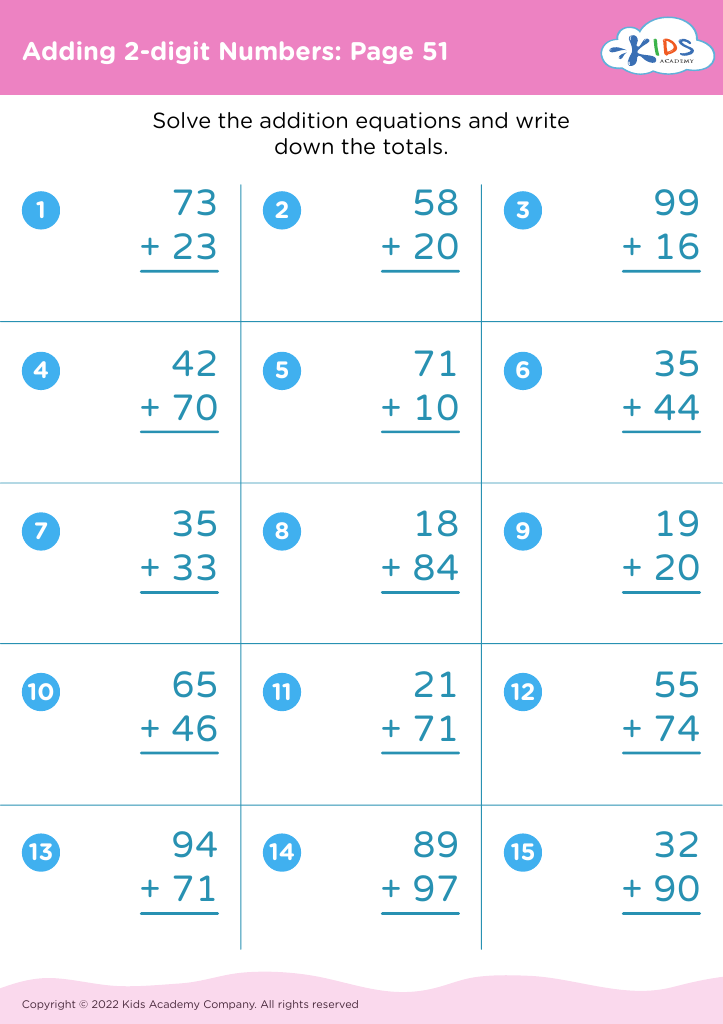
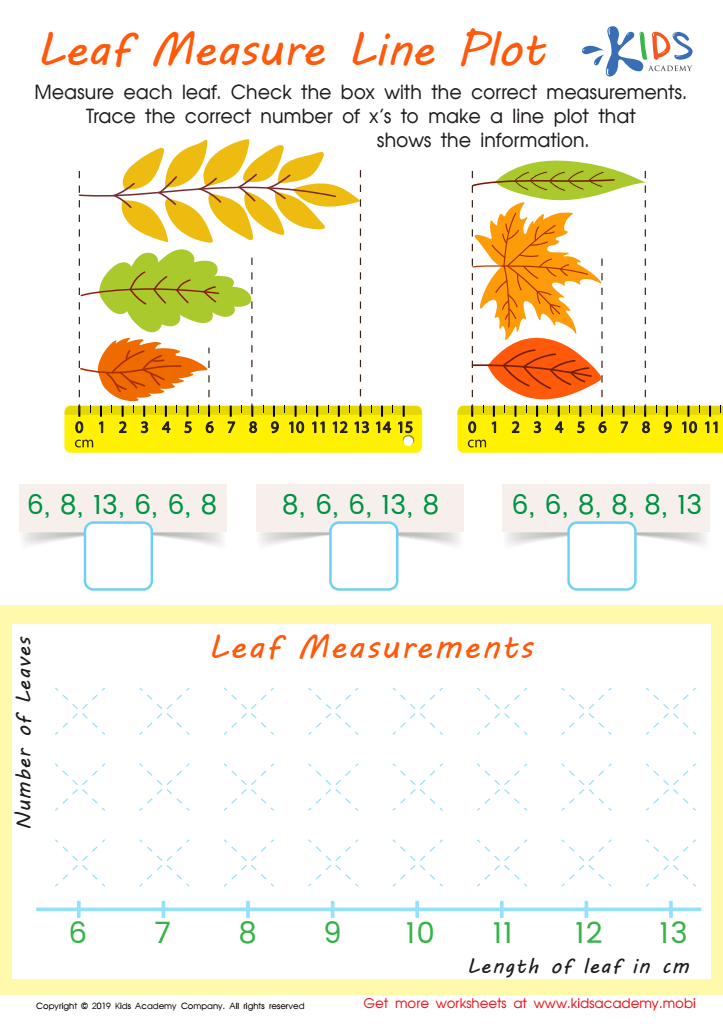
Leaf Measure Line Plot Worksheet
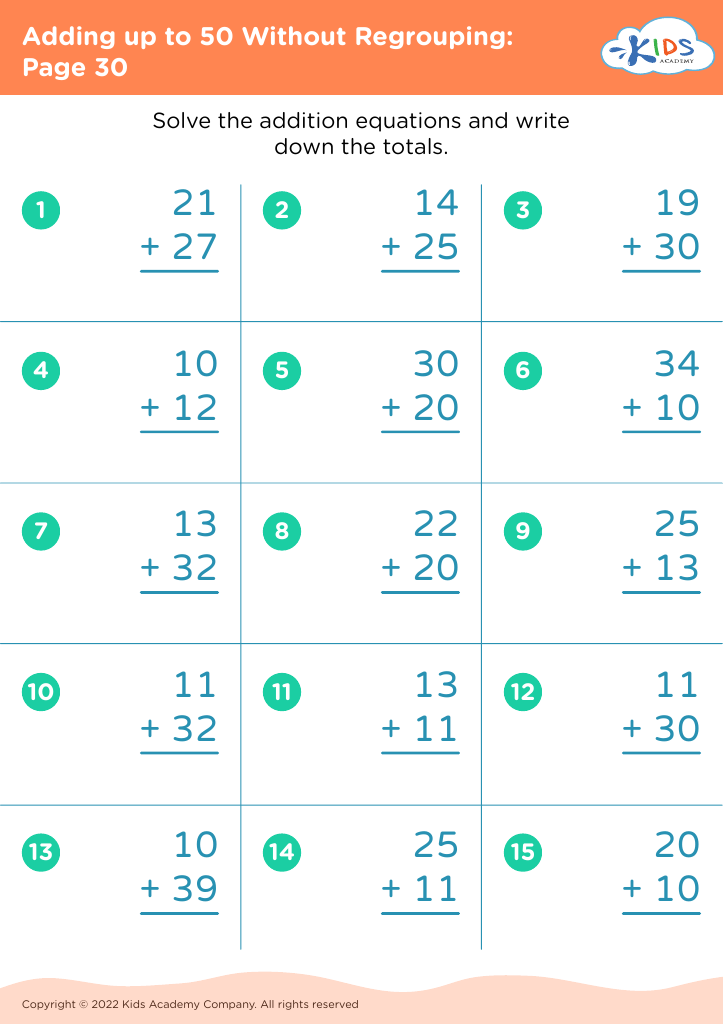








Improving counting skills as well as addition and subtraction is crucial for 8-year-olds as these foundational math abilities play a significant role in their overall academic development and daily life. At this age, children transition from concrete understanding to more abstract mathematical concepts. Mastery of counting and basic operations fosters confidence in their ability to tackle more advanced topics like multiplication, division, and problem-solving.
Understanding these skills helps enhance critical thinking and logical reasoning. Proficient counting and arithmetic enable children to comprehend money management, time tracking, and basic measurements, which are vital in real-world situations. Furthermore, strong mathematical skills are strongly linked to future academic success; students who struggle with foundational math may face difficulties as they progress through school, potentially impacting their self-esteem and love for learning.
Additionally, improvement in these areas enhances engagement and cognitive development, setting the stage for a lifelong appreciation of mathematics. Parents and teachers can create enriching environments that emphasize practice and application through games, hands-on activities, and real-life scenarios. By focusing on these skills, they empower children not only in math but in their general problem-solving abilities, building essential life skills along the way.








